


The Dubai desert safari market runs from AED 149 to AED 4,000 or more. The general format stays the same — dunes, a 4×4, a camp dinner, and a sunset. What changes at each price point is where you go and how many people share the vehicle. The camp can be a communal tent or a private candlelight setup. Between a standard Lahbab evening safari and a private Dubai Desert Conservation Reserve experience, the gap is real. Here is everything you need to know to make the right booking.
What Is a Dubai Desert Safari?
A Dubai desert safari is a guided excursion from the city into the Arabian desert. The standard format combines a 4×4 drive over dunes (dune bashing), cultural camp activities, and an Arabic dinner under the open sky. Camp activities include camel riding, sandboarding, henna, and falconry. Excursions run from 4 hours (sunrise format) to 18 hours (overnight with a desert camp stay). Prices range from AED 149 per person for a shared group tour to AED 2,000 or more for a private conservation-reserve experience.
The Three Types of Dubai Desert — Lahbab, Al Marmoom, and the DDCR
Most competing articles treat “the Dubai desert” as one place. Three distinct locations support safari operations, each offering a different experience.
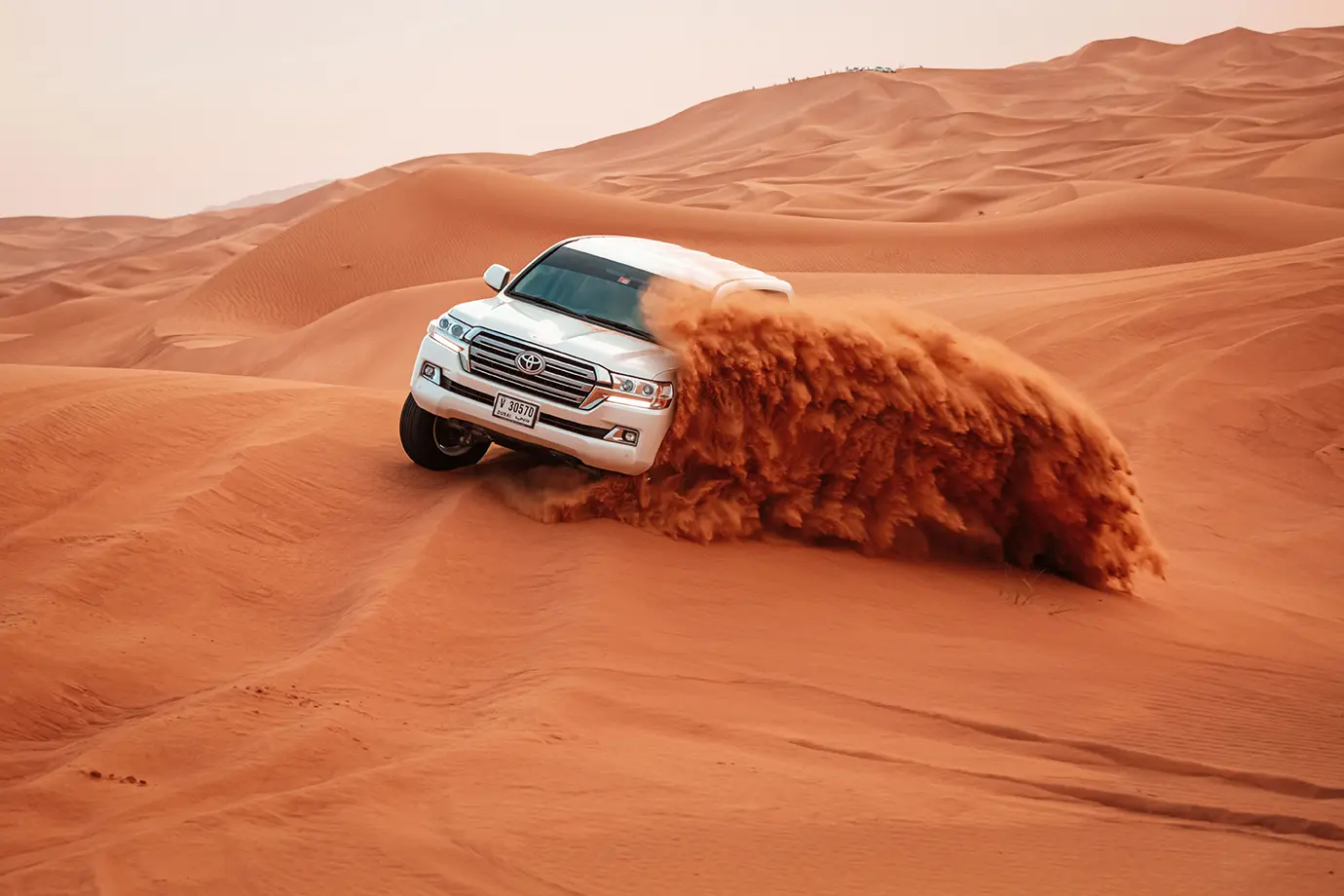
Lahbab Red Dunes — Where Most Commercial Safaris Run
The Lahbab dune belt lies approximately 45 minutes southeast of central Dubai, along the E44 highway. The dunes are distinctive for their red-orange color — the result of iron oxide in the sand. The gradient is steep enough for proper dune bashing and sandboarding.
Any licensed operator can use the Lahbab area. The experience ranges from well-run private safaris to mass-market shared convoys of 40 vehicles running simultaneously. What you get at Lahbab depends entirely on the operator and the package tier, not the location itself.
Best for: first-time safari visitors at the standard AED 130–350 shared tier.
Al Marmoom Conservation Reserve — Quieter, Wildlife-Focused
Al Marmoom Desert Conservation Reserve lies southeast of Dubai, beyond Lahbab. Motorized dune bashing is heavily restricted inside the reserve. The experience here is calmer: conservation drives, camel trekking, falconry demonstrations, and wildlife spotting. Arabian Oryx herds have been reintroduced alongside gazelle. No mass-market dune bashing convoys operate inside Al Marmoom.
Best for: families with young children, couples who want a quieter desert evening, travelers who prioritize wildlife and culture over adrenaline.
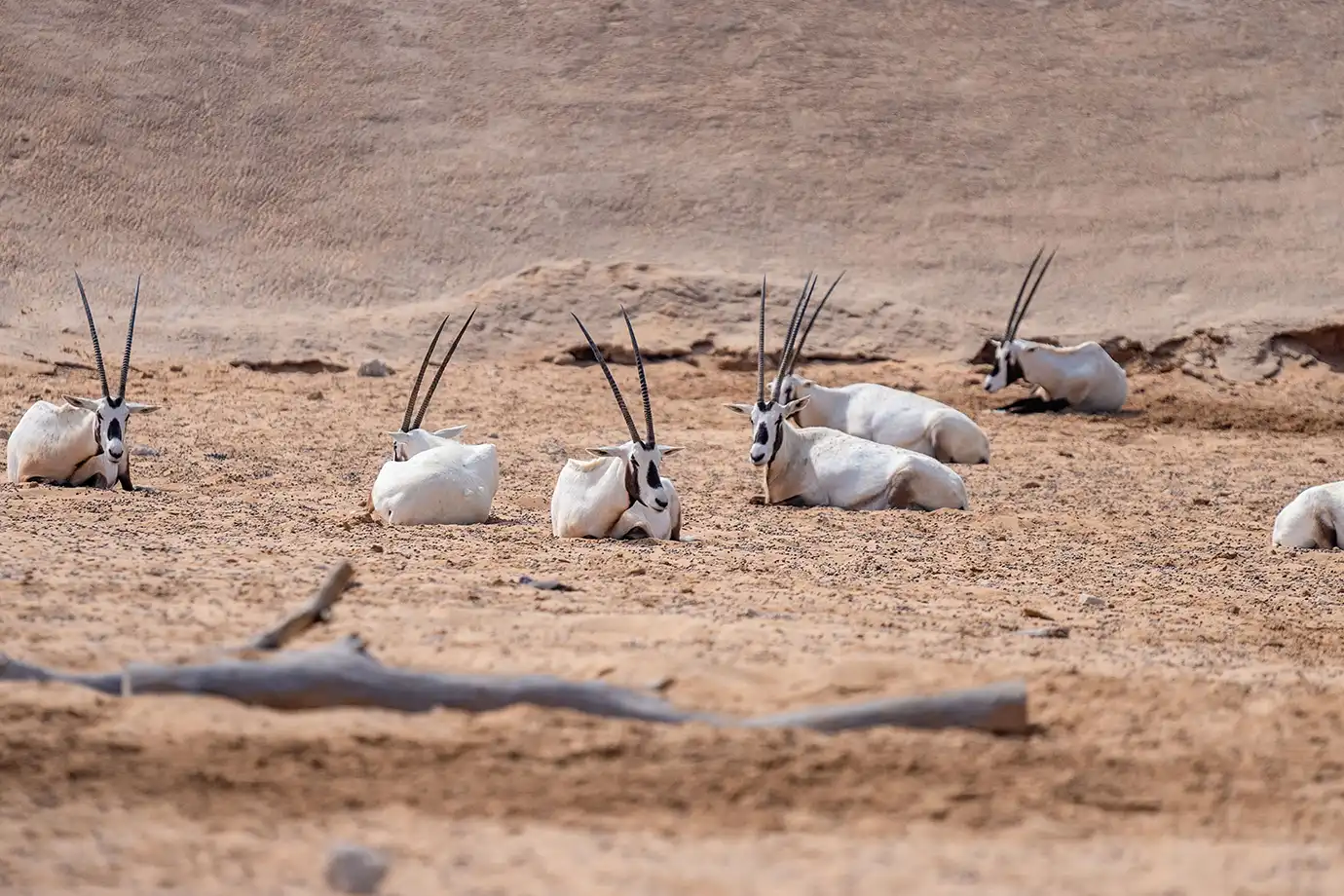
Dubai Desert Conservation Reserve (DDCR) — Private Access Only
The DDCR is a 225 sq km protected ecosystem managed by Dubai Municipality, roughly 45–60 minutes from Downtown. Only approximately eight licensed operators have permission to enter. Limited access is what sets the DDCR apart from everything at Lahbab.
Inside the DDCR, Arabian Oryx (the UAE’s national animal), Sandgazelle, Arabian Gazelle, and desert foxes are regularly sighted. The ecosystem has been deliberately restored. Driving through a protected, recovering desert is a different experience from driving through an open commercial area where dozens of operators work simultaneously.
The daily vehicle allocation per DDCR operator is tightly controlled. No crowded multi-camp environment at peak hours.
Best for: honeymooners, repeat Dubai visitors who have done Lahbab before, and travelers seeking wildlife in a genuine conservation setting.
Desert Safari Types — Morning, Evening, Overnight, and Private
Morning Desert Safari (4–5 Hours)
Departure at roughly 05:00–06:00 from the hotel. Two advantages the evening format cannot match: temperature (14–20 °C during November to March) and light quality. Low-angle sunrise on the red dune faces produces the most dramatic photographs.
Activities: camel trekking through the dunes, sandboarding, optional quad biking, and a hot breakfast at a camp on the dune crest. No dune bashing in the morning format at most operators. Return to the hotel by roughly 10:00–11:00.
Price range: approximately AED 130–350 per person.
Best for: summer visitors (May to September) when mornings are the only comfortable outdoor window, and travelers who want the desert ambiance without the adrenaline.
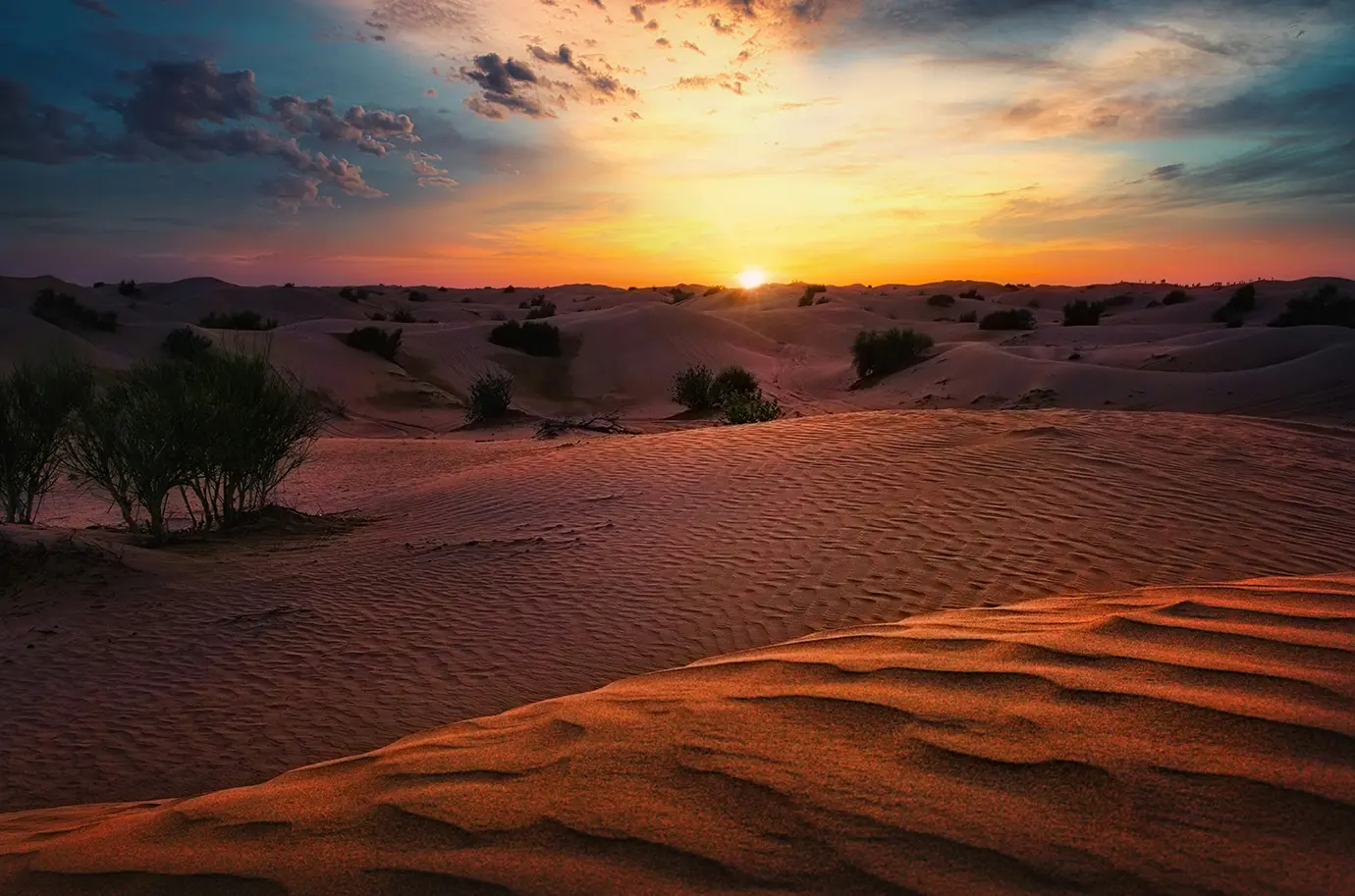
Evening Desert Safari (6 Hours) — The Standard Format
The evening format is the most commonly booked option for Dubai desert safaris. Departure at roughly 14:30–15:00. The earlier departure ensures arrival with enough daylight for dune bashing and the pre-sunset photo session on the dune crest. Return to the hotel between 21:00 and 22:00.
The standard evening format delivers the full activity sequence in a 6-hour window. Dune bashing, sandboarding, camel ride, henna, BBQ dinner, and entertainment all fit between a morning of sightseeing and a night return—the right choice for most first-time visitors.
Price range: AED 130–250 per person for shared, AED 250–500 for premium camps, from AED 750 per vehicle for private.
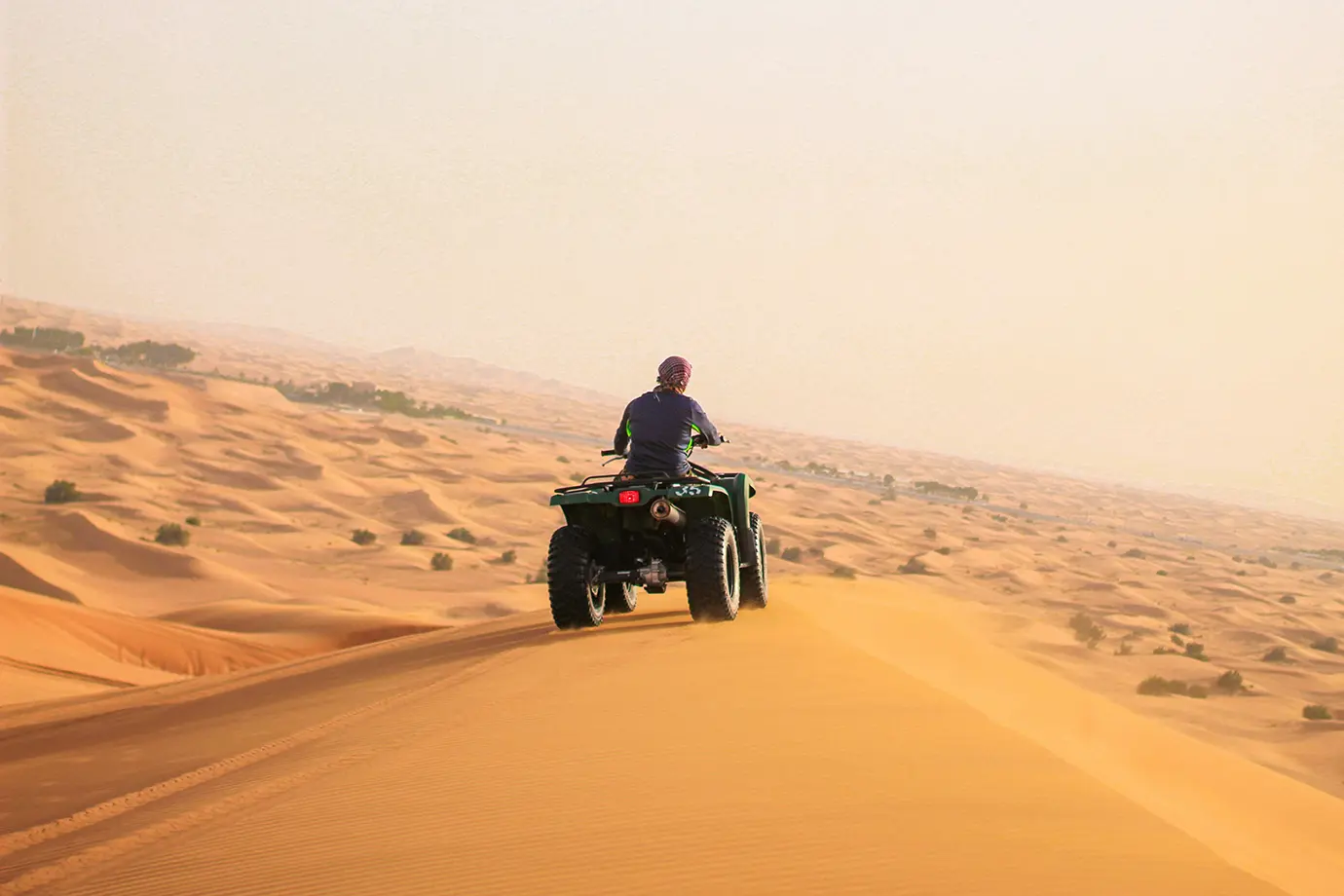
Overnight Desert Safari (18 Hours)
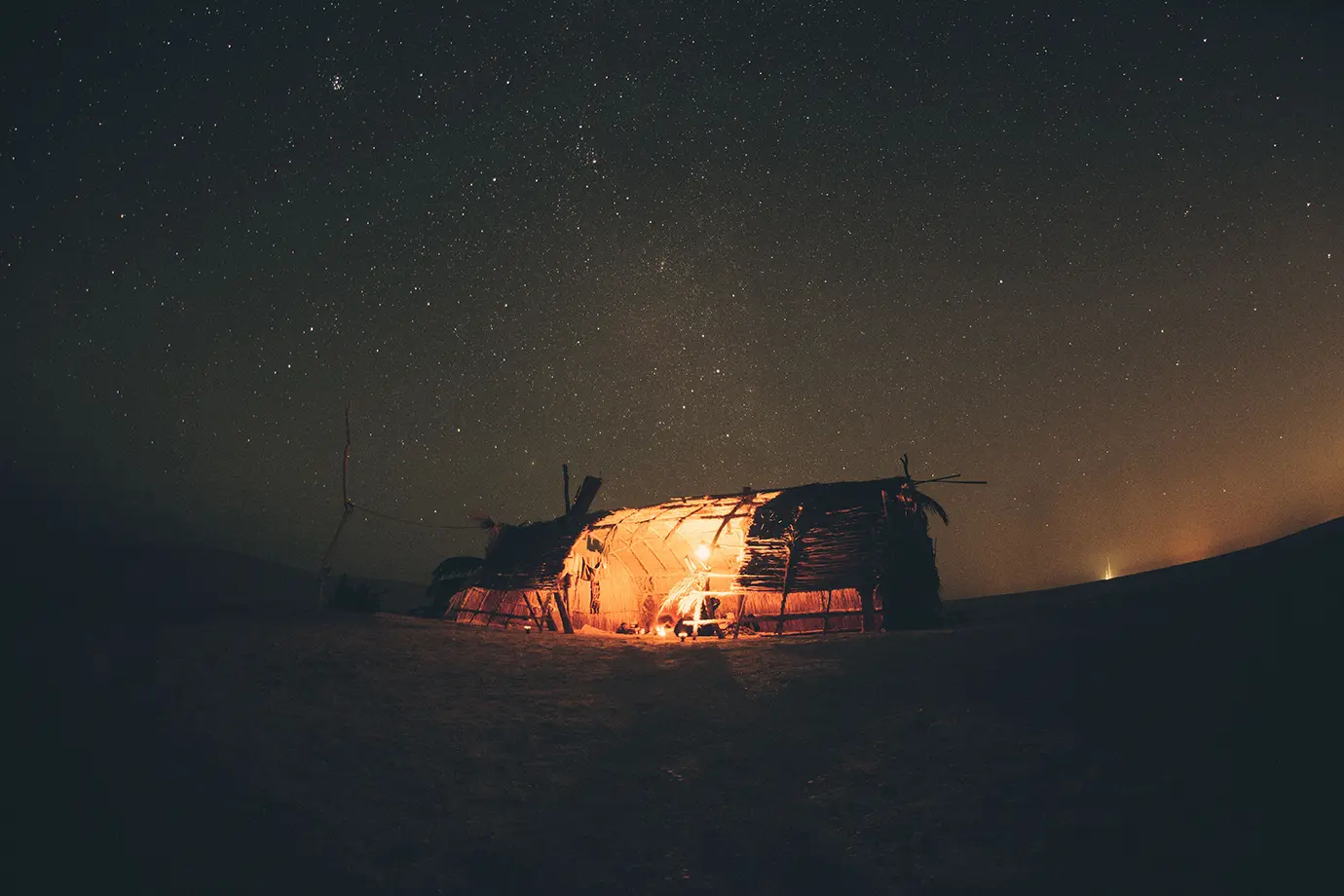
The overnight format extends the evening safari into a camp stay under the desert sky. After dinner and entertainment, you sleep in a Bedouin-style tent, ranging from basic sleeping pads to furnished air-conditioned glamping tents, depending on the camp.
Sunrise over the dunes in the morning. Breakfast at camp—camel trekking before departure. Return to the hotel between 09:00 and 10:00 the following morning.
The specific experience no day-format safari provides: the desert at 02:00, with no city light pollution and the Milky Way visible on clear moonless nights. Sleep quality varies significantly by camp standard.
Price range: AED 600–3,000 or more, depending on camp standard and whether the format is shared or private.
Private Desert Safari — Your Vehicle, Your Camp, Your Pace
A private safari is priced per vehicle, not per person. A standard private 4×4 Land Cruiser carries up to 6 passengers. Cost from AED 750–899 per vehicle. For 6 passengers, the per-person cost is roughly AED 125–150. For a group of 2, the same vehicle price pushes the per-person cost significantly higher.
The private format delivers no other passengers and a dedicated guide throughout. You also get full flexibility on timing and a separate private camp area at quality operators.
What Happens on an Evening Desert Safari — Hour by Hour
The Drive to the Dunes (45 Minutes)
The hotel pickup arrives in a Toyota Land Cruiser 4×4 — the standard safari vehicle across all Dubai operators. At the edge of the sand, the driver deflates the rear tires to roughly 15–18 PSI. Lower pressure reduces ground contact and lets the vehicle float on soft sand. The deflation takes about 10 minutes at a staging area.
Dune Bashing (25–45 Minutes)
The Land Cruiser enters the dune face — climbs, drops, traverses laterally, and descends at angles that pitch and roll the vehicle. The most dramatic moments are the vertical descents over the dune crest lip, where the nose tips over the edge before the slide begins.
Duration: roughly 25 minutes for standard shared, 30–45 minutes for premium or private. Some premium operators extend the session to 60 minutes.
Motion sickness note: Dune bashing causes car sickness in a significant number of passengers. Take motion sickness medication (available without prescription at any UAE pharmacy) at least 30 minutes before pickup. The middle rear seat produces the most lateral motion and the highest risk of sickness. A window seat slightly reduces the effect.
Sunset and the Drive to Camp
The driver parks on a high dune crest roughly 30 minutes before sunset — the standard photo position with a clear horizon. Golden-hour light on the Lahbab red dunes is the most dramatic natural light available within easy distance of Dubai. Protect camera equipment from windblown sand by keeping it in a bag during the drive. Use the camera only at the stationary dune crest stop.
Camp Activities — Camel Ride, Sandboarding, and Henna
Camel ride: A short circuit around the camp area (5–15 minutes). The mounting and dismounting — the animal kneels to load and rises with a sharp forward lurch — is itself the memorable moment. Most camps enforce a maximum rider weight of approximately 100–110 kg per camel.
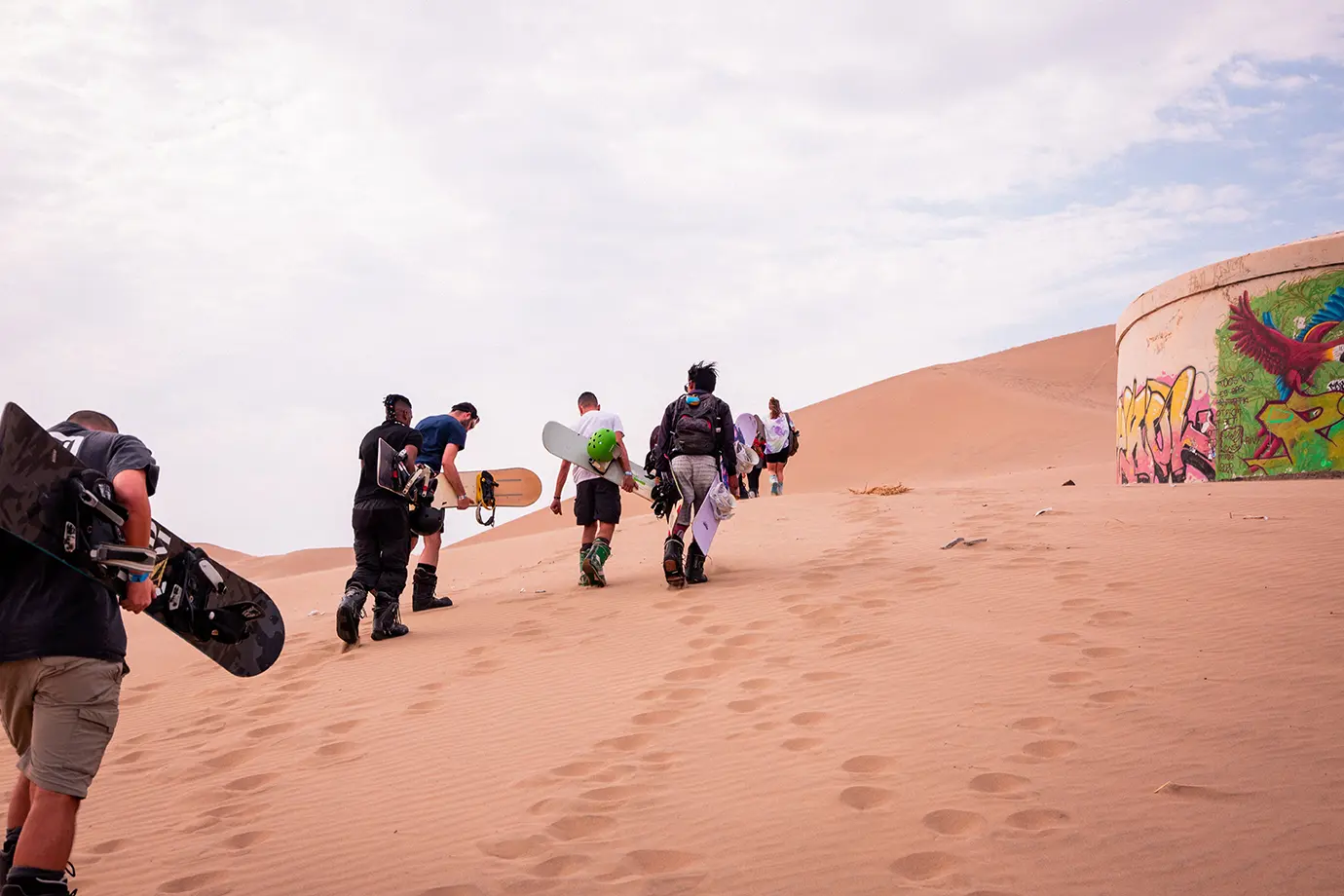
Sandboarding: Boards provided by the camp. The run is a 30–40-degree dune slope at the camp edge—no prior experience required.
Henna painting: The camp artist draws temporary patterns on the hand or wrist using natural henna paste. Takes roughly 10 minutes per hand. The design dries in 20–30 minutes and darkens over 6–8 hours. Avoid washing the henna area for 6 hours.
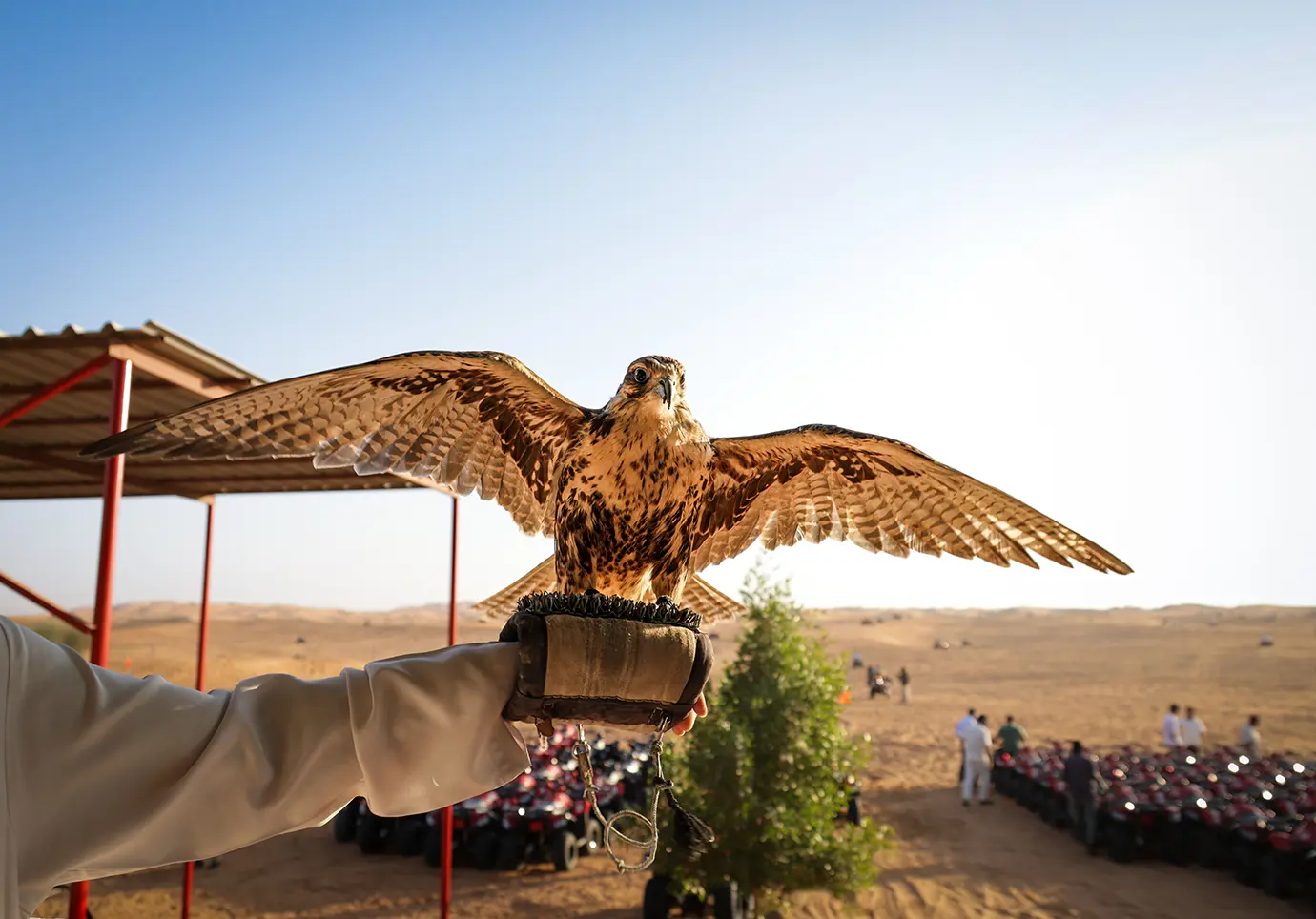
Optional at some camps: Falconry demonstration (roughly 20 minutes with a licensed falconer), archery, and shisha lounge.
Dinner and Evening Entertainment
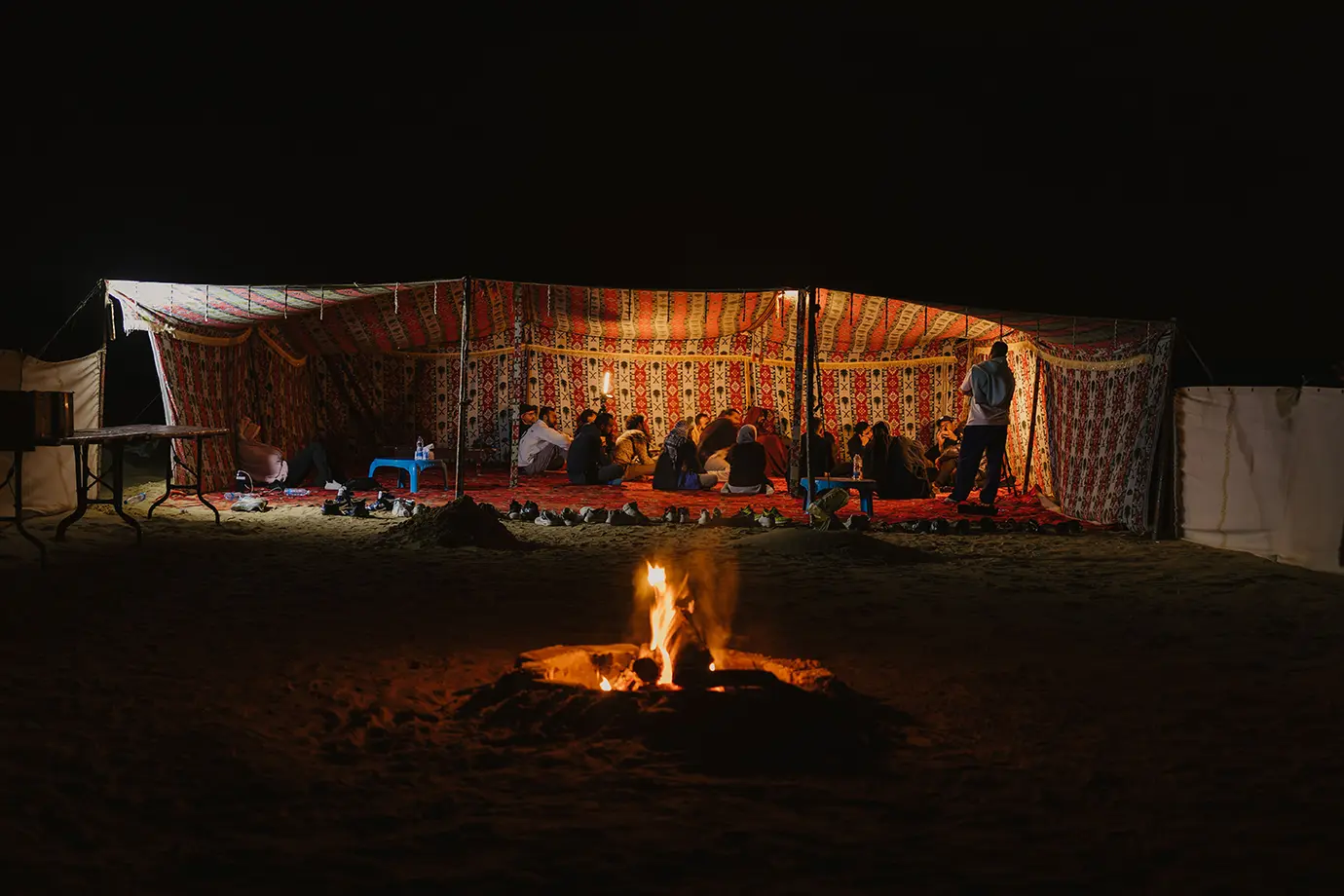
Standard BBQ buffet: Arabic mezze (hummus, fattoush, tabbouleh, babaganoush), grilled lamb and chicken, flatbread, and grilled vegetables. Desserts include luqaimat — fried dough balls with date syrup. Hot and cold drinks included — Arabic coffee, mint tea, soft drinks, and water. Alcohol is not included in the standard package. Some premium camps serve alcohol at an additional charge.
Tanoura dance: A Sufi-influenced spinning performance. The dancer wears a layered, multi-colored skirt that fans outward during continuous rotation. Typically 15–20 minutes.
Belly dance and fire show: Standard at most commercial camps.
Return vehicle departs between 20:30 and 1:30.
What Is Included and What Costs Extra
Included in the Standard Package
| Item | Notes |
|---|---|
| Hotel pickup and drop-off in a 4×4 Land Cruiser | Confirm your hotel is within the operator’s pickup zone |
| Dune bashing (25–45 minutes) | Longer in premium packages |
| Camel ride | Subject to a 100–110 kg per-rider weight limit |
| Sandboarding | Boards provided |
| Henna painting | On the one hand, basic design |
| Camp BBQ dinner | Multi-course Arabic buffet |
| Soft drinks, water, Arabic coffee, and tea | Throughout the camp stay |
| Evening entertainment | Tanoura dance, belly dance, and fire show at most camps |
| Return transfer to the hotel | Same vehicle or convoy vehicle |
Optional Add-Ons and Their Costs
| Add-On | Approximate Cost | Notes |
|---|---|---|
| Quad biking | AED 150–300 per person | Short session on a fenced track near the dunes. Minimum age 16 to drive solo |
| Dune buggy | AED 700-plus per vehicle per hour | Significantly more expensive than quad biking — confirm before booking |
| Professional photography | AED 200–500-plus | A photographer accompanies for golden-hour dune shots |
| Hot air balloon | AED 900–1,200 per person | Separate morning activity. Not combinable with an evening safari on the same day |
| Alcohol at camp | Varies by camp | Only at licensed premium camps |
| Falconry demonstration upgrade | Varies | Included in some premium and DDCR packages |
What Is Never Included
- International airfare
- Travel insurance
- Lunch (the safari is an afternoon and evening activity)
- Personal expenses (camp souvenir stalls)
- Tips (guide or driver: AED 20–50 per person is customary, camp staff: AED 10–20 per person)
Desert Safari Prices — What Different Budgets Buy
All prices below are mid-2026 ranges. Confirm current pricing at the time of booking.
Shared Evening Safari — AED 130–250 Per Person
You share a vehicle with 5–11 other passengers. The package covers the full format: pickup, dune bashing, sunset, camp activities, BBQ dinner, entertainment, and return. The camp is typically a permanent structure shared with multiple groups.
Best for: solo travelers, budget-conscious couples, travelers for whom the safari is one of several activities rather than the primary event.
Premium Shared Safari — AED 250–500 Per Person
Camp quality increases: private seating, higher-quality catering, smaller groups, and longer dune bashing sessions. Some premium camps include falconry demonstrations and cold drink service throughout the evening.
Private Safari — From AED 750 Per Vehicle
The private 4×4 carries up to 6 passengers. For a full vehicle, the per-person cost is competitive with the premium shared tier. The private format means no shared vehicle, a dedicated guide, full timing flexibility, and a private camp area at quality operators.
Luxury and DDCR Safari — AED 1,500–4,000-Plus
The DDCR premium covers wildlife (Oryx sightings are a regular feature), genuinely limited access, and the highest camp quality on the market. Platinum Heritage, the most cited premium DDCR operator, runs vintage 1950s Land Rovers as part of the experience. High-end Lahbab camps at this tier offer fine dining, white-linen service, and furnished glamping tents.
Family-Friendly Desert Safari — What to Know Before Booking
The Gentle Dune Drive vs Standard Dune Bashing
Standard dune bashing means aggressive 4×4 driving at speed across steep dune faces with intentional drops. The format is not suitable for children under roughly 7–8, pregnant women, or people with back or spine conditions.
The family alternative is a “gentle dune drive.” The vehicle uses the same terrain but at lower speeds and on lower-gradient routes. The visual and environmental experience stays the same. The physical intensity drops significantly. Families must specifically request the gentle drive at the time of booking — it is not the default option.
Age and Weight Guidelines
- Under 3: not recommended for dune bashing. Can attend camp activities.
- Under 7–8: gentle dune drive recommended. Standard dune bashing at parents’ discretion.
- Camel ride: weight limit approximately 100–110 kg per rider. No specific minimum age, but the child must be able to sit independently on the saddle.
- Quad biking: minimum age typically 16 to drive solo. Younger children can ride as passengers on a two-seat quad with an adult — confirm with the operator.
- Pregnant women: not recommended for any dune driving format.
What Children Enjoy at the Camp
Children aged 5 and above respond most strongly to the camel ride (the mounting and dismounting moment), the Tanoura dance (the spinning skirt), and sandboarding. Henna painting and the fire show also hold attention well. Bring a light layer for children in the evening — desert nights from November to February can drop to 14–16°C.
The Dubai Desert Conservation Reserve — Why It Is Different
Wildlife in the DDCR
The DDCR is a restored ecosystem supporting viable populations of Arabian Oryx, Sandgazelle, Arabian Gazelle, and desert foxes. The Arabian Oryx was declared extinct in the wild in 1972. The UAE’s reintroduction program — which began in the DDCR — is one of the most successful large-mammal conservation recoveries on Earth. Wildlife sightings during morning and evening hours are a regular feature, not a staged addition.
Why Only Eight Operators Can Enter
The DDCR limits licensed operators to protect the ecosystem from over-tourism. A commercial convoy of 20–40 vehicles on the same dune system — the reality at peak Lahbab days — cannot enter the reserve. The daily vehicle allocation per DDCR operator is tightly controlled. The exclusivity is an ecosystem management policy, not a marketing claim.
The Peregrine DDCR Private Safari
Peregrine uses a private Land Cruiser within the DDCR — a single vehicle, a dedicated guide, and a private camp area separated from other groups. The guide includes a falconry demonstration with a licensed falconer. Honeymoon and luxury packages add a private candlelight dinner setup. The DDCR’s distance from Dubai’s light dome makes the Milky Way visible on clear, moonless nights.
Contact Peregrine to confirm current DDCR safari availability for your dates. Reserve access is limited, and the best operators fill quickly in peak season.
How to Choose a Desert Safari Operator
Look for the DET License
The licensing authority for Dubai safari operators is the Department of Economy and Tourism (DET) — formerly DTCM, rebranded in 2021. A DET-licensed operator meets minimum standards for vehicle maintenance, driver certification, camp facilities, and safety. The DET license number should be visible on the operator’s website and vehicle. Do not book with any operator who cannot confirm their DET license.
Ask About Vehicle Age, Group Size, and Driver Certification
Three questions before booking: What model year are the Land Cruisers? (Newer models handle sand more predictably.) What is the maximum group size per vehicle? (12 passengers is a very different experience from 6.) Are the drivers certified under the RTA Safari Driving Permit? (Tourist 4×4 drivers must pass specialist off-road theory and practical tests.)
Confirm Your Hotel Is Covered for Pickup
Not every operator picks up from every hotel. Downtown, JBR, and major tourist-district hotels are usually covered. Hotels in outlying business districts may require confirmation. Verify the specific hotel address is in the operator’s pickup zone before booking.
What to Wear and Bring
- Light, loose clothing in breathable fabric (linen or cotton)
- Long sleeves and trousers for November to March evenings (14–16°C at camp after sunset)
- A light jacket for November to February — the shift from 28°C daytime to 16°C camp temperature is significant
- Closed-toe shoes or sturdy flat sandals for sandboarding (flip-flops do not work on sand slopes)
- Sunscreen SPF 50-plus, sunglasses, and a hat for the pre-sunset outdoor portion
- Phone or camera in a protective bag during dune bashing — remove only at the stationary dune crest photo stop
- Motion sickness tablets (any UAE pharmacy, no prescription needed) — take 30 minutes before pickup
- Small cash for tips and optional add-ons
Best Time of Year for a Desert Safari
November to March: The optimal window for evening safaris. Daytime 22–28°C. Camp evening temperatures 14–20°C. The cooler air makes the candlelight dinner and stargazing genuinely comfortable. The Milky Way is more visible on clear winter nights than in the summer haze.
April and October: Transitional months. Daytime reaches 32–35°C. The dune-bashing and sunset portions are warm but manageable. The camp evening drops to a comfortable 20–22°C.
May to September: Morning-only format recommended. Evening temperatures at the camp remain 28–35°C, making outdoor dinner uncomfortable. The morning safari (05:00–10:00) catches the coolest hours and the most dramatic light.
Read More: Best Time to Visit Dubai: Month by Month Guide
Photography Tips for the Desert
Golden hour — the 30 minutes before and 10 minutes after sunset — produces the most dramatic light on the Lahbab red dunes. The iron oxide in the sand amplifies the warm red wavelengths as the sun drops. The guide positions the vehicle on a high dune crest for the window.
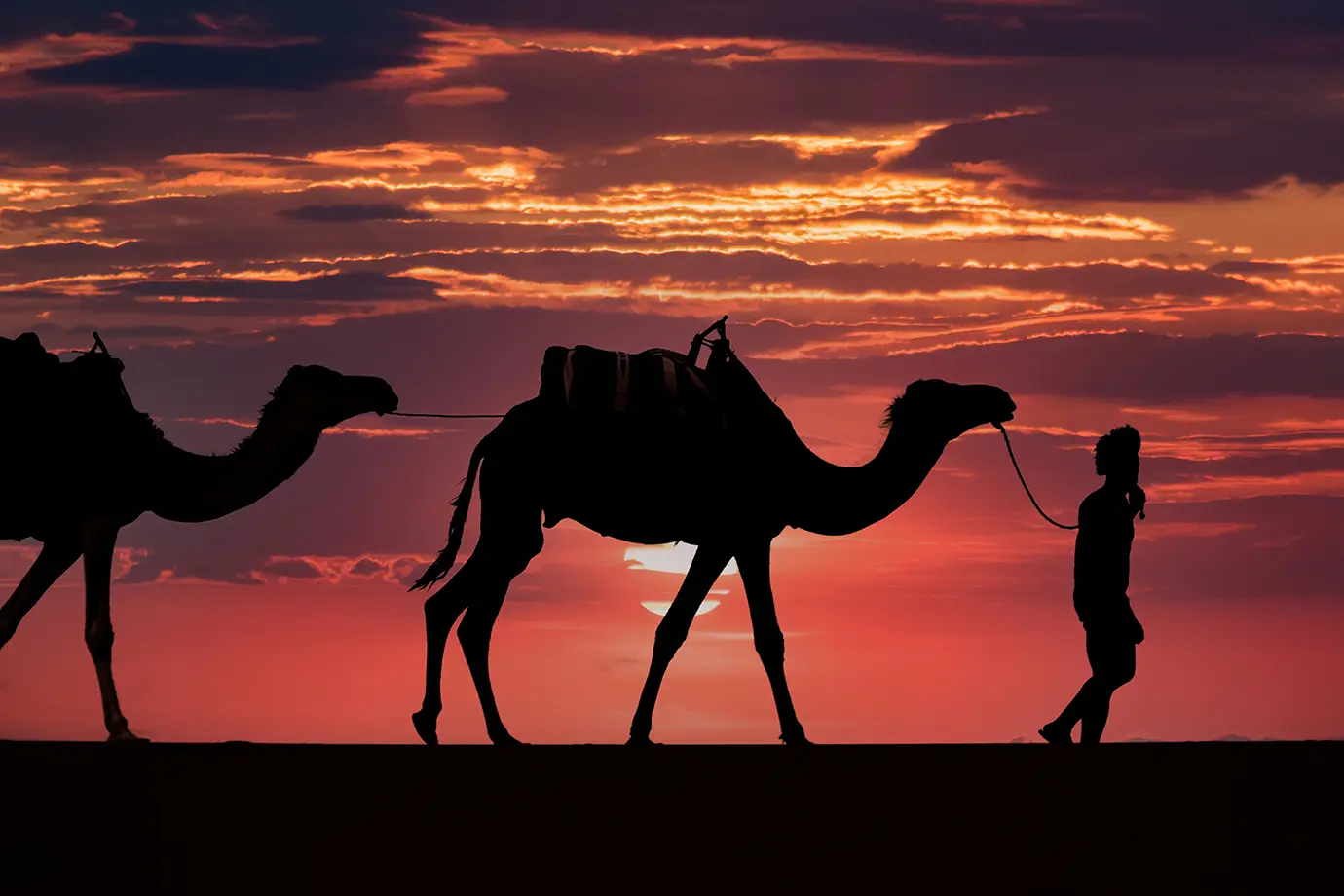
Silhouette: Position a camel or a person between the camera and the setting sun. Expose for the sky, not the subject.
Dune texture: A low-angle shot parallel to the dune face picks up the fine sand ribbing created by wind. Most visible during golden hour from the crest.
Camp at night: Use long exposure or night mode. Set the camera on a flat surface with the fire and camp lanterns in the middle distance. Stars show clearly after 20:00 on clear nights.
Frequently Asked Questions
What Is the Best Desert Safari in Dubai?
The best depends on what you want. For a first safari at a fair price, a standard or premium shared evening run in the Lahbab red dunes covers the full experience. For the highest quality, a private DDCR safari offers genuine wildlife sightings and no other groups sharing the space.
How Much Does a Desert Safari Cost in Dubai?
A shared evening safari costs AED 130–250 per person at the standard tier and AED 250–500 at the premium camp. A private 4×4 for up to 6 guests starts from AED 750–899. Luxury and DDCR experiences range from AED 1,500 to AED 4,000 or more. Optional quad biking (AED 150–300 per person) and dune buggies (AED 700-plus per vehicle) are charged separately.
What is the difference between a morning and an evening desert safari?
The morning safari starts at 05:00 and returns by 10:00–11:00. The experience is quieter, cooler, and more photography-focused — sunrise light on the dunes is exceptional. The evening safari runs from 14:30–15:00 and returns by 21:00–22:00, featuring the full sequence: dune bashing, sunset, BBQ dinner, and Tanoura dance. The morning is better for summer visitors, when the afternoon heat makes dune bashing uncomfortable.
Is the Desert Safari Suitable for Children?
Yes, with conditions. For children under roughly 7–8, request the “gentle dune drive” instead of standard dune bashing. The gentle format uses lower speeds and avoids steep drops. Children under 3 are generally excluded from dune bashing but can join camp activities. The camel ride carries a per-rider weight limit of roughly 100–110 kg. Confirm age and weight policies with the operator at booking.
What Is the Dubai Desert Conservation Reserve?
The DDCR is a 225-sq-km protected ecosystem managed by Dubai Municipality. Only roughly eight licensed operators can bring visitors inside. Arabian Oryx, gazelle, and desert foxes live in the restored desert habitat. The experience costs more than a Lahbab safari because access is genuinely limited by conservation policy. Peregrine operates private DDCR safaris.
Is Dune Bashing Safe?
Dune bashing is a regulated activity under DET oversight. Drivers must pass specialist RTA Safari Driving Permit tests. Seatbelts are mandatory during the dune segment. The activity is not recommended for pregnant women, people with severe back or spine conditions, or children under 3. Motion sickness is the most common discomfort. Take medication 30 minutes before pickup if you have any sensitivity. to it
Does the Desert Safari Include Alcohol?
Standard packages do not include alcohol. Some premium camps serve drinks at the camp bar as a paid add-on. Not all camps carry a license to serve — confirm before booking if alcohol matters to your evening. Arabic coffee, mint tea, soft drinks, and water are included in every standard package.
Book the Peregrine Desert Safari
Peregrine Treks and Tours operates private DDCR safaris for all Dubai packages. Each safari uses a single vehicle, a dedicated guide, and a private camp. Peregrine quotes the DDCR private safari against your group size and dates. No obligation. Confirmed within 24 hours.
Contact: sales@peregrinetreks.com | WhatsApp +977 985 105 2413 | www.peregrinetreks.com