


Dubai Tour Packages
Destination
Dubai and MaldivesDifficulty
Easy
Dubai Tour Packages Travel Information
Dubai does scale better than any city on Earth. The Burj Khalifa rises 828 meters. The Dubai Mall covers more ground than most town centers. Twenty minutes from either one, the city stops, and the desert starts. The contrast explains why Dubai tour packages work for such different travelers. Honeymooners, families with young children, luxury travelers, shoppers, and 48-hour stopover passengers all get a version of the city that suits them.
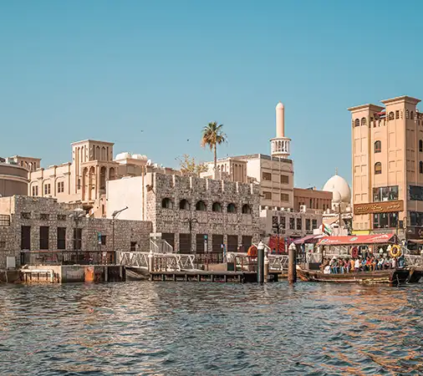
The core sights cluster tightly. Downtown Dubai is home to the Burj Khalifa, the Dubai Mall, and the Dubai Fountain within a single walkable block. Dubai Marina and Palm Jumeirah sit together on the coast. Old Dubai — Al Fahidi, the Gold Souk, the Spice Souk, and the Creek — occupies a compact area you can cover in a morning.
Beyond the city, the Dubai Desert Conservation Reserve delivers dune drives, camel rides, and Bedouin-style camps. Abu Dhabi sits 90 minutes down the highway with the Sheik Zayed Grand Mosque and Louver Abu Dhabi.
One planning fact governs everything else. Dubai’s climate splits the year hard. From November to March, the weather is close to perfect. From June to September, daytime temperatures routinely pass 40°C, and outdoor sightseeing becomes genuinely unpleasant.
Summer travel still works if you plan around it — indoor attractions, early mornings, late evenings, and much lower hotel rates. But you need to know that going in.
Dubai also rewards travelers who understand a few local rules. Alcohol is served in licensed venues, not on the street. Ramadan changes daytime dining. Dress standards are relaxed at beaches and resorts, but conservative at malls and religious sites.
Our guide covers every Dubai tour package we operate, all major districts and attractions, the seasonal calendar, day trips, costs, itineraries, and the current entry requirements. By the end, you will know which Dubai holiday fits you and when to book it.
Dubai Quick Facts
| Information | Details |
|---|---|
| Country | United Arab Emirates (Dubai is one of seven emirates) |
| Currency | UAE Dirham (AED), pegged to the US Dollar |
| Language | Arabic official. English is spoken almost everywhere |
| Time Zone | GMT +4 (no daylight saving) |
| Visa | 90+ nationalities get a visa-free or a visa on arrival. Duration varies by passport |
| Best Time to Visit | November to March |
| Main Airport | Dubai International Airport (DXB). Al Maktoum International (DWC) secondary |
| Population | Roughly 3.8 million in the Dubai emirate |
| Climate | Desert. Hot year-round, extreme June to September |
| Weekend | Saturday and Sunday |
| Driving Side | Right |
| Power | Type G (UK-style 3-pin), 240V |
| VAT | 5 percent, refundable for tourists at the airport |
| Tipping | 10 percent is typical, often not included |
Why Visit Dubai?
Dubai combines record-breaking modern architecture, genuine desert adventure, excellent beaches, and some of the best family entertainment in the world inside one compact, safe, English-speaking city. Flights connect from almost everywhere. Infrastructure is excellent. You can cover the headline experiences in three days or spend two weeks without repeating yourself.
Modern Architecture
The Burj Khalifa stands 828 meters across 163 floors and remains the tallest building in the world. Observation decks operate on levels 124 and 125, with a premium SKY level at 148.
The Museum of the Future opened in 2022 and rivals the Burj Khalifa as the city’s most striking building. The torus-shaped structure is clad in Arabic calligraphy and built with no internal columns.
The Burj Al Arab, Dubai Frame, and the Palm Jumeirah complete the set.
Luxury Lifestyle
Dubai holds one of the deepest luxury hotel inventories anywhere. Beach resorts on Palm Jumeirah and Jumeirah, city towers in Downtown and Business Bay, and desert resorts inside the conservation reserve.
Service standards are consistently high. Competition is intense, which keeps quality up.
Desert Adventures
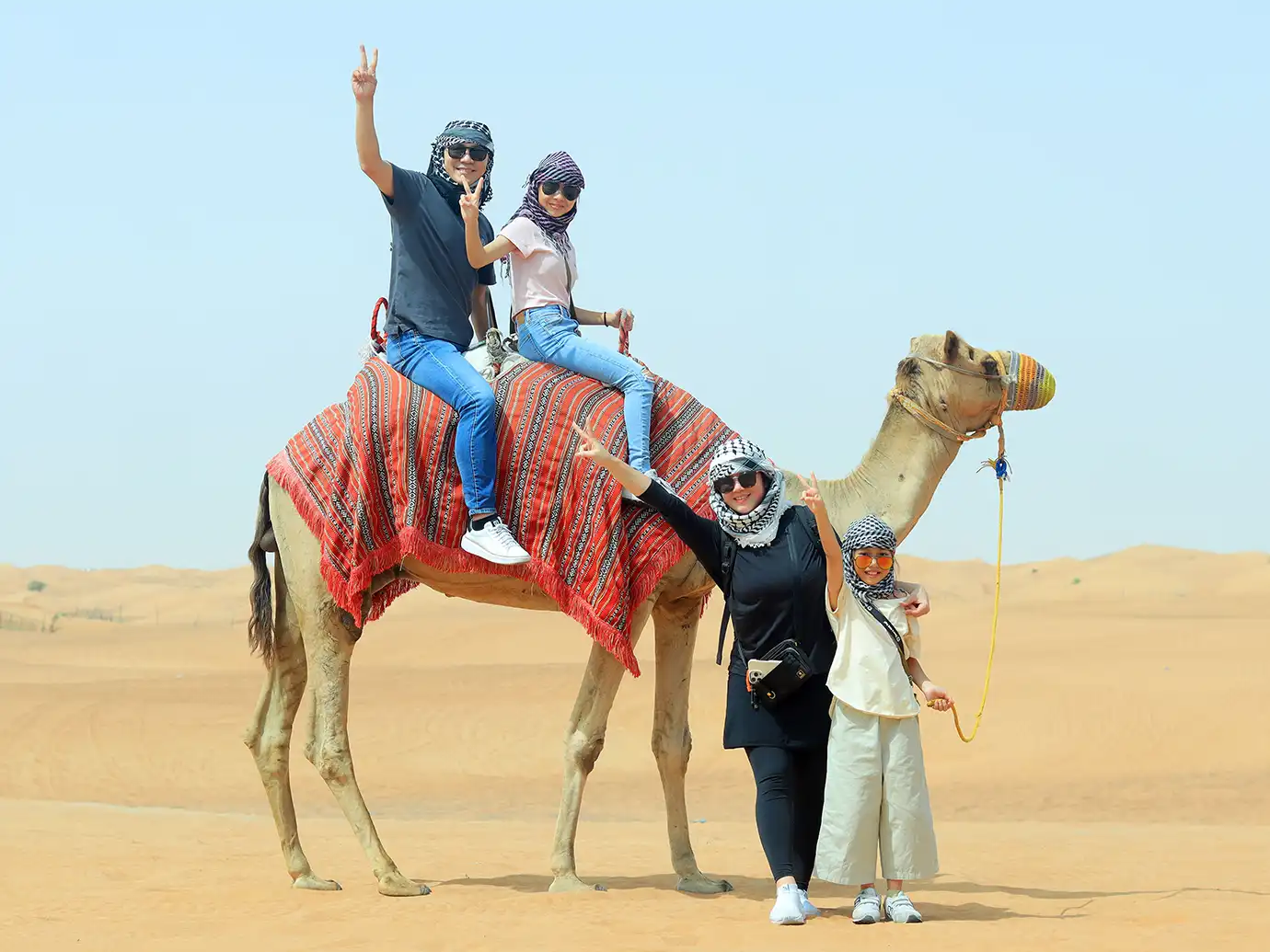
The desert starts 30 to 45 minutes from Downtown. Dune bashing in 4x4s, camel riding, sandboarding, quad biking, falconry displays, and overnight Bedouin-style camps all operate daily. The Dubai Desert Conservation Reserve is a protected area covering roughly 5 percent of Dubai’s landmass. Premium safaris operate inside it with far lower vehicle density.
Beautiful Beaches
Dubai’s coastline runs warm and calm year-round. JBR, Kite Beach, Sunset Beach, and Palm West Beach are all public and free. Water temperature rarely drops below comfortable, even in January.
Family Entertainment
Few cities match Dubai for children. LEGOLAND Dubai, Motiongate, IMG Worlds of Adventure, Aquaventure, Dubai Aquarium, KidZania, and Ski Dubai are all within a short drive. Most are fully indoors or partly indoors, which matters enormously in summer.
Shopping
The Dubai Mall and Mall of the Emirates anchor the mall scene. The Gold Souk and Spice Souk in Deira offer the traditional counterpoint.
Dubai has no personal income tax and only 5 percent VAT, refundable for tourists. Prices on luxury goods, gold, and electronics compare well internationally.
Fine Dining
Dubai’s restaurant scene has developed fast and now includes internationally recognized fine dining alongside outstanding cheap eats. A shawarma costs a few dirhams. A tasting menu can cost as much as anywhere in the world. Both are worth doing.
Cultural Heritage
Al Fahidi Historical District preserves wind-tower architecture from the pre-oil city. Traditional abra boats still cross Dubai Creek for a single dirham. The Sheik Mohammed Center for Cultural Understanding runs “open doors, open minds” sessions where visitors ask direct questions about Emirati culture over a traditional meal.
Year-Round Attractions
Dubai never fully closes. Summer simply moves indoors, and hotel rates drop sharply. Winter delivers perfect outdoor weather at peak prices.
Easy International Access
Dubai International Airport is one of the busiest international airports in the world. Emirates and flydubai connect directly to well over 100 countries. Dubai works exceptionally well as a stopover between Europe, Asia, Africa, and Australia.
Dubai Tour Packages We Offer
Peregrine operates ten core Dubai and UAE tour packages, all private and fully customizable. Durations run from 3 to 8 days. Every package includes private airport transfers, handpicked hotels, English-speaking guides, and all listed activities. We build around your dates, group size, and priorities — city, desert, beach, shopping, or family.
Dubai Luxury Tour
Duration: 6 days / 5 nights
Highlights: Five-star Palm Jumeirah or Downtown hotel, private city guiding, Burj Khalifa SKY level, private desert safari, yacht charter
Best season: November to March
Ideal for: Luxury travelers, milestone celebrations, couples
Every element upgraded. Private vehicles throughout, premium access to the observation deck, and a private desert camp rather than a shared one.
Dubai and Abu Dhabi Tour
Duration: 7 days / 6 nights
Highlights: Dubai city and desert, Sheikh Zayed Grand Mosque, Louvre Abu Dhabi, Qasr Al Watan, Yas Island
Best season: November to March
Ideal for: First-time UAE visitors who want both emirates
The most complete introduction to the UAE. Abu Dhabi adds cultural and architectural depth that Dubai alone does not cover.
Dubai Honeymoon Package
Duration: 5 days / 4 nights
Highlights: Beach resort stay, private desert dinner, sunset yacht cruise, couples spa, rooftop dining
Best season: November to March
Ideal for: Honeymooners and couples
Built around privacy and romance. Beach or Palm Jumeirah resort base with private rather than shared experiences throughout.
Dubai Family Holiday
Duration: 6 days / 5 nights
Highlights: Dubai Parks and Resorts, Aquaventure, Dubai Aquarium, desert safari, beach days
Best season: November to March, or summer with indoor focus
Ideal for: Families with children aged 3 to 16
Paced for children. Short transfers, family rooms, and a mix of theme parks, beach time, and one desert night.
Dubai Desert Safari Package
Duration: 3 days / 2 nights
Highlights: Overnight desert camp, dune bashing, camel riding, sandboarding, falconry, Bedouin dinner
Best season: October to April
Ideal for: Short trips, adventure travelers, stopover extensions
The desert-focused option. Includes an overnight stay in the dunes rather than a standard evening safari return.
Dubai City Tour
Duration: 4 days / 3 nights
Highlights: Burj Khalifa, Dubai Mall, Dubai Frame, Al Fahidi, Gold and Spice Souks, Dubai Fountain
Best season: November to March
Ideal for: First-time visitors, short breaks, stopovers
The essential Dubai sights in a tight, efficient itinerary. Good for travelers with limited time.
Dubai Cruise Tour
Duration: 5 days / 4 nights
Highlights: Dhow dinner cruise, Dubai Marina yacht cruise, Dubai Canal, coastal sightseeing, city touring
Best season: November to March
Ideal for: Couples, photographers, relaxed itineraries
Dubai from the water. The skyline reads completely differently from the Marina and the Creek.
UAE Multi-City Tour
Duration: 8 days / 7 nights
Highlights: Dubai, Abu Dhabi, Sharjah, Ras Al Khaimah, Hatta, Al Ain
Best season: November to March
Ideal for: Repeat visitors, travelers wanting depth beyond Dubai
Covers the emirates most visitors never see. Sharjah’s museums, Ras Al Khaimah’s mountains, and Al Ain’s oases.
Dubai Group Tour
Duration: 5 days / 4 nights
Highlights: City tour, desert safari, Abu Dhabi day trip, shopping time, group dining
Best season: November to March
Ideal for: Friends, extended families, corporate groups, incentive travel
Built for groups of 8 or more with coach transport, group-friendly hotels, and shared activity scheduling.
Dubai New Year Package
Duration: 5 days / 4 nights
Highlights: Burj Khalifa New Year fireworks viewing, gala dinner, city touring, and desert safari
Best season: Late December
Ideal for: Celebration travelers, couples, groups
Dubai’s New Year fireworks display is among the largest in the world. Book 6 to 9 months ahead — hotels with Burj Khalifa views sell out early.
Combination and Extension Options
Dubai easily combines with other destinations thanks to its aviation connectivity.
Dubai and Nepal. A natural pairing for travelers wanting a luxury city break alongside Himalayan trekking or cultural touring. Peregrine’s Nepal operation makes this straightforward.
Dubai and Oman. Peregrine maintains an office in Muscat. Oman adds mountains, wadis, and a much quieter cultural experience two hours down the coast.
Dubai stopover. 24 to 96-hour stopovers work well between Europe, Asia, and Australia. Ask your airline about transit visa eligibility.
Dubai and the Maldives, or Dubai and Egypt. Both combine well on a single long-haul ticket.
Best Places to Visit in Dubai
Dubai’s essential sights cluster in three zones. Downtown is home to the Burj Khalifa, the Dubai Mall, and the Dubai Fountain. The coast holds Palm Jumeirah, Dubai Marina, and the Burj Al Arab. Old Dubai holds Al Fahidi, Dubai Creek, and the souks. Most visitors cover all three in three to four days.
Burj Khalifa
The tallest building in the world is 828 meters and has 163 floors. Observation decks sit on levels 124 and 125, with the premium SKY experience on 148.
Book online in advance. Sunset slots sell out first and cost more. Non-prime morning slots are substantially cheaper and far less crowded.
The Dubai Mall
One of the largest malls in the world by total area. Over 1,200 stores, the Dubai Aquarium, an ice rink, VR park, and dozens of restaurants.
Connected directly to the Burj Khalifa and the Dubai Fountain. Allow half a day minimum.
Palm Jumeirah
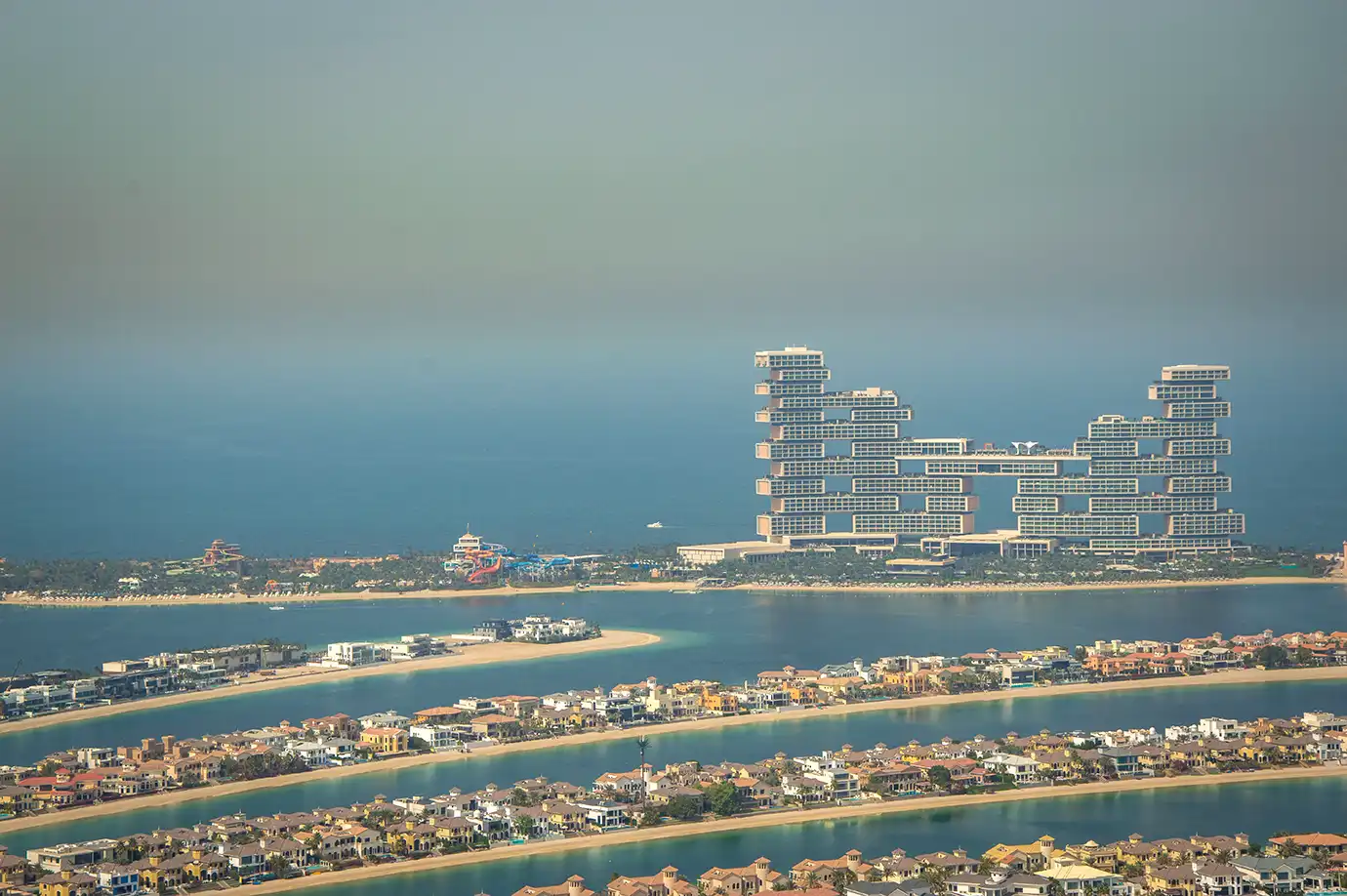
The artificial palm-shaped island holds Atlantis The Palm, Atlantis The Royal, and a long list of beach resorts.
The Palm Monorail runs the trunk. The View at The Palm observation deck gives the best overhead perspective of the island’s shape.
Dubai Marina
A dense high-rise waterfront district with a 7-kilometer walkway, a yacht harbor, and a heavy restaurant concentration.
The Marina Walk at night is one of Dubai’s best free experiences. Skydive Dubai operates from here.
Burj Al Arab
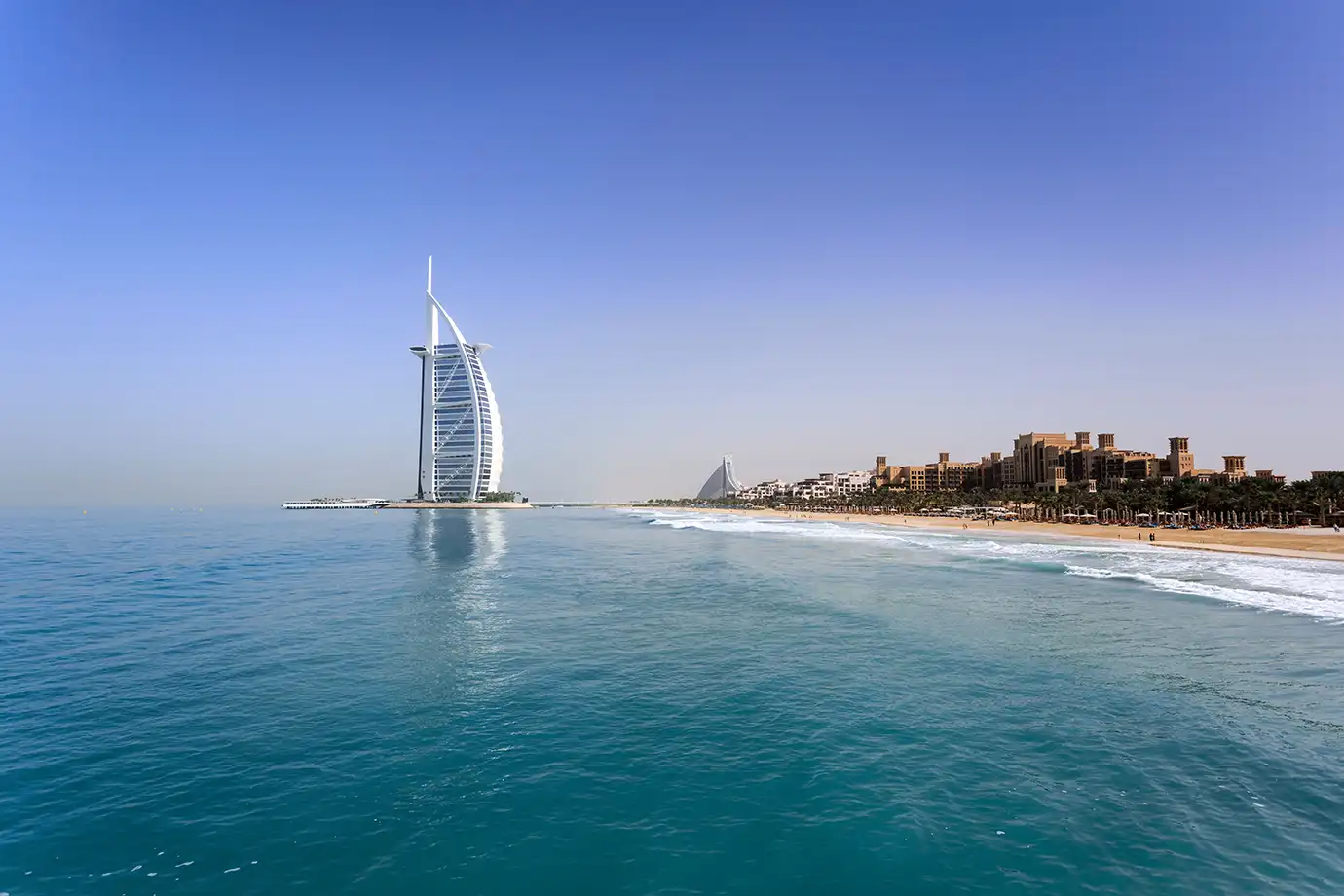
The sail-shaped hotel on its own island, opened in 1999 and still the city’s most recognizable silhouette.
Non-guests need a reservation to enter a restaurant or for afternoon tea. The best free photo angle is from Sunset Beach at Umm Suqeim.
Museum of the Future
A torus-shaped building covered in Arabic calligraphy opened in 2022. Exhibitions cover space, ecology, wellness, and future technology.
Tickets sell out days ahead. Book early. Allow 2 to 3 hours.
Dubai Frame
A 150-meter picture frame in Zabeel Park with a glass-floored sky bridge. The design deliberately places old Dubai on one side and new Dubai on the other.
Good value and rarely as crowded as the Burj Khalifa.
Dubai Creek
The saltwater inlet that made Dubai a trading port long before oil. Traditional abra boats still cross it for one dirham.
The Abra Crossing is the single best-value experience in the city.
Al Fahidi Historical District
The best-preserved old quarter, with wind-tower architecture, narrow lanes, art galleries, and courtyard cafes.
The Sheikh Mohammed Centre for Cultural Understanding operates here. Their cultural meals are genuinely worthwhile.
Bluewaters Island
An artificial island off JBR holding restaurants, retail, Caesars Palace, and Madame Tussauds Dubai.
Ain Dubai, the 250-meter observation wheel, stands here. Its operation has been intermittent since it opened, so confirm its current status before planning a ride around it. The island itself and the promenade remain worth visiting regardless.
Jumeirah Beach
The long public beach strip along the Jumeirah coast. Sunset Beach at Umm Suqeim gives the classic Burj Al Arab view.
Free, clean, and equipped with showers and changing facilities.
Dubai Miracle Garden
A seasonal flower garden with over 50 million blooms arranged in elaborate structures. Operates roughly from November to May and closes for the summer heat.
The adjacent Dubai Butterfly Garden runs on a similar seasonal schedule.
Global Village
A seasonal multicultural festival park with pavilions from dozens of countries, street food, shopping, and live entertainment. Runs roughly from October to May.
Excellent value and very popular with families. Evenings only.
Hatta
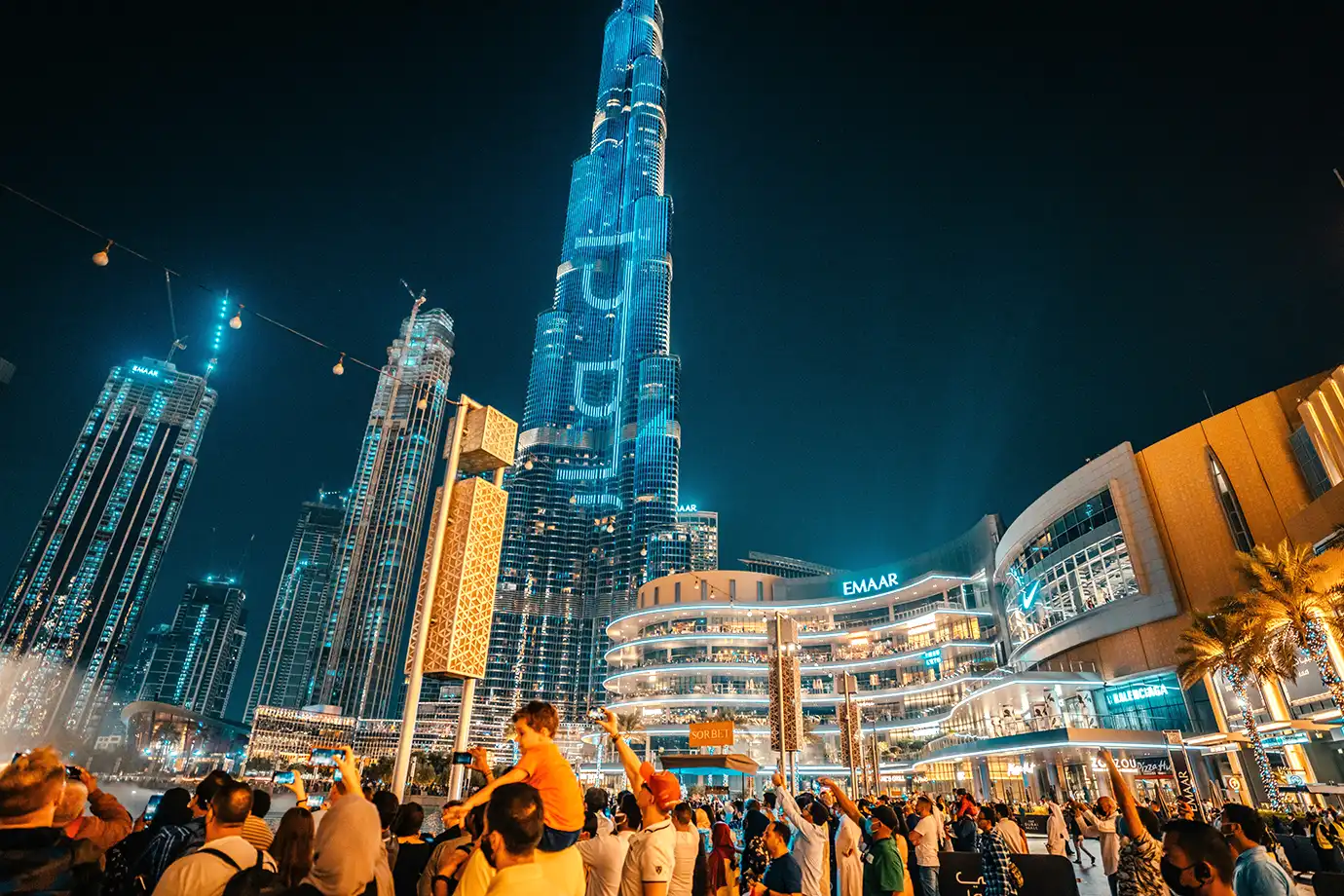
A mountain exclave of Dubai, roughly 90 minutes east, near the Oman border. Hatta Dam kayaking, mountain biking, hiking, and the Hatta Wadi Hub adventure center.
A genuine change of scenery from the city. Good full-day or overnight trip.
Dubai Opera
A 2,000-seat dhow-shaped performing arts venue in Downtown hosting opera, ballet, concerts, and theatre.
Check the program when planning. Worth building an evening around.
Gold Souk
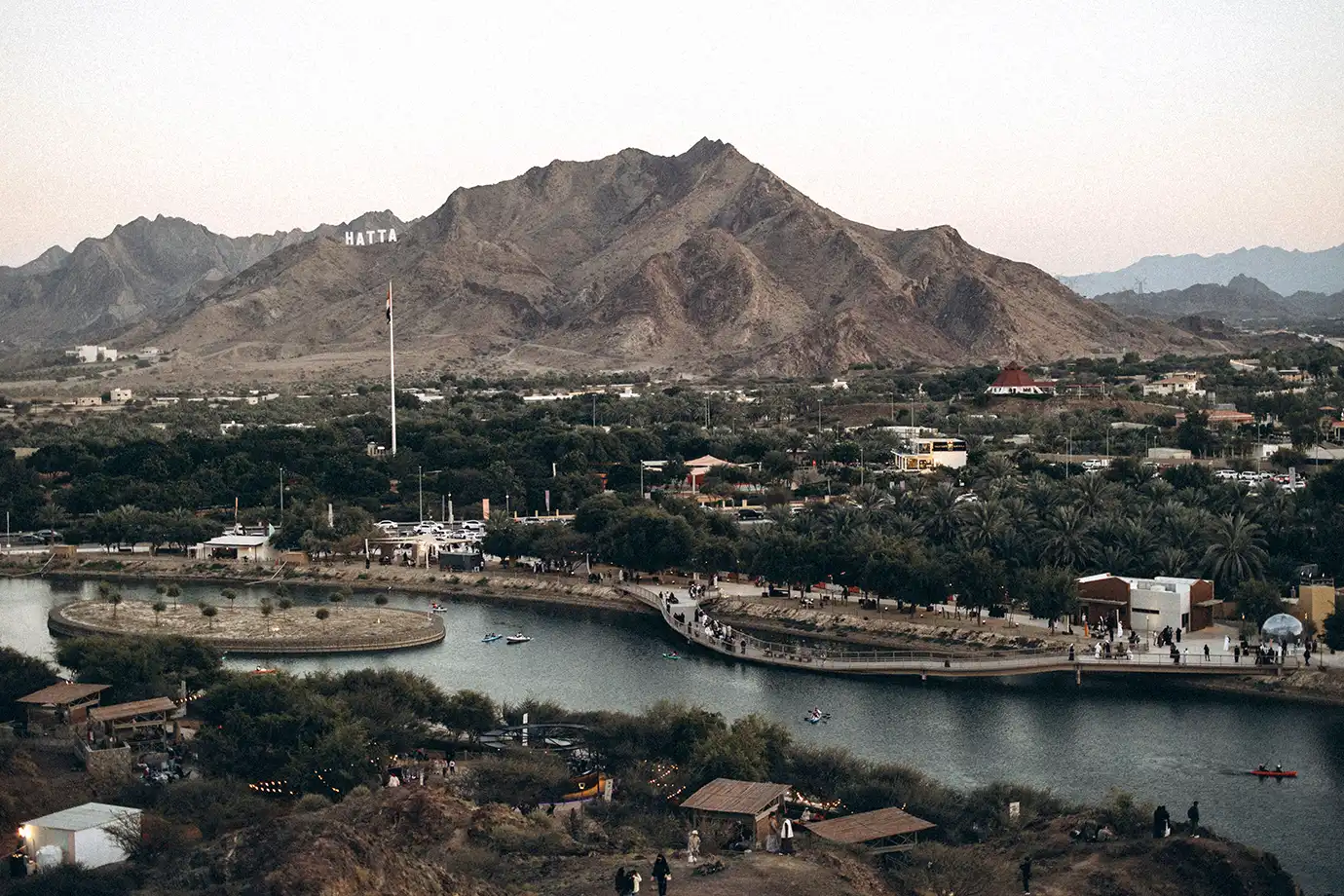
In Deira. Hundreds of retailers are displaying gold, and one of the largest concentrations of gold trading is anywhere.
Gold is sold by weight at the daily rate plus a making charge. Negotiate the making charge, not the gold price.
Spice Souk
Adjacent to the Gold Souk. Saffron, frankincense, dried lemons, cardamom, and traditional remedies.
Bargaining is expected. Prices quoted to tourists start high.
Explore Dubai by Area
Dubai spreads along the coast rather than around a single center, so your hotel district shapes your whole trip. Downtown suits first-time sightseers. Dubai Marina and JBR are suited to beach and dining. Palm Jumeirah suits resort holidays. Deira and Bur Dubai suit heritage and budget. Choose your base before you choose your hotel.
Downtown Dubai
Attractions: Burj Khalifa, Dubai Mall, Dubai Fountain, Dubai Opera, Souk Al Bahar
Hotels: Dense luxury and mid-range tower inventory, many with Burj views
Best for: First-time visitors, sightseeing-focused trips, shoppers
The most convenient base for the headline attractions. Everything is walkable. Rates are higher than average, and traffic is heavy at peak times.
Dubai Marina
Attractions: Marina Walk, yacht harbor, Skydive Dubai, beach access via JBR
Hotels: A wide range from apartments to luxury towers
Best for: Couples, longer stays, travelers who want dining and beach together
The best all-round base for a week-long stay. Metro and tram connected, excellent restaurant density, and a beach within walking distance.
Palm Jumeirah
Attractions: Atlantis, Aquaventure, The View at The Palm, beach clubs
Hotels: Resort-focused, heavily weighted to luxury
Best for: Honeymooners, families wanting a resort-based, beach holiday
A resort district rather than a sightseeing base. Getting to Downtown takes 25 to 40 minutes, depending on traffic.
Jumeirah
Attractions: Burj Al Arab, Kite Beach, Sunset Beach, Jumeirah Mosque, La Mer area
Hotels: Beach resorts and boutique properties
Best for: Beach travelers, families, longer stays
A low-rise coastal district with the city’s best public beaches.
Deira
Attractions: Gold Souk, Spice Souk, Dubai Creek, abra crossings, Deira Clocktower
Hotels: Mostly budget and mid-range
Best for: Budget travelers, heritage-focused visitors, shoppers
The historic commercial heart. Dense, busy, and much cheaper than the newer districts.
Bur Dubai
Attractions: Al Fahidi Historical District, Al Seef waterfront, Textile Souk, Hindu temple, Dubai Museum area
Hotels: Budget and mid-range
Best for: Culture travelers, budget stays
Across the Creek from Deira. The best area for old Dubai on foot.
Business Bay
Attractions: Dubai Water Canal, Dubai Canal waterfall, walkways
Hotels: Modern towers, strong mid-range and upper-mid value
Best for: Value-conscious travelers who still want Downtown proximity
Adjacent to Downtown with lower rates. A good compromise base.
Bluewaters Island
Attractions: Madame Tussauds, restaurants, boardwalk, Ain Dubai structure
Hotels: Luxury, limited inventory
Best for: Dining, evening walks, JBR-adjacent stays
Connected to JBR by a pedestrian bridge.
Al Seef
Attractions: Reconstructed heritage waterfront on Dubai Creek, cafes, floating market
Hotels: Boutique heritage-style properties
Best for: Evening walks, photography, heritage atmosphere
A modern development built in a traditional style. Best at sunset.
Hatta
Attractions: Hatta Dam, Hatta Wadi Hub, mountain biking, heritage village
Hotels: Lodges, chalets, and a caravan park
Best for: Adventure travelers, families, overnight escapes
Dubai’s mountain exclave. Cooler than the city and completely different in character.
Best Things to Do in Dubai
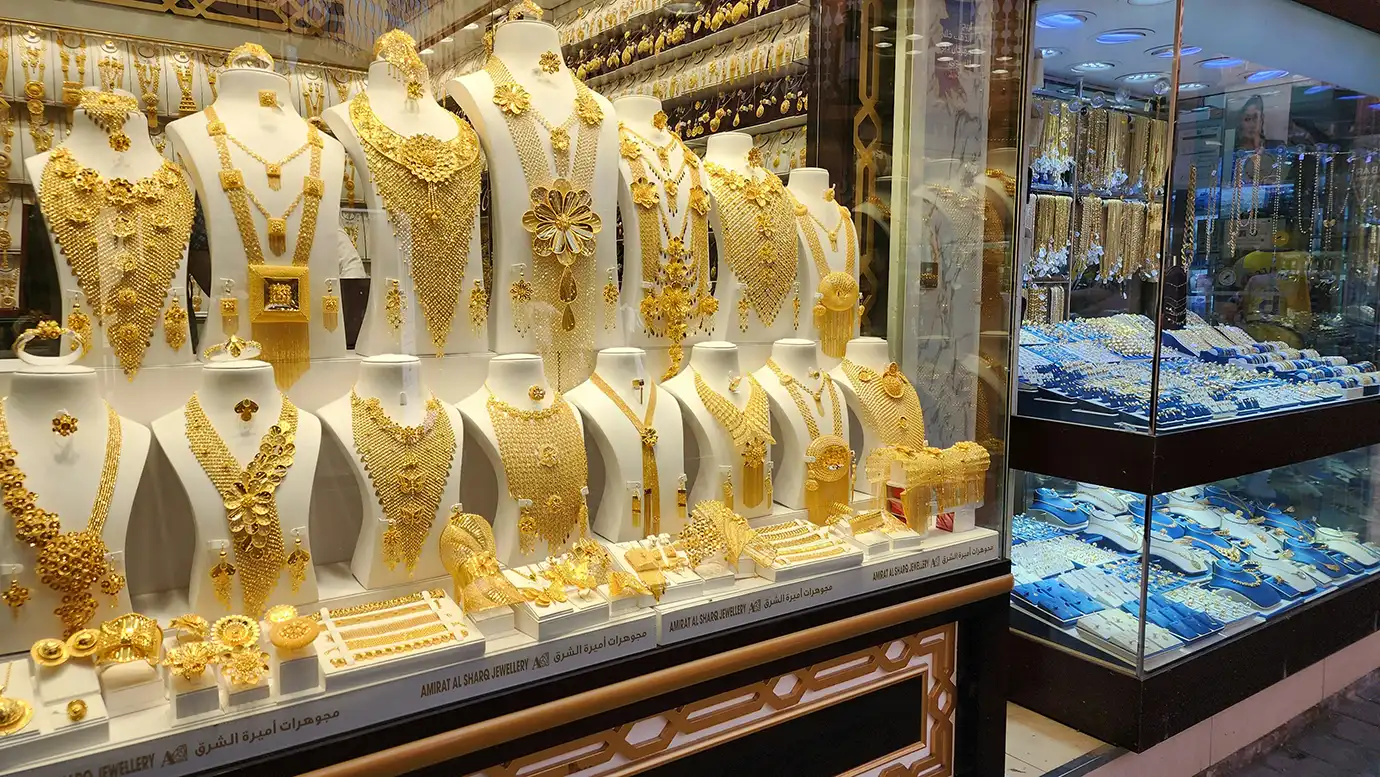
Dubai’s essential experiences are split between the vertical city and the desert. Go up the Burj Khalifa, watch the Dubai Fountain, and take a dhow or yacht cruise. Then get out to the dunes for a safari with dune bashing, camel riding, and a Bedouin dinner. Add theme parks for families and souks for shoppers.
Visit the Burj Khalifa. Levels 124 and 125 for the standard experience, level 148 for SKY. Book online well ahead. Off-peak morning slots cost significantly less than sunset.
Take a desert safari. The signature Dubai experience. Standard evening safaris include dune bashing, camel rides, sandboarding, a camp dinner, and entertainment. Premium options run inside the Dubai Desert Conservation Reserve with fewer vehicles.
Try dune bashing. 4×4 driving over steep dunes. Genuinely thrilling. Sit in the front if you are prone to motion sickness, and skip a heavy lunch beforehand.
Ride a camel. Included in most safaris as a short circuit. Longer treks are available on premium desert experiences.
Take a hot air balloon flight. Dawn departures over the desert with views of dunes, wildlife, and occasionally the distant skyline. Operates October to April only — summer conditions ground flights.
Watch the Dubai Fountain. Free. Runs on the Burj Khalifa lake with shows every 30 minutes through the evening. Best viewed from the Dubai Mall waterfront promenade or the Souk Al Bahar bridge.
Take a yacht cruise. Marina charters run 2 hours to full day. Sunset departures are the most popular. Shared and private options both available.
Visit Sky Views Observatory. In the Address Sky View towers. A glass slide and glass-floored edge walk. A good alternative to the Burj Khalifa with shorter queues.
Take a helicopter tour. 12 to 25-minute flights over Palm Jumeirah, the Burj Al Arab, and Downtown. The most dramatic way to see the coastline.
Visit the Dubai Aquarium and Underwater Zoo. Inside the Dubai Mall. The viewing panel is visible from the mall floor. Paid entry gives tunnel access to the zoo.
See the Museum of the Future. Book several days ahead. One of the most interesting museum experiences in the region.
Ski at Ski Dubai. An indoor ski slope inside the Mall of the Emirates with real snow, penguins, and a chairlift. Absurd and excellent, especially in summer.
Spend a day at Aquaventure. At Atlantis The Palm. One of the largest waterparks in the world.
Visit IMG Worlds of Adventure. The largest indoor theme park in the world. Fully air-conditioned, which makes it a summer standout.
Take an evening dhow cruise. Traditional wooden boat dinner cruises on Dubai Creek or Dubai Marina. Creek cruises feel more traditional. Marina cruises deliver better skyline views.
Cross the Creek by abra. One dirham per person on a traditional wooden boat. The best-value experience in Dubai and a genuine slice of daily life.
Have a cultural meal at SMCCU. The Sheik Mohammed Center for Cultural Understanding hosts meals where you can eat Emirati food and ask questions about local culture, religion, and customs.
Dubai for Luxury Travelers
Dubai is one of the strongest luxury destinations in the world, with a deep five-star inventory, exceptional service standards, and price points below London, Paris, or New York for equivalent quality. Palm Jumeirah and Downtown hold the best hotels. Private yachts, helicopter tours, VIP desert camps, and internationally recognized fine dining are all readily available.
Luxury Hotels
Palm Jumeirah holds the highest concentration of luxury beach resorts. Downtown and Business Bay are home to luxury city towers, many of which offer direct Burj Khalifa views.
Jumeirah’s beachfront resorts offer a lower-rise, quieter alternative. Desert resorts inside the conservation reserve deliver something no city hotel can.
Competition is intense, which means service standards stay high across the entire luxury tier.
Private Villas
Beach villas on Palm Jumeirah and desert villas in the conservation reserve both offer full privacy with dedicated staff.
Multi-bedroom villas work well for extended families and groups traveling together.
Luxury Shopping
The Dubai Mall’s Fashion Avenue holds the international luxury houses. Mall of the Emirates and City Walk add further high-end retail.
Personal shopper services are available at the major malls. The VAT refund process at the airport on departure.
Fine Dining
Dubai’s fine dining scene includes internationally recognized restaurants across Japanese, French, Middle Eastern, and modern European cuisine.
Reservations are essential at the top tables, particularly during peak season from December to February.
Private Yachts
Dubai Marina is the charter hub. Options run from 40-foot cruisers to superyachts with crew.
Half-day charters with sunset timing are the most-booked. Catering and water sports can be added.
Helicopter Tours
Scenic flights of 12 to 25 minutes depart from Atlantis and the Palm. Private charter options allow custom routing.
The Palm Jumeirah and Burj Al Arab from above justify the cost.
VIP Desert Safaris
Premium desert experiences are located within the Dubai Desert Conservation Reserve. Private vehicles, private camps, vintage Land Rover drives, falconry demonstrations, and multi-course dining under the stars.
Vehicle numbers inside the reserve are restricted, so the experience feels genuinely remote rather than crowded.
Luxury Spas
Resort spas across Palm Jumeirah and Jumeirah offer full treatment menus. Traditional hammam is widely available.
Several properties offer couples’ suites with private facilities.
Dubai for Families
Dubai is one of the best family destinations in the world. Theme parks, water parks, aquariums, and an indoor ski slope cluster within a short drive. Most major attractions are air-conditioned, which makes summer travel viable. Infrastructure is safe, clean, and stroller-friendly. English is spoken everywhere.
Dubai Aquarium and Underwater Zoo
Inside the Dubai Mall. A 10-million-liter tank with sharks, rays, and a walkthrough tunnel. The main viewing panel is visible for free from the mall floor.
Allow 2 hours with paid entry.
Aquaventure Waterpark
At Atlantis The Palm. One of the largest waterparks in the world with record-holding slides, a private beach, and shark lagoons.
Full day. Good for ages 5 and up, with a dedicated toddler area.
LEGOLAND Dubai and LEGOLAND Water Park
Part of Dubai Parks and Resorts. Aimed squarely at ages 2 to 12.
The water park operates seasonally. Check before booking in cooler months.
Motiongate Dubai
A Hollywood-themed park at Dubai Parks and Resorts with rides based on major film franchises. Better suited to older children and teenagers.
IMG Worlds of Adventure
The largest indoor theme park in the world. Marvel and Cartoon Network zones, plus a dinosaur area.
Fully air-conditioned. The single best family option during summer.
Dubai Parks and Resorts
A combined destination holding Motiongate, LEGOLAND, LEGOLAND Water Park, and Riverland dining district.
Multi-park tickets deliver better value than single-park entry. Allow two days to do it properly.
KidZania
Inside the Dubai Mall. A role-play city where children perform real-world jobs and earn a local currency.
Excellent for ages 4 to 12. Allow 3 to 4 hours.
Dubai Safari Park
A modern wildlife park with African, Asian, and Arabian zones. Operates seasonally and typically closes during the summer months.
Confirm the current season before planning a visit.
Practical Family Notes
- Heat is the main constraint. Schedule outdoor activity before 10:00 and after 17:00 from May to September.
- Malls, hotels, and attractions are extremely stroller-friendly.
- Baby supplies are widely available. Standards are high.
- Taxis do not carry child seats by default. Request one when booking, or bring your own.
- Most restaurants welcome children and provide high chairs.
- Tap water is desalinated and technically safe but most residents drink bottled or filtered.
Dubai for Honeymooners
Dubai works exceptionally well for honeymoons. Beach resorts on Palm Jumeirah deliver privacy and service. Private desert dinners under the stars, sunset yacht cruises, couples spa treatments, and rooftop dining round out the itinerary. Five nights is the standard length. Book November to March for reliable outdoor weather.
Luxury Beach Resorts
Palm Jumeirah holds the highest concentration of honeymoon-suitable resorts. Jumeirah’s beachfront properties offer a quieter, lower-rise alternative.
Adults-only options exist for couples who want to avoid family-heavy resorts.
Private Desert Dinners
Premium desert operators arrange private tables set in the dunes with dedicated service, lanterns, and a multi-course Arabic menu.
No shared camp, no crowds. Book through your operator rather than on arrival.
Sunset Yacht Cruises
Private charters from Dubai Marina with the skyline lit behind you. Two to three hours is standard.
Catering, drinks, and photography can all be arranged.
Spa Experiences
Couples treatment suites are standard at the luxury resorts. Traditional hammam, Balinese massage, and full-day spa packages are all widely available.
Fine Dining
Book at least one high-end tasting menu. Downtown, Palm Jumeirah, and DIFC hold the strongest concentrations.
Romantic Rooftop Restaurants
Downtown rooftops offer views of the Burj Khalifa and the Dubai Fountain. Marina rooftops give the skyline and water.
Reserve well ahead for window or terrace tables.
Luxury Suites
Many Palm Jumeirah resorts offer private-pool suites and over-water style villas. Book directly through your operator for honeymoon amenities — most properties offer complimentary upgrades or extras when the occasion is flagged at the time of booking.
Dubai for Adventure Lovers
Dubai delivers more genuine adventure than its skyline suggests. Skydiving over Palm Jumeirah is the signature. Desert dune bashing, quad biking, and sandboarding run daily. The coast offers jet skiing, parasailing, and diving. Hatta adds mountain biking, kayaking, and hiking, 90 minutes from the city.
Skydiving
Skydive Dubai operates tandem jumps over the Palm Jumeirah drop zone. The view on descent is the reason people book it.
Weight and age restrictions apply. Book weeks ahead — slots fill fast in peak season.
Desert Safaris
Half-day, evening, overnight, and premium conservation reserve options. Dune bashing, camel rides, sandboarding, falconry, and camp dinners.
Overnight options let you see both the sunrise and the sunset in the dunes.
Quad Biking
Self-driven quad excursions in the desert, usually 30 to 60 minutes. Full instruction and safety gear provided.
Often bundled into safari packages as an add-on.
Sandboarding
Standing or seated boarding down dune faces. Included in most safaris at no extra cost.
Easier than snowboarding and requires no experience.
Jet Skiing
Operates from JBR, the Marina, and Palm West Beach. Routes pass the Burj Al Arab and Atlantis.
30 and 60-minute rentals with a guide escort.
Parasailing
Available from JBR and Palm Jumeirah beaches. Tandem flights lift you over the coastline with skyline views.
Ziplining
XLine Dubai Marina runs one of the world’s longest urban ziplines, descending between Marina towers at speed.
Weight restrictions apply. Book ahead.
Scuba Diving
Dubai’s own diving is modest — wrecks and artificial reefs with limited visibility. The East Coast at Fujairah, roughly 90 minutes away, offers substantially better diving in the Gulf of Oman.
Day trips to Fujairah are easy to arrange.
Deep-Sea Fishing
Charters depart from Dubai Marina targeting kingfish, barracuda, queenfish, and tuna. Half and full-day options.
Best from October to April.
Mountain Adventures in Hatta
Hatta Wadi Hub offers mountain biking, hiking trails, zip lines, and a via ferrata route. Hatta Dam offers kayaking and pedal boats on turquoise water between mountains.
A genuine change of environment. Noticeably cooler than the city.
Dubai Shopping Guide
Dubai is a genuine shopping destination. VAT is only 5 percent and refundable for tourists, and there is no personal income tax. The Dubai Mall and Mall of the Emirates anchor the modern retail scene. The Gold Souk and Spice Souk in Deira offer the traditional alternative where bargaining is expected.
The Dubai Mall
Over 1,200 stores across every category, plus the Dubai Aquarium, an ice rink, and dozens of restaurants. Fashion Avenue holds the luxury houses.
Connected directly to the Burj Khalifa and Dubai Fountain. Allow half a day.
Mall of the Emirates
Home to Ski Dubai. Strong luxury-and-mid-range mix with a more manageable footprint than the Dubai Mall.
Metro is connected and easier to cover in a single visit.
Dubai Outlet Mall
Discounted previous-season stock from international brands. Located out toward Al Ain Road.
Worth the drive for serious bargain hunters, less so for casual browsing.
City Walk
An open-air retail and dining district in Jumeirah with a more European street feel. Boutiques rather than chains.
Good in the evenings from November to March.
Gold Souk
In Deira. Gold sells by weight at the daily international rate plus a making charge. Negotiate the making charge — the gold rate itself is fixed.
Ask for the certificate of authenticity. Dubai regulates gold purity strictly.
Spice Souk
Adjacent to the Gold Souk. Saffron, frankincense, dried lemon, cardamom, and za’atar.
Opening prices quoted to tourists are high. Bargain hard and buy from stalls that let you smell before purchase.
Global Village
Seasonal, roughly October to May. Country pavilions selling handicrafts, textiles, food, and souvenirs from dozens of nations.
Excellent value and a genuine cultural mix. Evenings only.
Luxury Brands
Fashion Avenue at the Dubai Mall holds the deepest luxury inventory. Prices often compare favorably with those in Europe once the VAT refund is applied.
Tax-Free Shopping
Tourists can reclaim the 5 percent VAT on eligible purchases. Request a tax-free tag at the point of sale, keep receipts, and process the refund at the airport before check-in.
Minimum spend thresholds apply per receipt.
Dubai Beaches Guide
Dubai’s public beaches are free, clean, and well-maintained with showers, changing rooms, and lifeguards. JBR and Kite Beach are the most developed with dining and watersports. Sunset Beach gives the classic Burj Al Arab view. Sea temperatures stay warm year-round, though summer water can feel uncomfortably hot.
JBR Beach (The Beach at JBR)
Best for: Families, dining, watersports
Facilities: Full showers, changing rooms, lifeguards, restaurants, retail
The most developed public beach with an adjacent dining and retail strip. Busy, especially on weekends.
Kite Beach
Best for: Watersports, active travelers, food trucks
Facilities: Excellent — running track, volleyball, skate park, food trucks
Named for the kitesurfing that dominates the northern end. Strong facilities and a young, active atmosphere.
Good Burj Al Arab views along the strip.
La Mer and the Jumeirah Beachfront
Best for: Beach clubs, dining
Facilities: Varies by venue
The La Mer beachfront has undergone significant redevelopment in recent years. Confirm what is currently operating before planning around it, as the venue mix has changed.
Sunset Beach (Umm Suqeim Beach)
Best for: Burj Al Arab photography, surfing, quieter atmosphere
Facilities: Basic — showers and changing rooms
The best free view of the Burj Al Arab. Sunset is the obvious time. Dubai’s small surf scene operates here when swell allows.
Palm West Beach
Best for: Couples, dining, evening walks
Facilities: Good — boardwalk, restaurants, beach clubs
A boardwalk strip along the west side of Palm Jumeirah with strong restaurant density and skyline views.
Black Palace Beach (Al Sufouh Beach)
Best for: Quiet, seclusion, photography
Facilities: None — bring everything
An undeveloped stretch between Palm Jumeirah and the Burj Al Arab with no facilities and few visitors. The trade-off is total quiet and an excellent Burj Al Arab angle.
Beach Practicalities
- All public beaches are free. Beach clubs charge day passes.
- Swimwear is fine on the beach. Cover up when leaving.
- Summer sea temperatures can exceed 35°C, offering little cooling.
- UV is extreme year-round. Reapply sunscreen constantly.
- Public beaches have designated swimming zones marked by flags. Respect them.
Best Time to Visit Dubai
The best time to visit Dubai is from November to March, when daytime temperatures range from 24 to 30°C, humidity is low, and skies are clear. Peak season means peak prices, particularly around Christmas and New Year. Summer from June to September regularly exceeds 40°C, making outdoor sightseeing difficult, but hotel rates drop dramatically.
Winter (November to March) — Peak Season
Weather: 20-30°C during the day, cool evenings. Minimal rain.
Prices: Highest of the year, peaking late December to early January.
Crowds: Heavy, especially in December and January.
Outdoor activities: All fully operational. Best conditions for desert, beach, and walking.
Events: Dubai Shopping Festival, New Year fireworks, and major sporting events.
The obvious time to visit. Book 3 to 6 months ahead for December and January.
Spring (April to May)
Weather: 28 to 38°C, warming quickly through May.
Prices: Moderate and falling.
Crowds: Thinning.
Outdoor activities: Comfortable in April, difficult by late May. Balloon flights end.
Events: Ramadan may fall here depending on the lunar calendar.
April is an excellent value window with acceptable heat. May gets hard.
Summer (June to September) — Low Season
Weather: 38 to 45°C daytime, sometimes higher. High humidity in August and September.
Prices: Lowest of the year. Deep hotel discounts.
Crowds: Light at outdoor sites, heavy at indoor attractions.
Outdoor activities: Very limited. Desert safaris run but are uncomfortable. Balloon flights suspended.
Events: Dubai Summer Surprises retail promotion.
Summer works only if you plan around it. Indoor attractions, early mornings, late evenings, and a hotel with a good pool.
Autumn (October) — Shoulder Season
Weather: 30 to 36°C, cooling through the month.
Prices: Rising from summer lows.
Crowds: Building.
Outdoor activities: Returning to comfort by late October. Global Village opens.
Events: GITEX Global. Global Village season opens.
Late October is one of the best value windows of the year.
Dubai Weather by Month
The month-by-month breakdown below covers weather, crowds, events, and which activities work. Use it to match your travel dates to your priorities.
January
Weather: 14 to 24°C. The coolest month. Occasional rain.
Crowds: Very high early in the month.
Events: Dubai Shopping Festival runs through January.
Desert: Excellent. Cool enough for daytime activity. Nights genuinely cold.
Beach: Pleasant, though the sea feels cool to some.
Best for: Sightseeing, desert, shopping
February
Weather: 15 to 26°C. Ideal conditions.
Crowds: High.
Events: Sporting events and food festivals.
Desert: Excellent across all activities.
Beach: Very good.
Best for: Everything. The strongest month of the year overall.
March
Weather: 18 to 29°C. Warm and clear.
Crowds: High but easing late in the month.
Events: Art Dubai. Ramadan may begin depending on the lunar calendar.
Desert: Excellent.
Beach: Excellent.
Best for: Beach, desert, outdoor dining
April
Weather: 21 to 33°C. Warming noticeably.
Crowds: Moderate.
Events: Ramadan or Eid Al Fitr may fall within this period.
Desert: Good in early April, hot by late April. Balloon season ends.
Beach: Excellent.
Best for: Beach, value-conscious travelers
May
Weather: 25 to 38°C. Hot.
Crowds: Low.
Events: Eid Al Fitr may fall here.
Desert: Uncomfortable in daytime. Evening safaris only.
Beach: Hot but workable early and late in the day.
Best for: Budget travel, indoor attractions, resort stays
June
Weather: 28 to 41°C. Very hot.
Crowds: Low.
Events: Dubai Summer Surprises begins.
Desert: Evening only. Miracle Garden is closed.
Beach: Very hot. Water offers little relief.
Best for: Indoor attractions, resort pools, discounted luxury
July
Weather: 30 to 42°C. Peak heat.
Crowds: Low at outdoor sites.
Events: Dubai Summer Surprises.
Desert: Evening only and still uncomfortable.
Beach: Difficult.
Best for: IMG Worlds, Ski Dubai, malls, hotel pools
August
Weather: 30 to 42°C with high humidity. The hardest month.
Crowds: Low.
Events: Dubai Summer Surprises continues.
Desert: Not recommended.
Beach: Not recommended during the day.
Best for: Indoor attractions only. Deep hotel discounts.
September
Weather: 28 to 39°C. Still hot, humidity easing late.
Crowds: Low, rising late in the month.
Events: Season begins to restart.
Desert: Evening safaris resume more comfortably late in the month.
Beach: Improving late.
Best for: Value travel, indoor attractions
October
Weather: 24 to 35°C. Cooling steadily.
Crowds: Building.
Events: GITEX Global. Global Village season opens.
Desert: Good from mid-month. Balloon season resumes.
Beach: Very good.
Best for: Value-conscious travelers wanting near-peak conditions
November
Weather: 20 to 31°C. Excellent.
Crowds: High.
Events: Miracle Garden opens. Global Village in full swing.
Desert: Excellent.
Beach: Excellent.
Best for: Everything. Strong all-round month.
December
Weather: 16 to 26°C. Cool and clear.
Crowds: Very high late in the month.
Events: Dubai Shopping Festival begins. National Day. New Year fireworks.
Desert: Excellent. Cold at night.
Beach: Good.
Best for: Festive travel, shopping, New Year. Book far ahead.
Related Article: Best Time to Visit Dubai: Month by Month Guide
Day Trips from Dubai
Dubai’s central position makes the rest of the UAE accessible in a day. Abu Dhabi is 90 minutes southwest and delivers the Sheikh Zayed Grand Mosque and Louvre Abu Dhabi. Hatta is 90 minutes east of the mountains and kayaking. Sharjah, Al Ain, and Ras Al Khaimah each offer something Dubai does not.
Abu Dhabi
Distance: Roughly 140 km, 90 minutes by road
Highlights: Sheikh Zayed Grand Mosque, Louvre Abu Dhabi, Qasr Al Watan, Ferrari World, Yas Island, Corniche
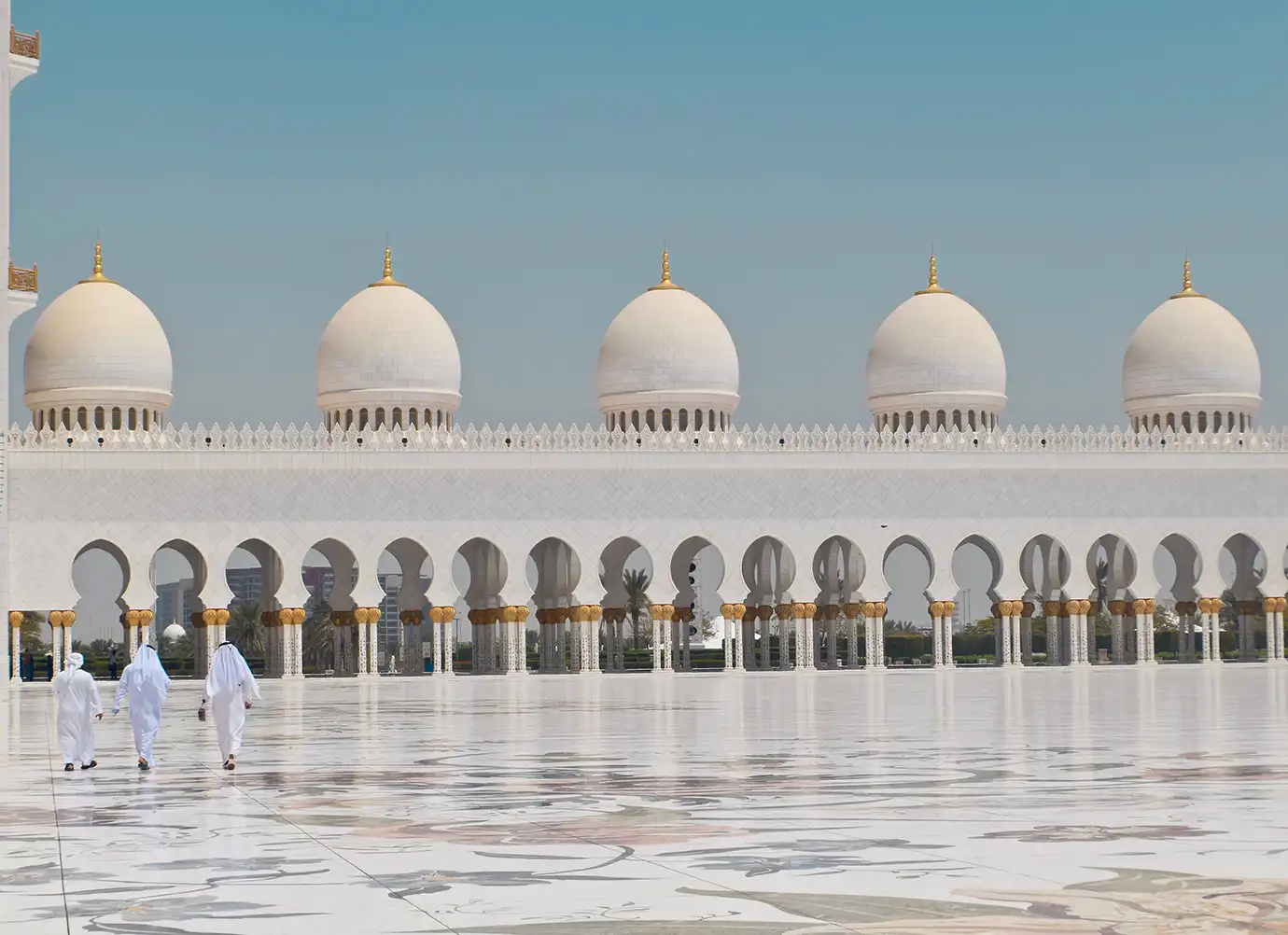
The UAE capital is the single best day trip from Dubai. The Sheikh Zayed Grand Mosque alone justifies the drive — it holds tens of thousands of worshippers and is open to non-Muslim visitors outside prayer times with strict dress requirements.
Consider an overnight stay rather than a day trip if you want to visit both the mosque and Yas Island.
Hatta
Distance: Roughly 130 km, 90 minutes by road
Highlights: Hatta Dam kayaking, Hatta Wadi Hub, mountain biking, heritage village
A Dubai exclave in the Hajar Mountains. Cooler than the city and completely different in character.
The route passes briefly near the border with Oman — carry your passport.
Sharjah
Distance: Roughly 30 km, 30 to 60 minutes depending on traffic
Highlights: Sharjah Art Museum, Museum of Islamic Civilization, Al Noor Mosque, Heart of Sharjah
The UAE’s cultural capital has the strongest museum inventory in the country. Sharjah is dry — no alcohol is served or sold anywhere in the emirate.
Traffic between Dubai and Sharjah is heavy at commuting times. Travel mid-morning.
Al Ain
Distance: Roughly 160 km, 90 to 120 minutes
Highlights: Al Ain Oasis (UNESCO), Jebel Hafeet, Al Jahili Fort, camel market
The “Garden City” is inland, near the border with Oman. Al Ain Oasis holds a UNESCO-listed ancient falaj irrigation system still in use.
Jebel Hafeet’s summit road is one of the best drives in the country.
Ras Al Khaimah
Distance: Roughly 115 km, 75 to 90 minutes
Highlights: Jebel Jais, the world’s longest zipline, Bear Grylls Explorers Camp, and beaches
The mountain emirate. Jebel Jais is the UAE’s highest peak and is home to the world’s longest zipline.
Noticeably cooler at altitude. Good escape during shoulder season.
Dubai Desert Conservation Reserve
Distance: Roughly 60 km, 45 minutes
Highlights: Protected desert, Arabian oryx, gazelle, premium safari camps
A protected reserve covering roughly 5 percent of Dubai’s land area. Vehicle access is restricted to licensed operators, which keeps the experience uncrowded.
Where premium desert experiences operate. Worth the upgrade over a standard safari.
Dubai Food Guide
Dubai’s food scene spans a few dirhams to a few thousand. Emirati cuisine is the local base — machboos, harees, and luqaimat — but it sits alongside Lebanese, Iranian, Indian, Pakistani, Filipino, and international dining. The best cheap food in the city is in Deira and Bur Dubai. The best fine-dining clusters are in Downtown, DIFC, and Palm Jumeirah.
Shawarma
The default Dubai street food. Spit-roasted chicken or lamb wrapped in flatbread with garlic sauce and pickles.
Available everywhere at very low prices. Late-night shawarma counters are a Dubai institution.
Machboos
The Emirati national dish. Spiced rice cooked with meat or fish, dried lemon, and a local spice blend called bezar.
Similar in structure to biryani but distinctly Gulf in flavor. Order it at a traditional Emirati restaurant rather than a hotel.
Luqaimat
Small deep-fried dough balls soaked in date syrup. Crisp outside, soft inside.
The standard Emirati dessert is a Ramadan staple. Sold at Global Village and heritage venues.
Mixed Grill
Lebanese and Iranian grill houses serve shish taouk, kofta, lamb chops, and kebabs with rice, salad, and bread.
Deira and Bur Dubai offer the best-value options. Portions are large.
Arabic Mezze
Hummus, moutabel, tabbouleh, fattoush, vine leaves, and warm bread. Ordered as a shared table.
The default way to start a Lebanese meal and the easiest entry point for first-time visitors.
Karak Chai
Strong, sweet, milky spiced tea is sold from small cafeterias across the city for a few dirhams.
A genuine daily ritual for residents. Try it from a roadside cafeteria rather than a hotel.
International Dining
Dubai’s expatriate population means most world cuisines are represented at a high standard. Indian, Pakistani, and Filipino food are particularly strong and particularly cheap.
Fine Dining
Internationally recognized restaurants operate across Downtown, DIFC, Palm Jumeirah, and Bluewaters. Japanese, French, and modern Middle Eastern are the strongest categories.
Book well ahead in peak season.
Street Food and Cheap Eats
The best value in the city sits in Deira, Bur Dubai, Karama, and Al Rigga. Full meals cost a fraction of Downtown prices.
Global Village, during its season, offers the widest street food range in one place.
Practical Dining Notes
- Alcohol is served in licensed venues, which are almost all inside hotels or licensed restaurants. It is not sold in ordinary supermarkets.
- Public intoxication is illegal and enforced.
- Pork is available but served separately and clearly labeled.
- Vegetarian options are excellent thanks to the large Indian community.
- Most restaurants add a service charge. Additional tipping is customary but not mandatory.
- During Ramadan, many restaurants close during daylight hours or screen off dining areas.
Dubai Festivals and Events
Dubai’s event calendar concentrates in the cooler months. The Dubai Shopping Festival runs from December to January. Ramadan and Eid shift annually with the Islamic calendar, changing how the city operates. New Year fireworks at the Burj Khalifa are among the largest displays in the world. Summer brings Dubai Summer Surprises.
Dubai Shopping Festival
Runs from December into January. Citywide discounts, raffles, live entertainment, and fireworks.
The busiest and most expensive travel window of the year. Book accommodation months ahead.
Dubai Food Festival
Usually held in the cooler months. Restaurant promotions, street food events, and celebrity chef appearances across the city.
Dubai Summer Surprises
Runs through July and August. A retail promotion designed to drive summer traffic, with heavy mall discounting and family entertainment.
Pairs well with deep summer hotel discounts.
Ramadan
The Islamic holy month shifts roughly 11 days earlier each year on the Gregorian calendar.
Eating, drinking, and smoking in public during daylight hours is restricted. Many restaurants close during the day or screen their dining areas.
Evenings transform. Iftar buffets and late-night suhoor dining are among the best food experiences of the year. Hotels and malls stay open late.
Visiting during Ramadan is entirely workable and often cheaper. Just plan daytime meals around hotel dining.
Eid Al Fitr and Eid Al Adha
Major public holidays follow Ramadan and the Hajj period, respectively. Expect fireworks, entertainment, and heavy domestic crowds at attractions.
Hotel rates rise. Book ahead.
New Year Celebrations
The Burj Khalifa fireworks display draws enormous crowds and international broadcast coverage.
Downtown restaurants and hotels sell ticketed viewing packages that book out 6 to 9 months in advance. Public viewing areas fill hours ahead.
UAE National Day
December 2. Parades, fireworks, air displays, and citywide decoration.
A good time to be in Dubai — festive without the New Year price premium.
Art Dubai
An international contemporary art fair is usually held in the spring. Draws galleries and collectors from across the region and beyond.
GITEX Global
One of the largest technology exhibitions in the world, usually held in October at the Dubai World Trade Center.
Hotel rates spike citywide during GITEX. Avoid those dates unless you are attending.
Sporting Events
Dubai hosts major international tennis, golf, rugby sevens, and motorsport events through the cooler months.
Check the calendar when planning — major events affect hotel availability and pricing.
Dubai Travel Costs
Dubai spans every budget. Hotel rates swing dramatically by season — the same room can cost three times more in December than August. Food ranges from a few dirhams for shawarma to fine dining at international prices. Attractions are the main fixed cost. Metro and taxis are inexpensive.
Flights
Dubai is served by Emirates, flydubai, and most major international carriers. Competition keeps fares reasonable from most regions.
Book 3 to 6 months ahead for December and January travel.
Hotels
The single biggest variable in your budget, and the most season-sensitive.
- Budget: Deira, Bur Dubai, and Al Barsha guesthouses and 3-star hotels
- Mid-range: Business Bay, Al Barsha, and Marina apartments and 4-star properties
- Luxury: Downtown towers, Palm Jumeirah resorts, Jumeirah beachfront, desert resorts
Summer rates at luxury properties can fall to half of peak season.
Transportation
Dubai is cheap to move around. The Metro is inexpensive and clean. Taxis are metered and reasonably priced. Careem and Uber both operate.
An NOL card covers Metro, tram, and bus. Buy one on arrival.
Tours and Attractions
The main fixed costs. Burj Khalifa tickets, theme park entry, desert safaris, and yacht charters carry the largest line items.
Book attractions online in advance — walk-up pricing is higher, and slots sell out.
Meals
Enormous range. Street shawarma and cafeteria meals cost very little. Mid-range restaurants are reasonable. Fine dining matches international capitals.
Alcohol carries a significant markup due to licensing. Budget accordingly if you drink.
Luxury Experiences
Helicopter tours, private yacht charters, VIP desert safaris, and premium observation deck access all carry premium pricing but deliver genuinely differentiated experiences.
Shopping
Highly variable. Souks and outlet malls at one end, Fashion Avenue at the other.
Remember the 5 percent VAT refund on eligible purchases when budgeting.
Cost-Saving Tips
- Travel in May, September, or October for near-peak conditions at much lower rates.
- Use the Metro instead of taxis for routes to Downtown, Marina, and Deira.
- The Dubai Fountain, public beaches, Marina Walk, and the abra crossing are free.
- Book attraction tickets online and off-peak.
- Eat lunch at the mall food courts and dinner in Deira or Karama.
- Buy a multi-attraction pass if you plan four or more paid attractions.
Related Article: Things to Do in Dubai: 20 Experiences From the Burj Khalifa to the Desert at Sunset
How to Reach Dubai
Dubai International Airport (DXB) is one of the busiest international airports in the world, with direct connections to over 100 countries. Al Maktoum International (DWC) handles overflow and some budget carriers. The airport sits close to the city — most hotel transfers take 15 to 45 minutes. Metro connects both terminals.
Dubai International Airport (DXB)
The primary gateway is located roughly 5 km from Deira and 15 km from Downtown. Three terminals operate.
Terminal 3 handles Emirates. Terminal 2 handles flydubai and some regional carriers. Terminal 1 handles most other international airlines.
The Red Line Metro serves Terminals 1 and 3 directly. Taxis are metered and plentiful.
Immigration uses smart gates for many nationalities, which cuts processing to a couple of minutes.
Al Maktoum International Airport (DWC)
The secondary airport at Dubai South is roughly 45 to 60 minutes from Downtown. Handles a smaller mix of carriers.
Check which airport your flight uses. The two are far apart, and confusing them is costly.
International Airlines
Emirates operates the largest network from DXB. flydubai covers regional and short-haul routes.
Most major international carriers serve Dubai, including all Gulf carriers, European flag carriers, and major Asian airlines.
Stopovers
Dubai is one of the best stopover cities in the world. Emirates and flydubai both offer stopover programs with discounted hotel rates.
Transit visas valid for up to 96 hours are available from airlines for eligible nationalities. Confirm eligibility with your carrier.
Cruise Terminals
Dubai Harbour Cruise Terminal and Mina Rashid handle regional cruise itineraries, particularly during the winter season.
Many Gulf cruises begin or end in Dubai.
Airport Transfers
Peregrine includes private airport transfers on every Dubai package. Independent options are all straightforward — metered taxis, Careem, Uber, and the Metro Red Line.
Allow extra time during peak arrival at banks in the early morning and late evening.
Dubai Visa Guide
Over 90 nationalities enter the UAE visa-free or on arrival, but the permitted stay varies sharply by passport. Most EU nationals receive 90 days. US, UK, Australian, and Japanese passport holders typically receive 30 days, extendable once. Indian nationals qualify conditionally. Verify your own eligibility before booking — rules change.
Visa on Arrival Tiers
The most common mistake travelers make is assuming all Western passports get the same allowance. They do not.
GCC citizens — Saudi Arabia, Kuwait, Bahrain, Oman, and Qatar — enter without a visa under a separate treaty arrangement.
Roughly 70 nationalities, including most EU and Schengen member states, receive a free visa on arrival valid for around 90 days.
Around 15 nationalities, including the United States, United Kingdom, Australia, and Japan, receive a free 30-day entry stamp on arrival, typically extendable once.
Indian passport holders qualify for a visa on arrival only when holding a valid visa or residence permit from the US, UK, EU, Canada, Australia, New Zealand, Japan, Singapore, or South Korea. Without one, apply in advance.
All other nationalities must obtain a visa for entry before travel. The process is fully online through licensed agents or the UAE authorities.
Always verify your specific eligibility using the UAE Ministry of Foreign Affairs official visa tool before booking flights.
Passport Validity
Your passport must be valid for at least 6 months from your date of arrival. Ensure blank pages are available.
Tourist Visa Process
Nationalities requiring a pre-arranged visa apply online. Processing is typically fast, though timelines vary. Peregrine can arrange visa support on booked packages.
Options include 30-day and 60-day single and multiple-entry visas.
Overstay Rules
Overstay fines run AED 50 per day with no grace period, starting from the day after expiry.
Extensions are available in-country before your permitted stay expires. Do not let it lapse.
Travel Insurance
Comprehensive travel insurance is strongly recommended and required on all Peregrine packages. Ensure your policy covers medical treatment, emergency evacuation, adventure activities if you plan to skydive or dune bash, and trip cancellation.
Medical care in Dubai is excellent but expensive without cover.
Customs and Legal Notes
UAE law differs significantly from Western norms, and enforcement is real. Know these before you travel.
- Zero tolerance. Penalties are severe, including for trace quantities and for substances legal elsewhere. Some prescription medications require prior approval — check the approved medicines list before travel.
- Legal for tourists in licensed venues. Public intoxication and drink-driving are criminal offenses with no tolerance.
- Public behavior. Public displays of affection beyond hand-holding, rude gestures, and public swearing can result in arrest.
- Do not photograph people without permission, particularly women and children. Avoid photographing government and military sites.
- Cash declarations. Amounts above the reportable threshold must be declared on arrival.
- Restricted items. Certain publications, e-cigarette rules, and some medications are subject to restrictions. Check current customs guidance.
Transportation in Dubai
Dubai’s public transport is clean, cheap, and easy. The Metro’s Red and Green lines cover most tourist areas. An Nol card works across Metro, tram, and bus. Taxis are metered and inexpensive. Careem and Uber operate citywide. Traffic peaks hard at commuting hours, so plan around it.
Dubai Metro
Two lines operate. The Red Line runs along Sheikh Zayed Road connecting the airport, Deira, Downtown, Business Bay, Marina, and Jebel Ali. The Green Line covers Deira and Bur Dubai.
Clean, punctual, and air-conditioned. Gold Class cabins and women-and-children-only cabins both operate.
Eating and drinking on the Metro is prohibited and is subject to fines. So is sitting in the wrong cabin class.
The Metro is the fastest way to get between Downtown and the Marina during rush hour.
Dubai Tram
Serves Dubai Marina, JBR, and Palm Jumeirah’s monorail interchange. Integrates with the Metro Red Line.
Useful within the Marina district specifically.
Palm Monorail
Runs the trunk of Palm Jumeirah from Gateway Station to Atlantis. Connects to the tram network.
Practical if you are staying on the Palm and want to reach the mainland without a taxi.
Public Buses
An extensive network covering areas that the Metro does not reach. Air-conditioned and cheap.
Less useful for most visitors than Metro and taxis, but good value for outlying destinations.
Taxis
Metered, plentiful, and reasonably priced. Cream-colored official Dubai Taxi vehicles are the standard. Pink-roofed taxis have female drivers and serve women and families.
Airport taxis carry a small surcharge. Card payment is widely accepted.
Ride-Hailing
Careem and Uber both operate citywide. Pricing is comparable to taxis with a surge at peak times.
Useful for airport runs and late nights.
Water Transport
Traditional abras cross Dubai Creek for one dirham — the cheapest and most characterful transport in the city.
Modern air-conditioned water taxis and water buses run scheduled routes on the Creek and the Dubai Canal.
Car Rental
Roads are excellent and well signposted. Dubai drives on the right. An International Driving Permit is required alongside your home license for most nationalities.
Salik toll gates charge automatically. Rental companies bill tolls afterward.
Parking is paid in most central areas. Fuel is inexpensive.
Worth it for Hatta, Al Ain, and multi-emirate trips. Unnecessary for a city-only stay.
Nol Card
A rechargeable card covering Metro, tram, and bus. Buy at any Metro station on arrival.
Silver Nol suits most visitors. Gold Nol allows access to Gold Class cabins at double the fare.
Sustainable Tourism in Dubai
Dubai faces real environmental pressure from desert development, water desalination, and high per-capita energy use. Responsible travel means choosing operators inside protected reserves, avoiding wildlife attractions that permit handling, using public transport, and respecting local customs. Your choice of operator has a direct impact on desert conservation.
Desert Conservation
The Dubai Desert Conservation Reserve protects roughly 5 percent of Dubai’s land area and supports Arabian oryx, gazelle, and native flora.
Unregulated dune bashing outside protected zones damages fragile desert crust and vegetation. Book operators licensed to work inside the reserve, where vehicle numbers are capped, and routes are controlled.
The Arabian oryx was extinct in the wild before a reintroduction program brought it back. The reserve is part of that story.
Marine Protection
Coastal development has affected local reef and seagrass habitats. Several local organizations run reef monitoring and cleanup programs.
If you dive or snorkel, practice good buoyancy, do not touch marine life, and use reef-safe sunscreen.
Responsible Wildlife Tourism
Avoid any attraction offering photo opportunities with big cats, primates, or other exotic animals. Private ownership of exotic pets has been restricted in the UAE, and tourist demand drives the remaining trade.
Camel rides at licensed safari operators are acceptable. Check that animals appear healthy and are worked in a reasonable rotation.
Falconry is a genuine Emirati cultural tradition with strong welfare standards at reputable venues.
Public Transportation
The Metro is the lowest-impact way to move around the city and often the fastest. Use it for Downtown, Marina, and Deira routes.
Eco-Friendly Hotels
Several Dubai properties hold international sustainability certifications covering energy, water, and waste. Desert resorts inside the conservation reserve typically operate to stricter environmental standards.
Water Use
Dubai’s water comes almost entirely from energy-intensive desalination. Reuse towels, take shorter showers, and skip unnecessary linen changes.
Respecting Local Customs
Cultural respect is part of responsible travel.
- Dress modestly in malls, souks, and public areas. Cover shoulders and knees.
- Cover fully at mosques. Women should cover their hair. Robes are usually provided.
- Do not eat, drink, or smoke in public during Ramadan daylight hours.
- Ask before photographing people.
- Accept and pass items with the right hand.
- Public displays of affection are not acceptable.
Dubai vs Other Middle East Destinations
Dubai leads the region in entertainment, shopping, dining, and family attractions. Abu Dhabi has more cultural depth. Doha is quieter and more design-focused. Muscat is the natural choice for landscape and tradition. Riyadh is opening fast but remains less tourist-ready. Most travelers pair Dubai with one of the others.
Dubai vs Abu Dhabi
Dubai offers more entertainment, better shopping, more nightlife, and a wider range of hotels. Abu Dhabi has the Sheikh Zayed Grand Mosque, Louvre Abu Dhabi, Qasr Al Watan, and Ferrari World, plus a calmer atmosphere and better cultural institutions.
They sit 90 minutes apart. Most good UAE itineraries include both rather than choosing.
Choose Dubai for: Entertainment, shopping, dining, nightlife
Choose Abu Dhabi for: Culture, architecture, museums, and a quieter pace
Dubai vs Doha
Doha is smaller, quieter, and more focused on museums and architecture — the Museum of Islamic Art and the National Museum of Qatar are outstanding. Dubai has far more to do, especially for families.
Doha suits short cultural trips and stopovers. Dubai suits full holidays.
Choose Dubai for: Families, entertainment, longer stays, beaches
Choose Doha for: Museums, architecture, short stopovers, quieter travel
Dubai vs Muscat
Muscat and Oman offer mountains, wadis, turtle beaches, forts, and a far more traditional Gulf character. Dubai offers modernity, entertainment, and infrastructure.
They complement each other well. Peregrine’s Muscat office makes the combination straightforward, and the two cities sit within easy reach of one another.
Choose Dubai for: City experiences, shopping, family attractions
Choose Oman for: Landscape, tradition, road trips, hiking, and wadis
Dubai vs Riyadh
Riyadh is rapidly opening up to tourism, with major projects underway, but visitor infrastructure remains less developed than Dubai’s. Social norms are more conservative.
Riyadh suits travelers interested in seeing a destination early in its tourism development. Dubai remains the easier, more polished choice.
Choose Dubai for: Ease, infrastructure, leisure travel
Choose Riyadh for: Emerging destinations, heritage sites like AlUla, and business travel
Dubai vs Bahrain
Bahrain is compact, relaxed, and considerably cheaper, with genuine archaeological depth including the UNESCO-listed Dilmun burial mounds and Qal’at al-Bahrain.
Dubai offers vastly more range. Bahrain works well as a short add-on rather than a primary destination.
Choose Dubai for: Range, luxury, entertainment
Choose Bahrain for: Budget travel, archaeology, and short breaks
Frequently Asked Questions
What is the best time to visit Dubai?
November to March delivers the best weather, with daytime temperatures of 20 to 30°C, low humidity, and clear skies. December and January are the busiest and most expensive. October and April offer near-peak conditions at noticeably lower rates. Summer, from June to September, regularly exceeds 40°C, making outdoor sightseeing difficult, though hotel prices fall sharply.
How many days should I spend in Dubai?
Three days cover the headline sights — Burj Khalifa, Downtown, old Dubai, and a desert safari. Five days lets you add Palm Jumeirah, the Marina, and a proper beach day. Seven days allow Abu Dhabi and Hatta. Families visiting theme parks should plan at least five to six days. Stopover travelers get real value from even 24 to 48 hours.
Do I need a visa for Dubai?
It depends on your passport. Over 90 nationalities receive visa-free entry or a visa on arrival, but the permitted stay varies. Most EU nationals get around 90 days. US, UK, Australian, and Japanese travelers typically get 30 days. Indian nationals qualify conditionally, subject to holding certain other visas. Everyone else must apply in advance. Verify your specific eligibility before booking.
Is Dubai expensive?
Dubai can be either. Hotels are the biggest variable and swing dramatically by season — summer rates can be half of winter. Food ranges from a few dirhams for shawarma to international fine dining prices. Metro and taxis are cheap. Attractions are the main fixed cost. Traveling in May, September, or October cuts costs substantially without sacrificing much.
Is Dubai safe for tourists?
Yes. Dubai has very low violent crime rates and extensive surveillance and policing. Solo female travelers generally report feeling safe. The main risks are legal rather than criminal — UAE law on drugs, alcohol, public behavior, and photography is far stricter than most Western countries and is genuinely enforced. Read the legal notes before you travel.
Which desert safari is best?
Standard evening safaris include dune bashing, camel rides, sandboarding, and a camp dinner with entertainment at a fair price. Premium safaris operating within the Dubai Desert Conservation Reserve cost more but have vehicle numbers capped, so the experience feels genuinely remote. Overnight safaris let you see both sunset and sunrise. For couples, private desert dinners are worth the upgrade.
What should I wear in Dubai?
Dubai is more relaxed than most of the Gulf but still conservative by Western standards. Swimwear is fine at beaches, pools, and resorts. In malls, souks, and public areas, cover your shoulders and knees. Mosques require full coverage, and women should cover their hair — robes are usually provided. Evening dress codes at upscale venues are smart. Pack light fabrics regardless of the season.
Is Dubai suitable for families?
Exceptionally. Dubai has some of the best family infrastructure in the world — LEGOLAND, Motiongate, IMG Worlds, Aquaventure, the Dubai Aquarium, KidZania, and Ski Dubai. Most major attractions are air-conditioned, making summer travel viable. The city is safe, clean, stroller-friendly, and entirely English-speaking. Note that taxis do not carry child seats by default.
Can I combine Dubai with Abu Dhabi?
Yes, easily. Abu Dhabi sits roughly 140 km southwest, about 90 minutes by road. Many visitors do it as a day trip covering the Sheikh Zayed Grand Mosque, Louvre Abu Dhabi, and Qasr Al Watan. If you also want Yas Island and Ferrari World, stay overnight instead. Peregrine’s Dubai and Abu Dhabi package covers both properly across 7 days.
Which Dubai beach is best?
It depends on what you want. JBR Beach is the most developed, with dining and watersports, and is best for families. Kite Beach has the best facilities and an active atmosphere. Sunset Beach at Umm Suqeim gives the classic free Burj Al Arab view. Palm West Beach suits couples and evening dining. Black Palace Beach offers seclusion with no facilities.
Is Dubai good for honeymooners?
Very. Palm Jumeirah beach resorts deliver privacy and high service standards. Private desert dinners in the dunes, sunset yacht charters from the Marina, couples spa suites, and rooftop dining with Burj Khalifa views all combine well. Five nights is the standard length. Book November to March for reliable outdoor weather and flag the occasion at booking for upgrades.
What currency is used in Dubai?
The UAE Dirham, written as AED or Dhs. It is pegged to the US Dollar, which keeps the rate stable. ATMs are everywhere. Card payment is accepted almost universally, including in taxis. Carry some cash for souks, abras, and small cafeterias. VAT is 5 percent and refundable for tourists on eligible purchases at the airport.
Is public transportation good in Dubai?
Yes. The Dubai Metro is clean, punctual, air-conditioned, and inexpensive, with Red and Green lines covering most tourist areas. An NOL card also works on trams and buses. Taxis are metered and cheap, and Careem and Uber operate citywide. The Metro is often faster than driving between Downtown and Marina during rush hour.
Can I visit Dubai during the summer?
Yes, with planning. June to September regularly exceeds 40°C, so outdoor sightseeing is limited to early mornings and evenings. The upside is significant — luxury hotel rates can fall by half, and attractions are quieter. Focus on indoor experiences: IMG Worlds, Ski Dubai, the Dubai Mall, the aquarium, and hotel pools. Hot air balloon flights are suspended.
What are the top free attractions in Dubai?
The Dubai Fountain show runs free every 30 minutes through the evening. Public beaches, including JBR, Kite Beach, and Sunset Beach, cost nothing. The Marina Walk and Palm West Beach boardwalk are free. The abra crossing on Dubai Creek costs one dirham. Al Fahidi Historical District, the Gold Souk, and the Spice Souk are all free to walk.
Is alcohol available in Dubai?
Yes, for tourists in licensed venues — almost all hotels, licensed restaurants, and bars. It is not sold in ordinary supermarkets. Public intoxication is a criminal offense and enforced, as is drink-driving, with zero tolerance. Prices carry a significant markup due to licensing. Neighboring Sharjah is entirely dry, with no alcohol sold or served anywhere.
How do I get from Dubai airport to the city?
Dubai International Airport sits close to the city. The Metro Red Line serves Terminals 1 and 3 directly and reaches Downtown in about 20 minutes. Metered taxis are plentiful and reasonably priced, taking 15 to 20 minutes to Deira and 20 to 30 minutes to Downtown. Careem and Uber both operate. Peregrine includes private transfers on all packages.
Do I need to tip in Dubai?
Tipping is customary but not obligatory. Most restaurants add a service charge, though it does not always reach the staff, so an additional 10 percent is common for good service. Round up taxi fares. Hotel porters and housekeeping appreciate small amounts. Desert safari guides and drivers are typically tipped at the end of the experience.
Can women travel to Dubai alone?
Yes. Dubai is one of the safest destinations in the region for solo female travelers, with low crime rates and extensive policing. Women-only Metro cabins and pink-roofed taxis with female drivers are available. Dress modestly in public areas to avoid unwanted attention. Normal precautions apply as in any major city, particularly late at night.
Is Dubai worth visiting during Ramadan?
Yes, with adjusted expectations. Eating, drinking, and smoking in public during daylight hours is restricted, and many restaurants close or screen off during the day. Hotel restaurants generally serve guests. Evenings transform — iftar buffets and late-night suhoor dining are among the year’s best food experiences. Rates are often lower and attractions quieter.
What is the dress code at mosques in Dubai?
Full coverage is required. Men need long trousers and sleeved shirts. Women need loose clothing covering arms, legs, and hair. Most visitor-accepting mosques, including Jumeirah Mosque in Dubai and the Sheik Zayed Grand Mosque in Abu Dhabi, provide robes at the entrance free of charge. Remove shoes before entering the prayer hall.
Is the Burj Khalifa worth the money?
Yes, but book strategically. Levels 124 and 125 deliver the standard experience. Level 148 (SKY) costs substantially more for a higher deck and shorter queues. Sunset slots command a premium and sell out first. Off-peak morning slots cost far less with much shorter waits. Book online in advance — walk-up availability is poor, and pricing is higher.
How far in advance should I book a trip to Dubai?
Book 3 to 6 months ahead for December and January travel, and 6 to 9 months for New Year packages with Burj Khalifa fireworks views. Shoulder-season trips in October, April, and May can be arranged with 6 to 8 weeks’ notice. Summer is bookable at short notice. Attraction tickets and restaurant reservations should be secured well before arrival, regardless of season.
Can I drink tap water in Dubai?
Dubai’s tap water is desalinated, treated, and meets safety standards at the source. Most residents and visitors still drink bottled or filtered water because of the construction of storage tanks and pipework. Hotels universally provide bottled water. Ice in restaurants and hotels is safe. Carry a refillable bottle and use hotel filtered refill points where available.
What is the Dubai Desert Conservation Reserve?
A protected area covering roughly 5 percent of Dubai’s total land area, established to protect native desert habitat and reintroduced wildlife, including Arabian oryx and gazelle. Vehicle access is restricted to licensed operators with capped numbers, so safaris inside the reserve feel far less crowded than standard commercial desert tours. Premium desert experiences operate here.
Are theme parks open year-round in Dubai?
Most indoor attractions operate year-round, including IMG Worlds, the Dubai Aquarium, Ski Dubai, and KidZania. Outdoor and water-based venues vary — some water parks and outdoor attractions reduce hours or close seasonally. Dubai Miracle Garden, Global Village, and Dubai Safari Park all operate seasonally and close during the summer months. Confirm operating status before booking.
Can I visit Dubai on a stopover?
Yes, and it is one of the best stopover cities in the world. Emirates and flydubai both run stopover programs with discounted hotels. Transit visas valid for up to 96 hours are available from airlines for eligible nationalities. A 24-hour stopover covers the Burj Khalifa, Dubai Mall, and Dubai Fountain. A 48-hour stopover adds a desert safari and old Dubai.
Which is better for shopping, the malls or the souks?
They serve different purposes. The Dubai Mall and Mall of the Emirates offer international brands, fixed pricing, air conditioning, and VAT refunds — best for luxury goods, electronics, and fashion. The Gold Souk and Spice Souk offer gold at weight-based pricing and spices at negotiable rates — best for jewelry, saffron, and souvenirs. Serious shoppers do both.
Is Dubai good for a Nepal combination trip?
Yes. Dubai pairs naturally with Nepal for travelers wanting a luxury city break alongside Himalayan trekking or cultural touring. Flight connections between Dubai and Kathmandu are frequent and short. Peregrine operates directly in both destinations, which makes the combined itinerary straightforward to arrange as a single booking with continuous support.
Plan Your Dubai Tour with Peregrine
Every Peregrine Dubai tour is private, fully customizable, and built around your dates, group size, and priorities. We will not sell you a shared desert safari when you ask for privacy, or schedule outdoor sightseeing at midday in August.
Every package includes private airport transfers, handpicked hotels matched to your preferred district, English-speaking guides, all listed activities, and pre-booked attraction tickets so you skip the queues.
Combine Dubai with Abu Dhabi, the wider UAE, Oman through our Muscat office, or Nepal through our Kathmandu operation. Tell us what matters most — luxury, desert, family, shopping, or a short stopover — and we build the rest.
WhatsApp: +977 985 105 2413
Email: sales@peregrinetreks.com
Response within 24 hours. All itineraries are customizable.