


Georgian food is one of the great under-known cuisines of the world. Any useful Georgian food guide starts with the same short list: khachapuri, khinkali, walnut sauces, and amber wine fermented in buried clay.
Georgia sits between the Mediterranean, Persia, and the steppe. Georgian cooks borrowed from all three and then built something unmistakably their own. Below you will find 15 dishes, how to eat each one, where to find the best version, and the table rules that matter.
What Is Georgian Cuisine Known For?
Georgian cuisine is built on four pillars: cheese-filled breads, walnut-based sauces, fresh herbs, and qvevri wine. Tarragon, coriander, blue fenugreek, and pomegranate appear constantly. Meals arrive family-style with every dish on the table at once. Nothing is served in European courses.
The country grows over 500 indigenous grape varieties. Around 45 are in regular commercial use. Food and wine are inseparable here. You will rarely eat a proper Georgian meal without a glass beside it.
The 15 Must-Try Georgian Dishes
1. Khachapuri — Georgia’s National Dish
Khachapuri is a leavened bread filled with melted cheese, usually sulguni or Imeruli cheese. More than ten regional versions exist. The two you will meet most often are Imeruli, a round, closed loaf with cheese baked inside, and Adjaruli, the boat-shaped version topped with a raw egg yolk and butter.
Adjaruli arrives at the table still bubbling. Mix the egg and butter into the molten cheese with a fork, then tear strips off the crust and dip. Imeruli is the purer version and the one most Georgians eat daily. Order it first if you want to understand the dish.
Other varieties worth hunting down:
- Megruli — like Imeruli, but with extra sulguni melted across the top
- Achma — layered like a cheese lasagna, from Abkhazia
- Penovani — puff pastry, folded into squares, sold at bakery counters
- Osuri (Khabizgina) — Ossetian style, filled with potato and sharp cheese
- Guruli — crescent-shaped with hard-boiled egg, made for Orthodox Christmas
Where to eat it: Skip the restaurant version for breakfast. Find a neighborhood bakery, called a purne, and buy one straight from the tone, the clay oven set into the floor. A basic Imeruli costs a few lari and outperforms most restaurant plates.

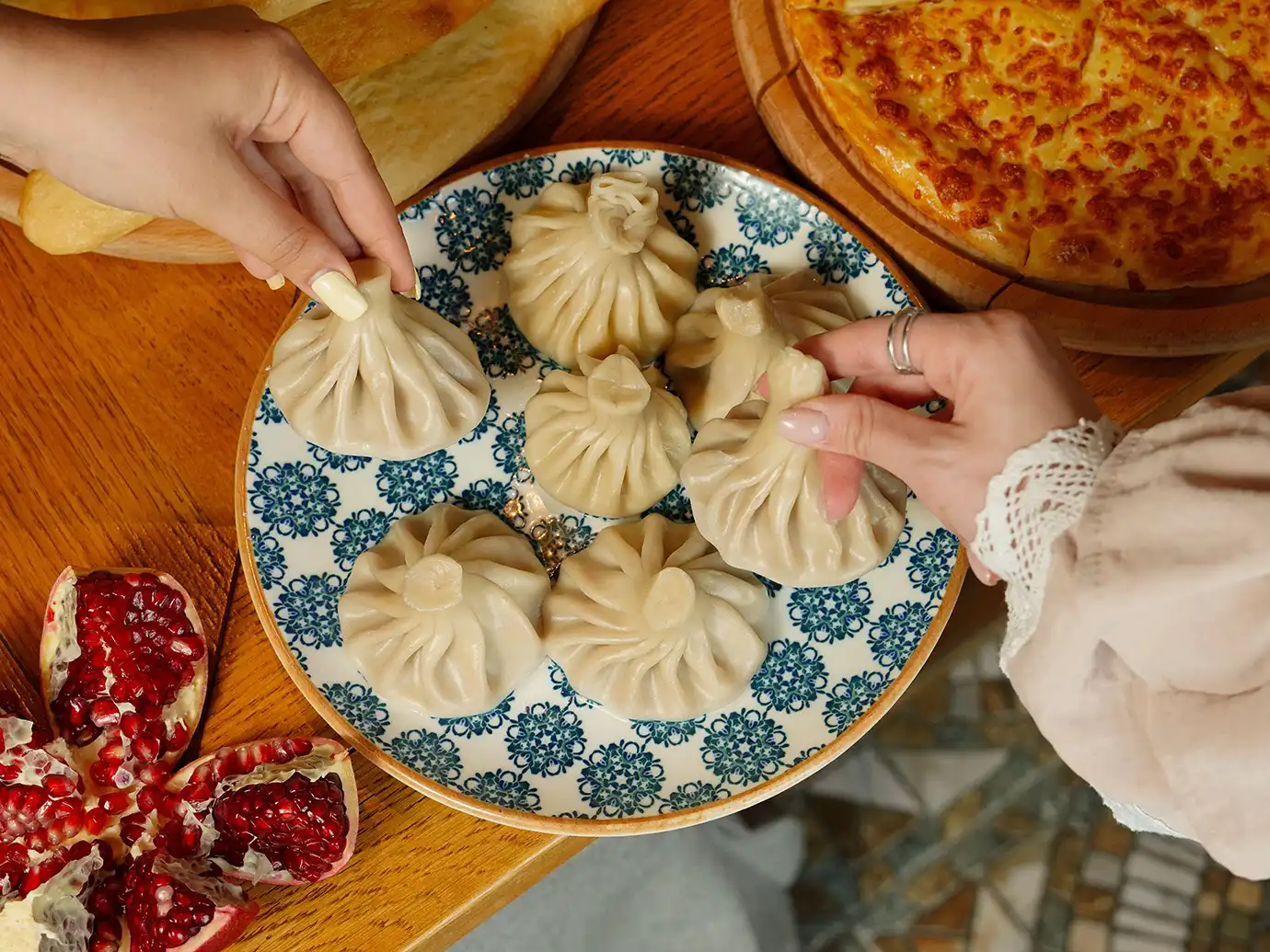
2. Khinkali — Georgian Soup Dumplings
Khinkali are large hand-twisted dumplings filled with spiced meat and hot broth. A standard dumpling runs 8 to 12 cm across. Traditional filling is made with pork and beef, onion, coriander, and black pepper.
Eating them correctly matters, and Georgians will notice. Hold the twisted knot at the top. Bite a small hole in the side. Sip the broth out first, then eat the rest of the dumpling.
Never use a fork. Piercing khinkali spills its broth, instantly marking you as a first-timer. Leave the knot on your plate. Georgians count them at the end of the meal. Ten to fifteen in one sitting is normal for a local.
Regional styles vary. Kalakuri is city-style with more herbs and pepper. Kazbeguri uses hand-chopped meat instead of mince, giving a coarser texture. Vegetarian versions with mushrooms, potatoes, or cheese are widely available. One local rule surprises most visitors. Georgians drink chacha with khinkali, not wine. The grape brandy cuts the fat better.
Where to eat it: Pasanauri is widely regarded as the home of Georgian khinkali. The village sits about 90 km north of Tbilisi on the Georgian Military Highway at 1,050 m, right where the White and Black Aragvi rivers meet without mixing. Stop there on the way to Kazbegi. In Tbilisi, Machakhela is reliable and open late.
3. Mtsvadi — Georgian Barbecue
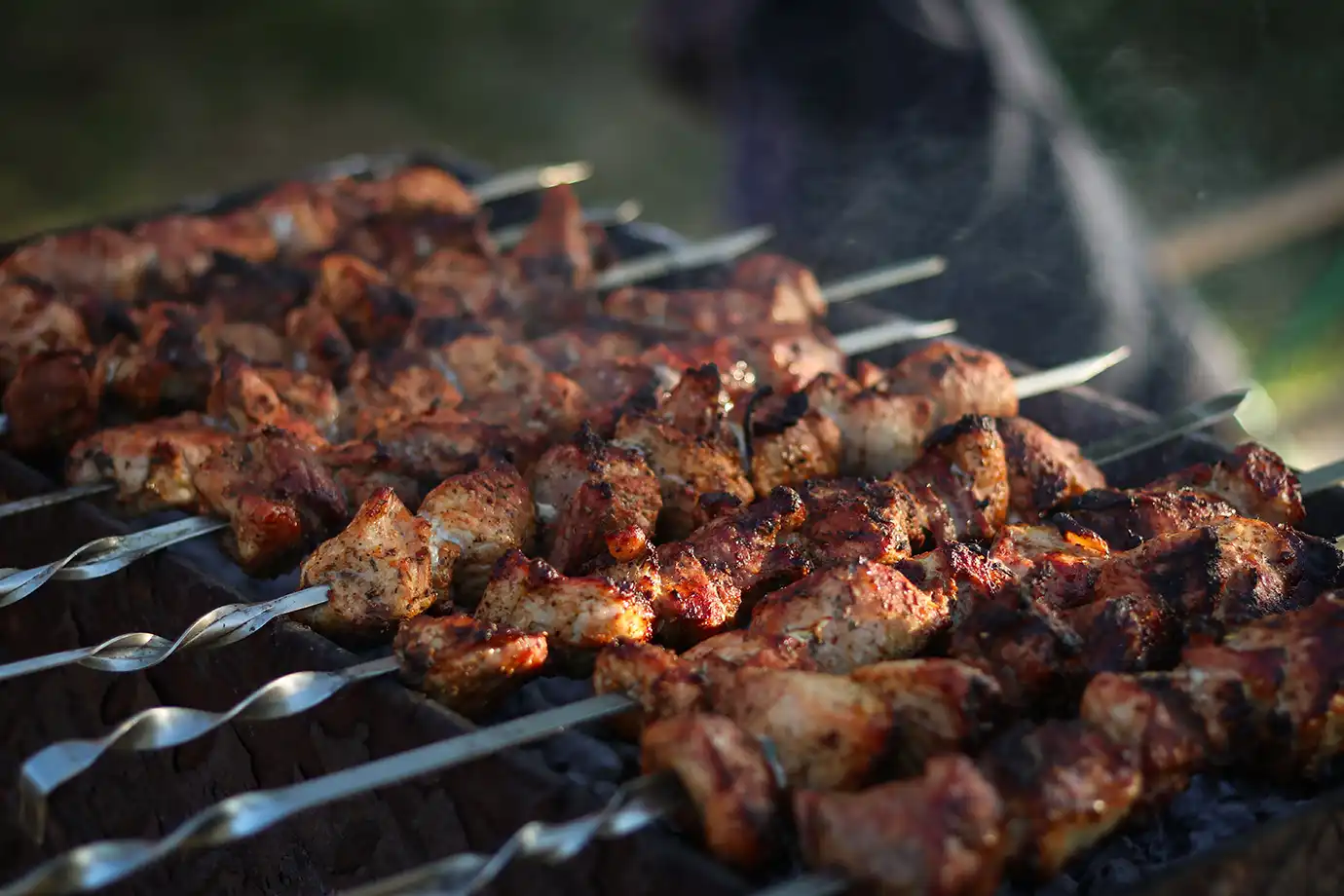
Mtsvadi is charcoal-grilled skewered meat, usually pork, beef, or lamb. Kakhetian cooks grill over dried grapevine cuttings rather than charcoal, which leaves a faint sweetness in the meat that ordinary wood does not.
Served with raw onion, pomegranate seeds, and tkemali, a sour plum sauce. Best eaten outdoors in Kakheti with the vineyard in view. The smell of vine cuttings burning is worth the trip on its own.
4. Badrijani Nigvzit — Eggplant with Walnut Paste
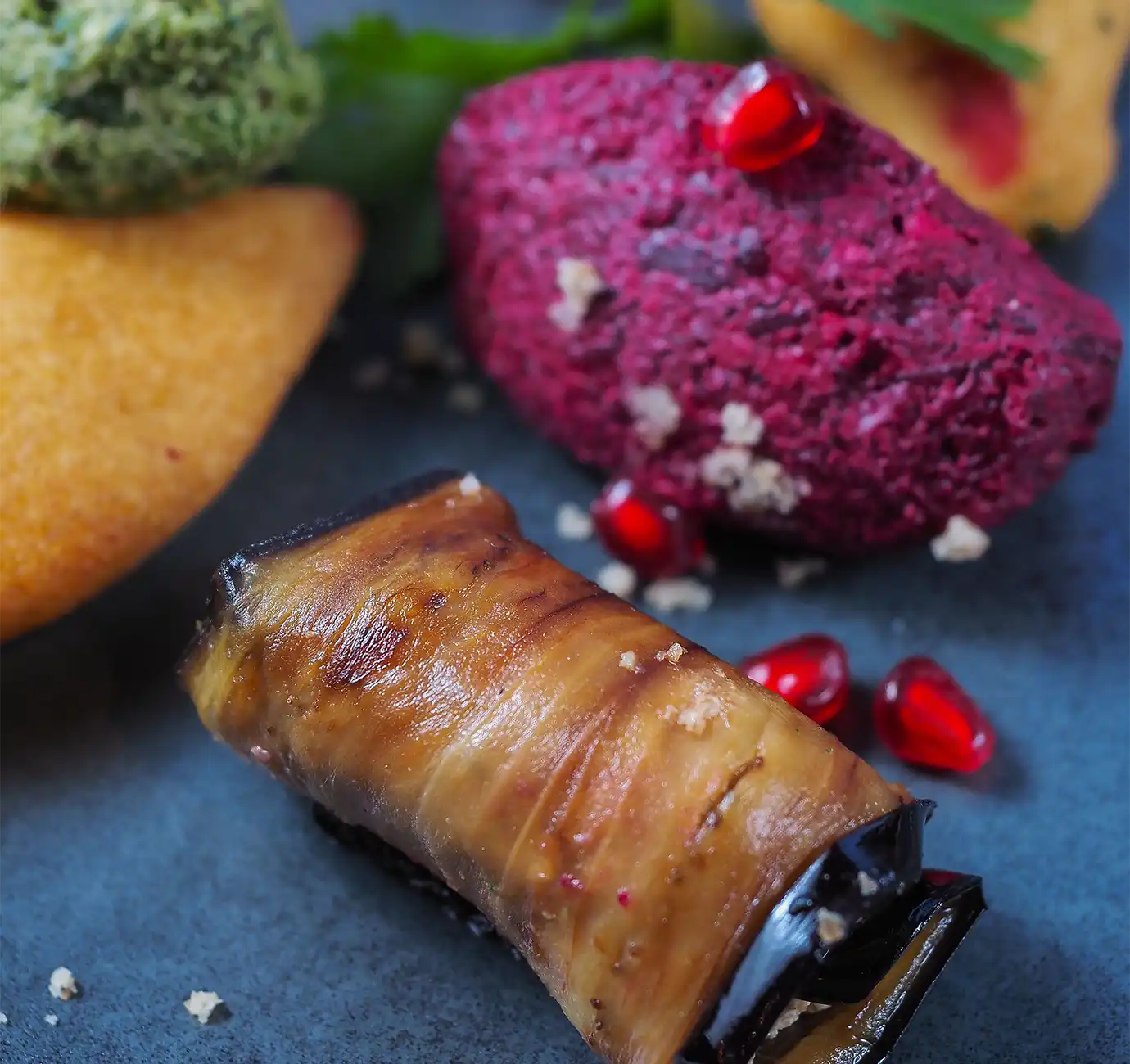
Badrijani nigvzit is fried, thinly sliced eggplant, rolled around a walnut-and-garlic paste, and topped with pomegranate seeds. The paste blends ground walnuts, garlic, coriander, and blue fenugreek. Vegan by default, and one of the most approachable dishes for first-time visitors. Order it as a starter. Every traditional restaurant makes it.
5. Pkhali — Vegetable and Walnut Pâtés
Pkhali is a family of cold vegetable appetizers bound with ground walnuts and herbs. Spinach, beetroot, green beans, and cabbage are the standard four. Each ball comes topped with a single pomegranate seed.
Ask for a mixed pkhali plate. Four colors arrive together, and it is the best-looking dish on any Georgian table. Excellent with bread and a glass of amber wine.
6. Lobio — Spiced Bean Stew
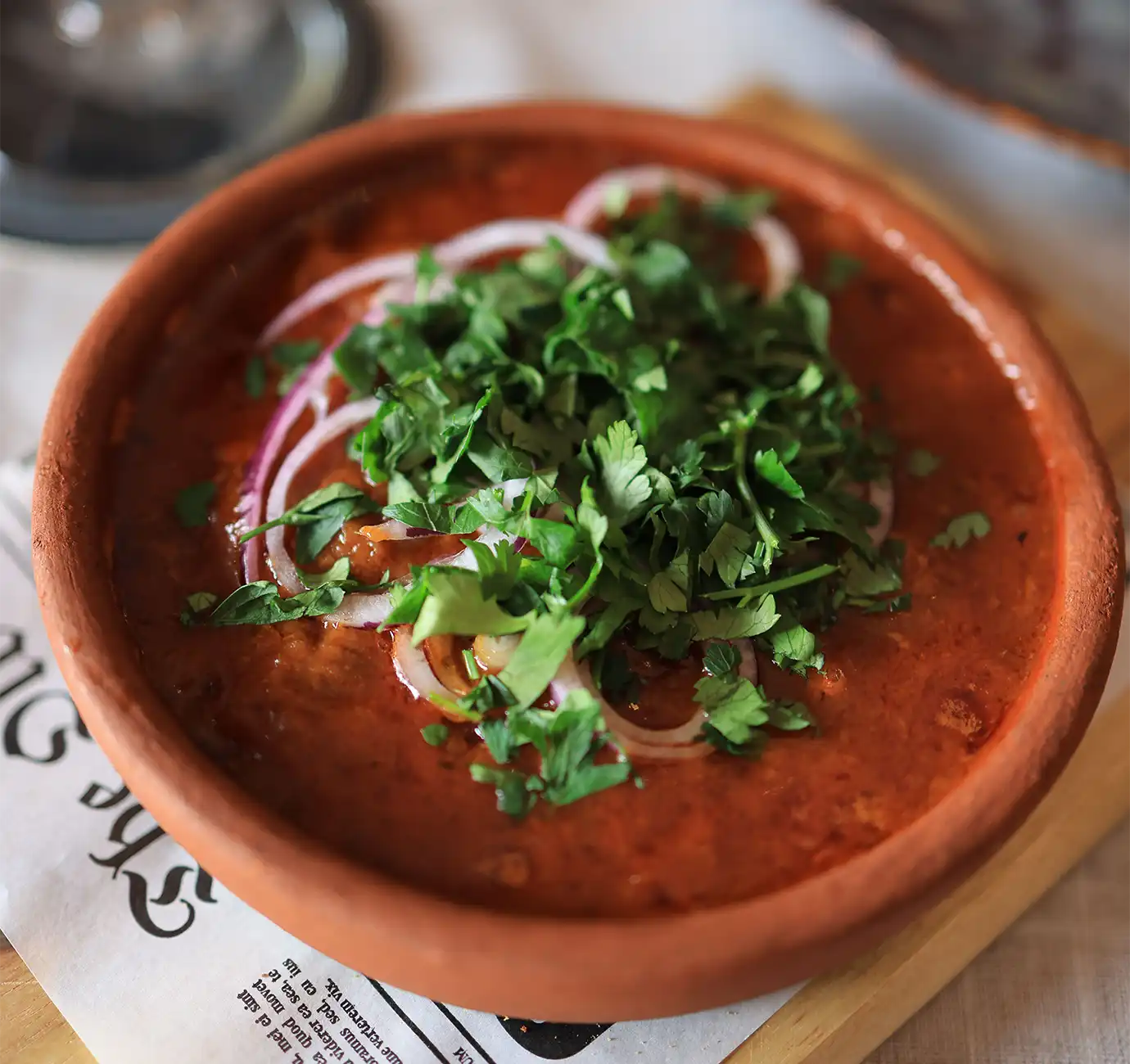
Lobio is slow-cooked red beans with onion, garlic, coriander, blue fenugreek, and chili. Served in a ketsi, a heavy clay pot that keeps the stew bubbling at the table.
Eat it with mchadi, a dense cornbread that crumbles into the sauce. Lobio anchors the Georgian winter diet and remains one of the best vegetarian options in the country. Order it in a small neighborhood restaurant rather than a tourist one.
7. Chakhokhbili — Braised Chicken with Herbs
Chakhokhbili is chicken braised with tomatoes, onions, white wine, and generous amounts of fresh herbs. Tarragon, coriander, and basil go in near the end, giving the dish a green, grassy fragrance unlike European chicken stews.
One of the lighter dishes in the Georgian repertoire. Good choice after two days of cheese bread.
8. Shkmeruli — Chicken in Garlic Cream
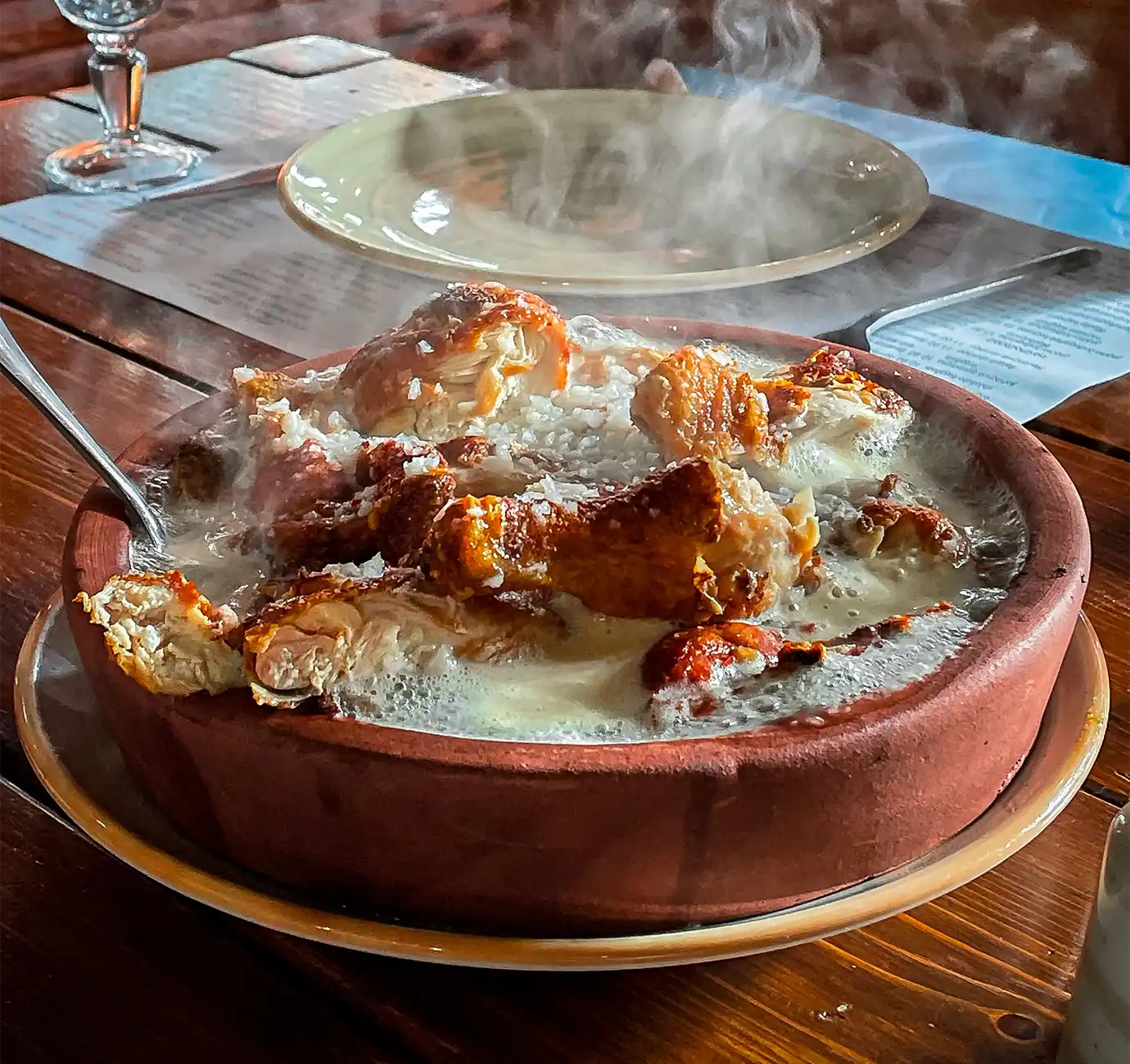
Shkmeruli comes from the Racha mountains: fried chicken finished in a sauce of milk, butter, and a serious quantity of garlic. The description sounds heavy. The result is balanced and deeply savory.
Georgia has an almost devotional relationship with garlic. Shkmeruli is its clearest statement. Order extra bread. You will want to clean the pan.
9. Ojakhuri — The Family Skillet
Ojakhuri is pan-fried potatoes, pork, and onion, seasoned with Georgian spices and served in the skillet. The name translates roughly as “family dish.”
Unfussy, generous, and the sort of thing Georgian families make on a Sunday. Portions are large enough to share between two people.
10. Satsivi — Poultry in Walnut Sauce
Satsivi is cold chicken or turkey coated in a thick amber walnut sauce with garlic, cinnamon, cloves, and marigold. The sauce is one of the most complex preparations in Georgian cooking, and every family has its own version.
Traditionally, a festive dish, served at the New Year and at major supras. Served cold. Do not send it back, thinking the kitchen made a mistake.
11. Chakapuli — Lamb with Tarragon
Chakapuli is a spring stew of lamb or beef simmered with white wine, unripe sour plums, garlic, and large bunches of fresh tarragon. The flavor is sour, herbal, and completely unlike anything in European cooking.
Chakapuli depends on young tarragon and unripe tkemali plums. Restaurants serve it from roughly April through early summer. If you visit Georgia in spring, order it the first time you see it on a menu. The window closes fast.
12. Churchkhela — Georgia’s Walnut Candy
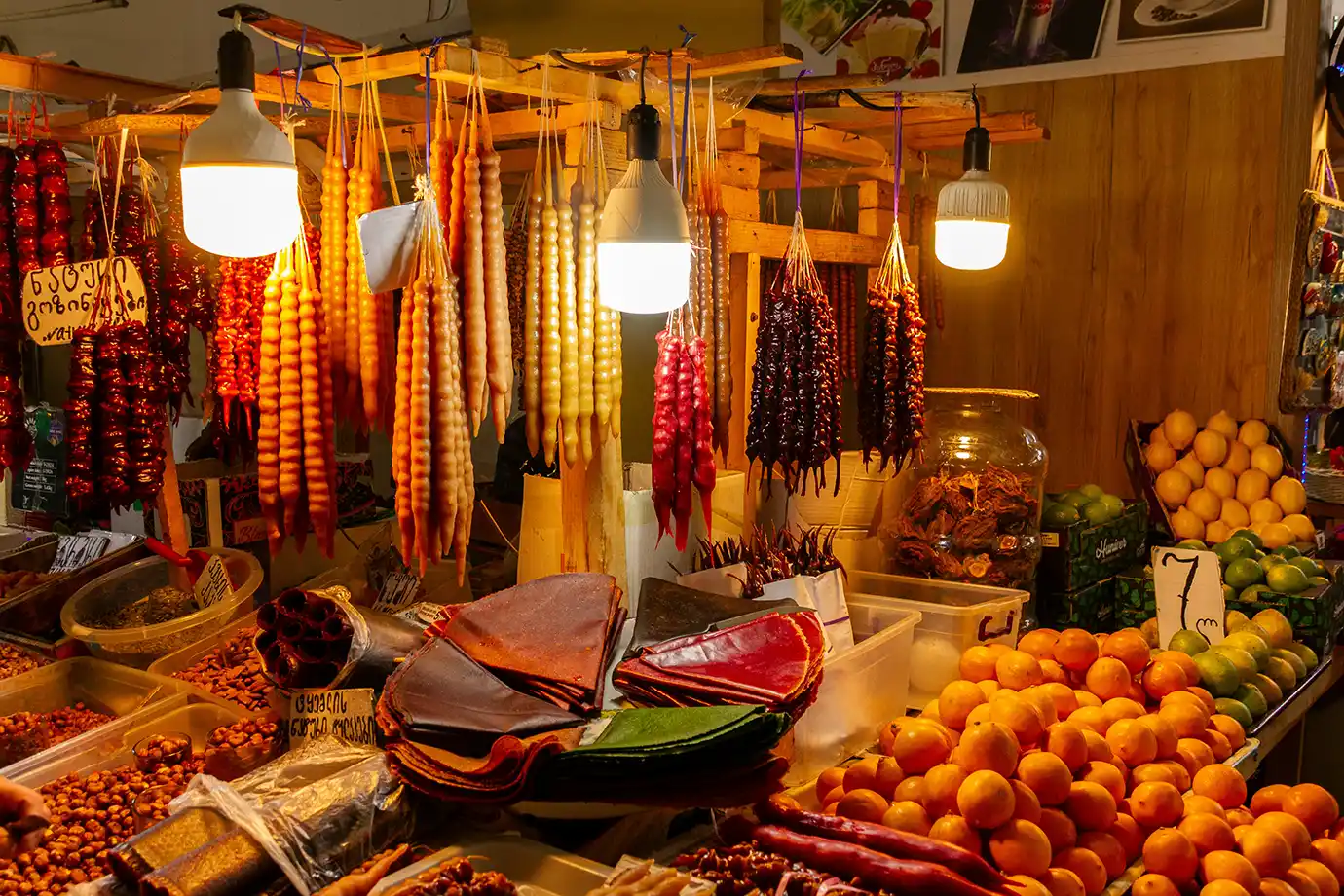
Churchkhela is walnuts threaded onto a string, repeatedly dipped in thickened grape juice, and then air-dried into long candles. The result is chewy, nutty, and fruity, with no added sugar.
In Eastern Georgia, grape must is thickened with wheat flour and called tatara. Western Georgia uses corn flour and calls the same base pelamushi.
Historically, it was carried by shepherds and soldiers as high-energy food. Georgians still call it the original energy bar. The best versions come from Kakheti and are made with Saperavi juice. Squeeze one before buying. It should give slightly, not crumble.
13. Tklapi — Fruit Leather
Tklapi is sun-dried fruit purée pressed into thin sheets, used both as a snack and as a souring agent in cooking. Plum, pomegranate, and cornelian cherry are the common versions.
The cornelian cherry version has a sharpness that has no Western equivalent. Cooks tear pieces into stews instead of adding vinegar or lemon. Buy it at Dezerter Bazaar in Tbilisi. It packs flat, weighs almost nothing, and makes a far better souvenir than a fridge magnet.
14. Kubdari — Svan Meat Bread
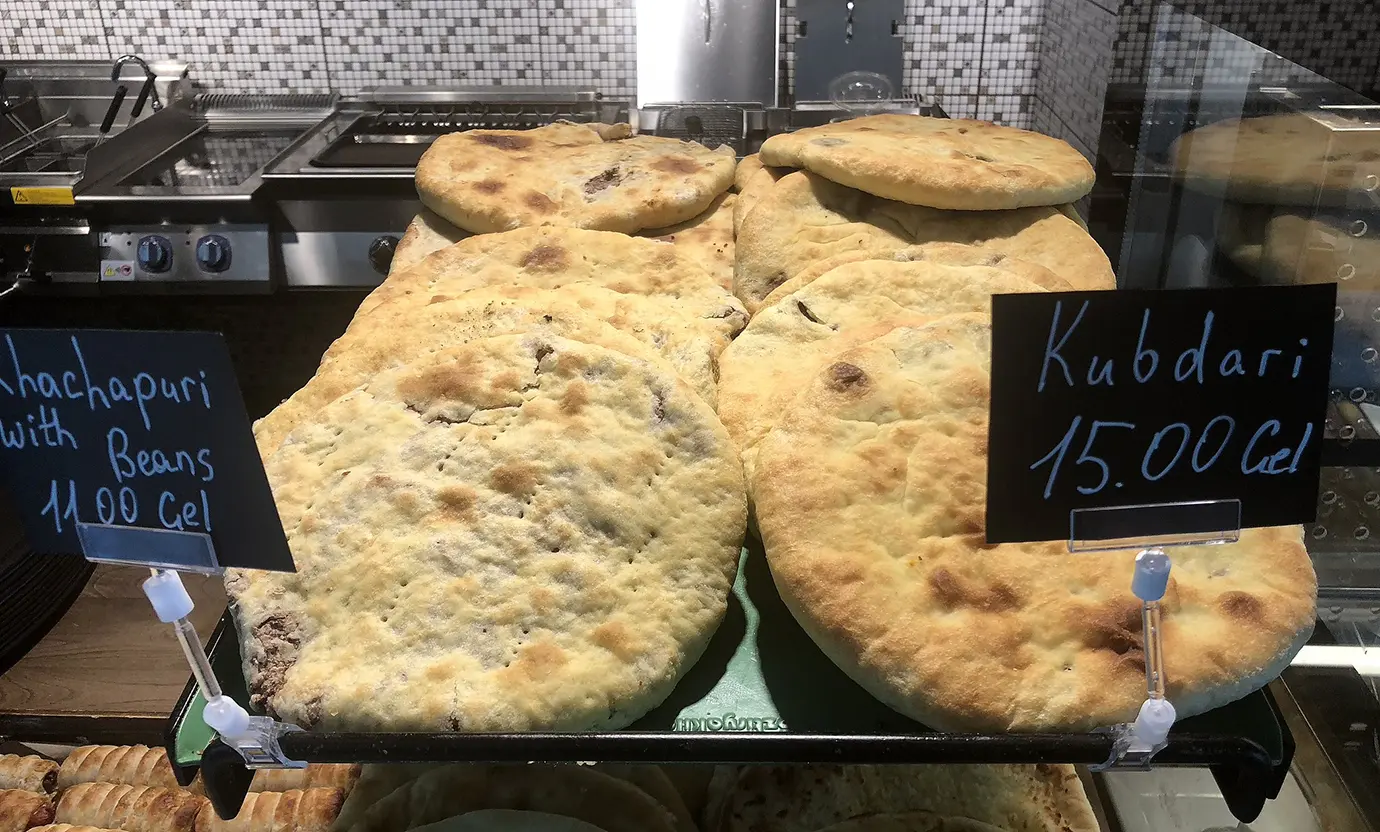
Kubdari is a flatbread from Svaneti filled with hand-chopped spiced meat. The seasoning comes from Svan salt, a regional blend of garlic, coriander, ground marigold, and blue fenugreek.
Think of it as the mountain relative of khachapuri, but heavier and considerably spicier. Authentic kubdari is hard to find outside Mestia and Ushguli. Restaurants in Tbilisi make a version, but the Svan salt is the difference, and it is fresher in the mountains. Buy a jar of Svan salt while you are there. It travels well and improves almost anything you cook at home.
15. Qvevri Wine — The 8,000-Year Method
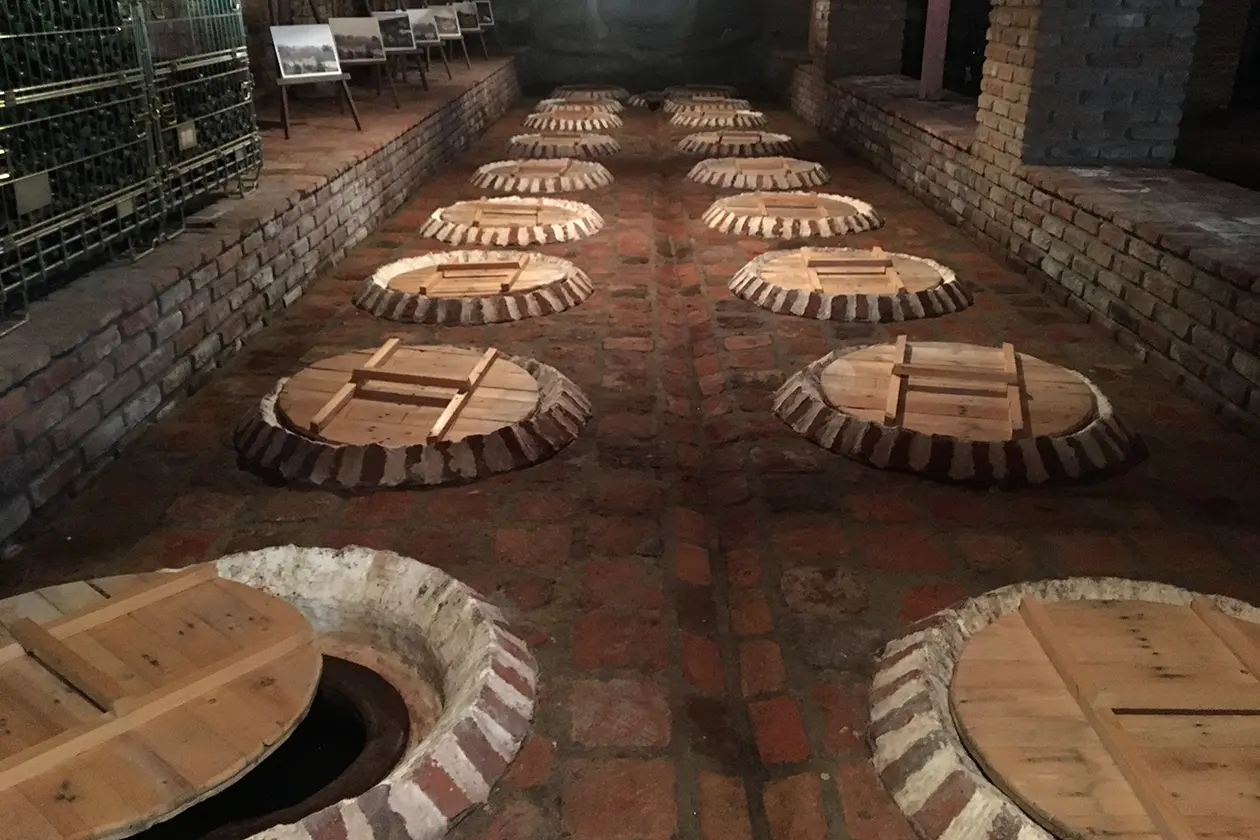
Qvevri wine is fermented and aged in egg-shaped clay vessels buried underground and sealed with beeswax. UNESCO inscribed the method on its Intangible Cultural Heritage list in 2013. Archaeological evidence at Gadachrili Gora dates Georgian winemaking to roughly 6000 BC.
White grapes fermented on their skins for four to six months produce amber wine, also called orange wine. Deep-colored, tannic, and structurally closer to a light red than to any European white.
Rkatsiteli is Georgia’s most widely planted white grape and the classic amber wine base. Saperavi is the flagship red, one of the rare grapes with pigmented flesh as well as skin.
In Kakheti, ask for the family’s own wine. It usually arrives in a pitcher and sometimes in a drinking horn.
Where to Eat Each Dish
Use this as a quick reference when planning where to eat across the country.
| Dish | Best Place to Try | Approx. Cost |
|---|---|---|
| Adjarian khachapuri | Batumi, Old Town Tbilisi | 12–18 GEL |
| Khinkali (10 pieces) | Pasanauri village, Machakhela, Tbilisi | 20–30 GEL |
| Mtsvadi | Kakheti vineyard restaurants | 25–40 GEL |
| Badrijani nigvzit | Any traditional restaurant | 8–12 GEL |
| Pkhali (mixed plate) | Traditional starter platter | 10–15 GEL |
| Lobio in a clay pot | Neighborhood restaurants | 8–12 GEL |
| Chakhokhbili | Family restaurants, guesthouses | 15–20 GEL |
| Shkmeruli | Racha-style restaurants, Tbilisi | 20–28 GEL |
| Churchkhela | Dezerter Bazaar, Kakheti markets | 3–5 GEL each |
| Qvevri wine (glass) | G.Vino, Wine Bar 8,000 Vintages | 10–20 GEL |
Prices shift with season and location. Mountain towns run higher than Tbilisi in peak months.
What Is a Georgian Supra and How Should You Behave?
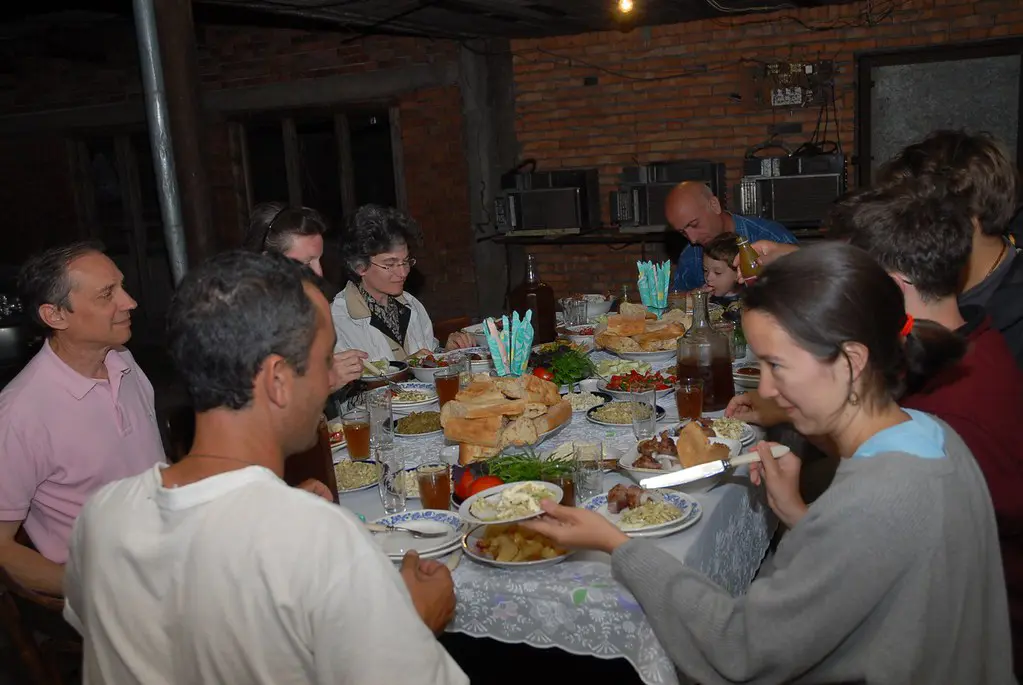
A supra is a structured Georgian feast led by a tamada, or toastmaster, who controls the order and pace of every toast. Georgia added supra traditions to its national Intangible Cultural Heritage list in 2017. A full supra runs four to six hours. Wedding supras run longer.
Georgian polyphonic singing, which UNESCO recognized separately, often begins around the seventh or eighth tone. Nobody announces it. Someone starts, and the table joins.
Supra Rules That Actually Matter
- Do not drink before the tamada toasts. Every glass follows a toast. Sipping between toasts is the most common foreign mistake.
- Never interrupt a toast. Talking over the tamada or another speaker is the single rudest thing you can do at the table.
- Accept an alaverdi if offered. The tamada may pass the floor to you to expand on the theme. A few sincere sentences are enough.
- Share everything. Dishes arrive in the center. Nobody gets an individual plate of anything.
- Leaving food is fine. A cleared table suggests the host did not provide enough.
- Take the chacha. Georgian grape brandy runs 40 to 60 percent for commercial bottles and considerably higher when home-distilled. Accept a small glass. Declining outright reads as cold.
- Respect the bread. Georgians treat puri as sacred. Never throw it away or step over it.
- Bring something. Invited to a Georgian home? Arrive with wine, chocolates, or fruit. Never empty-handed.
Skipping alcohol is genuinely fine. Ask for limonati, the Georgian homemade lemonade, or mineral water. Health and religious reasons get universal respect.
What Should Vegetarians Eat in Georgia?
Georgia is one of the easiest countries in the region for vegetarians, thanks to the Orthodox fasting calendar. Practicing Georgians abstain from meat and dairy during long fasting periods, so most restaurants keep a full range of vegan dishes on the standard menu year-round.
Reliable vegetarian and vegan orders: pkhali, badrijani nigvzit, lobio, ajapsandali (eggplant and pepper stew), mchadi with cheese, and mushroom ketsi. Vegans should avoid all khachapuri and confirm that lobio has not been cooked with meat stock.
Ask for a “sadgesastsaulo” or fasting menu. Staff will understand immediately.
Practical Food Tips for Georgia
Restaurants in Georgia open around midday and serve continuously until late. Dinner at 9 pm is normal in summer. Georgia has almost no traditional breakfast culture. Bakeries and cafes handle mornings.
Portions are larger than they look on the menu. Two people ordering three dishes plus bread will usually end up with too much food. English menus are common in Tbilisi, Batumi, and Kutaisi. Rural areas may have none, and staff may not read Latin script. Point at what neighbors are eating.
Tipping is not obligatory but appreciated. Ten percent is generous. Many restaurants already add a service charge, so check the bill. Carry cash for markets, bakeries, and village restaurants. Cards work almost everywhere in the cities.
Frequently Asked Questions
What is the national dish of Georgia?
Khachapuri, the cheese-filled bread, is generally considered Georgia’s national dish. More than ten regional varieties exist, and the two most common are Imeruli, a round, closed loaf with cheese inside, and Adjaruli, the boat-shaped version topped with egg and butter. Khinkali, the soup dumpling, holds equal cultural weight and is often named alongside khachapuri as a co-national dish.
How do you eat khinkali properly?
Hold the twisted knot at the top of the dumpling and bite a small hole in the side. Sip the hot broth out first, then eat the rest. Never use a fork, since piercing the dough releases the broth onto your plate. Leave the top knot behind. Georgians count the knots at the end of the meal.
Is Georgian food spicy?
Georgian food is aromatic rather than hot. Cooks rely on coriander, blue fenugreek, marigold, tarragon, and garlic for heat rather than chili. A few dishes carry real spice, notably Megrelian dishes and adjika, the red pepper paste served on the side. Ask for adjika separately if you want heat, and taste before adding it.
What is amber wine, and how is it different?
Amber wine, sometimes called orange wine, is made from white grapes fermented on their skins in buried clay qvevri for four to six months. Skin contact gives the wine deep color, firm tannins, and a texture closer to a light red than a conventional white. Rkatsiteli is the classic amber grape. UNESCO recognized the qvevri method in 2013.
Can I find good vegetarian food in Georgia?
Yes, and more easily than in most neighboring countries. Orthodox fasting traditions mean that restaurants keep vegan dishes on the menu year-round. Order pkhali, badrijani nigvzit, lobio, ajapsandali, and mchadi. Vegans should skip all khachapuri varieties and confirm that bean dishes are cooked without meat stock before ordering.
Where can I try churchkhela and Svan salt?
Churchkhela is sold at every Georgian market, but the best versions come from Kakheti and are made with Saperavi grape juice. Buy it at Dezerter Bazaar in Tbilisi or directly from roadside stalls in wine country. Svan salt is authentic only in Svaneti, so buy a jar in Mestia or Ushguli rather than at a souvenir shop in Tbilisi.