


Tbilisi holds about 1.2 million people and sits in a river gorge heated by natural hot springs. The best things to do in Tbilisi cluster in a walkable core: the Old Town lanes, the Sulphur bath district, the ridge-top viewpoints, and a natural wine scene built on 8,000 years of practice.
Most visitors arrive with low expectations. Almost nobody leaves that way. Below you will find what to see, what it costs, how to get there, and the operational details that guidebooks skip.
What Are the Best Things to Do in Tbilisi?
Start with the Old Town, the Sulphur baths at Abanotubani, and the cable car ride to the Sololaki ridge. Add the Georgian National Museum, an evening in a natural wine bar, and a half-day at Fabrika. Three full days comfortably cover the city. Two days’ work if you move efficiently.
Everything in central Tbilisi sits within a 25-minute walk of everything else. The city rewards walking more than any other capital in the Caucasus. Cobblestones are uneven, so bring shoes with a real grip.
Old Town (Dzveli Tbilisi) — Where to Start
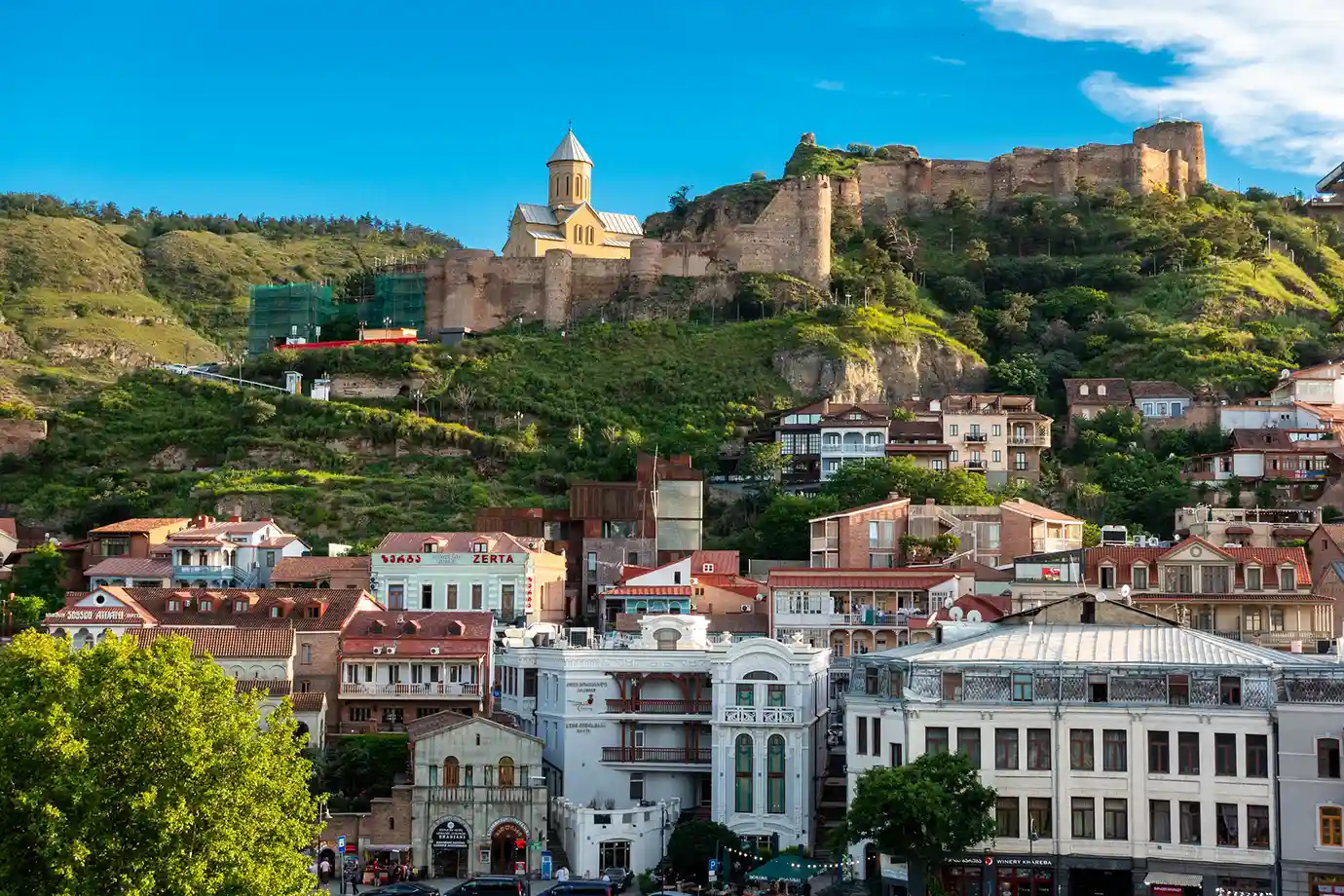
Old Town is the historic core and your logical base for the first day. Narrow lanes climb from the Mtkvari River toward the Sololaki ridge, lined with carved wooden balconies, small churches, and courtyards you can walk straight into. Everything worth seeing in the district falls within one square kilometer.
Give yourself a full morning here with no fixed schedule.
Abanotubani — The Bath District
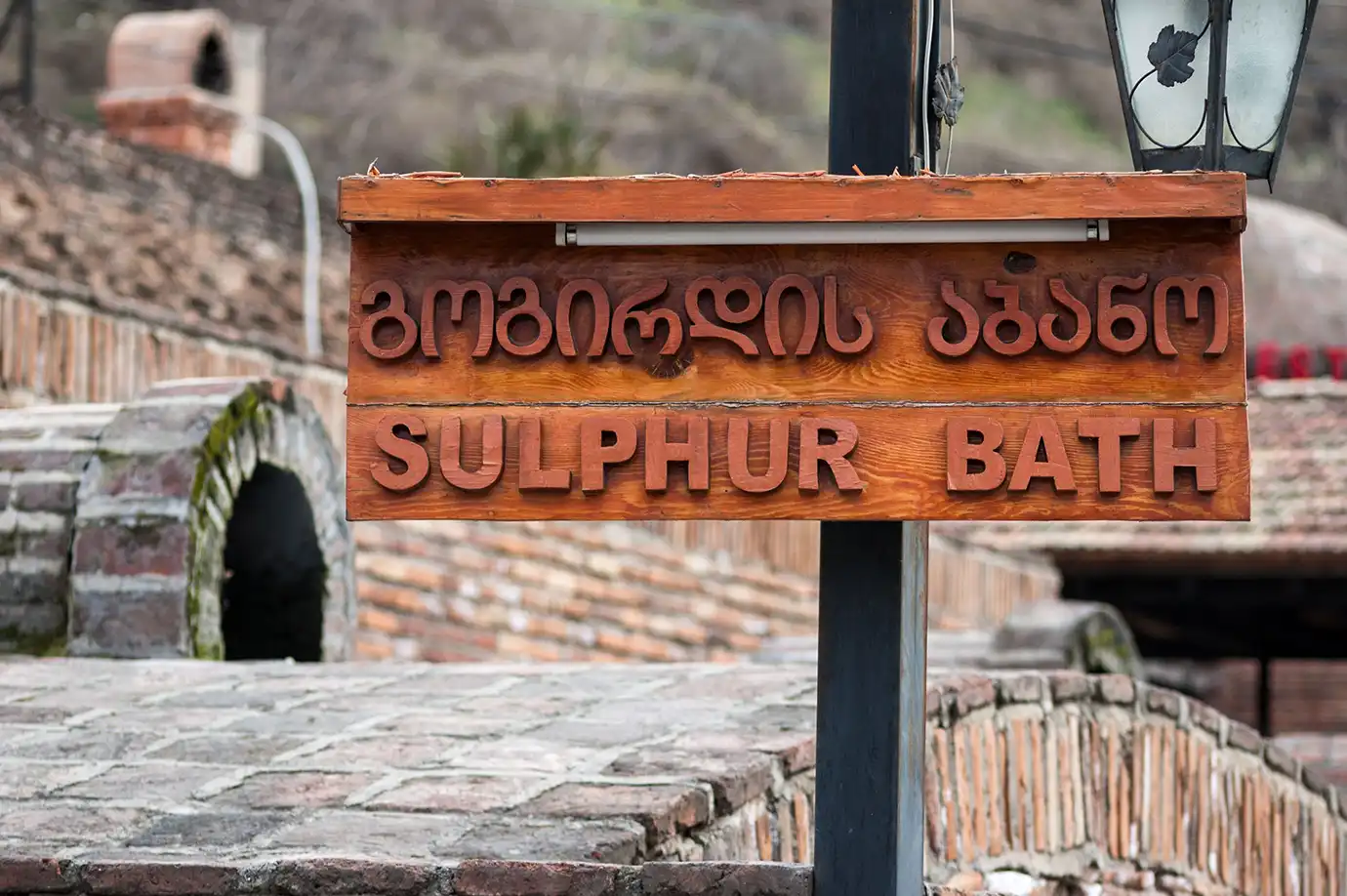
Domed brick bathhouses sit half-buried in the ground at the base of the gorge. The Sulphur smell hits you about 40 meters before you reach the entrance. Locals stop noticing it within a day.
Water rises naturally from underground at 37–42°C. No heating, no treatment, no pumps.
Leghvtakhevi — The Waterfall Gorge
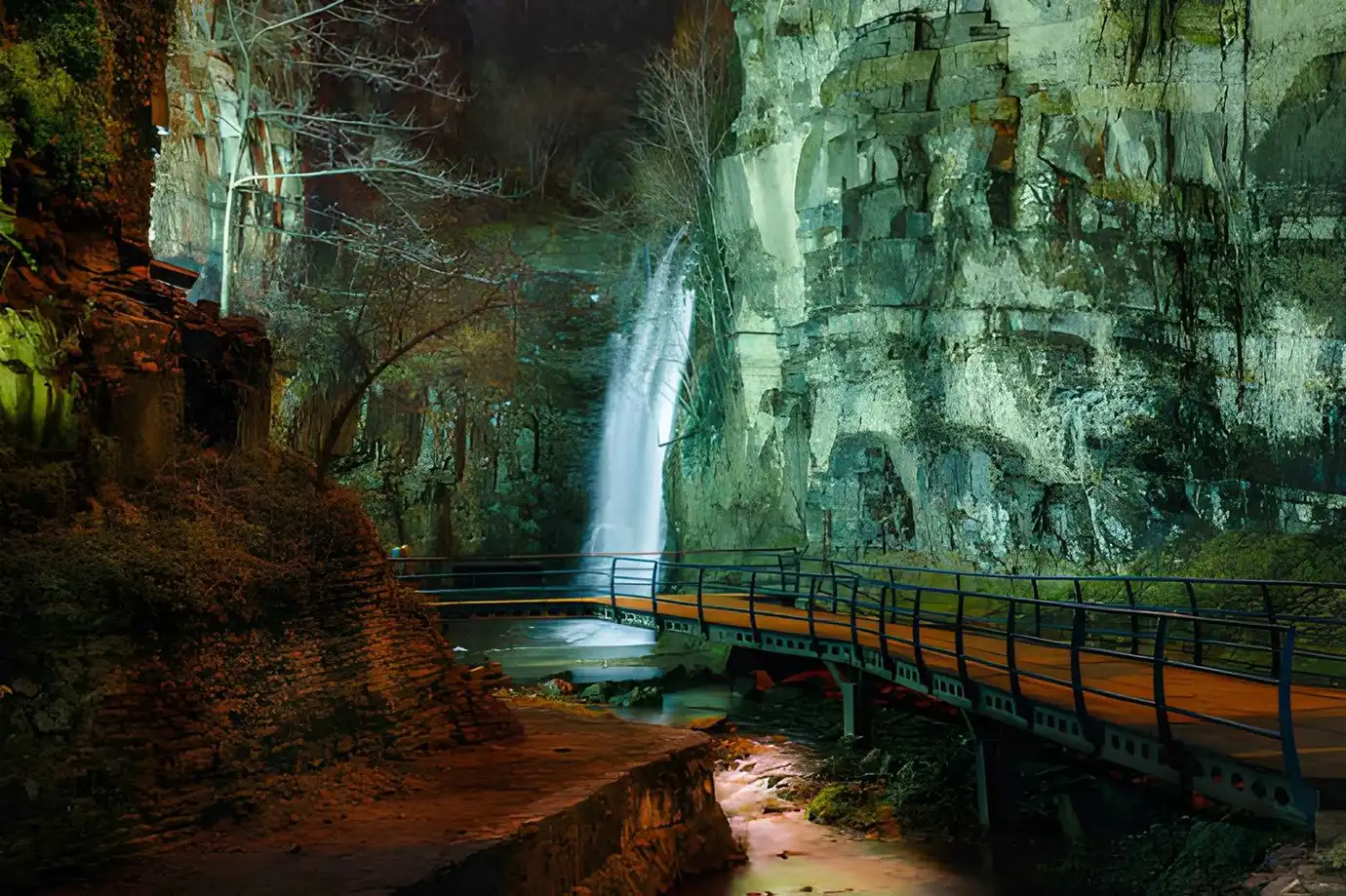
Walk past the bathhouses and follow the narrow gorge upstream. A waterfall drops from the cliff face at the far end, roughly 22 meters high. Entry is free. The walkway takes ten minutes end to end. Go early in the morning for photos without crowds.
Metekhi Church and the Gorgasali Statue
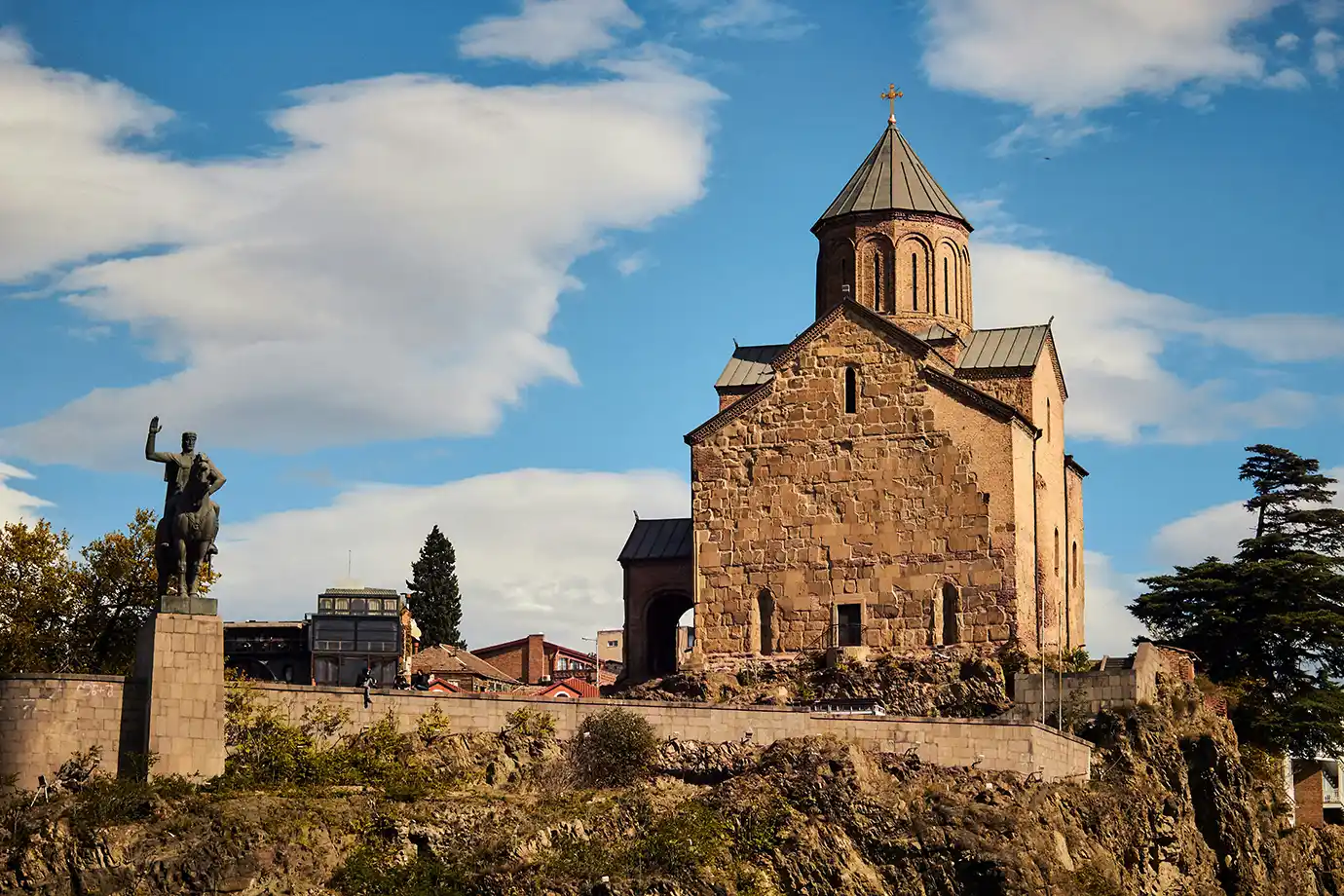
The 13th-century Metekhi Church sits on a cliff directly above the river. Cross the Metekhi Bridge from Old Town to reach it.
Beside the church stands the equestrian statue of King Vakhtang Gorgasali, who founded Tbilisi in the 5th century. The view back toward Narikala from here is the classic Tbilisi photograph.
Jan Shardeni Street
Jan Shardeni is the busiest cobbled lane in Old Town. Wine bars, cafes, and restaurants fill both sides. Prices here run 30–50 percent above those of neighborhood restaurants two streets away. Come for the evening atmosphere. Eat somewhere quieter.
Related Article: Best Time to Visit Georgia
Narikala Fortress and Mother of Georgia — What to Know Before You Go
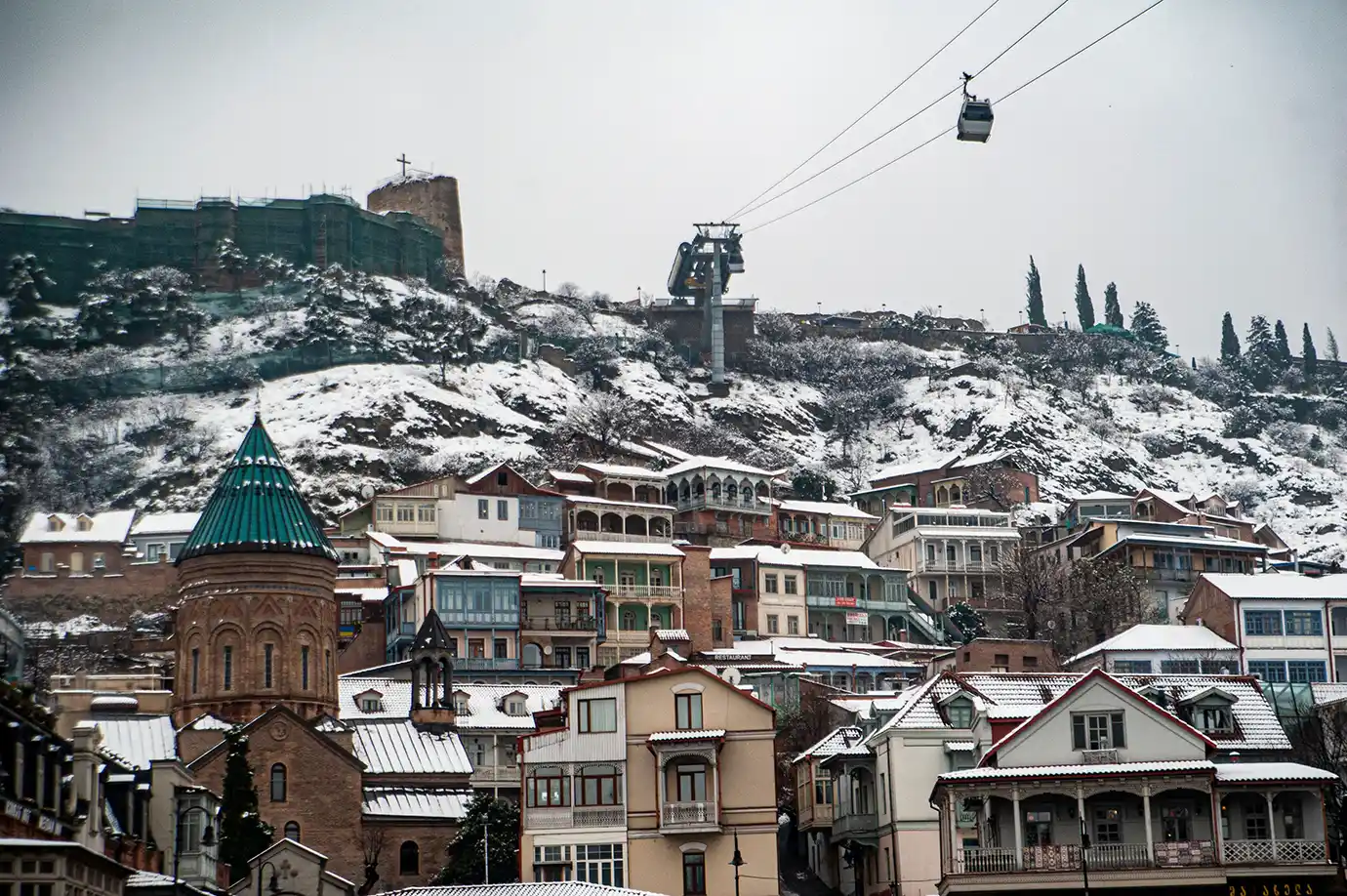
Narikala Fortress is currently closed to visitors for restoration work. The cable car still runs, and the Mother of Georgia statue, the ridge-top viewpoints, and the National Botanical Garden all remain open. Check access status before you plan a fortress visit, because the reopening date shifts.
The ridge is still worth the trip even with the fortress closed.
The Cable Car from Rike Park
The Rike Park to Narikala cable car covers 500 meters in about 90 seconds. One-way fare is 2.5 GEL. A return trip costs 5 GEL, since each direction is charged separately. Here is the detail that catches out most first-time visitors. The cable car accepts only a MetroMoney card. Cash is not taken at the cabin.
Buy the card for 2 GEL at the Rike station kiosk, any metro station, or a yellow street kiosk. One card pays for several passengers, so a group needs only one. Load at least 10 GEL when you buy it. You will use the same card on the metro and buses.
The lower station sits in Rike Park near the Bridge of Peace. Strong winds or thunderstorms can temporarily close the line.
Kartlis Deda (Mother of Georgia)
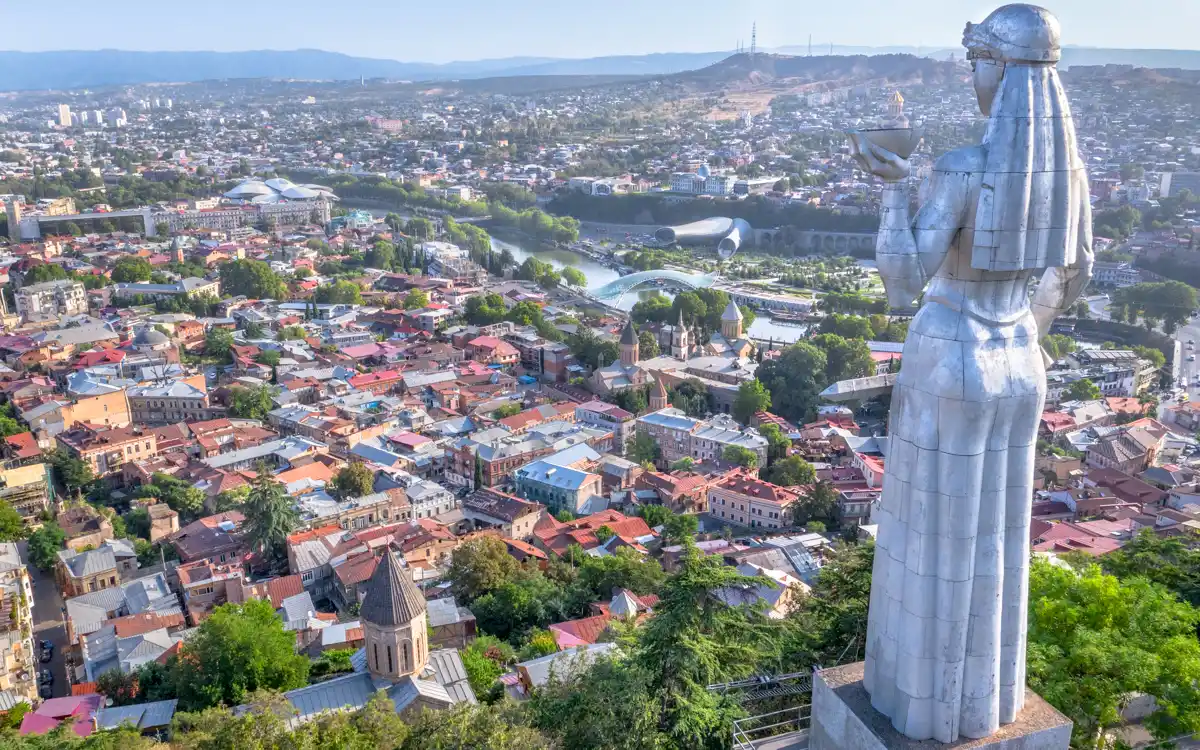
A 20-meter aluminum statue crowns Sololaki Hill above the fortress. She holds a sword in one hand and a bowl of wine in the other. The meaning is direct. Enemies get the sword. Guests get the wine. Walk down through the Sololaki lanes rather than riding the cable car back. The descent takes about 25 minutes and passes through the city’s best residential streets.
Are the Tbilisi Sulfur Baths Worth It?
Yes, and they are not a tourist invention. Tbilisi exists because of these springs, and the baths have anchored city social life for centuries. Pushkin and Alexandre Dumas both wrote about bathing here. The mineral-rich water leaves your skin noticeably softer for two or three days.
Book a private room rather than the shared public halls.
How to Book and What Happens
Chreli-Abano and Royal Bath both offer private rooms by the hour. A room for two people with a kisi scrub and massage runs roughly 80–150 GEL per hour, depending on the venue.
Book ahead on weekends. Walk-in slots disappear by mid-afternoon. The sequence is simple. You soak in the hot pool, move to the steam room, then lie on a marble slab while an attendant scrubs you head to toe with a coarse mitt called a kisi.
The scrub is firmer than most visitors expect. Dead skin comes off in visible rolls. Nobody warns you about that part. Consider yourself warned.
Practical Bath Tips
- Bring your own flip-flops. Rental sandals are available but poorly sized.
- Towels are provided in private rooms. Confirm when booking.
- Do not wear silver jewelry. Sulphur tarnishes it within minutes.
- Allow 90 minutes total, not 60. You will not want to rush.
- Skip the baths on your last morning if you have a long flight. You will feel pleasantly wrecked afterward.
Georgian National Museum and the Gold Fund
The Georgian National Museum on Rustaveli Avenue holds the most important archaeological collection in the Caucasus. Standard entry now costs around 40 GEL, including the Gold Fund. The museum is open Tuesday through Sunday and closed on Mondays. Allow two hours minimum. Three, if you read the panels.
Why the Gold Fund Matters
The Gold Fund displays Colchian gold jewelry from the Bronze Age. Some pieces predate Scythian goldwork entirely. Look for the animal-form pendants and the granulated gold beads. The craftsmanship at that scale, made without magnification, is difficult to process.
Ancient Colchis occupied what is now western Georgia. The gold in these cases is the historical basis for the Golden Fleece legend that drew Jason and the Argonauts east. The Soviet Occupation Hall on the upper floor covers the period from the 1921 annexation to independence in 1991. Short, direct, and worth 20 minutes.
Related Article: Georgian Food Guide
Liberty Square, Rustaveli Avenue, and the Opera House
Liberty Square marks the center of modern Tbilisi, with the golden Saint George column at its middle. Rustaveli Avenue runs northwest from the square and holds the National Museum, the Opera House, the Rustaveli Theatre, and the Parliament building. The whole stretch takes 20 minutes to walk.
Rustaveli Avenue has been undergoing major rehabilitation work. Sections close intermittently, and several bus routes divert. Check current conditions before relying on it as a transit route.
The Tbilisi Opera and Ballet Theatre
Founded in 1851, the Opera House is one of the most beautiful theaters in the region. The Moorish Revival interior alone justifies a ticket. Check the program when you arrive. Georgian ballet has a serious international reputation, and tickets cost a fraction of European equivalents. Dress smart-casual. Georgians take the opera seriously.
Related Article: Georgia Travel Cost
Fabrika — Tbilisi’s Creative Quarter
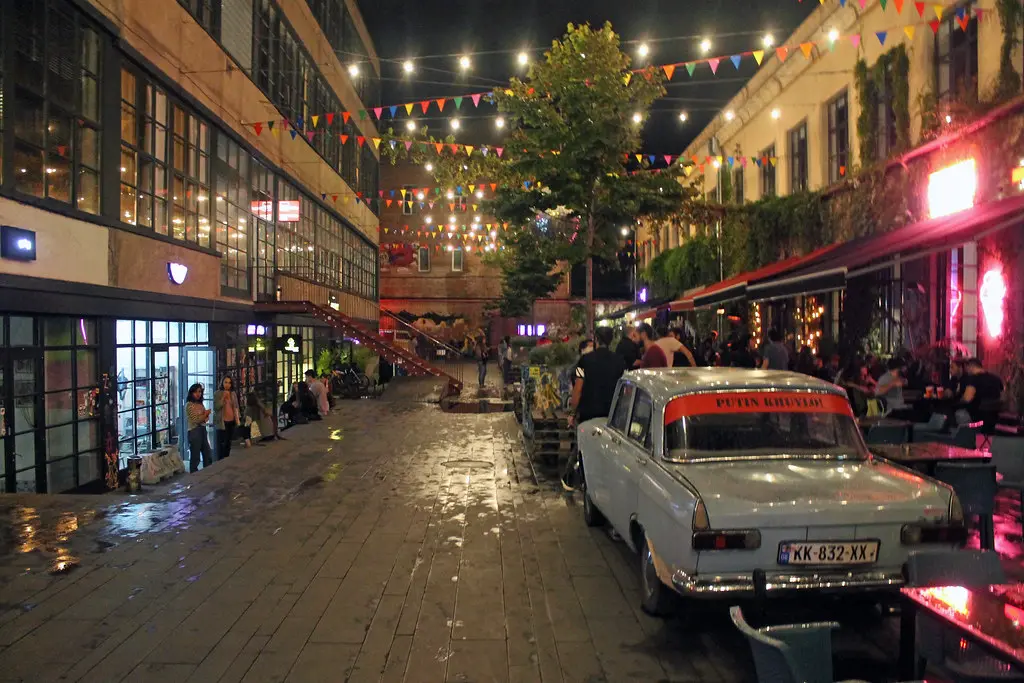
Fabrika occupies a former Soviet sewing factory at 8 Egnate Ninoshvili Street in the Chugureti district. Entry to the courtyard is free and open 24 hours. Inside, you will find independent bars, cafes, designer shops, art studios, a coworking space, and a large hostel arranged around an industrial yard.
The courtyard is covered in murals and fills up after dark.
Fabrika sits 600 meters from Marjanishvili metro station, roughly a five-minute walk. From Old Town, walking along the riverbank takes 20–25 minutes. Daytime here is calm and good for coffee and shopping. Evenings from 18:00 onward bring the crowd, with live music most Fridays and Saturdays.
Fabrika shows you modern Tbilisi more honestly than any museum. Post-Soviet, international, unpretentious, and completely comfortable in its own skin.
Where to Drink Georgian Wine in Tbilisi
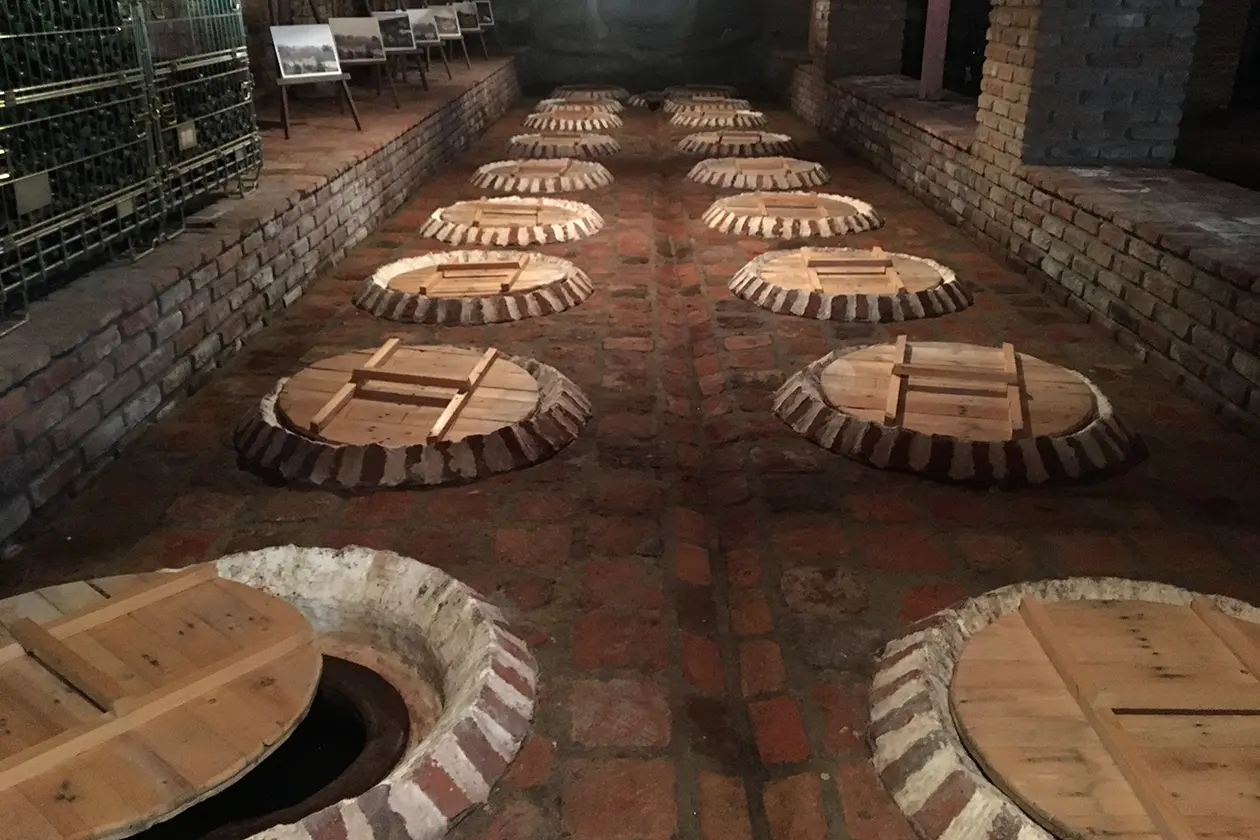
Tbilisi runs one of the strongest natural wine scenes anywhere, built on an unbroken 8,000-year tradition. Georgian winemakers ferment in qvevri, large clay vessels buried underground. UNESCO added the qvevri method to its Intangible Cultural Heritage list in 2013.
The natural wine movement here is not a trend. It is the default.
Three Bars Worth Your Evening
Vino in the Vera neighborhood carries hundreds of small-producer labels. The staff knows every grower personally.
Wine Bar 8,000 Vintages has several locations and suits first-timers best. Tell them what you like, and they will build you a flight.
Ghvino Underground in Old Town occupies a cellar space and offers an excellent selection of amber wines.
What to Order First
Start with a Rkatsiteli, Georgia’s most widely planted white grape. Clean, mineral, and a useful baseline.
Move to an amber wine next. White grapes fermented on their skins in qvevri, producing a tannic, orange-hued wine that tastes closer to a light red than a white.
Finish with Saperavi, the flagship Georgian red. Deep, dark, and firmly tannic.
Ask for the amber wine before the red. Reversing that order flattens everything.
Dry Bridge Flea Market and Souvenir Shopping
Dry Bridge Market runs daily near Dedaena Park, with Saturday and Sunday the busiest days. Sellers spread Soviet-era objects, Georgian silver, religious icons, carpets, oil paintings, antique books, military medals, and chess sets across the ground and along the railings.
Bargaining is expected. Start at roughly half the asking price.
Best Things to Buy
- Georgian silver filigree jewelry, particularly older pieces
- Soviet enamel pins, watches, and camera equipment
- Vintage maps, postcards, and photographs
- Hand-thrown ceramics from regional potters
- Lurji supra, the blue-and-white printed Georgian tablecloths
For fixed-price shopping without negotiation, try the Fabrika boutiques, the Georgian Heritage Crafts Association shops, or the museum gift shops on Rustaveli Avenue.
Check any icon or antique carefully before buying. Export restrictions apply to genuine antiquities over 50 years old.
Best Day Trips from Tbilisi
Tbilisi works as a base for most of central and eastern Georgia. Mtskheta sits 30 minutes away, Sighnaghi 1.5 hours, and Kazbegi about 3 hours by road. All are reachable and back in a day, though Kazbegi rewards an overnight stay.
Here is how the main options compare.
| Destination | Drive Time | What You See | Day Trip or Overnight |
|---|---|---|---|
| Mtskheta | 30 minutes | Svetitskhoveli, Jvari Monastery | Half day |
| Gori and Uplistsikhe | 1.5–2 hours | Stalin Museum, cave city | Full day |
| Sighnaghi | 1.5 hours | Walled town, wine country | Full day |
| Davit Gareja | 1.5–2 hours | Cave monastery, border ridge | Full day |
| Kazbegi | 3 hours | Gergeti Church, Mt Kazbek | Overnight preferred |
| Tbilisi Sea | 15 minutes | Reservoir, cycling, swimming | Half day |
Mtskheta pairs naturally with Gori and Uplistsikhe in one long day. Do not attempt Kazbegi as a same-day return trip in winter, when the Jvari Pass can close without warning.
Getting Around Tbilisi: Transport, Taxis, and Airport Transfers
Tbilisi public transport costs 1 GEL per ride, flat, regardless of distance. One tap buys 90 minutes of unlimited transfers across the metro and city buses. Pay with a MetroMoney card (2 GEL, refundable) or tap a contactless bank card directly at the gate.
The metro has two lines and 23 stations. Trains run daily from 06:00 to around midnight.
Taxis and Ride Apps
Use Bolt or Yandex Go for every taxi journey. Both apps show the fare before you accept, and both undercut street taxis significantly. Never take an unmetered taxi from the airport arrivals hall. Drivers there quote three to four times the app rate.
Airport Transfer
Tbilisi International Airport (TBS) sits 18 km southeast of Old Town. A Bolt ride runs roughly 25–40 GEL and takes 25–35 minutes outside rush hour. No metro line reaches the airport. Bus 337 connects the airport to the city center, but its routes have shifted due to roadworks, so check before relying on it.
Where to Stay
Old Town (Dzveli Tbilisi) puts you inside the atmosphere and within walking distance of nearly everything. Vera suits travelers who want boutique hotels, quieter streets, and the best wine bars. Rooms Hotel Tbilisi and Stamba Hotel both sit here. Mtatsminda climbs the hillside and delivers the views, but expect steep walks home.
Is Tbilisi Safe for Tourists?
Tbilisi ranks among the safest capitals in the region, placing 44th globally on recent city safety indexes. Violent crime against visitors is rare. Walking alone at night through Old Town, Vera, and Rustaveli is normal and comfortable, including for solo female travelers.
Three practical cautions apply.
Traffic is assertive, and crossings are not always respected. Look both ways twice, even on a green signal. Stray dogs are common and generally calm. Tagged dogs have been vaccinated and neutered. Leave them alone, and they will leave you alone.
Cobblestones and open drainage grates cause more tourist injuries than anything else in the city. Watch your footing on the Sololaki descent.
How Many Days Do You Need in Tbilisi?
Three days cover Tbilisi properly, with a half-day left for Mtskheta. Two days is workable if you skip the museums. Five days lets you add Sighnaghi and the Kakheti wine country without rushing.
Here is a practical structure.
Day 1: Old Town, Abanotubani baths, Leghvtakhevi gorge, Metekhi Church. Evening on Jan Shardeni.
Day 2: Cable car to the Sololaki ridge, Mother of Georgia, walk down through Sololaki. Afternoon at the Georgian National Museum. Evening wine bar in Vera.
Day 3: Morning at Dry Bridge Market. Afternoon at Fabrika. Evening opera or a supra dinner.
Day 4 (optional): Mtskheta in the morning, Gori and Uplistsikhe in the afternoon.
Frequently Asked Questions
Is Narikala Fortress open to visitors?
Narikala Fortress is currently closed for restoration work, and the reopening date has been postponed multiple times. The cable car from Rike Park still operates normally, and the ridge-top area remains fully accessible. You can still reach the Mother of Georgia statue, the viewpoints, and the National Botanical Garden below the ridge. Confirm current access before planning a fortress-specific visit.
How much does the Tbilisi cable car cost?
The Rike Park to Narikala cable car costs 2.5 GEL for a one-way trip, so a return journey costs 5 GEL. Payment requires a MetroMoney card, which costs 2 GEL at the station kiosk. Cash and ordinary bank cards are not accepted at the cabin gate. One card can pay for multiple passengers traveling together.
Do I need to book the Sulphur baths in advance?
Private rooms at popular bathhouses like Chreli-Abano and Royal Bath fill up quickly on weekends and holidays. Book at least a day ahead for a Saturday or Sunday slot. Weekday mornings usually accept walk-ins without difficulty. Booking ahead also lets you confirm whether towels, sheets, and a kisi scrub are included in the room rate.
What is the best neighborhood to stay in Tbilisi?
Old Town gives you the strongest atmosphere and puts nearly every major sight within walking distance. Vera suits travelers wanting boutique hotels, better restaurants, and the best natural wine bars, with a 15-minute walk into Old Town. Mtatsminda offers the finest views but involves steep uphill returns. First-time visitors do best in Old Town or Vera.
Can I use my phone and bank card easily in Tbilisi?
Yes. Contactless Visa and Mastercard work at most Tbilisi restaurants, hotels, shops, and metro gates. Carry some cash for markets, marshrutka minibusses, and smaller neighborhood restaurants. Buy a local SIM from Magti or Geocell at the airport for around 5 USD, which covers roughly 10 GB for 30 days with strong city coverage.
Is Tbilisi walkable for older travelers?
Central Tbilisi is compact but genuinely hilly, with uneven cobblestones throughout Old Town and Sololaki. Travelers with limited mobility should use the cable car in both directions rather than walking down the ridge. Bolt taxis cost very little and cover short distances easily. Rustaveli Avenue and Rike Park are flat, paved, and comfortable for slower walking.