


When travelers ask is cambodia safe to visit, the answer depends on the region. The country is safe for the areas travelers actually visit, with Siem Reap, Angkor Wat, Phnom Penh, Kampot, Kep, and the islands all operating normally. The exception is the northern border zone around Preah Vihear, roughly 140 kilometers northeast of Siem Reap. Armed conflict with Thailand damaged the temple and left unexploded ordnance across the area. Preah Vihear is closed to visitors. Angkor is not affected.
The distance between the restricted zone and the places you plan to go is what puts the risk into perspective. Angkor Wat sits roughly 140 kilometers from the border area. Phnom Penh is over 400 kilometers away. Kampot and Kep are further still. If you are visiting the standard destinations, the border situation does not affect your trip.
Is Cambodia Safe Right Now — the Border Situation Explained
The border fighting between Cambodia and Thailand occurred along the northern frontier in Preah Vihear province. A ceasefire is in place. Certain sites are closed or restricted, and Thai land crossings remain shut. The fighting did not reach Siem Reap, Phnom Penh, or any coastal destination.
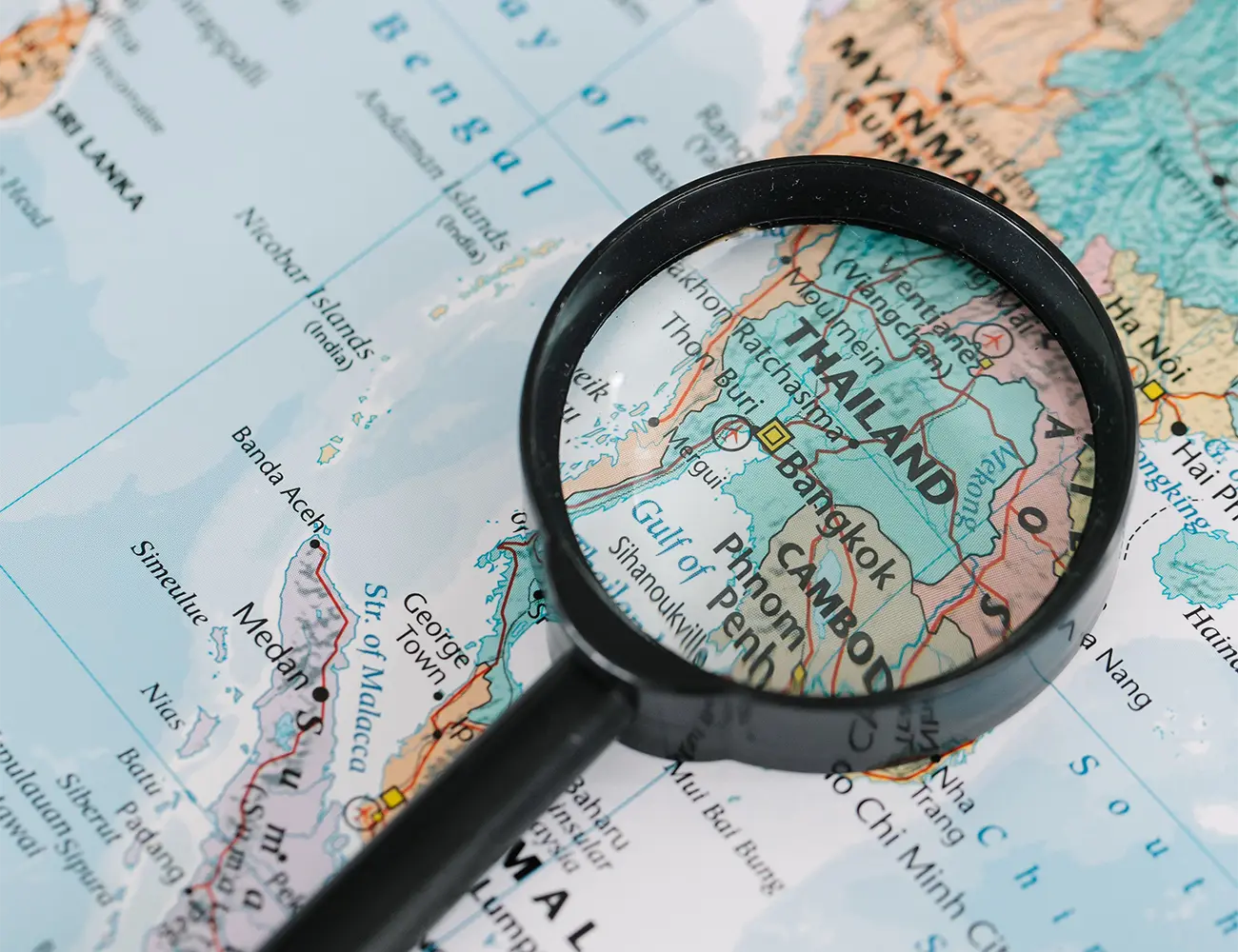
What Happened and Where
Armed conflict broke out along the Dangrek mountain range on the Thai-Cambodian border. The fighting centered on the area around the Preah Vihear temple in the far north. Siem Reap and Angkor Wat are located roughly 140 kilometers southwest of the affected zone. Phnom Penh is located over 400 kilometers to the south. The fighting did not spread to any tourist area.
A ceasefire is currently in place. Check the published review date on the page for when the position was last confirmed.
Preah Vihear — Closed and Why
Preah Vihear temple is closed to visitors for two reasons. Structural damage from the fighting has left parts of the site unsafe. Unexploded ordnance remains in the surrounding area, and clearance by the Cambodian Mine Action Center is ongoing.
Peregrine does not include Preah Vihear on any of its itineraries. If any operator offers it on a current package, treat that as a serious safety concern.
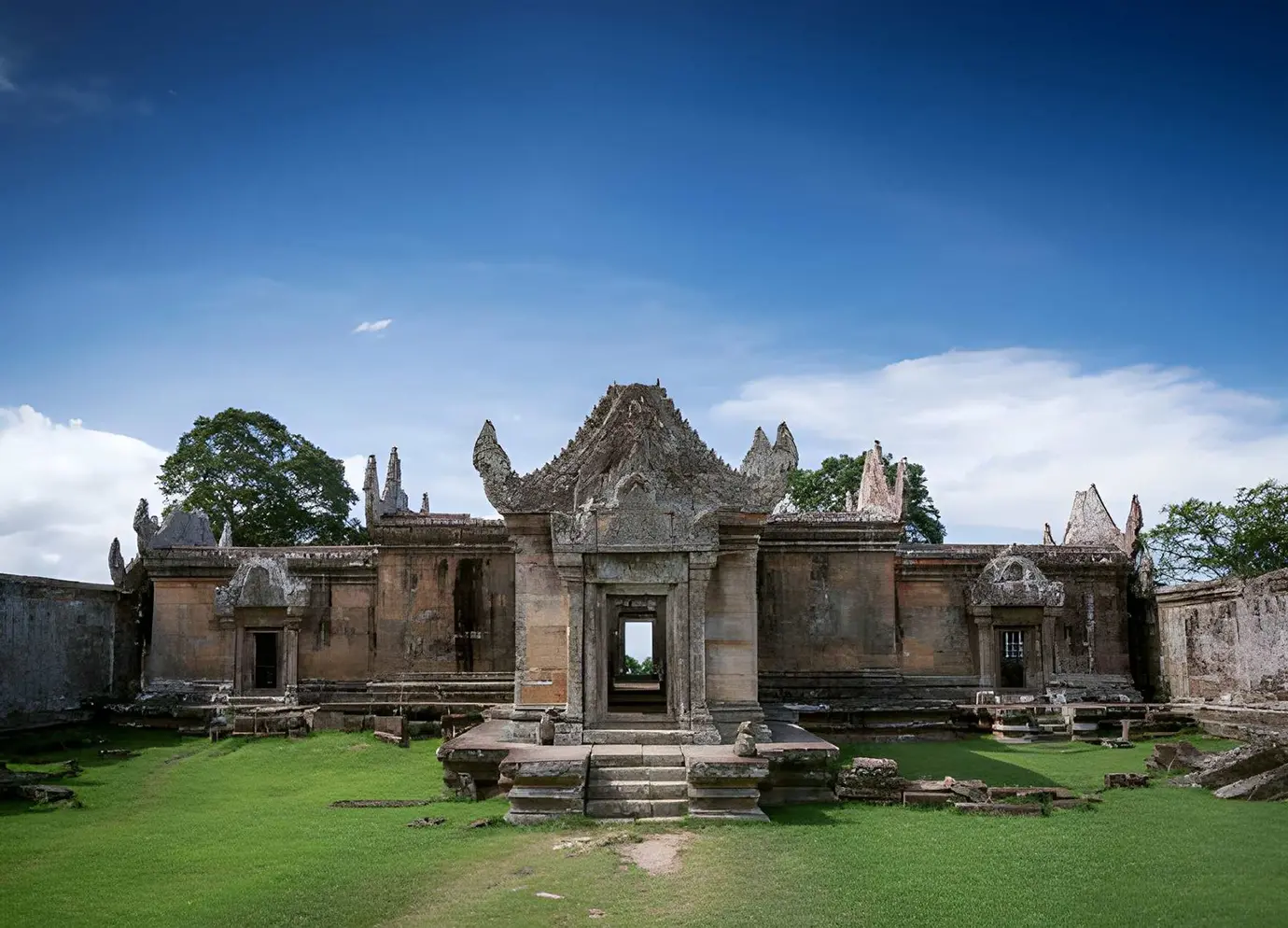
Banteay Chhmar — Current Access Status
Banteay Chhmar is a large Angkor-period temple in Banteay Meanchey province, northwest of Siem Reap and closer to the Thai border. Access is currently restricted. Peregrine does not route any itineraries through the area while restrictions remain in place. Check with your operator for the latest position before booking.
Thai Land Crossings — Why They Are Not in Our Itineraries
Thai-Cambodian overland border crossings are currently closed. Travelers combining Cambodia and Thailand must route by air. Flights connect Phnom Penh and Siem Reap to Bangkok in roughly one to two hours. No Peregrine itinerary routes through a Thai land crossing.
Do not plan an overland Cambodia-Thailand route through these crossings, regardless of what older travel guides may suggest.
Where Tourists Go — and How Far From the Border
The restricted zone sits in the far north of the country. Every standard tourist destination sits well south of it.
| Destination | Distance from Restricted Zone | Operating Normally? |
|---|---|---|
| Siem Reap and Angkor Wat | Roughly 140 km southwest | Yes, fully open |
| Phnom Penh | Over 400 km south | Yes, fully open |
| Kampot | Over 500 km south | Yes, fully open |
| Kep | Over 520 km south | Yes, fully open |
| Koh Rong and Koh Rong Sanloem | Over 550 km south | Yes, fully open |
| Battambang | Roughly 250 km west-southwest | Yes, open — further from the border than it appears on the map |
| Koh Kong and the Cardamoms | Over 400 km south-southwest | Yes, though Koh Kong province borders Thailand — check the current advisory |
| Preah Vihear | 0 km — the restricted zone itself | Closed to visitors |
Battambang sits northwest of Siem Reap and appears closer to the border on a map than it is in practice. Standard Battambang itineraries do not approach the border zone. Koh Kong province shares a border with Thailand, separate from the Preah Vihear conflict area. Check the current advisory for Koh Kong before booking a Cardamom Mountains itinerary. The main highway from Phnom Penh to Tatai is well south of any border area.
The Real Risks for Most Visitors
The border zone is the headline, but it is not what affects most travelers. The everyday safety picture in Cambodia covers five categories, each of which is manageable with simple precautions.
| Risk | Likelihood for Tourists | Prevention |
|---|---|---|
| Traffic accident | Moderate | Private car transfers, no motorbike rental, daytime travel |
| Bag snatching | Low to moderate in Phnom Penh | Cross-body bag, no phone in hand on the street |
| Stomach illness | Low to moderate | Bottled water, cooked food, and hand hygiene |
| Landmine or UXO | Essentially zero on tourist routes | Stay on marked paths everywhere |
| Scams | Low, small financial impact | Official visa portal, licensed taxis |
| Online scam compounds | Zero for standard tourists | Do not respond to unsolicited job offers |
Petty Theft — Bag Snatching and Phone Theft
Bag snatching from passing motorbikes is the most common crime affecting tourists in Phnom Penh. The theft is fast. A rider on a motorbike grabs a shoulder bag or a phone from an outstretched hand and is gone before you turn around.
Prevention is simple. Carry your bag across your body, not hanging from one shoulder. Do not hold your phone while walking on a busy street, particularly after dark. Use ATMs inside banks rather than on the street. The Riverside area and the streets around the Central Market see higher incident rates at night.
Siem Reap has lower petty theft rates. The temples are secure. Standard awareness is sufficient.
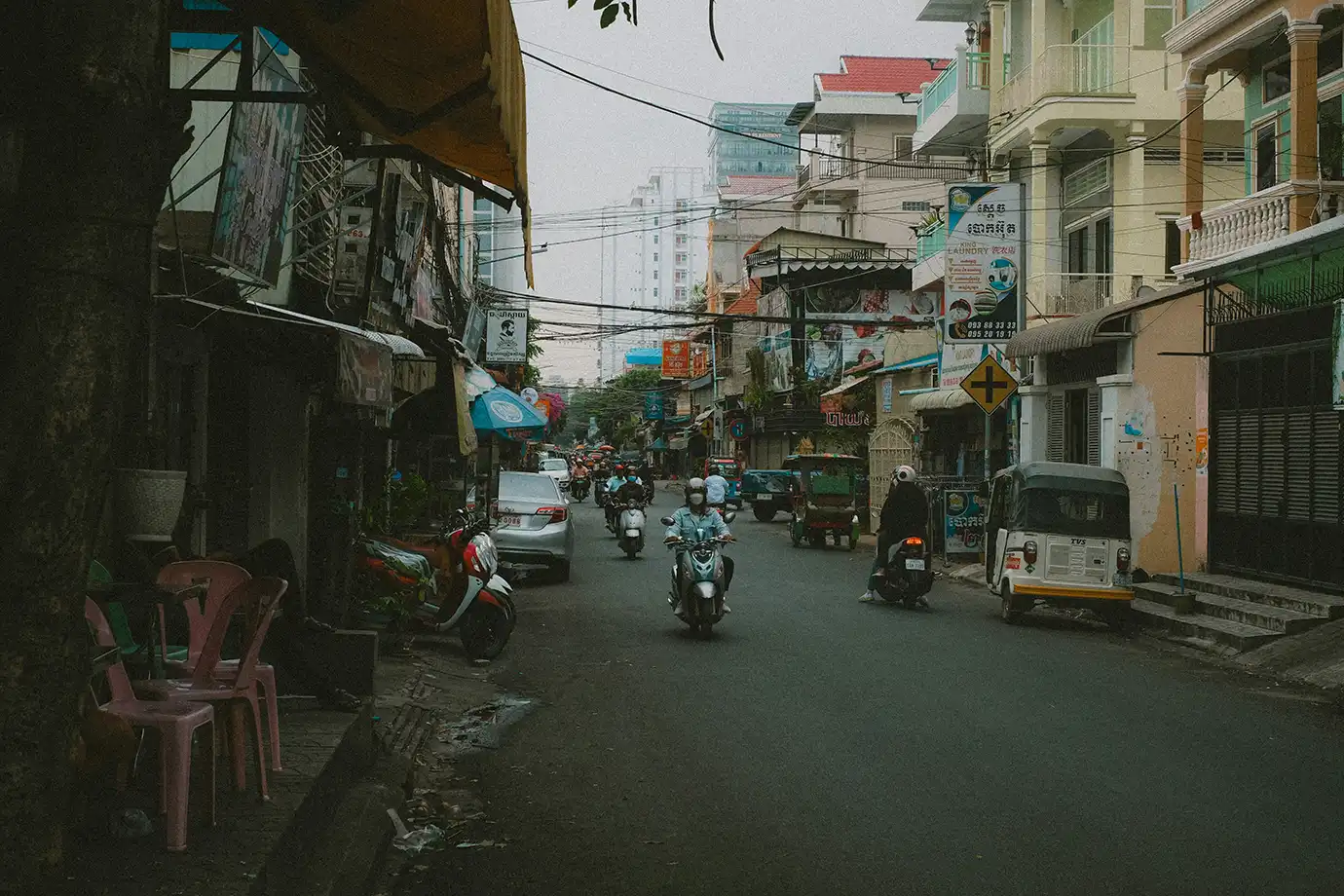
Traffic — the Highest-Risk Category
Traffic injures more foreign visitors in Cambodia than any other single cause. Road conditions outside the main highways vary sharply. Traffic follows conventions that differ significantly from Western roads. Medical care after a serious accident is limited outside Phnom Penh and Siem Reap.
Renting a motorbike is the single highest-risk activity a tourist can undertake in Cambodia. Peregrine does not use tourist motorbike rental on any itinerary. If you ride, a helmet is not a suggestion. It is non-negotiable.
Tuk-tuks are generally safe for short urban trips. The risk comes from other road users, not from the tuk-tuk driver.
Driving at night is significantly more dangerous than driving during the day. Road lighting is sparse outside cities. Livestock wanders onto roads after dark. Peregrine schedules all long transfers during daylight hours for safety rather than convenience.
Private car transfers with a professional driver are the safest land transport option. The driver knows the road, the vehicle is maintained, and you are not exposed to motorbike risk.
Landmines and Unexploded Ordnance
Cambodia carries one of the highest densities of landmine and UXO contamination in the world. The affected areas concentrate in the northwestern provinces — Battambang, Banteay Meanchey, Pailin, Oddar Meanchey — and in the Preah Vihear zone.
The tourist areas are not affected. The temples at Angkor have been systematically cleared. Phnom Penh, Kampot, and the islands carry no mine risk. Every visitor site on a standard itinerary is cleared and safe.
One rule applies everywhere in Cambodia. Stay on marked paths. Do not walk into uncleared land in rural areas. In practice, every stop on a normal tourist route respects the clearance boundaries. The risk materializes only if a traveler leaves marked paths in affected provinces.
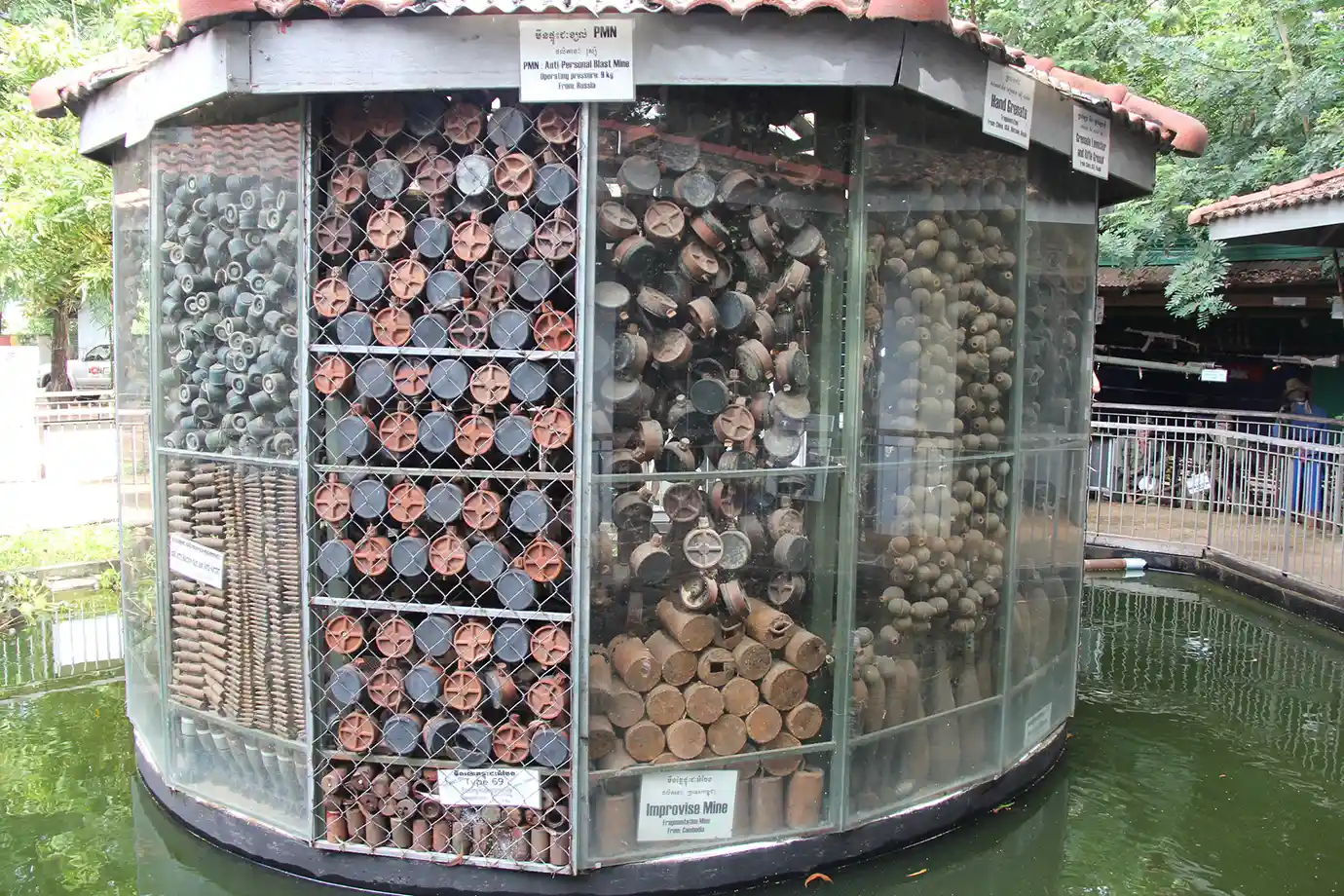
The Cambodian Mine Action Center manages clearance operations across the country. The Landmine Museum near Siem Reap offers serious historical context and is a worthwhile visit rather than a warning about the temples.
Scams — What to Know Before You Go
Visa copycat websites. The official Cambodian e-visa portal is evisa.gov.kh. Multiple copycat sites charge a markup on the official fee while submitting the same application. The risk is overpaying, not fraud. Bookmark the official URL and use only that.
Tuk-tuk overcharging. At airports and tourist sites, drivers may quote above-market rates to new arrivals. Ask your hotel for the standard fare before you leave. Use PassApp or Grab, where available in Phnom Penh, for rides at the agreed-upon fare.
Orphanage and school visit trade. Cambodia has a documented industry of orphanages presented as volunteer opportunities but run commercially; some homes house children who are not orphans. Do not visit or donate. Peregrine does not include orphanage visits on any itinerary.
Fake Angkor ticket sellers. Angkor passes are sold only at the official Angkor Enterprise ticket center on Apsara Road, through the official website, or through the Angkor Pass app. No legitimate ticket is sold at the roadside or at the temple gates.
Online Scam Compounds — What the News Coverage Is About
Online scams compound the pressure on forced-trafficked workers to commit fraud targeting people in other countries. The fraud covers cryptocurrency, romance, and investment schemes. Operations have been documented in the border areas of Myanmar, Laos, and Cambodia. In Cambodia, the primary locations are parts of the Koh Kong border zone and the Sihanoukville area.
Visitors do not encounter these facilities by accident. The risk to a tourist on a standard itinerary is zero. Siem Reap, Phnom Penh, Kampot, and the islands are not connected to the operations.
The one pattern worth knowing: if you receive an unsolicited job offer promising high pay in Cambodia, requiring immediate travel, do not accept it. The UK, US, and Australian governments have each published specific guidance on fake job advertisements linked to these operations.
Health — the Practical Picture
Water and Food
Tap water is not safe to drink in Cambodia. Bottled water is cheap and available everywhere. Ice in tourist restaurants is typically made from filtered water and is generally safe.
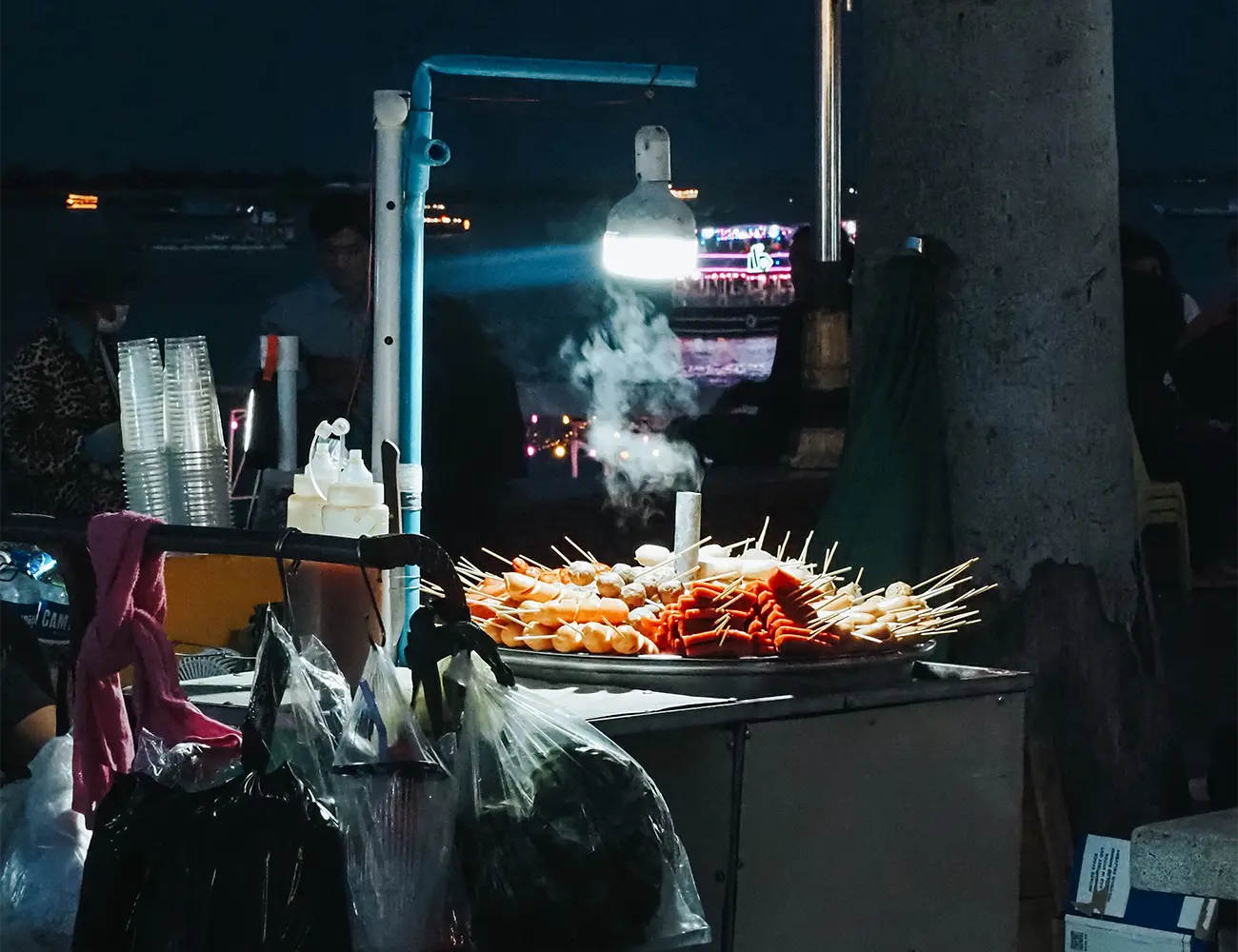
Street food carries a higher risk of stomach upset than restaurant food. Choose stalls with high turnover — busy means the food is fresh. Eat cooked dishes rather than raw salads at venues with uncertain hygiene. Peel your own fruit.
Mosquitoes and Disease Prevention
Malaria risk exists in forested areas, the Cardamom Mountains, and some rural northeastern provinces. The main tourist areas carry a low malaria risk but are not entirely free of it. Dengue fever is present year-round across the country, including in the cities.
Consult a travel medicine doctor before your trip for malaria prophylaxis advice matched to your specific itinerary. Use a DEET-based repellent at dawn and dusk. Wear long sleeves in forested areas after four in the afternoon. Sleep under a mosquito net in any room without air conditioning.
Sun and Heat
Heat exhaustion is a genuine risk at Angkor, particularly in the hot season from March to May. The stone radiates yesterday’s heat upward, and shade on the main causeways is limited.
Start temple visits before six. Carry at least 1.5 liters of water per session. Wear a hat. Retreat to shade or air conditioning by ten-thirty during the hot months.
Hospitals — Where to Go in an Emergency
Siem Reap: Royal Angkor International Hospital on National Route 6 is the primary facility for international visitors—emergency line: +855 63 761 888. The hospital has English-speaking staff and handles trauma and acute care. For serious cases requiring surgery or specialist treatment, medical evacuation to Bangkok is the standard course of action.
Phnom Penh: Calmette Hospital on Monivong Boulevard is the major government hospital. Royal Phnom Penh Hospital on Russian Confederation Boulevard is a private alternative with broader specialist capacity. Phnom Penh has significantly more medical infrastructure than any other Cambodian city. Bangkok, roughly one hour by air, is the standard evacuation destination for the most serious cases.
Travel insurance with emergency medical evacuation cover is not optional for Cambodia. Buy it before you leave.
Solo Travelers and Women Traveling Alone
Cambodia is manageable for solo travelers, including women traveling alone. Siem Reap and Kampot are the most straightforward bases. Phnom Penh requires more nighttime awareness but is not fundamentally different from other Southeast Asian capitals.
The specific risks for solo travelers are the same as for everyone: petty theft and traffic. The additional factor is nighttime street safety in Phnom Penh. Take a tuk-tuk or use PassApp rather than walking with a visible bag after dark in the Riverside and Central Market areas.
Cambodian society is respectful and non-confrontational. Unwanted attention directed at female travelers exists but sits below the level common in some other regional destinations. Modest dress — covered shoulders and knees — is appropriate at temples and in traditional communities. Standard swimwear is fine at the beach and pool.
Drink spiking has been reported in Phnom Penh’s bar scene. Do not leave a drink unattended. Accept drinks only from the bar directly.
Booking through a reputable operator means airport pickups, vetted drivers, and a local ground contact at every stage. The arrangement removes the main vulnerability points for solo travelers: arriving alone in an unfamiliar city and taking unvetted transfers.
Which Travel Advisories to Check
Read the full travel advisory for your nationality before booking. Most government advisories differentiate between the northern border provinces and the rest of the country. Pay attention to the regional breakdown rather than the headline level.
- United Kingdom: FCDO — search “Cambodia travel advice” on gov.uk
- United States: US Department of State — search “Cambodia” on travel.state.gov
- Australia: DFAT Smart Traveler — search “Cambodia” on smartraveller.gov.au
- Canada: Global Affairs Canada — search “Cambodia” on travel.gc.ca
- New Zealand: SafeTravel — search “Cambodia” on safetravel.g ovt.nz
- European Union travelers: Check your own country’s foreign ministry website
The review date for the advisory information on the page is published visibly. Check it against the date you are reading.
What Reputable Operators Do About It
Closed sites off every itinerary. Preah Vihear and Banteay Chhmar are removed. Any site entering a restricted advisory zone is immediately removed.
No land crossings. The Cambodia-Thailand air route remains open, while the crossings remain closed.
Stated review schedule. The safety assessment is reviewed every 90 days. The review date is published on the page.
Private drivers, not motorbike rentals. All inter-city transfers use professional drivers in maintained vehicles. No tourist motorbike rental. No unmarked local transport.
Daytime-only transfers. Long drives between cities run during daylight hours.
Local emergency contacts. Every trip has a ground team contact available throughout the itinerary.
Have a specific safety question about your planned route? Reach us at sales@peregrinetreks.com or WhatsApp +977 985 105 2413.
Frequently Asked Questions
Is Cambodia safe to visit right now?
Yes, for all standard tourist destinations. Siem Reap, Angkor Wat, Phnom Penh, Kampot, Kep, and the islands all operate normally. The exception is the northern border zone around Preah Vihear, roughly 140 kilometers northeast of Siem Reap, which is closed to visitors. Angkor is not affected. Check the review date on the page for when the position was last confirmed.
Is Angkor Wat safe to visit?
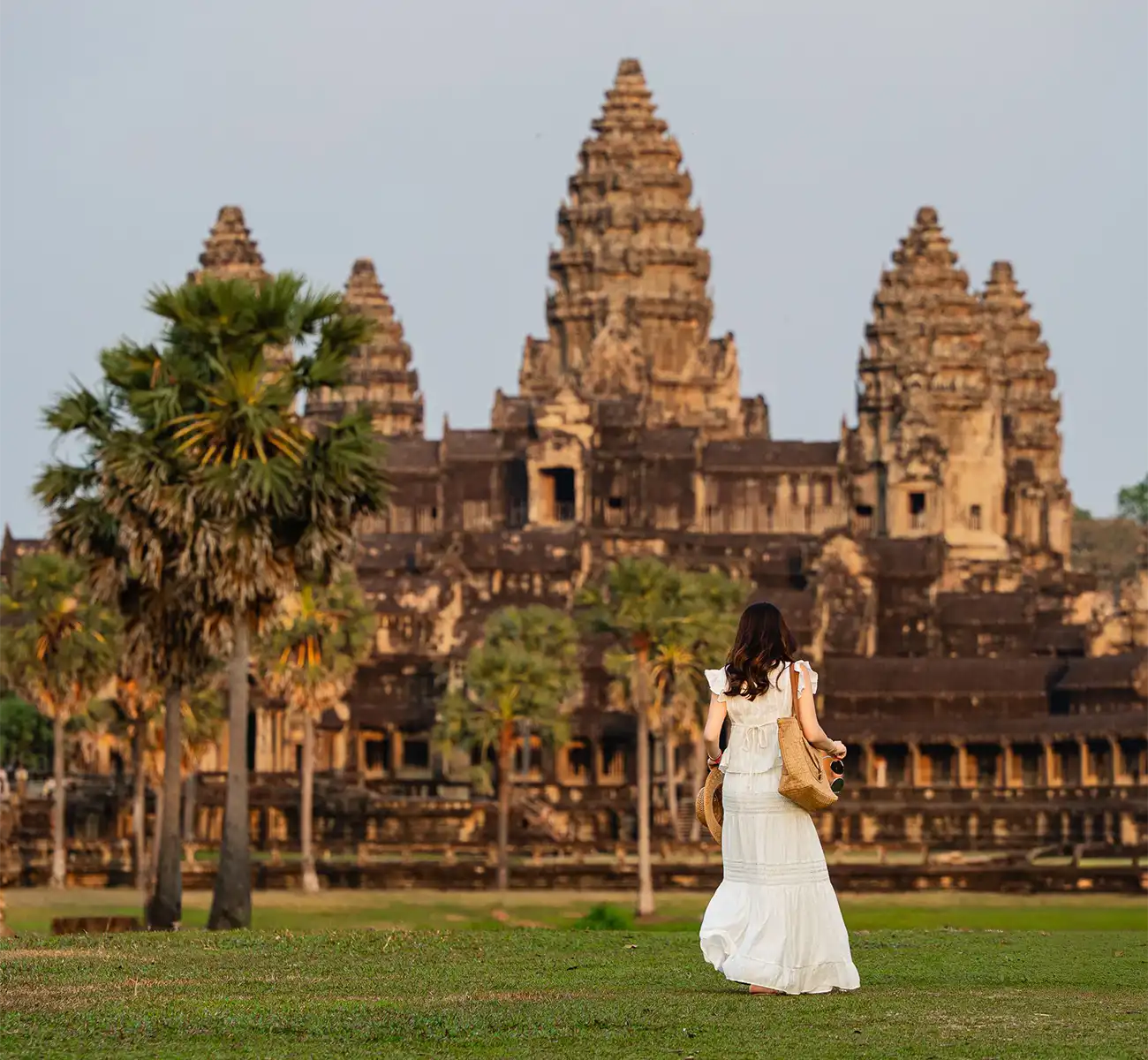
Yes. Angkor Wat is fully open and operating normally. The temple complex sits roughly 140 kilometers southwest of the restricted border zone. The temples have been systematically cleared of unexploded ordnance by the Cambodian Mine Action Center. Visitor access is unaffected by the border situation.
Is the Cambodia-Thailand border open?
Thai-Cambodian land crossings are currently closed—travelers combining the two countries’ routes by air. Flights connect Phnom Penh and Siem Reap to Bangkok in roughly one to two hours. Check the published review date on the page for the latest confirmed position.
Is Preah Vihear open to tourists?
No. Preah Vihear temple is closed due to structural damage from the border fighting and the presence of unexploded ordnance. The Cambodian Mine Action Center is conducting clearance. No Peregrine itinerary includes the site.
Are landmines still a danger in Cambodia?
Yes, in specific affected provinces in the northwest and in the Preah Vihear area. No risk exists at Angkor, Phnom Penh, Kampot, or the islands — all visitor sites have been cleared. Stay on marked paths everywhere in the country. The Cambodian Mine Action Center manages ongoing clearance operations.
Is Cambodia safe for solo female travelers?
Yes, with standard precautions. Siem Reap and Kampot are straightforward. Phnom Penh requires more nighttime awareness — use ride-hailing apps rather than walking with a visible bag after dark. Cambodian society is respectful and non-confrontational. A modest dress is appropriate at temples. Standard precautions apply to nightlife.
What are the main risks for tourists in Cambodia?
Traffic is the highest actual risk, followed by bag snatching in Phnom Penh, and stomach illness from food or water. The border zone restriction does not affect standard tourist itineraries. Scams carry a low financial impact. Health risks are manageable with bottled water, mosquito precautions, and travel insurance with evacuation cover.
Do online scam compounds pose a risk to tourists?
No, for visitors on a standard itinerary. The compounds are documented in specific border areas and in parts of the Sihanoukville zone, not in tourist destinations. The risk to a normal traveler is zero. The one prevention: do not respond to unsolicited job offers promising high pay in Cambodia or elsewhere in Southeast Asia.