


Japan is one of the best places in the world to travel with kids, and one of the trickiest to book for them. It is safe, clean, and endlessly interesting to children. It is also a country where a family of four struggles to fit in one hotel room. Trains run silent, and a toddler’s cry carries. And the food you loved as an adult may leave your kids hungry.
A family vacation in Japan works beautifully once you plan around those realities. The guide below covers the six factors that determine whether a trip with kids succeeds. Which theme parks earn a day. How to book them well in advance. Where a family of four sleeps in comfort. What children will really eat. How many moves a week can take. And how to pace a two- or three-city trip so nobody melts down.
Here is the honest thesis. Japan is wonderful with children, but only if you plan for their pace, not your own wish list. Two theme-park days is the ceiling before kids burn out. Half-day sightseeing blocks are a rule, not a suggestion. And booking your family rooms six or more months in advance is the difference between a calm trip and a stressful one.
Start with the route below, then dig into parks, hotels, food, and pacing.
Japan With Kids at a Glance
Here is the whole plan in a few lines. Read the section you need, or follow the route below to see how it fits together.
- Best age for a family trip to Japan: 5 and up, for deer feeding, theme parks, and temples.
- Ideal length: 10 to 12 days for one theme park, 12 to 14 for two.
- Recommended split: Tokyo 4 to 5 nights, Kyoto 2 to 3, Osaka 2 with USJ.
- Book six months ahead for family hotel rooms, Ghibli tickets, and USJ and Disney line-skip passes.
- Best parks by age: Tokyo Disney for all ages, DisneySea for 7 and up, USJ for 10 and up, Ghibli Park for 5 and up.
- The one rule: pace for the kids, book everything ahead, and forward your luggage between cities.
Japan rewards families who plan early and slow down. Get the rooms, tickets, and pacing right, and the rest of the trip runs itself.
Is Japan a Good Family Vacation?
Yes, Japan is one of the best places for a family vacation, thanks to its safety, cleanliness, and endless novelty for kids. The catch is the logistics, from small hotel rooms to silent trains. Plan for those, and children from about age five up have a wonderful time.
What Japan Does Well for Families
Japan makes family travel easy in ways that surprise first-timers. The streets, trains, and neighborhoods are safe enough to reset how you plan a day with kids. Everything is clean, which cuts the constant wiping down of other destinations. And novelty is everywhere for children, from vending machines and capsule-toy machines to shrines, koi ponds, and cats. The big-kid attractions, from theme parks to aquariums to deer parks, are excellent.
Where Japan Is Harder for Families
A few things take extra planning. Standard hotel rooms fit two adults, so a family of four often needs a special room or two. Restaurants outside chains and hotels rarely have a kids’ menu, and some formal places do not seat young children. Trains run near silently, which is hard on toddlers who cannot yet lower their voices. And the language gap at small restaurants asks for patience with kids in tow.
What Is the Best Age to Visit?
Age five and up is the sweet spot. Younger children miss much of what makes Japan special, from temple visits to theme-park height limits and adventurous food. Kids from about eight to twelve enjoy it most, feeding deer, riding the bullet train, and loving the parks. Teens engage well too, drawn to Tokyo’s youth districts, Nintendo World, and the culture.
Should You Travel With a Child Under Five?
You can, but the trip becomes about logistics more than experience. A toddler will not remember the temples, and much of the food adventure is lost on them. If the trip can wait two or three years, waiting usually pays off. If you are going regardless, the toddler section near the end covers the specifics.
The Recommended Family Route
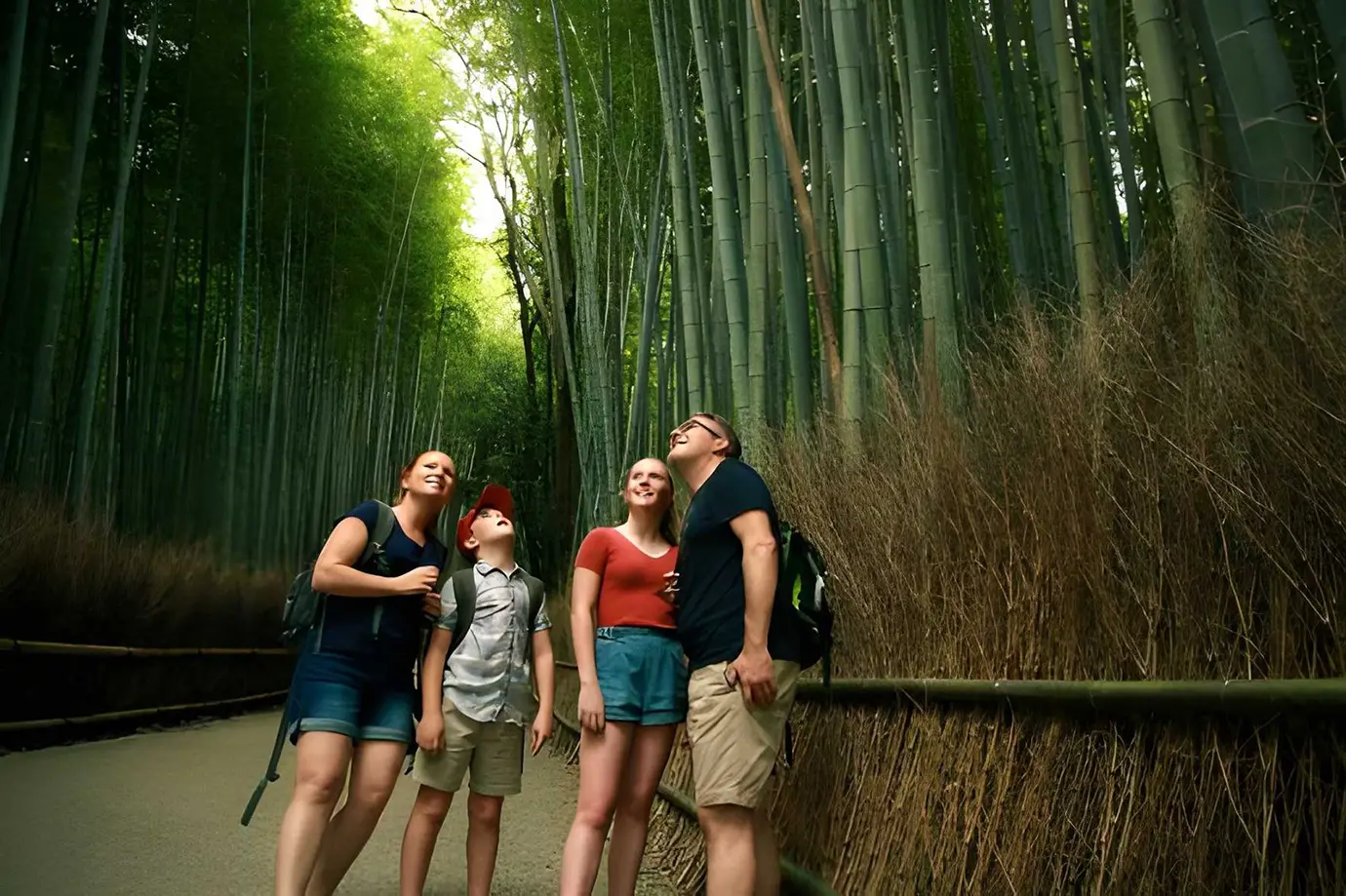
The best family route runs Tokyo, then Kyoto with a day trip to Nara, then Osaka, flying out from Kansai Airport. Plan 10 days for one theme park, 12 for two, and 14 to add Ghibli Park. Fly into Tokyo and out of Osaka, so you never backtrack.
The 10-Day Route, One Theme Park
Best for a first family trip with a single big park day:
- Day 1: Arrive in Tokyo, a rest day.
- Days 2 to 3: Tokyo, with Asakusa, Ueno Zoo, and teamLab Planets.
- Day 4: Tokyo Disney or DisneySea, all day.
- Day 5: A Tokyo recovery day, with the Ghibli Museum if you booked ahead.
- Day 6: Travel to Kyoto, a light day.
- Day 7: Kyoto, Fushimi Inari early and Arashiyama after.
- Day 8: Nara day trip for the deer, a family favorite.
- Day 9: Travel to Osaka, then Dotonbori.
- Day 10: Fly home from Kansai Airport.
The 12-Day Route, Two Theme Parks
Best for adding USJ, with a recovery day built in:
- Days 1 to 5: as above.
- Day 6: Travel to Kyoto, a light day.
- Day 7: Kyoto, one temple only and time at the rental.
- Day 8: Nara day trip.
- Day 9: Travel to Osaka.
- Day 10: Universal Studios Japan, all day.
- Day 11: An Osaka recovery day, with the castle and the Kaiyukan aquarium.
- Day 12: Fly home from Kansai Airport.
The 14-Day Route, Adding Ghibli Park
Best for Ghibli-loving families with more time:
- Days 1 to 5: as above.
- Day 6: Travel to the Nagoya area for Ghibli Park, booked well ahead.
- Day 7: More Ghibli Park, or move on to Kyoto.
- Days 8 to 10: Kyoto and a Nara day trip.
- Day 11: Travel to Osaka.
- Day 12: Universal Studios Japan.
- Day 13: An Osaka recovery day and the castle.
- Day 14: Fly home from Kansai Airport.
Why Open-Jaw Flights Are a Must
Fly into Tokyo and out of Kansai Airport near Osaka, never round-trip through Tokyo. A long bullet-train ride back to Tokyo with tired kids after two weeks is a day nobody enjoys. An open-jaw ticket, in one airport and out another, saves that whole return and keeps the trip moving forward.
The Best Theme Parks in Japan, Ranked by Age
The best family theme parks split by age. Tokyo Disney is suitable for all ages, and DisneySea is best for ages 7 and up. Universal Studios Japan is for ages 10 and up, and Ghibli Park is for ages 5 and up. Match the park to your kids’ ages, and book tickets and line-skip passes months in advance.
Tokyo Disney: Best for Ages 3 and Up
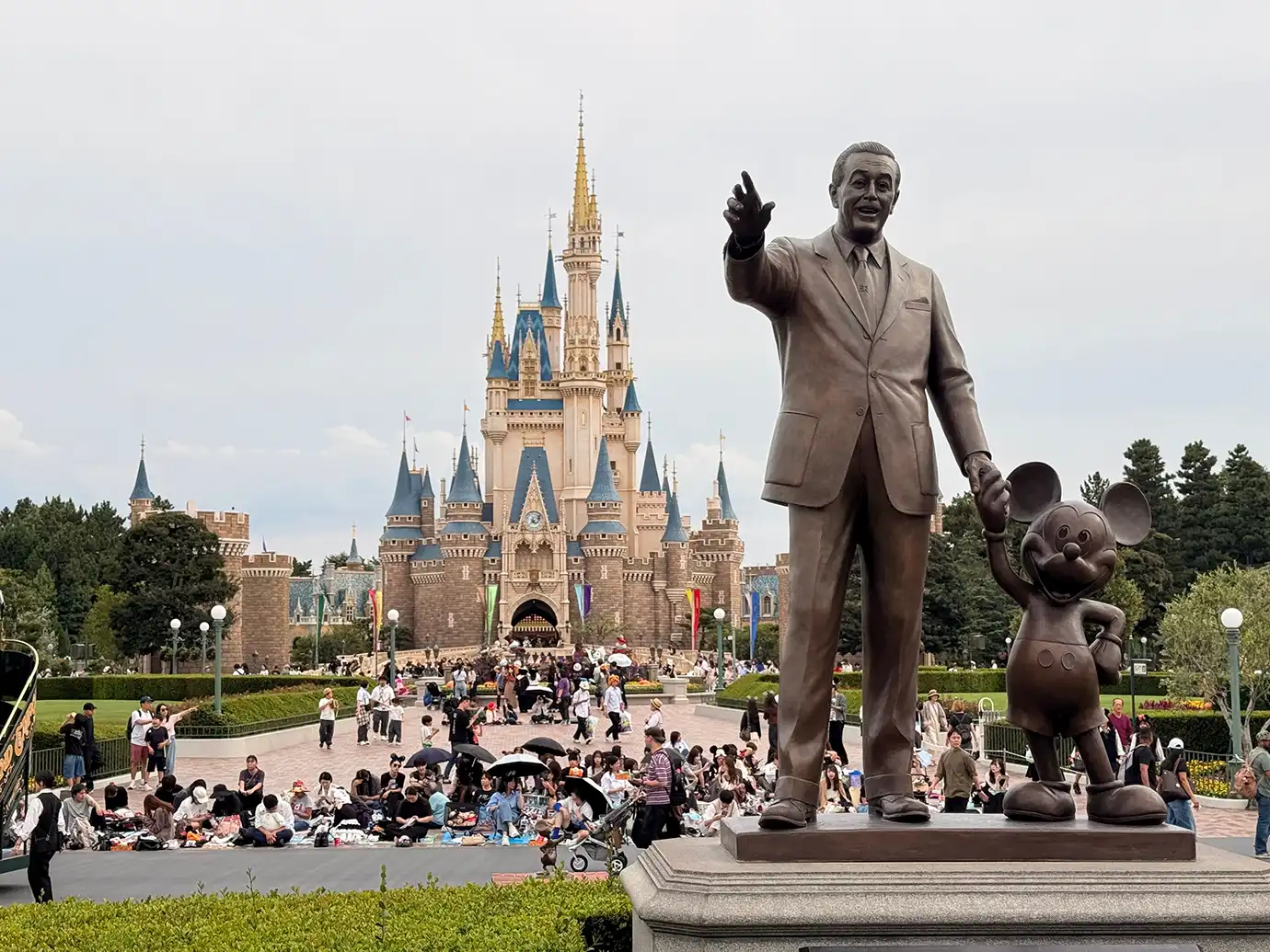
Tokyo Disney is the easiest park to visit first, and it works for the whole family. The classic castle, familiar characters, and Disney polish all land well with younger kids, and the park is spotless and well run. For popular rides, buy Premier Access—the paid line-skip that replaced the old free system—through the resort app on the day—best for ages 3 to 10 and families new to Disney. The trade-off is that it feels familiar if you’ve been to other Disney parks.
Tokyo DisneySea: Best for Ages 7 and Up
DisneySea is the one-of-a-kind park, and adults love it as much as kids. Built around a nautical theme, with a volcano, a harbor, and beautifully designed sections, it ranks among the finest theme parks anywhere. A newer area, Fantasy Springs, added zones for Frozen, Tangled, and Peter Pan. It uses the same Premier Access system, with extra passes for the new area.—best for ages seven and up, and older kids or teens. Very young children miss the familiar characters.
Universal Studios Japan: Best for Ages 10 and Up
Universal Studios Japan, in Osaka, is the park for older kids and teens, and Super Nintendo World is the reason to go. The Mario-themed area has wristbands, a Mario Kart ride, and a Donkey Kong expansion, alongside Harry Potter, Jurassic Park, and Minion Park. Buy an Express Pass to skip the lines, and reserve a timed entry for Nintendo World on top of your ticket. Best for ages ten and up, since the Mario Kart ride has a height limit. Younger kids get less out of it than they do from DisneySea.
Ghibli Park: Best for Ghibli-Loving Families
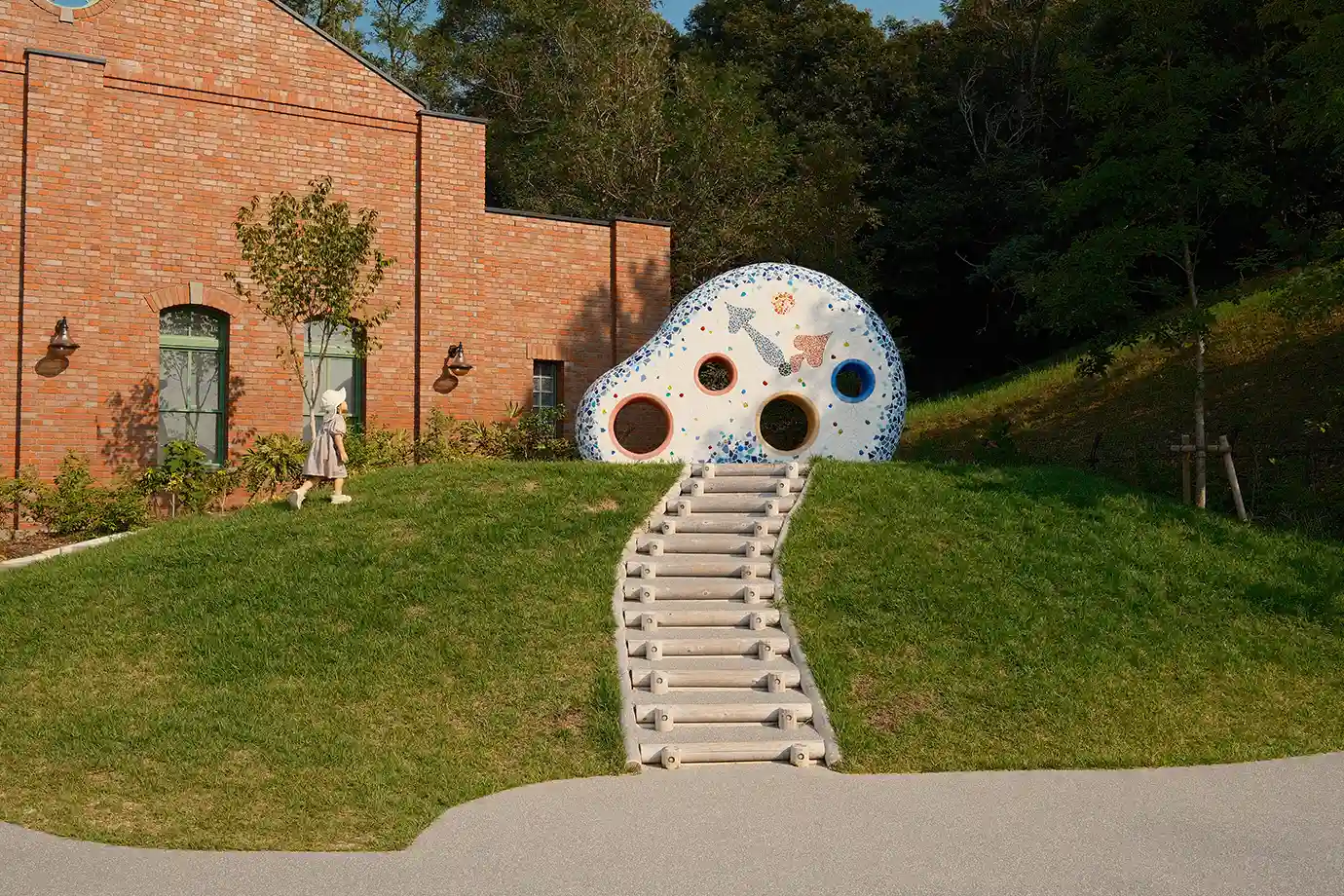
Ghibli Park suits families who love the Studio Ghibli films, and it is a walk-through world rather than a ride park. Near Nagoya, it features several themed areas based on films such as Totoro, Kiki’s Delivery Service, and Princess Mononoke. Every area needs a timed ticket, released about two months in advance and gone within hours on busy dates. Best for ages five and up who know the films. The trade-off is a Nagoya detour, and little payoff for families who do not know Ghibli.
Ghibli Museum: Best for Younger Ghibli Fans
The Ghibli Museum in western Tokyo is the smaller, original Ghibli experience, and it is lovely for young fans. A personal, detailed museum, it includes a short film shown only to visitors. You cannot walk in, since every ticket is pre-booked, released monthly, and gone within minutes for good dates. Best for ages four and up and Tokyo-based families short on time. It is far smaller than Ghibli Park and takes about two hours to visit.
Other Parks Worth Knowing
Four more fit particular families. Sanrio Puroland, near Tokyo, is an indoor Hello Kitty theme park, best for younger kids. Legoland Japan near Nagoya is suitable for ages 3 to 10. Fuji-Q Highland, at the base of Mount Fuji, is a thrill-ride park for teens. And the free Nara Deer Park is one of the most-loved stops of any family trip.
Family Hotels: Solving the Room Problem
Japan’s biggest family hurdle is the hotel room, since most fit only two adults. A family of four usually needs an apartment-style room, a family room at a Western-brand hotel, connecting rooms, or a whole-house machiya rental in Kyoto. Book any of them six or more months ahead.
Why Standard Rooms Do Not Fit Four
Most Japanese hotel rooms are built for two adults, and even a room rated for four can feel cramped. A family of four with luggage needs more space than a standard double gives. So the room type matters more than the hotel brand, and you plan around it from the start.
Room Types That Actually Work
Four options reliably fit a family:
- Apartment-style hotels, like the family-focused MIMARU chain, sleep four to six people and include a kitchenette in Tokyo, Kyoto, and Osaka.
- Western-brand family rooms, at chains like Hilton, Marriott, and Hyatt, offer sofa beds or larger layouts.
- Connecting rooms: two rooms with a shared inner door, which you must request at booking, not assume.
- Ryokan family rooms, tatami rooms that sleep four to six on futons, which older kids find fun and toddlers sometimes resist.

Why Six Months Ahead Is Not Optional
Family rooms are a small slice of any hotel’s inventory, so they sell out first. During cherry blossom, autumn, and school-holiday weeks, they go months before standard rooms do. Booking six or more months ahead is a firm rule for families, not a nice-to-have. Lock the rooms before you plan anything else.
Kyoto’s Machiya Rentals
In Kyoto, a whole-house machiya rental is the family sweet spot. A restored wooden townhouse sleeps four to six, includes a kitchen, and gives you space and character in one booking. Families spread out, cook a simple breakfast, and skip the two-room juggle. It is one of the easiest ways to house a family in Japan.
What to Skip
Avoid a few traps. Budget business hotels are genuinely too small for a family. Some smaller ryokan will not confirm young children, so check first. And with a short-term rental, book only a registered, licensed property, since the rules tightened in recent years and unlicensed listings can cancel on you.
Getting Around Japan With Kids
Getting around with kids is easy on Japan’s trains, especially the bullet train, with a few family habits. Reserve your seats, forward your luggage, and decide early on whether to use a stroller or a carrier. IC cards give children half fare, and taxis are worth it for tired temple days.
The Bullet Train With Kids
The Shinkansen is great for families, fast, quiet, and roomy, with big seats and luggage space. Reserve your seats in advance, since reserved cars offer set seats and space for bags. On most trains, you can spin two rows to face each other, so ask the conductor and let the kids sit together. Bring snacks and small activities for the two-hour Tokyo-to-Kyoto run.
Stroller or Baby Carrier?
Choose a carrier for the youngest kids and a stroller for slightly older ones. A carrier reaches every station and train and every temple path, with no stairs to fight. A stroller lets tired kids rest and carries your bags, but many stations have stairs or a single, distant elevator, and the narrow lanes of old Kyoto are hard to navigate. Use a carrier under age three, a light stroller from three to five, and walking with breaks after that.
IC Cards and Fares for Kids
Get your kids their own IC card, and travel gets simple. Children aged six to eleven ride at half fare on a child’s Suica or Icoca, and kids under six ride free. Pick up the child card at the airport on arrival, with the child’s passport for age proof. One tap each, and the whole family moves through the gates together.
Forward Your Luggage, Always
Forward your suitcases between cities by takkyubin, which matters even more with kids. A family of four cannot wrestle four suitcases and children through stations and onto bullet trains. Send the bags from Tokyo to Kyoto and Osaka, and travel with just a daypack each. Your hands stay free for the kids, which is the whole point.
Take Taxis for the Hard Stretches
Use taxis more freely than you would on an adult trip. Kyoto’s temples spread out, and a short taxi between them saves tired legs and frayed tempers. The fare runs higher, but the time and energy you save with kids is worth it. Save the walking for the flat, fun stretches.
Food With Kids: What They Will Actually Eat
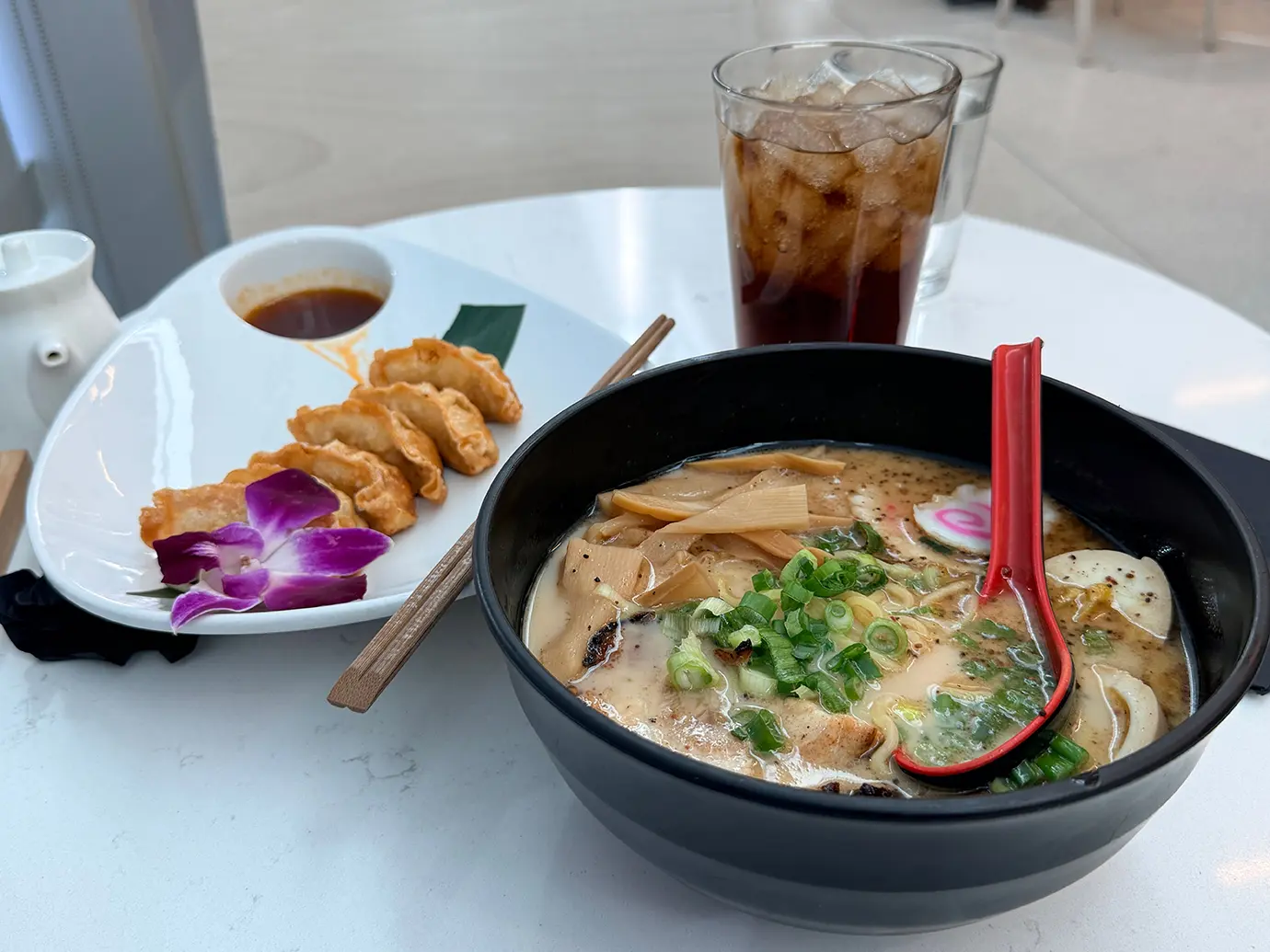
Kids eat well in Japan once you know which dishes are safe. Ramen, udon, tempura, gyoza, rice bowls, tonkatsu, and mild Japanese curry all please most children. Lean on convenience stores for breakfast and snacks, and on kid-friendly chains when nothing else works.
The Dishes Kids Usually Like
Most children happily eat these:
- Ramen, ask for mild, and udon or soba noodles.
- Onigiri rice balls from any convenience store.
- Tempura and gyoza dumplings.
- Rice bowls like katsudon and oyakodon, and tonkatsu pork cutlet.
- Japanese curry rice, which is milder and sweeter than most.
- Melon pan and other Japanese bakery treats for breakfast.
The Foods Kids Often Skip
A few things tend to get a no:
- Raw fish sushi, though cooked options abound at conveyor-belt shops.
- Miso soup and strong broths, at least at first.
- Fermented foods like natto and pickles.
- Anything with visible seafood parts, like whole squid or bones.
Convenience Stores Are Your Breakfast HQ
Lean on the convenience store for breakfast and snacks every day. The 7-Eleven, Family Mart, and Lawson chains sell pastries, yogurt, boiled eggs, sandwiches, and fruit that kids eat without fuss. Grab breakfast the night before to save a slow morning. A daily konbini stop keeps hungry children fed between meals.
Kid-Friendly Chains to Know
A handful of chains save the day when kids are tired or picky. Coco Ichibanya serves curry with adjustable spice and a kids’ menu. Saizeriya does cheap, familiar Italian-Japanese plates. Conveyor-belt sushi chains like Kura Sushi and Sushiro delight kids with touch screens and little prizes. And the beef-bowl chains are quick and simple.
Kaiseki and Young Kids
Plan around formal meals, since many kaiseki restaurants do not seat children under six. Some ryokan offer a children’s course for ages seven and up, so ask when you book. On a ryokan night with younger kids, eat the in-room meal or a simpler dinner. Save the grown-up food splurge for a rest afternoon while the kids nap.
How to Pace a Family Trip
Pace a family trip around the kids, with half-day sightseeing, a rest day every three days, and no more than two theme-park days total. Treat travel days as full days, plan for naps, and keep a simple plan for the inevitable meltdown.
Cap It at Two Theme-Park Days
Two theme-park days is the ceiling before kids burn out. A 10-day trip absorbs one, and a 12-day trip absorbs two, but only with a recovery day in between. Stack more than that and the whole family runs down. Choose your parks by your kids’ ages and stop at two.
Build Every Day Around a Half-Day Block
Keep sightseeing to half a day with young kids. Do one morning sight of about two hours, then break for lunch. Rest at the hotel through the early afternoon, then do a light activity or spend some time in the park afterward. Two heavy sightseeing sessions in one day breaks children under ten. Less really is more here.
Take a Rest Day Every Three Days
Give the family a rest day after every three days of sightseeing. A rest day is not a hotel-room day; it is one gentle activity, a slow lunch, some pool or bath time, and no rushing. Skip this and the back half of your trip falls apart. The rest day is what keeps everyone pleasant.
Treat Travel Days as Full Days
Count each bullet-train move as a whole day, not a quick hop. Packing up, forwarding bags, riding the train, and settling into the next hotel fills a family day on its own. Do not plan morning sights before a train and expect an afternoon of more to come. Arrive, settle, and let the kids run off some energy.
Plan for Naps and Meltdowns
Expect naps and the odd meltdown, and plan for both. Kids under six need a midday nap, so head back to the hotel between one and three. And when a meltdown hits, have an escape ready: a quiet convenience store, a taxi to the hotel, or an ice cream break. Naming the plan ahead takes the stress out of the moment.
Traveling With Toddlers Under Five
Traveling with a toddler works, but the trip becomes about logistics. Japan makes it easier with well-stocked pharmacies, clean changing rooms, and gentle attractions like deer, aquariums, and koi ponds. Still, a child under five remembers little, so consider whether the trip could wait.
Diapers, Formula, and Feeding
You do not need to overpack baby supplies. Japanese pharmacy chains like Matsumoto Kiyoshi and Sun Drug carry international-standard diapers, including the soft local Merries brand, as well as formula and feeding gear. Buy what you need on arrival to save space in your luggage. Convenience stores cover snacks and drinks anywhere you go.
Changing Rooms and Nursing
Baby facilities in Japan are excellent and easy to find. Department stores, big stations, and malls have well-kept changing rooms marked with a stroller icon. Nursing rooms sit in every department store and major station, so feeding on the go is simple. The facilities are often cleaner than what you know at home.
What Toddlers Actually Enjoy
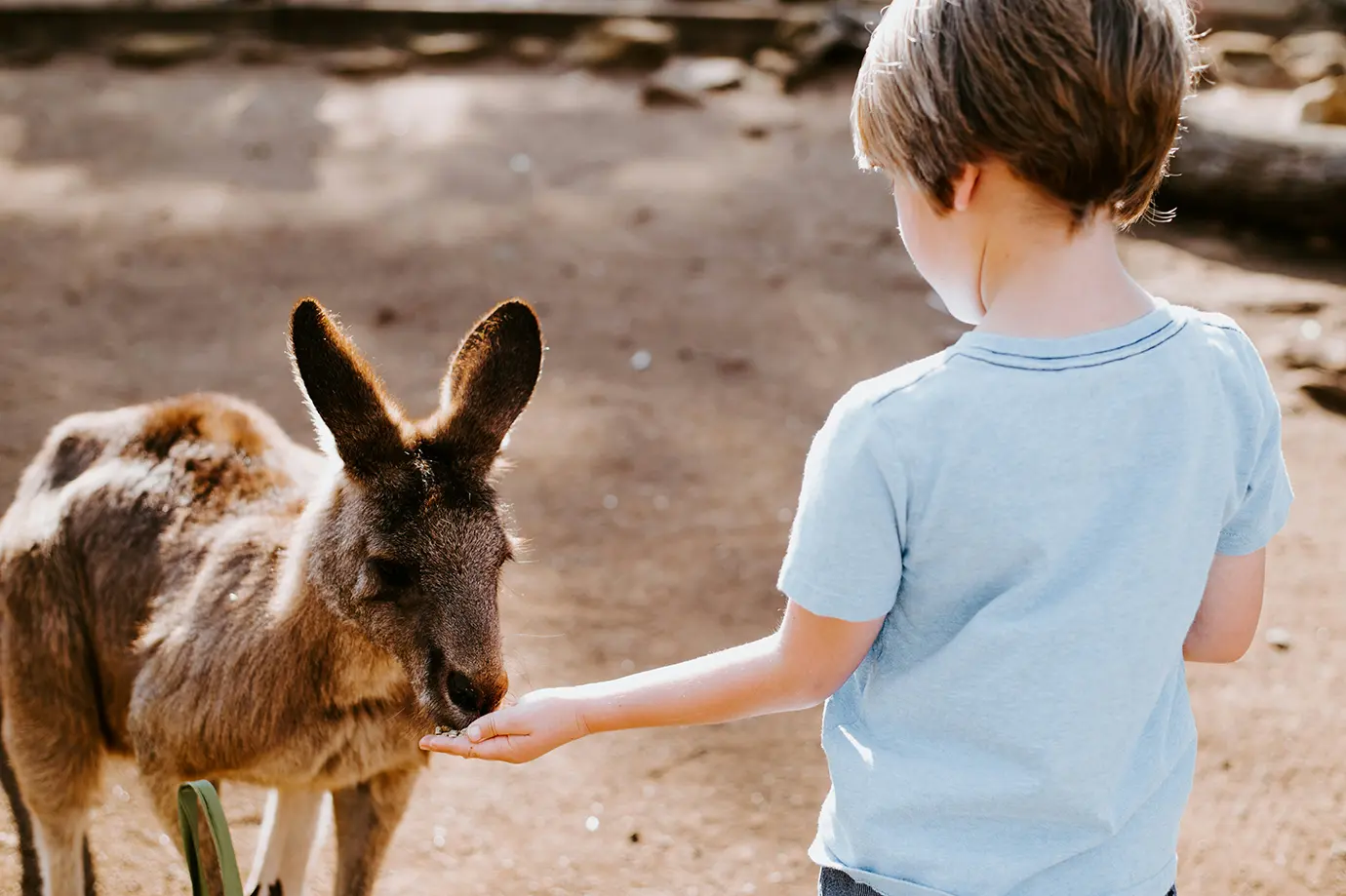
Point a toddler to the simple, sensory things. Nara’s deer, capsule-toy machines, convenience-store treats, koi ponds, and aquariums like Osaka’s Kaiyukan all land well. Slow garden strolls work too. Skip most temples and museums with a child under four, since they get little from them and grow restless fast.
Should You Wait a Few Years?
Be honest about timing. A Japan trip with a child under five gives you a fraction of what the same trip gives with a child of six or more. If it can wait two or three years, waiting is usually the right call. If it cannot, keep the days short and the plans loose.
Frequently Asked Questions
Is Japan a Good Vacation for Families With Kids?
Yes, Japan is one of the best family destinations in the world. It is safe, clean, and packed with novelty for children, from theme parks and aquariums to deer parks and bullet trains. The main challenges are small hotel rooms, quiet trains, and picky-eater moments. Plan around those, and families with kids aged five and up have a wonderful time.
What Is the Best Age to Take Kids to Japan?
Ages 5 and up are the sweet spot for Japan. Younger kids miss much of the culture and hit theme-park height limits, while children ages 8 to 12 enjoy it most. Teens engage well with Tokyo’s youth districts and Nintendo World. Under five is possible, but the trip becomes about logistics, and the child remembers little of it.
How Many Days Should a Family Spend in Japan?
Plan 10-14 days for a family trip. Ten days covers Tokyo, Kyoto, and Osaka with one theme-park day. Twelve days adds a second park with a recovery day between them. Fourteen days lets you add Ghibli Park near Nagoya. Fewer than ten days with kids forces a pace that wears everyone out.
Tokyo Disney or DisneySea, Which Is Better for Kids?
Tokyo Disney suits younger kids, and DisneySea suits ages seven and up. Tokyo Disney has the classic castle and familiar characters that delight small children. DisneySea is more elaborate and a favorite among older kids, teens, and adults, though its theming goes over toddlers’ heads. With young kids, choose Tokyo Disney. With older kids, choose DisneySea.
How Far Ahead Do I Need to Book Ghibli Tickets?
Book Ghibli tickets as early as the system allows, since they sell out fast. The Ghibli Museum in Tokyo releases tickets monthly and sells out within minutes for good dates. Ghibli Park near Nagoya releases tickets about two months in advance and sells out within hours. Set a reminder for the release time and book as soon as it opens.
Should I Book a Family Trip to Japan as a Package or Plan It Myself?
Plan it yourself if you enjoy the research and have the time, or book Japan Tour packages if you would rather hand off the hard parts. A family package handles family rooms, park tickets, seat reservations, and luggage forwarding, all of which become harder to arrange during peak season. For a first family trip, many parents find the saved time and reduced risk worth it.
The Bottom Line on a Japan Family Vacation
A family vacation in Japan works when you plan it around your children rather than your own wish list. Book the family rooms and the park tickets six months out. Cap the theme parks at two, and build every day around a half-day of sights and a real rest. Forward your bags, lean on convenience stores, and keep a plan ready for the tired moments.
Would you like the whole family trip arranged, with the rooms, tickets, and pacing handled? Peregrine’s Japan team can build it around your kids’ ages. Tell them who is traveling and how old the children are, and the trip can be shaped to fit.