


Jordanian food sits at the intersection of Levantine, Bedouin, and Ottoman cooking traditions. The result is a cuisine distinct from that found in Egypt, Lebanon, or Saudi Arabia. The flavors lean toward slow-cooked lamb, fermented dairy, olive oil, sumac, and za’atar. The meals are communal. The portions are generous. The hospitality around food is central to Jordanian culture. Jordan’s traditional cuisine includes dishes such as mansaf, maqluba, falafel, zarb, and knafeh, as highlighted in the official Jordan tourism food guide.
Every Jordanian meal begins with a spread of mezze and ends with Arabic coffee. Between those bookends, the country produces dishes you will not find prepared the same way anywhere else. Mansaf (the national dish) uses a fermented, dried yogurt sauce unique to Jordan. Zarb (the Bedouin underground barbecue) is cooked in a sealed sand oven in ways that no restaurant kitchen can replicate. Knafeh (the defining Jordanian sweet) has a texture and cheese-to-syrup ratio that differ from those of versions served in neighboring countries.
You do not need to seek out food in Jordan. Food finds you. Your hotel serves breakfast. Your guide recommends lunch. Your camp cooks zarb. The question is not where to eat but what to order first.
The 8 Dishes Every First-Time Visitor Should Try
| Dish | What It Is | Where to Find the Best Version |
|---|---|---|
| Mansaf | Lamb cooked in jameed (fermented dried yogurt sauce) over rice with flatbread | Amman restaurants, especially Sufra on Rainbow Street |
| Zarb | Lamb and vegetables slow-cooked in a sealed underground sand oven for 2 to 3 hours. | Wadi Rum Bedouin camps |
| Musakhan | Roasted chicken with caramelized onions, sumac, and olive oil on flatbread | Northern Jordan and Amman restaurants |
| Falafel and hummus | Deep-fried chickpea fritters with sesame-tahini hummus and fresh flatbread | Hashem Restaurant, downtown Amman |
| Maqluba | Rice, lamb, and fried vegetables cooked in a pot and flipped upside down at the table. | Home kitchens and traditional Amman restaurants |
| Knafeh | Shredded wheat pastry over sweet cheese, soaked in sugar syrup and topped with pistachios. | Cheese shops in downtown Amman |
| Arabic mezze | A spread of hummus, baba ganoush, fattoush, tabouleh, labneh, and pickles | Every restaurant in Jordan |
| Arabic coffee (qahwa) | Lightly roasted coffee with cardamom, served in small handleless cups | Everywhere. Offered as hospitality in every home and shop. |
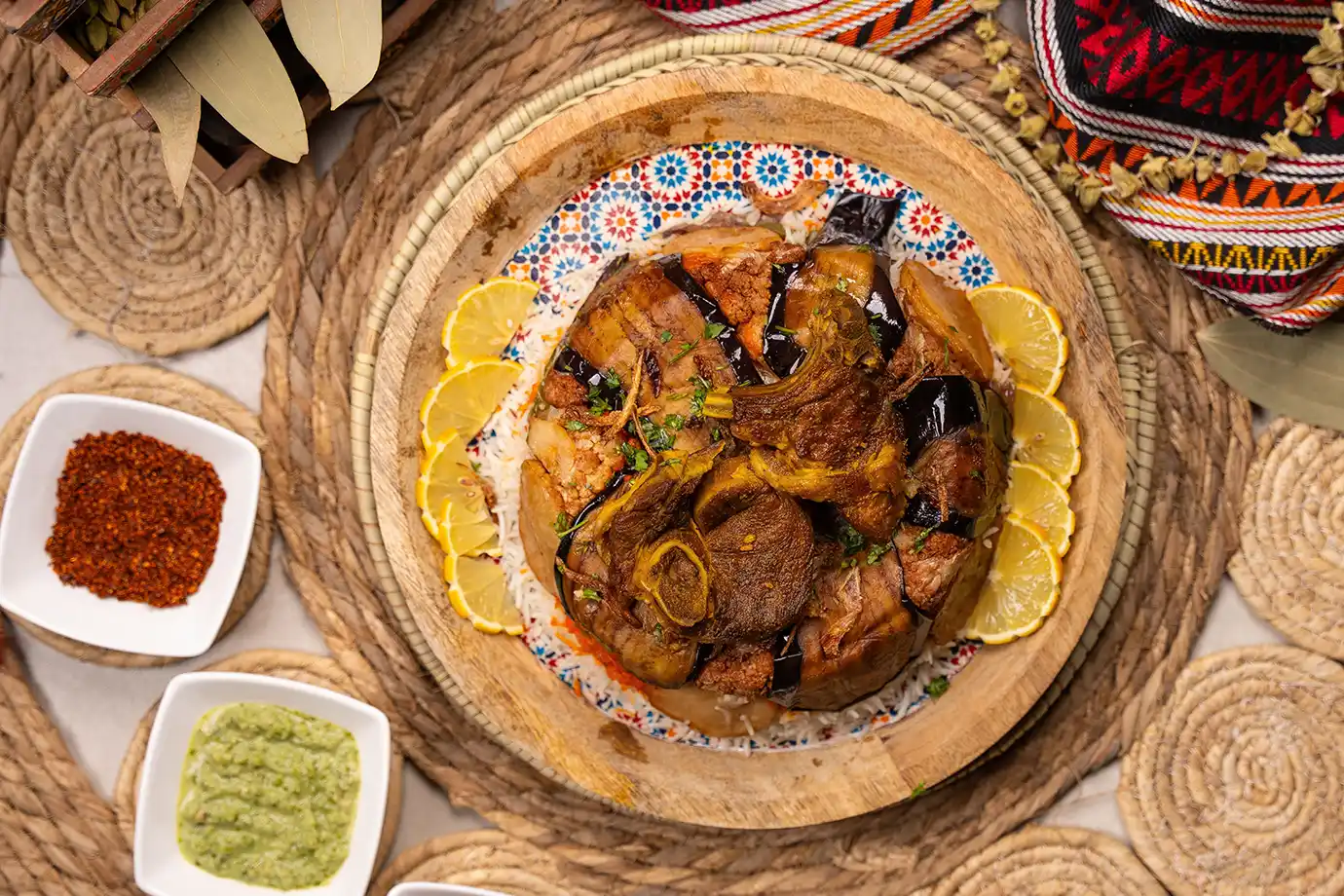
Mansaf — The National Dish of Jordan
Mansaf is the single dish that defines Jordanian cuisine. Slow-cooked lamb sits on a bed of rice, covered in jameed sauce (a poured sauce made from reconstituted dried fermented yogurt). Flatbread lines the bottom of the platter. Toasted almonds and pine nuts scatter across the top. Mansaf carries deep cultural significance in Jordan and was inscribed on UNESCO’s Representative List of the Intangible Cultural Heritage of Humanity in 2022. Learn more about Al-Mansaf in Jordan.
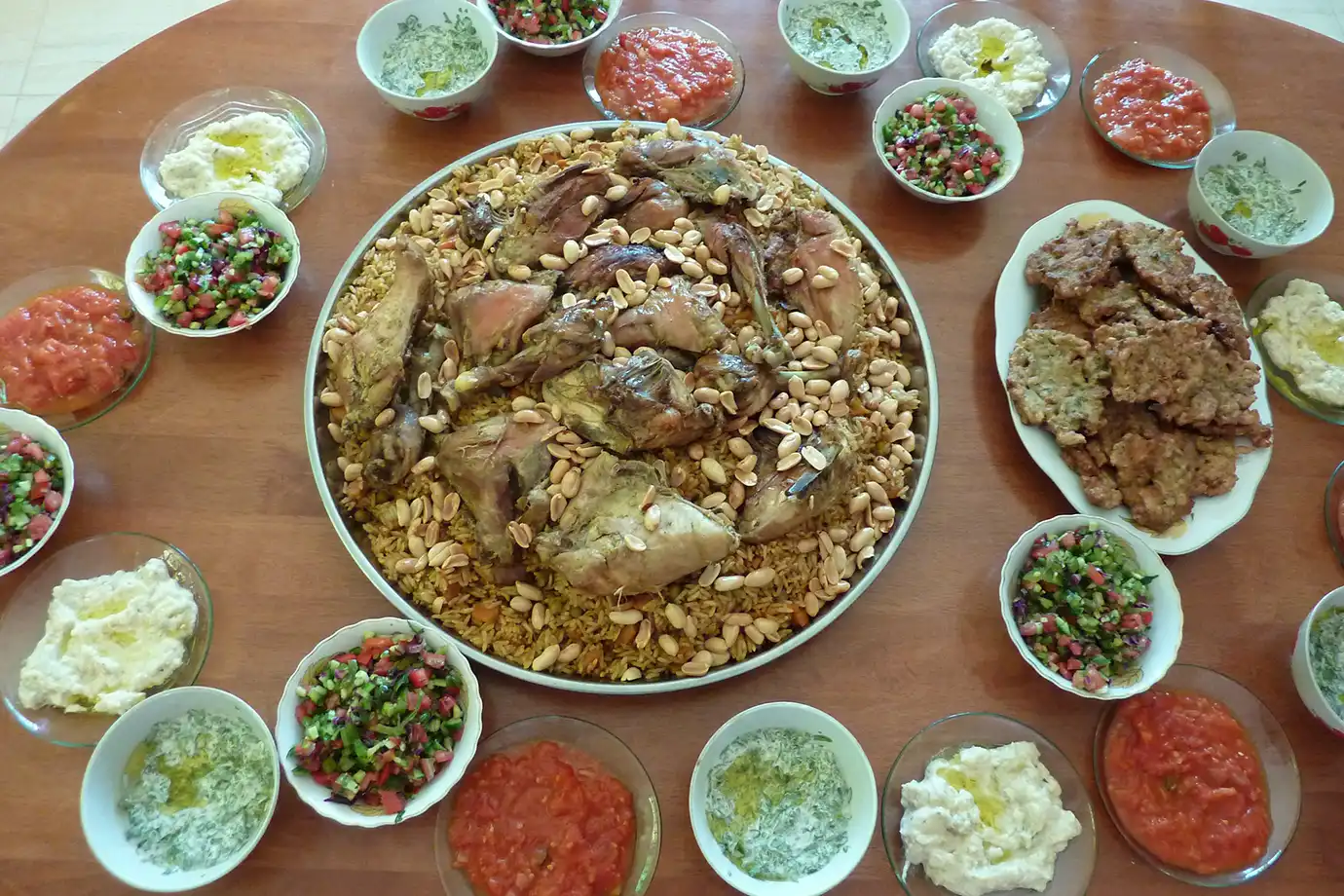
The dish is eaten communally. In traditional settings, you eat mansaf with your right hand, forming small balls of rice and meat and lifting them from the shared platter. Restaurant settings provide utensils for visitors who prefer them. Your guide will show you the technique if you want to try.
Jameed is the key ingredient. The dried yogurt balls are made from sheep or goat milk and have a sharp, tangy, slightly salty flavor. Jameed production is a Bedouin tradition. The taste is unfamiliar to most international visitors and takes a bite or two to appreciate. By the third serving, most people are converted.
The best mansaf in Amman is at Sufra Restaurant on Rainbow Street. Tawaheen al-Hawa, near the 8th Circle, is another strong option for a traditional mansaf meal.
Bedouin Desert Food — The Zarb Experience
Zarb is the Bedouin method of slow-cooking meat and vegetables in an underground oven. The camp staff dig a pit in the sand and line it with hot coals. A metal rack loaded with marinated lamb, chicken, potatoes, carrots, and onions goes in next. A metal lid and sand seal the pit—the food cooks for two to three hours. Zarb reflects the Bedouin cooking traditions of southern Jordan, especially around Petra and Wadi Rum. The Jordanian Embassy’s cultural guide provides more background on this traditional underground cooking.
The uncovering is the event. The camp staff clear the sand, lift the lid, and pull out the rack in front of seated guests. Steam rises. The smell of slow-roasted lamb and charred root vegetables fills the desert air. The meat falls off the bone.
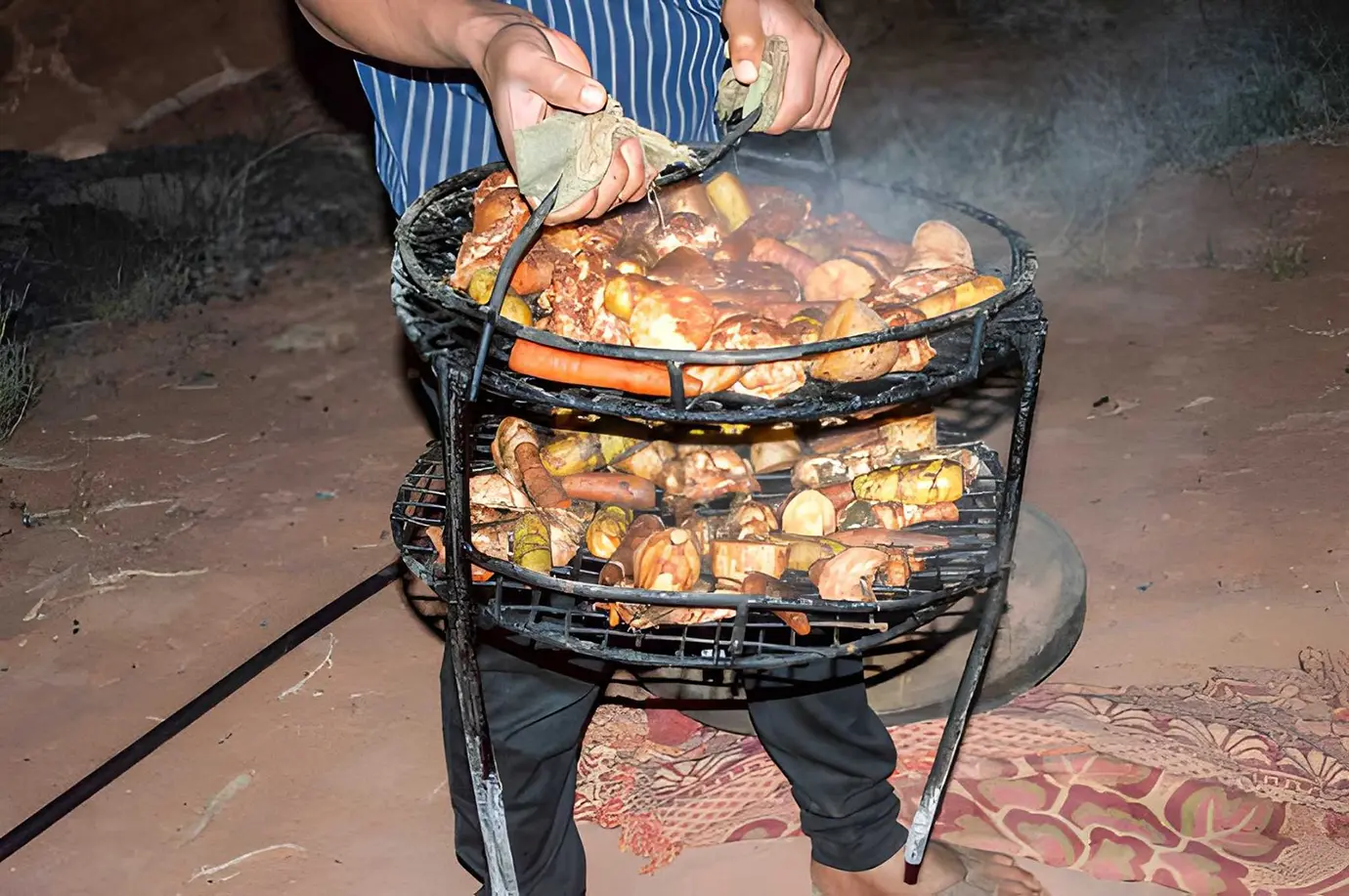
Zarb is served communally on shared platters. Rice, salads, and flatbread accompany the roasted meat. The meal takes place outdoors under the open sky. In Wadi Rum, the silence of the desert and the cooling evening air combine with the food. The first stars appear overhead as you eat.
Every Peregrine Wadi Rum overnight includes zarb dinner. No restaurant version compares. The underground oven, the desert setting, and the communal serving are inseparable from the taste.
Where to Eat in Amman
Amman has the strongest restaurant scene in Jordan. The range runs from legendary street food to rooftop fine dining.
Downtown (Al-Balad)
Hashem Restaurant. The most famous falafel and hummus spot in Jordan. Hashem occupies a narrow alley in the downtown market quarter. The menu is simple: falafel, hummus, ful medames (stewed fava beans), and fresh flatbread. Open 24 hours. Always busy. King Abdullah II has eaten here. A full plate costs a few JOD.
Come early for breakfast or late at night. The midday rush fills every table.
Rainbow Street (Jabal Amman)
Sufra Restaurant. A restored 1920s Amman house with a garden courtyard. The menu covers traditional Jordanian cuisine. Mansaf, maqluba, grilled meats, and a full mezze spread are the core options. Sufra is the best option for first-time visitors who want an authentic Jordanian meal in a comfortable setting.
Books at Cafe. A converted house with a rooftop terrace. Mixed Jordanian and international menu. A strong afternoon coffee or evening drinks spot with city views.
Upscale Amman
The Terrace at Fairmont Amman. Rooftop international and Levantine cuisine with panoramic city views from the 7th Circle. Smart casual dress. Book a table at sunset.
Tawaheen al-Hawa. Near the 8th Circle. Traditional Jordanian cuisine in a restored stone building. The mansaf here is a strong contender for the best in the city—a good option for a quieter, more formal Jordanian dinner.
Dining at Petra, Wadi Rum, and the Dead Sea
Food options outside Amman are more limited. Knowing what to expect at each destination saves disappointment.
Petra (Wadi Musa)
Wadi Musa has a small strip of restaurants in the town center. Al-Arabi and My Mom’s Recipe serve solid local food at moderate prices. The Movenpick Resort Petra has a buffet restaurant and a rooftop bar.
Inside Petra itself, food options are basic. The Basin Restaurant near the Colonnaded Street offers a buffet lunch. The Nabataean Tent near the same area has shade, cold drinks, and simple food. Bring water and snacks if you prefer to avoid the site-based options.
Wadi Rum
The camp provides all meals. Breakfast typically consists of flatbread, hummus, labneh, jam, eggs, and tea. Dinner is zarb (described above). Lunch on trekking days is a picnic prepared by your Bedouin guide. Bring your own snacks for the Jeep safari if you prefer something between meals.
The Dead Sea
Dead Sea resorts provide all meals. The Kempinski and Movenpick both run buffet and a la carte restaurants. The food at the resort level is international with Jordanian options. No independent restaurants operate near the Dead Sea shoreline.
Travelers who continue south can also visit Aqaba, Jordan’s Red Sea city. For more information about this coastal destination, read our Aqaba Jordan Travel Guide. It covers the main attractions and experiences to include in a visit to Aqaba.
Dietary Requirements in Jordan
Vegetarian. Jordan is one of the easiest countries in the Middle East for vegetarians. The mezze tradition means every meal begins with hummus, baba ganoush, fattoush, tabouleh, labneh (strained yogurt), and pickles. Falafel is vegetarian. Rice and vegetable dishes are standard. You will eat well without meat at every stop.
Vegan. Possible with care. Hummus, falafel, fattoush, and most vegetable dishes are vegan. Labneh and some mezze items use dairy. Ask your guide to communicate your needs to restaurants and camps. Wadi Rum zarb can be prepared with vegetables only on request.
Halal. All food in Jordan is halal. No pork is served anywhere in the country.
Alcohol. Available at licensed hotels and restaurants. Jordan is a moderate Muslim-majority country with relaxed alcohol policies for tourists. Wine, beer, and spirits are served at the Fairmont, Kempinski, Mövenpick, and most five-star properties. Aqaba waterfront restaurants serve alcohol. The Hayat Zaman Hotel near Petra does not serve alcohol. Wadi Rum Bedouin camps do not serve alcohol.
Gluten-free. More difficult. Flatbread accompanies every meal. Rice-based dishes (mansaf, maqluba) work. Communicate with your guide in advance for camp meals and restaurant orders.
Frequently Asked Questions
What is the national dish of Jordan?
Mansaf is the national dish of Jordan. Slow-cooked lamb is served over rice and flatbread, covered in jameed sauce made from fermented dried yogurt. The dish is eaten communally from a shared platter. You find the best versions in Amman restaurants like Sufra and Tawaheen al-Hawa.
Is Jordanian food spicy?
No. Jordanian food is flavorful but not hot. The dominant seasonings are sumac, za’atar, cumin, turmeric, and cardamom. Chili heat is rare. Fresh herbs, olive oil, and lemon provide brightness. Most international visitors find the food approachable and well-balanced from the first meal.
Can vegetarians eat well in Jordan?
Yes. Jordan’s mezze tradition provides a full range of vegetarian options at every meal. Hummus, falafel, baba ganoush, fattoush, tabouleh, labneh, and cooked vegetable dishes are standard across every restaurant and camp. You can eat a satisfying vegetarian meal at every stop on a Jordan tour.
What is zarb and where do you eat it?
Zarb is the Bedouin method of slow-cooking lamb, chicken, and vegetables in a sealed underground sand oven for two to three hours. You eat zarb at Wadi Rum Bedouin camps. The camp staff uncovers the oven in front of guests. The meal is served communally on shared platters under open sky. Every Peregrine Wadi Rum overnight includes zarb dinner.
Our Jordan Tours Include Zarb Dinner in Wadi Rum
Every Peregrine Jordan tour with a Wadi Rum overnight includes zarb dinner at the desert camp. The Classic Jordan Tour, the Grand Tour, the Honeymoon Package, the Family Tour, and the Adventure Tour all feature the full zarb experience listed under Jordan Tour Packages.
Email sales@peregrinetreks.com or message WhatsApp +977 985 105 2413.