


Discovering the **things to do in Amman** means exploring a city where ancient history meets modern life. Settlements on Citadel Hill date back to around 4000 BCE, and Roman ruins still share the skyline with coffee shops and apartment towers. Set at 780 meters above sea level, Amman is known for its steep hills and is Jordan’s cultural, political, and economic center—making it a natural starting point for many itineraries.
Most travelers spend one or two nights in Amman before heading south to Petra. A full afternoon covers the three essential stops: the Citadel, the Roman Theatre, and downtown. A full day adds Rainbow Street, the Jordan Museum, and a meal at one of the city’s best restaurants. Amman rewards time spent. The city is not just a transfer point.
The Amman Citadel (Jabal al-Qal’a) — The Essential First Stop
The Amman Citadel is the oldest part of the city and the single best place to start any visit. The hilltop complex holds ruins from the Roman, Byzantine, and Umayyad periods. The panoramic view from the Citadel over downtown Amman is the best city overview available from any public viewpoint. Entry to the Amman Citadel is included in the Jordan Pass. Read our Jordan Visa and Jordan Pass Guide to understand the pass, its benefits, and the entry requirements before your visit.
Allow 90 minutes to two hours for the full circuit. The Citadel is one of several historic attractions included in the pass. Check the official list of Jordan Pass attractions before planning your sightseeing visits.
The Temple of Hercules
The Temple of Hercules is the Citadel’s most prominent structure. Roman builders completed it between 161 and 166 CE during the governorship of Geminius Marcianus. Two restored columns rise 13.5 meters against the skyline. Each column consists of five or six drums, each weighing up to 11 tons.
On the ground nearby sit three massive marble fingers and an elbow fragment. Archaeologists believe these belonged to a colossal statue that once stood about 12 meters tall. The statue likely collapsed during one of the region’s periodic earthquakes. Only the fingers and elbow survived. As one local guide puts it, the rest of Hercules became Amman’s countertops.

The Umayyad Palace
The Umayyad Palace sits at the northern end of the Citadel complex. Arab builders constructed it in the 7th and 8th centuries CE during the Umayyad period, when Amman served as a provincial capital. The most striking element is the restored domed audience hall with a carved stone rosette above the entrance. The palace courtyard leads into a residential quarter and a colonnaded street.
The Umayyad Palace gives important context for travelers heading to the Umayyad Desert Castles east of Amman. The architectural style connects directly.
The Jordan Archaeological Museum
A small museum sits on the Citadel grounds. The collection spans from the Neolithic period through the Islamic era. The Ain Ghazal statues, among the oldest human-form sculptures ever found (approximately 7000 BCE), are the highlight. Allow 20 to 30 minutes.
The Panoramic View of Downtown Amman
The Citadel’s northern edge overlooks the entire downtown bowl. The Roman Theatre, the Nymphaeum, and the densely packed buildings of Al-Balad fill the valley below. The call to prayer from the Al-Husseini Mosque rises from the hillside five times daily. Sunset turns the limestone buildings from white to gold.
The Citadel viewpoint is the single best spot in Amman for orientation. Stand here first. The rest of the city makes visual sense from this angle.
The Roman Theatre — 2nd Century CE, Still in Use
Amman’s Roman Theatre is the most visible ancient monument in the city. Roman builders cut the theater into a hillside during the reign of Antoninus Pius (138 to 161 CE). Amman was known as Philadelphia at the time. The theater seats approximately 6,000 across three horizontal sections. The rulers sat closest to the stage, the military took the middle section, and the general public climbed to the top rows.
The theater still hosts performances today. The Jerash Festival of Culture and Arts, as well as occasional local events, use the space. Entry is included in the Jordan Pass.
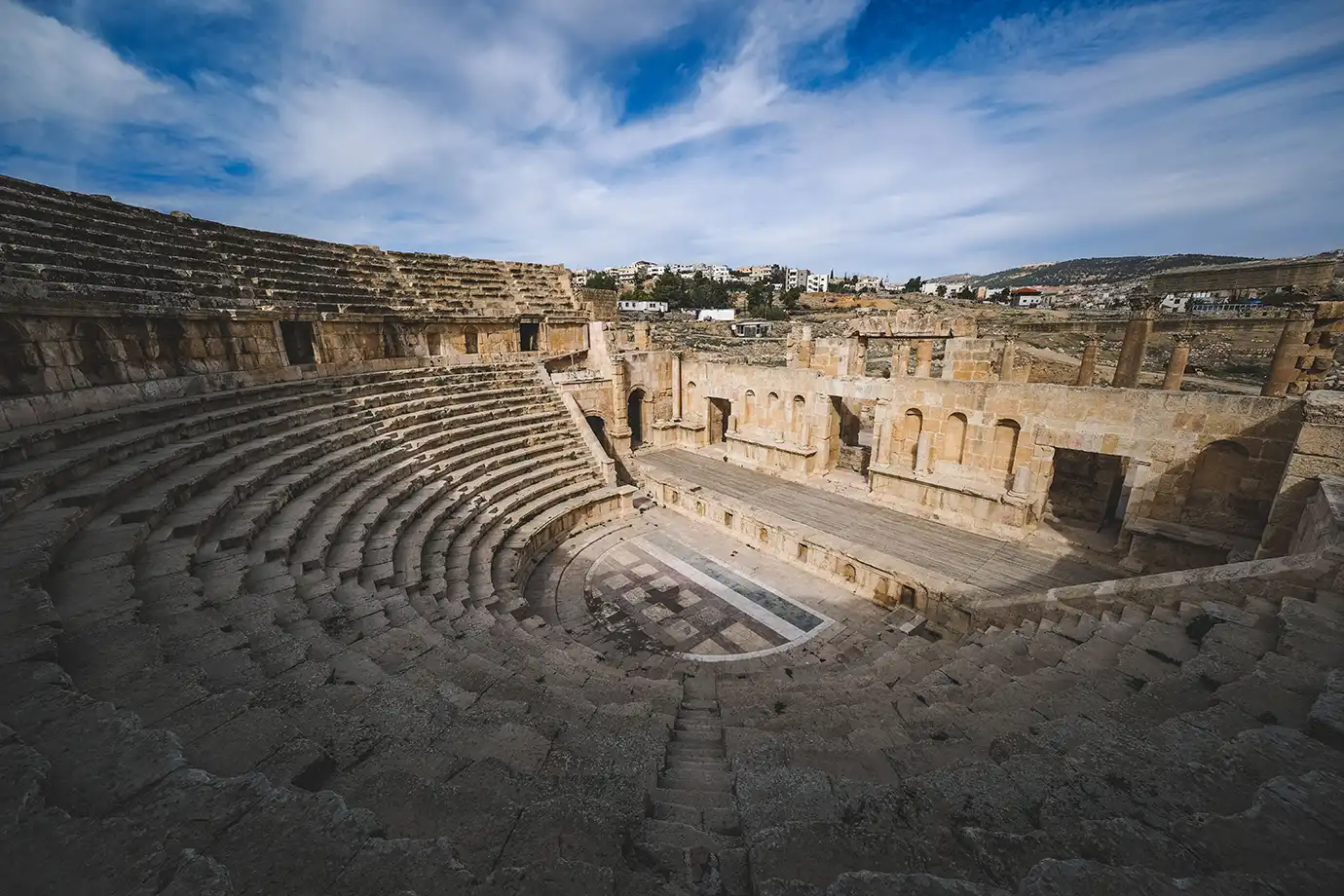
What to See Inside the Theatre Complex
The Folklore Museum sits in one of the vaulted chambers beneath the theatre seating. The museum displays traditional Jordanian clothing, musical instruments, and household objects. The Jordan Museum of Popular Tradition occupies the opposite side and covers Circassian, Palestinian, and Bedouin cultural heritage. Both are small, and each takes 15 to 20 minutes.
Best Time to Visit the Roman Theatre
Visit in the morning. The theater faces north, but the white limestone steps absorb and reflect heat quickly after midday. By early afternoon in summer, the stone is hot enough to discourage lingering. Morning light is also better for photographs, with the sun illuminating the stage and lower seating from behind the top rows.
Opening hours can change by season and during Ramadan. Check the official Jordan site opening hours before your visit to confirm the latest schedule for the Roman Theatre and Amman Citadel.
Stand in the center of the orchestra circle and speak at normal volume. Your voice reaches the top row without amplification. The acoustics remain fully intact after nearly 2,000 years.
Downtown Amman (Al-Balad) — The Traditional Market Quarter
Downtown Amman, known locally as Al-Balad, is the city’s commercial heart. The streets below the Citadel fill with vendors, shoppers, and cafe regulars from early morning to late evening. Al-Balad is loud, crowded, and completely different from the quiet residential hills above it.
Souq al-Balad
The traditional market runs through several streets and covered passages. Gold shops line one lane. Spice vendors fill another with open sacks of za’atar, sumac, cardamom, and turmeric. Textile shops sell keffiyeh scarves and embroidered fabrics. Household goods, perfumes, and electronics fill the remaining stalls.
Bargaining is expected at clothing and textile stalls. Gold shops sell by weight at fixed daily rates. Spice prices are generally fair without negotiation.
Al-Husseini Mosque
The main mosque in downtown Amman sits at the center of the market quarter. The current structure was built in the early 20th century on the site of an older mosque. The mosque is a functioning place of worship. Non-Muslims may view the exterior and the plaza but should not enter during prayer times without invitation. The surrounding streets fill with worshippers on Friday afternoons.
Walking Downtown Amman
Al-Balad works well as a walking tour starting point. Begin at the Roman Theatre. Walk west through the market streets to the Al-Husseini Mosque. Continue past the Nymphaeum (a 2nd-century Roman public fountain, partially excavated). From the market, you can walk uphill to the Citadel in about 15 minutes, or take a taxi. The climb is steep.
One practical note: downtown Amman is hilly and the streets are uneven. Comfortable shoes are essential. The walk from the Roman Theatre to the Citadel is uphill the entire way.
Rainbow Street — Amman’s Creative Quarter
Rainbow Street in Jabal Amman is the most lively pedestrian-friendly strip in the city. Cafes, restaurants, independent bookshops, art galleries, and small boutiques line both sides. The street runs along a ridge with views across the city on the northern side.
What Rainbow Street Offers
Rainbow Street is not a single attraction. The appeal is the atmosphere. Jordanian families, students, expats, and tourists share the pavement. Coffee shops serve Arabic coffee with cardamom or espresso-based drinks. Art galleries show local Jordanian work. Small shops sell handmade ceramics, olive oil soap, and locally designed clothing.
The First Circle (Duwwar al-Awwal) sits at the eastern end of Rainbow Street. The viewpoint from the Circle looks back across the downtown bowl toward the Citadel. On clear days, the panorama extends across the entire city center.

Best Time to Visit Rainbow Street
Late afternoon through the evening. Rainbow Street fills up after 17:00 as the day cools. The restaurants open for dinner. The street takes on a relaxed, social energy that lasts until midnight or later. Morning visits are quieter and better for gallery browsing.
The Jordan Museum — The Best Museum in Amman
The Jordan Museum is the most comprehensive in the country. The permanent collection traces Jordanian history from prehistoric times through the modern Hashemite Kingdom. The displays are well curated, well labeled in English and Arabic, and uncrowded on most days.
The Dead Sea Scrolls fragments displayed here are significant. The Copper Scroll, one of the most unusual of the Dead Sea Scrolls, is part of the permanent collection. The Ain Ghazal statues (also on display at the Citadel museum) are shown here in full context.
Allow one to two hours. The museum is air-conditioned and a good midday option when the outdoor sites are hot. The building sits in the Ras al-Ain neighborhood, about a 10-minute taxi ride from downtown.
Al-Salt — A Half-Day Trip Worth Adding
Al-Salt is a historic hillside town approximately 30 km northwest of Amman. The drive takes about 45 minutes. UNESCO inscribed Al-Salt on the World Heritage List in 2021 under the title “The Place of Tolerance and Urban Hospitality.” Read the UNESCO description of As-Salt to learn more about its historic architecture and cultural heritage.
The town is built on three hills. More than 600 Ottoman-era buildings survive, constructed of golden-yellow sandstone and featuring arched windows, domed roofs, and interior courtyards. The architectural style is unlike anything in Amman or elsewhere in Jordan. The Abu Jaber mansion (now the Historic Old Salt Museum) has Italian frescoed ceilings and carved stone facades.
Al-Salt receives almost no international tourists. The streets, the market, and the stairways between neighborhoods belong to residents and a handful of domestic visitors. The experience of walking through Al-Salt is closer to visiting a living historical town than a managed tourist site.
Half a day is enough. Combine Al-Salt with a morning visit or add it to a departure-day schedule before heading to the airport.
Amman Day Trips — Jerash, Dead Sea, Madaba, and Desert Castles
Amman’s central location makes it a practical base for several day trips. All destinations below are reachable and returnable within a single day. Allow at least three hours to explore the main monuments. Read our Jerash Travel Guide for more details on the Roman ruins, the main attractions, and how to plan your visit from Amman.
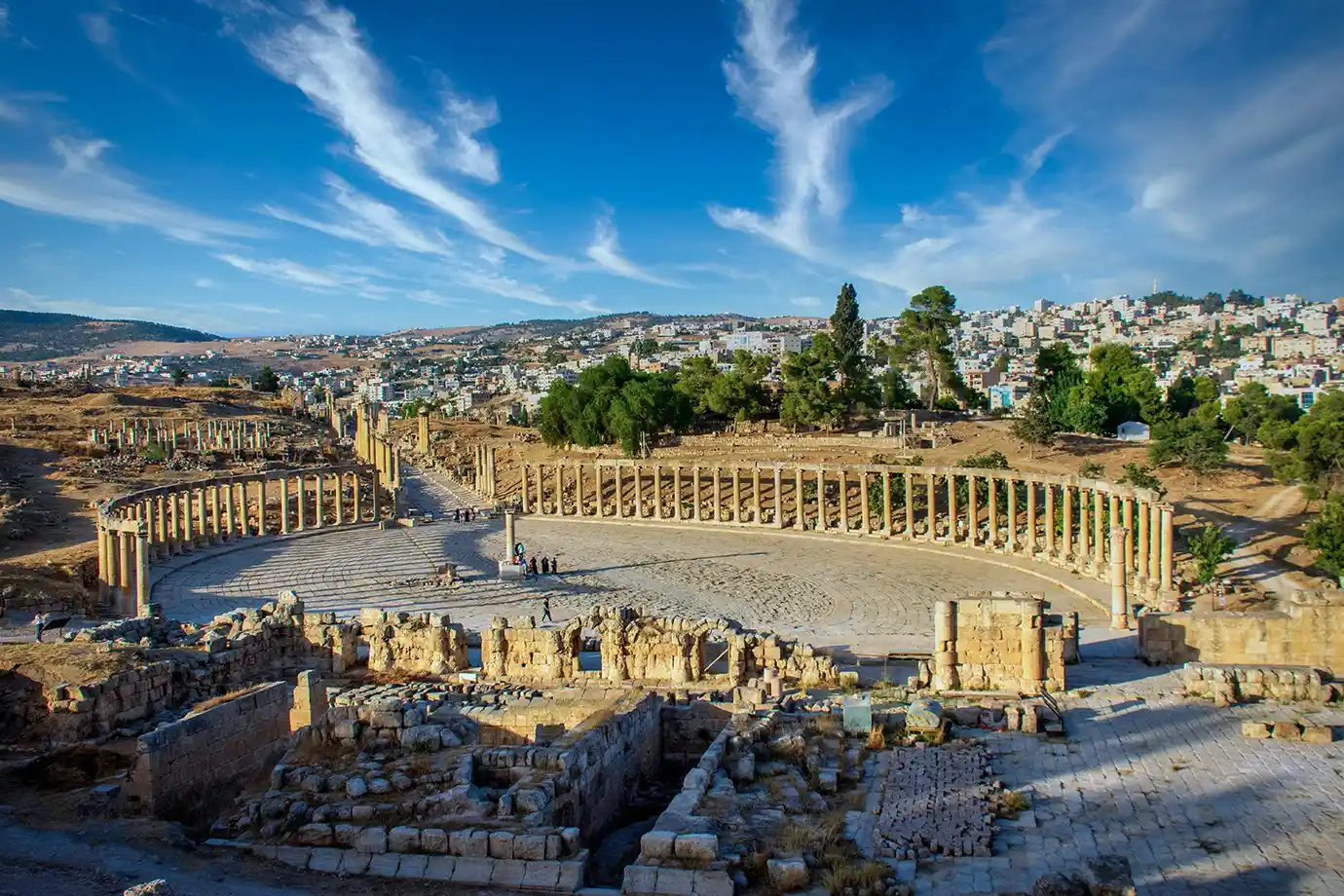
Jerash (48 km north, one hour). One of the best-preserved Roman cities outside Europe. The Oval Plaza, Hadrian’s Arch, the South Theatre, and the Cardo Maximus form a three-hour walking circuit. Entry is included in the Jordan Pass.
The Dead Sea (65 km west, one hour). The lowest point on Earth, more than 430 meters below sea level. Float in water with approximately 34 percent salt concentration. Day-use access is available at several resorts along the Jordanian shore. Planning a visit to the coast? Read our Dead Sea Jordan Guide for advice on resort access, floating, swimming, and what to bring.
Madaba and Mount Nebo (30 km south, 30 minutes). The 6th-century mosaic map at St. George’s Church and the biblical viewpoint at Mount Nebo combine into a half-day circuit. Both sites lie along the route of the King’s Highway.
The Desert Castles (east of Amman, half-day circuit). Qasr Amra (UNESCO World Heritage Site, 8th-century Umayyad bathhouse with rare early Islamic frescoes), Qasr Kharana (an imposing rectangular fortress), and Qasr al-Azraq (a black basalt fort where T.E. Lawrence was based during the Arab Revolt). The three castles form a loop of approximately 200 km. A private car covers the circuit in four to five hours with stops.
Where to Eat in Amman
Amman has the best restaurant scene in Jordan. The range runs from legendary street food to rooftop fine dining.
Hashem Restaurant
Hashem sits in a narrow alley in downtown Al-Balad. The restaurant serves falafel, hummus, ful medames (stewed fava beans), and fresh flatbread. Nothing else is on the menu. The tables fill every hour of every day. Hashem runs 24 hours. King Abdullah II has eaten here. The price for a full plate is a few JOD. Come for breakfast or a late-night meal. Skip lunch hour if you want a seat within five minutes.
Sufra Restaurant
Sufra sits on Rainbow Street in a restored 1920s Amman house with a garden courtyard. The menu covers traditional Jordanian cuisine. Mansaf (lamb, rice, and dried yogurt sauce), maqluba (upside-down rice with vegetables), and grilled meats are the core options. Sufra is the best option for first-time visitors who want an authentic Jordanian meal in a comfortable setting. Dinner reservations are recommended on weekends.
Books at Cafe
Books at Cafe occupies a convenient cafe house on Rainbow Street with a rooftop terrace overlooking the city. The cafe is an expat and Cafeeler meeting point. The menu mixes Jordanian and international options. The rooftop view makes it a strong late-afternoon stop.
The Terrace at Fairmont Amman
For a special dinner with city views, the Fairmont Amman’s rooftop restaurant serves international and Levantine cuisine. The outdoor terrace overlooks Amman from the 7th Circle. Dress is smart casual. Book a table for sunset.
Practical Amman Information
Getting around. Uber and Careem (a regional ride-hailing app) both work reliably in Amman. Rides are affordable and metered. Yellow taxis are available, but negotiating the fare in advance is advisable. Amman has no metro or tram system.
Walking between neighborhoods. Amman is built on steep hills. Walking from downtown to Rainbow Street is a sustained uphill climb. Walking from Rainbow Street to the Fairmont on the 7th Circle is another long stretch. Use ride-hailing apps between distant neighborhoods and save your walking energy for the sites themselves.
How long to spend in Amman. One full afternoon covers the Citadel, the Roman Theatre, and downtown. Two full days cover everything in the article plus Al-Salt and a day trip. Most Peregrine Jordan itineraries include one to two nights in Amman at the start or end of the trip.
Safety. Amman is safe for international tourists. Petty crime rates are low. Women can walk alone in tourist areas during the day and early evening. Downtown after midnight is quieter but not unsafe. The main risk is traffic. Amman drivers move fast, and pedestrian crossings are not always respected.
Currency. Jordanian Dinar (JOD). One JOD equals approximately USD 1.41. ATMs are widely available. Major credit cards work at hotels and restaurants. Carry JOD 20-50 in cash for taxis, tips, and market purchases.
Frequently Asked Questions
How many days do you need in Amman?
One full day covers the three essential sites: the Citadel, the Roman Theatre, and downtown. Two days allow you to add Rainbow Street, the Jordan Museum, Al-Salt, and a day trip to Jerash or the Dead Sea. Most travelers spend one to two nights in Amman at the start of their trip to Jordan. If you plan to visit more than just the capital, read our Jordan itinerary guide to compare 4-, 5-, 7-, and 10-day routes across the country.
Is Amman worth visiting or just a transit stop?
Amman is worth genuine time. The Citadel alone justifies a half-day. The restaurant scene in Jordan is the best. The Jordan Museum is well-curated and uncrowded. Travelers who skip Amman miss the country’s living, modern side. Petra and Wadi Rum show ancient Jordan. Amman shows you how Jordanians live today.
Is Amman safe for tourists?
Yes. Amman is one of the safest capital cities in the Middle East. Petty crime is rare in tourist areas. The UK, US, and Australian governments all classify Amman under standard travel advice. English is widely spoken in the hospitality sector and at most restaurants.
What is the best area to stay in Amman?
The 7th Circle area and Abdali district offer the best five-star hotel options (including Fairmont Amman and Amman Rotana). Rainbow Street in Jabal Amman suits travelers who want a walkable neighborhood with restaurants and cafes. Downtown is noisier and more affordable. Most Peregrine guests stay in the 7th Circle area for the balance of comfort and access.
Explore Jordan from Amman
Every Peregrine Jordan tour starts and ends in Amman. Send us your travel dates, and we build the itinerary around your interests. Our Classic Jordan Tour, Jordan Grand Tour, and Jordan Family Tour all include Amman as the opening stop.
Email sales@peregrinetreks.com or message WhatsApp +977 985 105 2413.