


Every first-time traveler lands in Japan with a food shortlist of three items: sushi, ramen, and tempura. The country does all three beautifully. It also serves twenty other dishes that most visitors try once, fall for, and realize they had never heard of before the trip.
Knowing what to eat in Japan turns a good trip into a great one. Wagyu beef that changes what you think beef can be. Okonomiyaki you grill yourself at the table. Kaiseki dinners that arrive as a dozen small, seasonal courses.
Here is a working Japan food guide for that first trip. For a broader look at Japanese food culture, regional specialties, and traditional dining, explore the Japan National Tourism Organization’s food and drink guide. You get 15 dishes, each with the regions where to eat them, and a breakdown of the main restaurant types. You also get honest advice for vegetarians and other restricted eaters, and the phrases that make small restaurants easy.
The best part is the range. You can eat wonderfully in Japan on a shoestring, or at the top end, on the same evening. The gap between the two is real, but the value at every level beats almost anywhere else. A convenience-store rice ball and a two-star counter can sit a day apart, and both feel worth it.
Planning a food-focused trip? Explore our Japan tour packages to discover private routes through Tokyo, Kyoto, Osaka, and other regions. You can include local food experiences and traditional dining in your itinerary.
Read the quick list below, then drop into any dish or region that catches your eye.
What to Eat in Japan: The Must-Eat Dish List
Here is the short list before the details. These are the dishes and food experiences worth building your meals around, well beyond sushi and ramen.
- Wagyu beef, some of the finest beef in the world, at a specialist counter.
- Okonomiyaki, savory pancakes grilled at your table, best in Osaka.
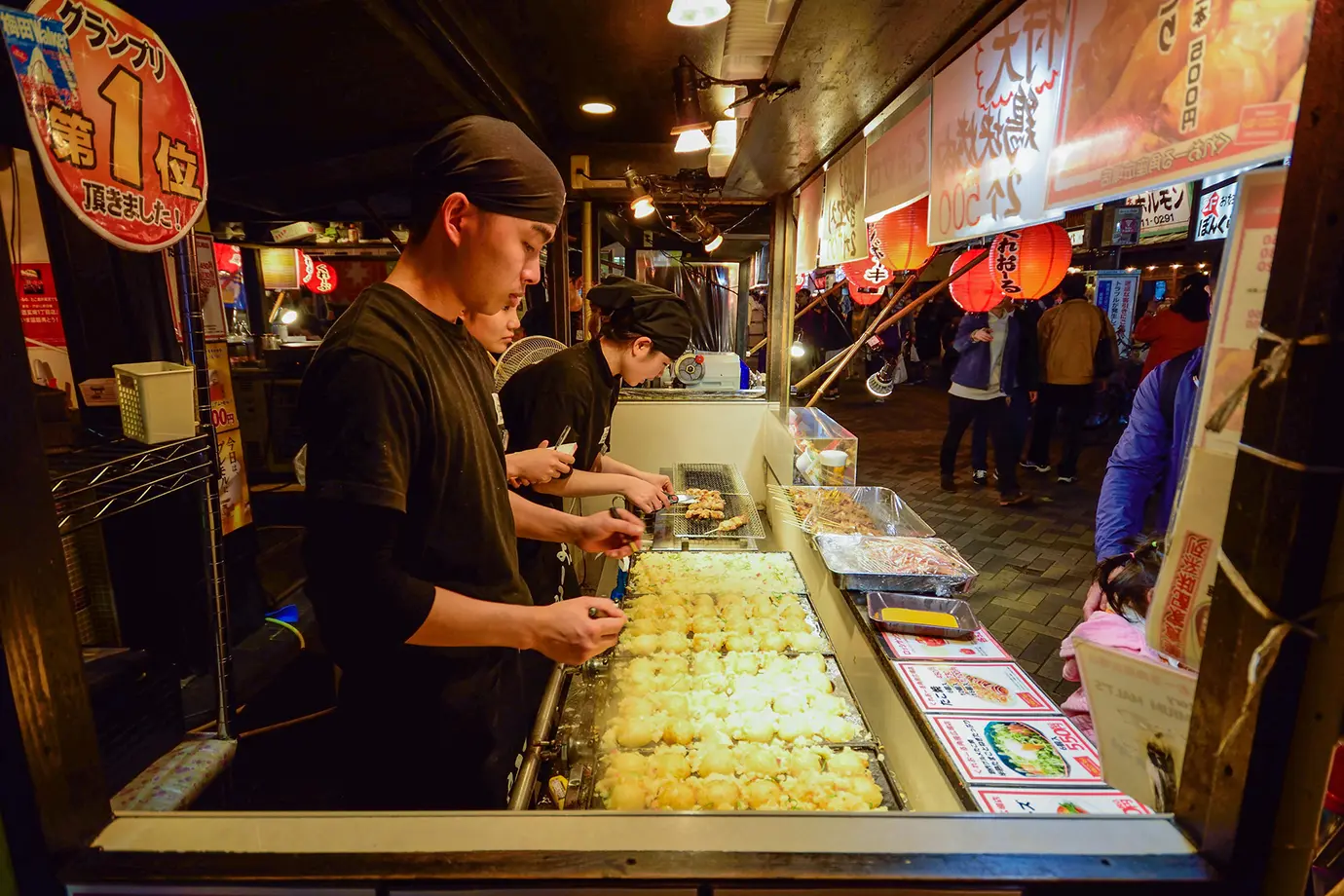
- Takoyaki, hot octopus dumplings, Osaka street food done right.
- Tonkatsu, the country’s best fried food, a crisp pork cutlet.
- Tempura, far lighter and cleaner than any Western version.
- Kaiseki, an 8- to 12-course seasonal tasting menu rooted in Kyoto.
- Sushi and sashimi, at a real counter, not a conveyor belt.
- Ramen, in regional styles that change city to city.
- Udon and soba, the underrated noodle categories.
- Yakitori, chicken skewers grilled over charcoal.
- Shabu-shabu and sukiyaki, two hot-pot beef traditions.
- Unagi, grilled freshwater eel over rice.
- Kyoto obanzai, the city’s seasonal home cooking.
- Hokkaido dairy and seafood, the northern specialty.
- Konbini and depachika food, both far better than they sound.
The dishes cluster by region, so your meals fall into place once your route does. Eat each specialty where it belongs, and every city gives you something the last one could not.
The Big Six: Dishes Every Japan Trip Should Include
Six dishes belong on every first Japan trip: wagyu, okonomiyaki, takoyaki, tonkatsu, tempura, and kaiseki. Each shows a different side of the country’s cooking, from a street-corner snack to a formal seasonal feast.
Wagyu Beef: Some of the Finest Beef in the World
Wagyu is Japanese beef graded for its marbling, and the top A5 grade sits at the peak of a quality system no other country matches. Kobe beef is the famous name, but Matsusaka from Mie, Omi from Shiga, and Yonezawa from Yamagata match or beat it by many counts.
Eat it at a teppanyaki (iron-griddle) counter, where a chef sears it in front of you, or at a charcoal-grill specialist. The fat is the whole point, threaded so finely through the meat that it softens as it cooks. Wagyu is rich, so a small cut satisfies more than a large one, and a big steak of it can defeat you halfway through. Wagyu and other premium dining experiences can increase your food budget, so review our Japan trip cost guide before planning your meals.
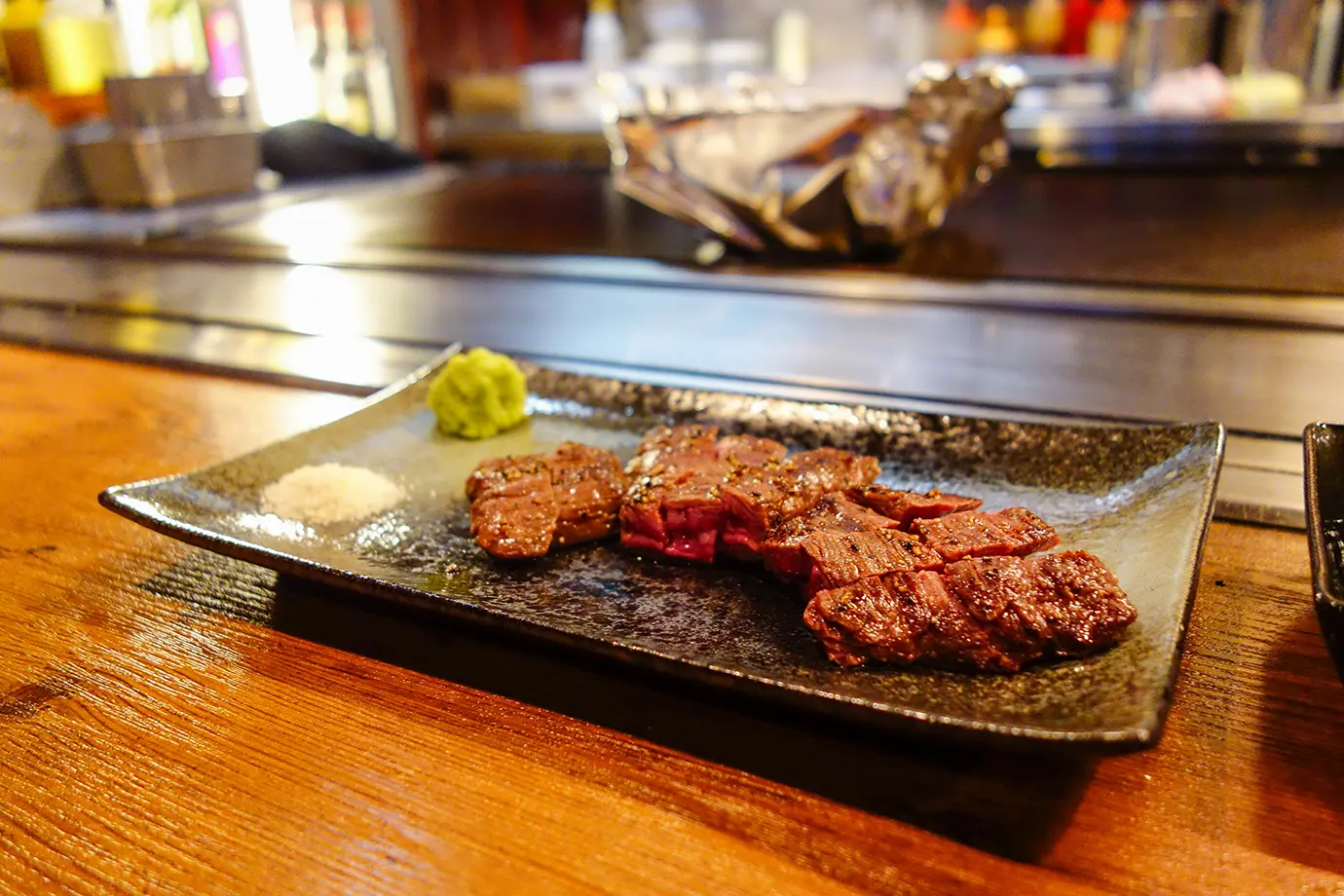
Ask for a modest portion and let the beef carry the meal. Kobe, Osaka, and Tokyo all have strong specialists, and a good counter will guide you on grade and cut.
Okonomiyaki: Osaka’s Savory Pancake
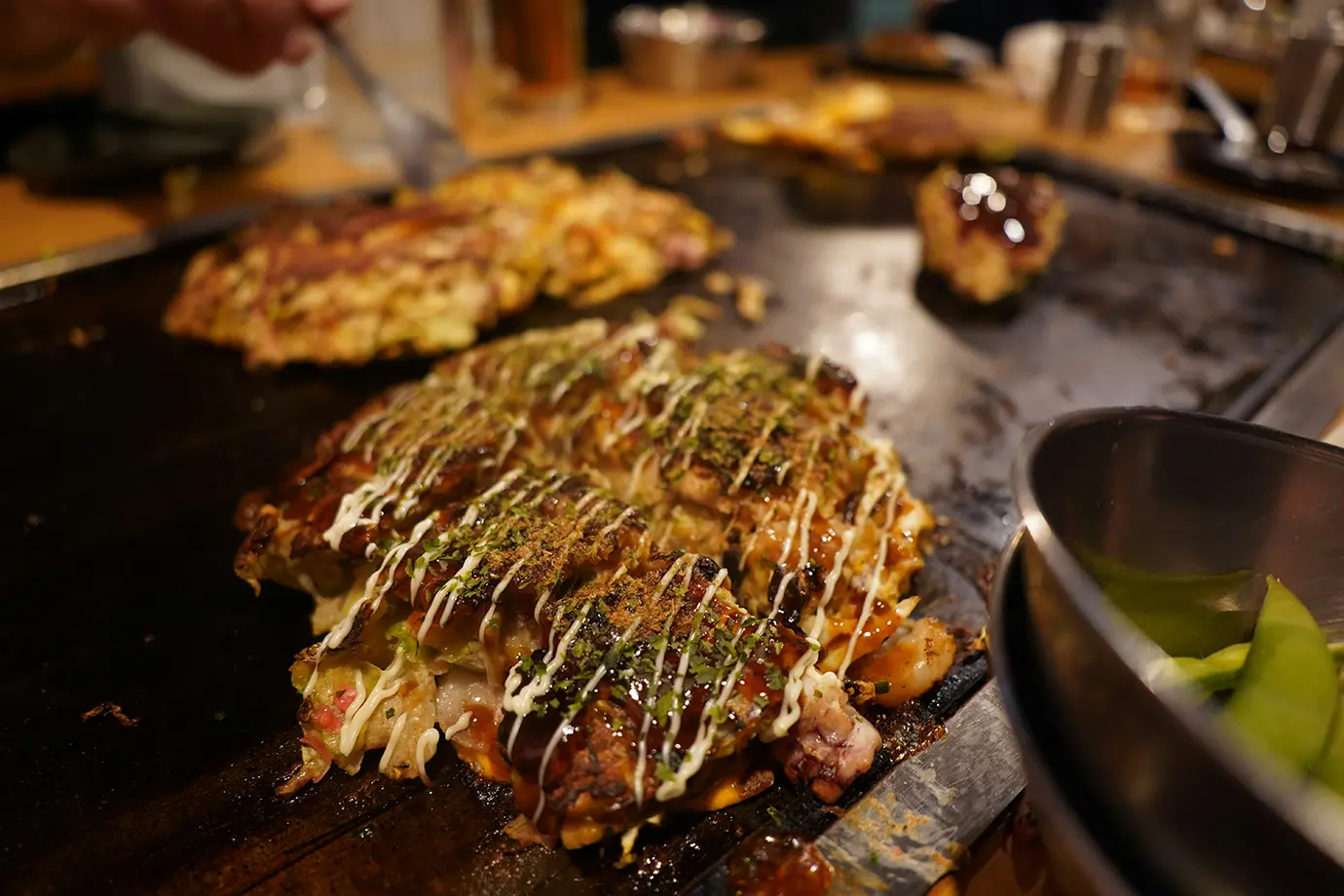
Okonomiyaki (a savory grilled pancake) combines cabbage, batter, and pork or seafood on a hot iron plate. It comes topped with mayonnaise, brown sauce, dried bonito flakes, and seaweed powder. Osaka-style folds everything into the batter. Hiroshima-style layers it instead and adds noodles, making it a different dish under the same name.
In some places, you cook it yourself on a table griddle, learning as you go, while in others, a cook runs the plate. Half the fun is the sizzle and the smell rising off the iron while you wait. Osaka’s Dotonbori has plenty of visitor-friendly spots, and Hiroshima is the place for the layered version. Point at the menu and say pork, buta, or mixed, mikkusu.
Takoyaki: Osaka Street Food, Done Right
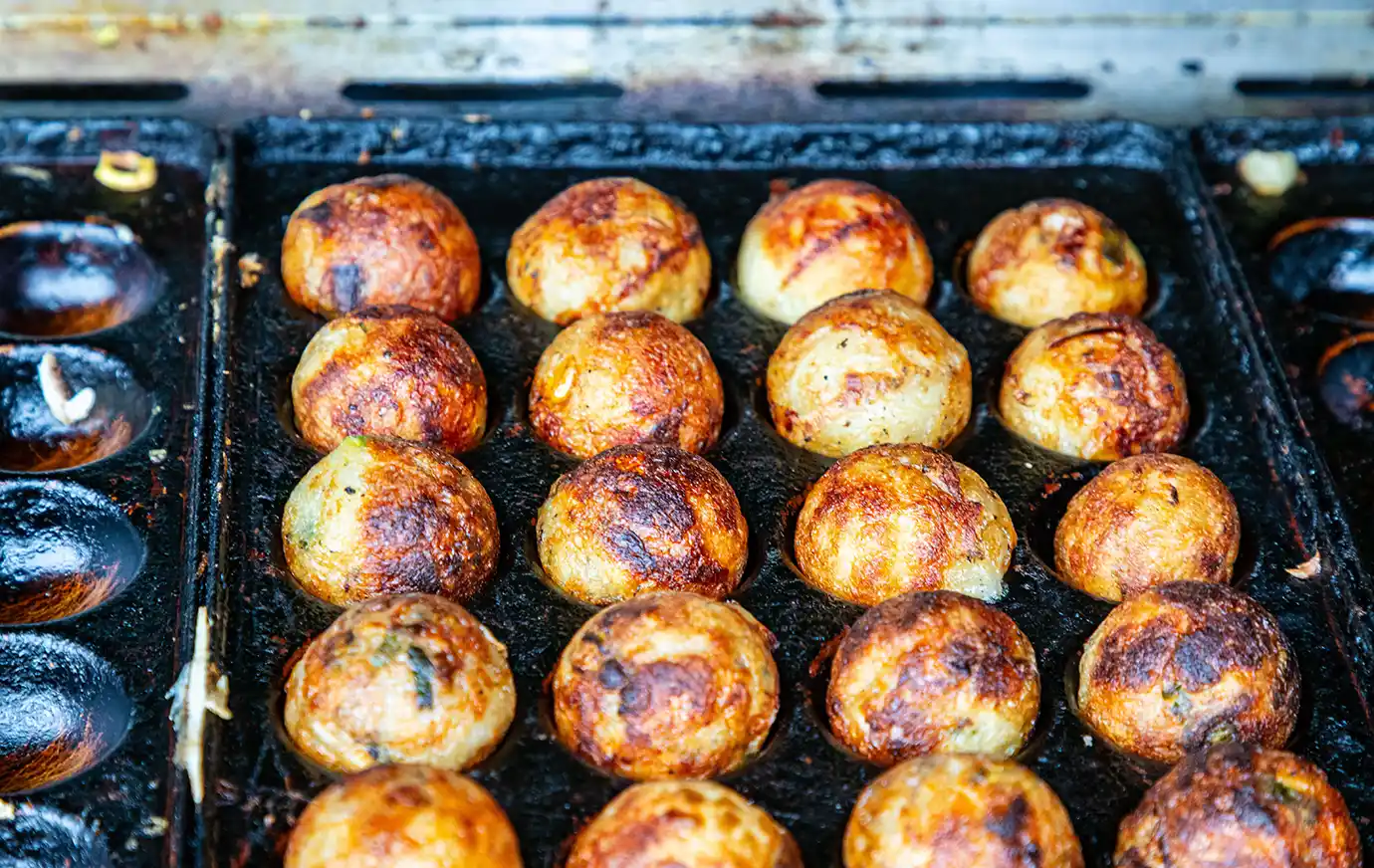
Takoyaki (octopus dumplings) are golf-ball-sized snacks cooked in a dimpled iron griddle, topped with sauce and bonito flakes that dance, and eaten with a toothpick. The best have a crisp shell and a molten center, so wait a minute before the first bite, or you will burn your mouth. Locals learn this young.
Osaka’s stalls in Dotonbori and Namba do this properly, and most other cities do not come close. Stalls sell set portions, usually six to eight pieces, so you point and pay. Eat them standing at the counter, hot, while the next batch spits and turns on the griddle beside you.
Tonkatsu: The Country’s Best Fried Food
Tonkatsu (breaded pork cutlet) is a fried dish that Western versions rarely reach. A light panko breadcrumb crust stays crisp while the meat inside stays juicy, served with shredded cabbage, rice, and a fruity brown sauce. Specialist shops use prized pork breeds like kurobuta (Berkshire pork) that lift the whole plate.
Tokyo has the best specialists, some of them century-old counters that do nothing else. Order the fattier loin, rosu, or the leaner fillet, and take the set meal, teishoku, which refills your cabbage and rice for free. Grind the sesame seeds yourself, then stir in the sauce and dip lightly, since the pork does not need much sauce.
Tempura: Lighter and Cleaner Than You Expect
Tempura (battered and fried seafood and vegetables) tastes almost weightless when it is done well. At a proper counter, each piece is fried in sesame oil and served as soon as it is ready. Eat it at once, with a dab of salt or a light dipping sauce. Chain-restaurant tempura, greasy and cold, misses the point entirely.
Tokyo and Kyoto hold the best counters. Sit at the bar and take the omakase (chef’s choice) course. The cook feeds you one piece at a time, in order, watching to see when you are ready for the next. Eat each one right away, before the crust softens and the moment passes.
Kaiseki: The Seasonal Multi-Course Feast
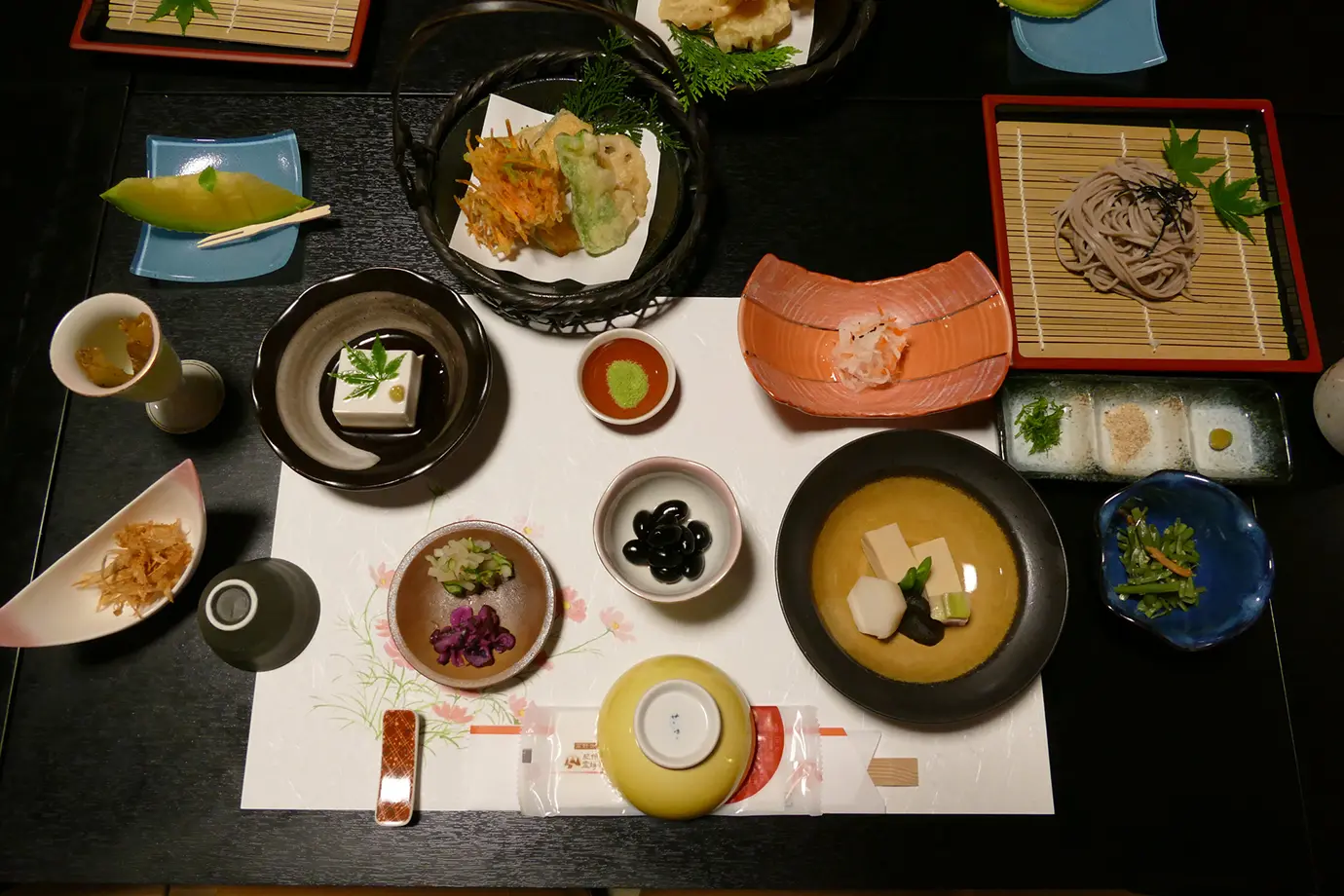
Kaiseki (seasonal tasting menu) is Japan’s finest dining tradition, a set run of eight to twelve small courses. Born of Kyoto’s tea ceremony, each course centers on a single ingredient at its seasonal peak and is plated with great care. You find it at ryokan dinners, standalone restaurants, and Michelin-starred rooms.
For many first-timers, it is the single best meal of the trip. Kyoto is the heartland, though Tokyo has strong versions too. The chef sets the whole course, so you cannot swap or skip dishes. The top restaurants need to be booked a month or more in advance—many traditional ryokan pair seasonal dinners with hot-spring baths. Read our Japan Onsen Guide to learn about onsen stays, bathing etiquette, and what to expect.
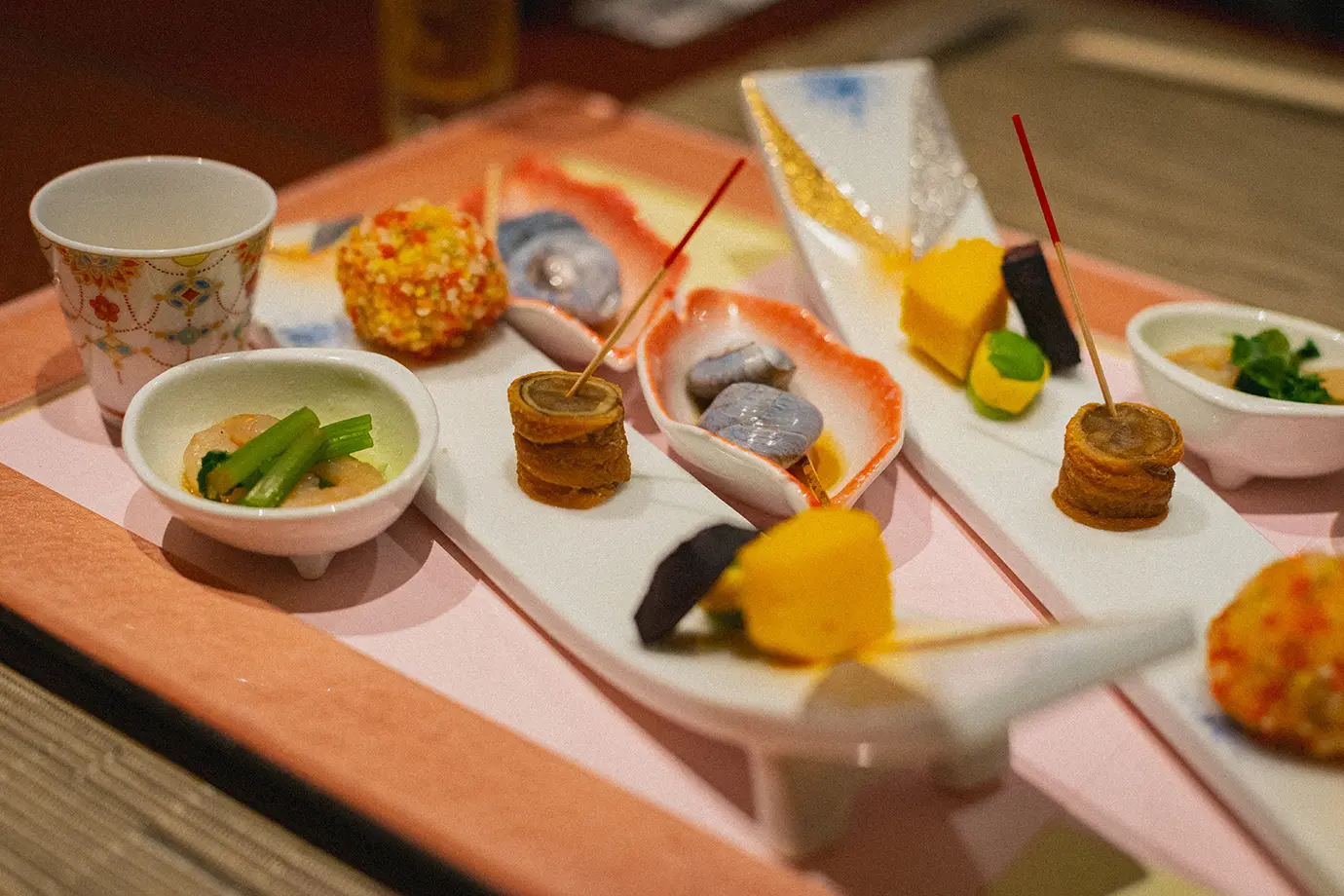
From our guides: book one serious kaiseki dinner and build a quiet evening around it. Rushing in from a packed day of sightseeing wastes a meal that asks you to slow down.
The Regional Specialties
Japan’s food varies widely by region, so plan your meals around your route. Osaka does street food, Kyoto does refined vegetables, Fukuoka does tonkotsu ramen, and Hokkaido does dairy and seafood. Each city rewards eating its own specialty.
Osaka: The Kitchen of Japan
Osaka is Japan’s street-food capital, and this Osaka food guide starts beyond okonomiyaki and takoyaki. Try kushikatsu (deep-fried skewers), dipped once each in a shared sauce, with a strict no-double-dipping rule. Add horumon (grilled offal) and doteyaki (beef tendon simmered in miso). Dotonbori and Namba pack the loudest, brightest, best casual eating in the country into a few blocks. The official Osaka travel guide also introduces local specialties such as takoyaki and okonomiyaki.
Kyoto: Obanzai and Buddhist Vegetarian Cooking
Kyoto eats quieter and greener than Osaka. Obanzai (Kyoto home cooking) is a run of small seasonal dishes of vegetables, tofu, and pickles. Yudofu (simmered tofu) originated in temple kitchens, and shojin ryori (Buddhist vegetarian cuisine) is still served at temples like Tenryu-ji and at specialist restaurants citywide. For Kyoto street food and souvenirs, pick up yatsuhashi, sweet cinnamon rice-flour treats, near the main temples.
Tokyo: Everything, at Every Level
Tokyo has no single local dish, but it has the deepest coverage of every cuisine in Japan. Eat sushi at the Tsukiji outer market or a Ginza counter, tempura at a century-old bar, and ramen in every regional style. Look for monjayaki, a runnier Tokyo cousin of okonomiyaki, in the Tsukishima district, where a whole street of shops serves little else.
Fukuoka: Tonkotsu Ramen and Yatai Stalls
Fukuoka, in Kyushu, owns the country’s most famous ramen and its best street-stall scene. Its tonkotsu (pork-bone) ramen is thick, creamy, and rich, the style most copied abroad. In the evening, the yatai (mobile food stalls) along the river in Nakasu set up their counters for about eight diners each. Try motsunabe, an offal hot pot born here, on a cool night.
Hokkaido: Dairy, Seafood, and Sapporo Ramen
Hokkaido, the northern island, is Japan’s dairy and seafood heartland. Its cheese, cream, and butter reach the top level, and its soft-serve ice cream has a devoted following. The seafood runs to uni (sea urchin), crab, ikura (salmon roe), and scallops. Try jingisukan (grilled lamb) and Sapporo’s rich, buttery miso ramen, both built for the cold.
Okinawa: The Tropical Outlier
Okinawa, far to the south, cooks unlike anywhere else in Japan. Its dishes include goya champuru (bitter melon stir-fry), Okinawa soba made with wheat noodles rather than buckwheat, and rafute (slow-braised pork belly). Finish with sata andagi, Okinawan doughnuts, and a small pour of awamori, the local rice spirit. It earns a trip of its own.
Dining Styles: Where You Eat Matters as Much as What
Japan’s restaurant types shape the meal as much as the food. Know the main ones, from the casual izakaya pub to the formal kaiseki room. You can then pick the right setting for every night of your trip.
Izakaya: The Japanese Pub
An izakaya (Japanese pub) is the country’s most social way to eat. You order small plates over drinks and build the meal as you go, sharing three to five dishes to start. Look for grilled fish, karaage (fried chicken), edamame, sashimi, and yakitori. Plan on two or three easy hours at the table.
Kaiseki and Ryokan Dinners: The Formal Route
Kaiseki is the formal, booking-required tasting menu covered above, quiet and dress-conscious. A ryokan dinner is served in the same style, course after course, either in a private room or in your tatami guest room. The meal comes with the inn stay, and the number of courses rises with the ryokan’s tier. It is the easiest way to try kaiseki without a separate reservation.
Yatai and Street Food: Eating on the Street
Yatai (mobile food stalls) are the most atmospheric way to eat in the evening in Japan, and Fukuoka is their capital. Each stall seats only a handful of diners and cooks a short, focused menu, from ramen to grilled skewers. Osaka’s Dotonbori has street food too, though not the kind of yatai you’d find there. Pull up a stool, order the house specialty, and talk to whoever sits next to you.
Conveyor Sushi and Chains: The Everyday Meals
Kaiten-zushi (conveyor-belt sushi) and casual chains cover your easy, cheap meals. Belt sushi lets you grab plates as they pass or order from a screen, and the beef-bowl and curry chains are quick, tasty, and reliable. None of these are the country’s peak, but they deliver real value and suit families and busy days. Traveling with children? Our Japan family vacation guide covers family-friendly destinations, activities, and practical travel tips.
Depachika and Konbini: The Underrated Everyday
Depachika (department-store food halls) sit in the basements of big stores and sell prepared food from top kitchens, from bento boxes to sushi and wagyu. Few tourists go, which is their loss. The convenience stores, or konbini, sell fresh rice balls, sandwiches, and hot food that shame any Western equivalent. Both make a great breakfast or a travel-day lunch.
Dietary Restrictions: Honest Guidance for Restricted Eaters
Japan is harder for restricted eaters than it looks, because fish stock hides in nearly everything. Vegetarians, vegans, and gluten-free travelers can eat well with planning, but it takes effort and the right restaurants.
Vegetarians: Harder Than It Looks
Japan reads as vegetable-heavy, but its cooking is broth-based. Dashi (the basic stock in miso soup, ramen, udon, soba, and most simmered dishes) is made from dried bonito and kelp. Even plain-looking vegetable dishes often contain fish.
The reliable answer is shojin ryori (Buddhist vegetarian cuisine), served at temples and specialist restaurants, especially in Kyoto, and it contains no meat or fish at all. Look for the shojin ryori sign. A restaurant-finder app like HappyCow is the handiest tool in the cities.
Vegans: Harder Still
Vegans face the dashi problem plus eggs and dairy. Eggs turn up in rolled omelets, ramen toppings, and batter, and dairy shows up in Hokkaido dishes and Western fusion. A fully vegan trip is doable but needs specialist spots and some homework.
Kyoto’s shojin ryori is genuinely vegan and excellent. Tokyo has a growing vegan scene, while Osaka and smaller cities stay tougher. Learn the phrase “vegan desu” and carry a Japanese card that says “no fish stock, no egg, no dairy.”
Gluten-Free: Genuinely Difficult
Gluten-free is the hardest of all in Japan. Regular soy sauce contains wheat; miso can contain barley; and both tempura and okonomiyaki batter contain wheat. Shared fryers and grills add cross-contact risk on top of that.
Rice is your safe zone: sushi, sashimi, plain grilled fish, and rice balls without soy-brushed seaweed. Tamari (wheat-free soy sauce) exists, but you must ask for it. Celiac travelers should research restaurants hard, carry a Japanese allergy card, and pack safe backup snacks.
Halal, Kosher, and Allergies
Halal, kosher, and severe allergies all need planning in Japan. Halal-certified restaurants and halal ramen shops exist in Tokyo, Osaka, and Kyoto, but are not common. Their numbers have grown in tourist areas in recent years. Kosher food is very limited, with Chabad houses in Tokyo and Kyoto as the main resource.
For allergies, take extra care, since Japan labels less strictly than the US or UK. Nut oils and traces can appear without warning. Carry a translation card, bring your own medication, and eat at higher-tier restaurants that can adjust a dish on request.
How to Order: The Vocabulary That Makes Restaurants Easy
A handful of phrases and a little know-how open almost any restaurant in Japan. Learn five words, understand the ticket machines, and you can eat anywhere, menu or no menu.
Five Phrases That Handle Most Restaurants
Learn these five, and you can manage nearly any meal:
- Sumimasen, excuse me, to get a server’s attention. The most useful word you will learn.
- Kore o kudasai, this one please, while pointing, to order without knowing the name.
- Osusume wa nan desu ka, what do you recommend, to let the chef guide you.
- Okaikei o onegaishimasu, the check please, to close out the meal.
- Gochisousama deshita, it was a feast, said to staff on your way out.
Ticket-Machine Restaurants
Many ramen shops and casual counters take your order at a machine by the door. Insert cash, and increasingly an IC card or credit card, then press the button for your dish. Take the tickets it prints, sit at the counter, and hand them to the cook. Buttons often have photos, and staff will help if they do not.
Reading the Menu and Paying
Tourist-area restaurants usually have English menus, while neighborhood spots often do not. The camera mode in Google Translate reads a menu well enough, and pointing always works as a backup. Pay at the counter on your way out, not at the table, in most places. Cash still rules at small shops, though chains and mid-range spots take cards, and you never tip.
Foods to Be Careful About
A few Japanese foods carry real risk, so treat them with respect. Blowfish, raw chicken, and generous sake pours are the main ones to watch on a first trip.
Fugu and Raw Chicken
Two dishes deserve real caution. Fugu (blowfish) is safe only at licensed restaurants with certified chefs, since the fish is poisonous if prepared wrong. Never eat it outside a licensed venue. Raw chicken, tori-sashi, is popular in Kyushu but carries a real risk of food-borne illness. First-timers or anyone with a weak immune system should skip it.
Konbini Sushi and Drinking Pace
Two everyday things trip people up. Convenience-store sushi is safe while refrigerated, but not after it sits out for hours, so follow the same rules you would at home. And restaurants pour sake generously from small carafes, which hides how much you have had, so pace yourself and drink water alongside.
Frequently Asked Questions
What Is the Most Famous Food in Japan?
Sushi is Japan’s most famous food worldwide, but ramen, tempura, and wagyu beef run close behind. In Japan, everyday favorites lean more toward ramen, curry rice, and grilled fish set meals than toward sushi. For a first trip, make sushi a must, then look beyond it to wagyu, okonomiyaki, tonkatsu, and kaiseki, which surprise most visitors more.
Is Japanese Food Good for Vegetarians?
Japanese food is trickier for vegetarians than it looks, because fish stock, dashi, hides in most soups and simmered dishes. You can still eat very well with planning. Seek out shojin ryori, the Buddhist vegetarian cuisine served at temples and specialist restaurants, especially in Kyoto. Use a restaurant-finder app in the cities, and carry a Japanese card explaining that you avoid fish stock. For more practical advice, read the Japan National Tourism Organization’s vegetarian and vegan guide before your trip.
What Is the Difference Between Kaiseki and Izakaya?
Kaiseki and izakaya sit at opposite ends of Japanese dining. Kaiseki is a formal, preset tasting menu of eight to twelve seasonal courses, quiet and often pricey, and usually booked in advance. An izakaya is a casual pub where you order small shared plates over drinks at your own pace. Choose kaiseki for a special night and an izakaya for a relaxed, social one.
What Should I Eat in Kyoto?
In Kyoto, eat obanzai, the local seasonal home cooking, and shojin ryori, the Buddhist vegetarian temple cuisine. Try yudofu (simmered tofu) near the eastern temples, and book a kaiseki dinner, since Kyoto is its heartland. For a sweet souvenir, pick up yatsuhashi, cinnamon rice-flour treats. Kyoto rewards slower, refined meals more than street snacking.
What Should I Eat in Osaka?
In Osaka, eat okonomiyaki and takoyaki first, then push further into the street-food scene. Try kushikatsu, deep-fried skewers with a one-dip rule, and horumon, grilled offal, around Dotonbori and Namba. Osaka calls itself the nation’s kitchen for good reason, so come hungry and graze at several stalls rather than sit down for one big meal.
What Is the Best Food Experience for a First-Time Visitor?
The best single food experience for a first-timer is one proper kaiseki dinner, ideally in Kyoto or at a ryokan. A dozen small seasonal courses show the care at the heart of Japanese cooking in one sitting. Pair it with plenty of casual eating, from ramen counters to Osaka street stalls, so you taste the full range from humble to refined.
Eat Your Way Across Japan
You now have a working plan for what to eat in Japan, from wagyu and kaiseki down to a perfect convenience-store rice ball. Match the dish to the region, mix one splurge meal with plenty of casual ones, and learn the five phrases that open any small restaurant. Come hungry and curious, and the country does the rest.
Would you like a trip built around the food, with kaiseki dinners booked and regional specialties worked into the route? Peregrine’s Japan team can arrange it. Tell them how you like to eat, and they can plan meals around your days.