


How much a trip to Japan costs depends less on Japan and more on the trip you choose. Search the question, and you get two useless extremes. One blog swears you can do it on pocket change. One luxury operator hints at a small fortune. Both are right, because they price completely different trips.
Here is the honest frame. Your Japan trip cost comes down to three big choices: your hotel tier, how you eat, and how you move between cities. A budget traveler and a luxury couple can walk the same temples and ride the same trains, then spend five times as much on everything else.
A quick word on the numbers below. All figures are in Japanese yen, with rough US dollar equivalents at about 150 yen to the dollar. The yen swings against the dollar month to month, and peak seasons push rates up hard, so treat every number as a planning range, not a fixed quote.
By the end, you will know what a genuine budget trip costs, what a comfort-tier trip runs at real four-star pricing, what a luxury private tour costs, and where the hidden fees hide. Peregrine’s Japan desk plans trips across all three tiers, so these ranges reflect how the money really lands.
The Three Tiers That Set Your Japan Trip Cost
Most Japan trips fall into three tiers: budget, comfort, and luxury. Each is a coherent travel style, not just a number. A rough per-person daily spend, before international flights, looks like this.
| Tier | Per person per day | What it buys |
|---|---|---|
| Budget | ¥15,000-22,000 ($100-150) | Business hotels, convenience-store and ramen meals, public transit |
| Comfort | ¥35,000-55,000 ($235-370) | 4-star hotels, one ryokan night, mixed dining, reserved Shinkansen |
| Luxury | ¥90,000-180,000 ($600-1,200) | 5-star hotels, high-end ryokan, kaiseki, Green Car, private guides |
Tier 1: Budget
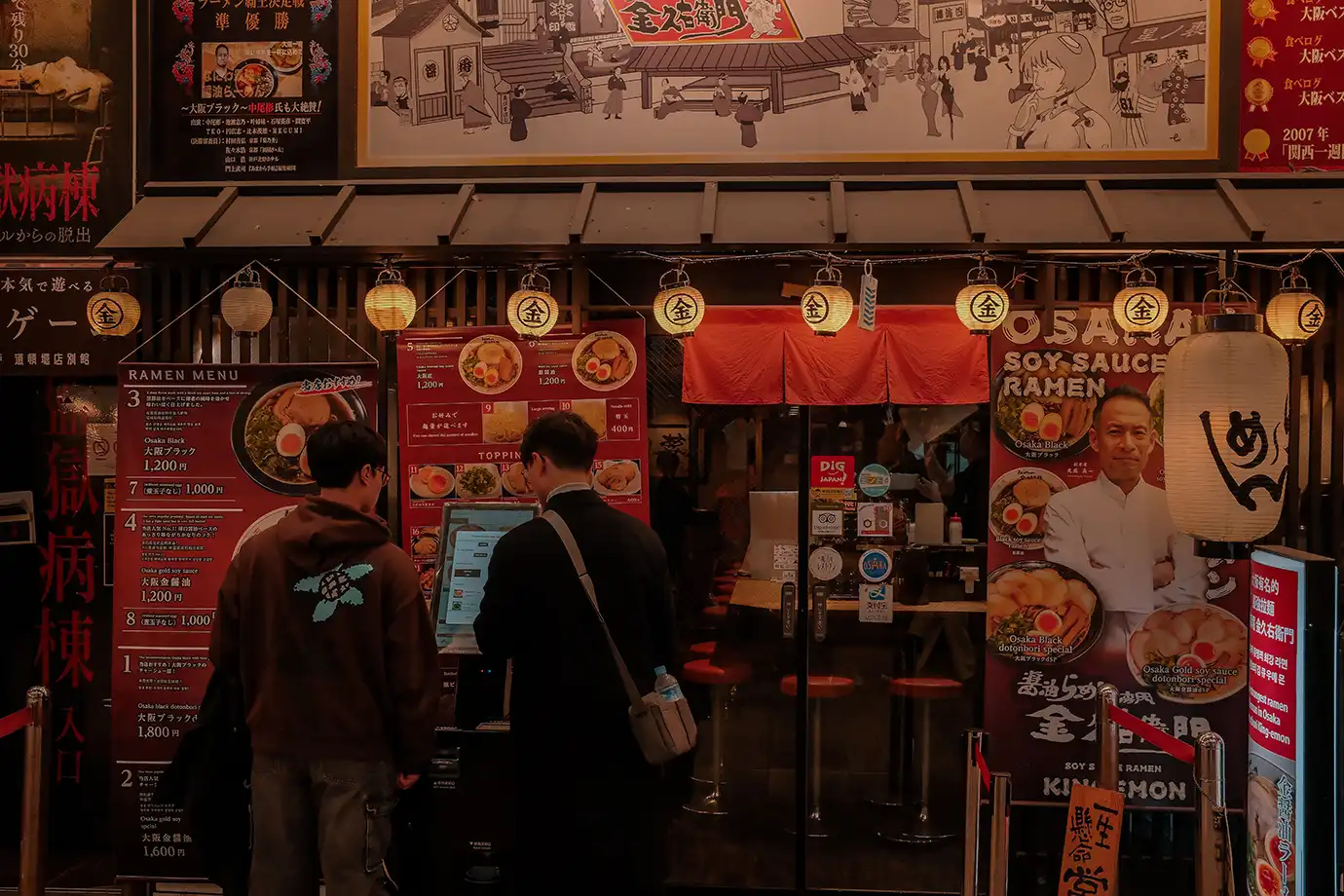
A budget trip to Japan runs about ¥15,000-22,000 ($100-150) per person per day. You sleep in business hotels like Toyoko Inn or APA at ¥9,000-14,000 ($60-95) per night for two. Breakfast is a convenience-store rice ball at ¥400-700. Lunch is ramen or a gyudon beef bowl at ¥800-1,200. Dinner at a casual izakaya costs ¥2,000- ¥3,500 per person.
Budget does not mean bad. Locals eat convenience-store meals daily, and a good ramen counter is a highlight. What the tier skips are the extras: no ryokan night, no kaiseki, and no private guide—best for solo travelers, students, and couples keeping a tight budget.
Tier 2: Comfort / 4-Star
The comfort tier runs about ¥35,000-55,000 ($235-370) per person per day, and it is the tier most first-timers actually book. You stay in four-star hotels like the Hyatt Regency or a Cross Hotel at ¥30,000-50,000 ($200-335) per night for two. Meals range from casual lunches at ¥2,000-4,000 to quality dinners at ¥5,000-12,000.
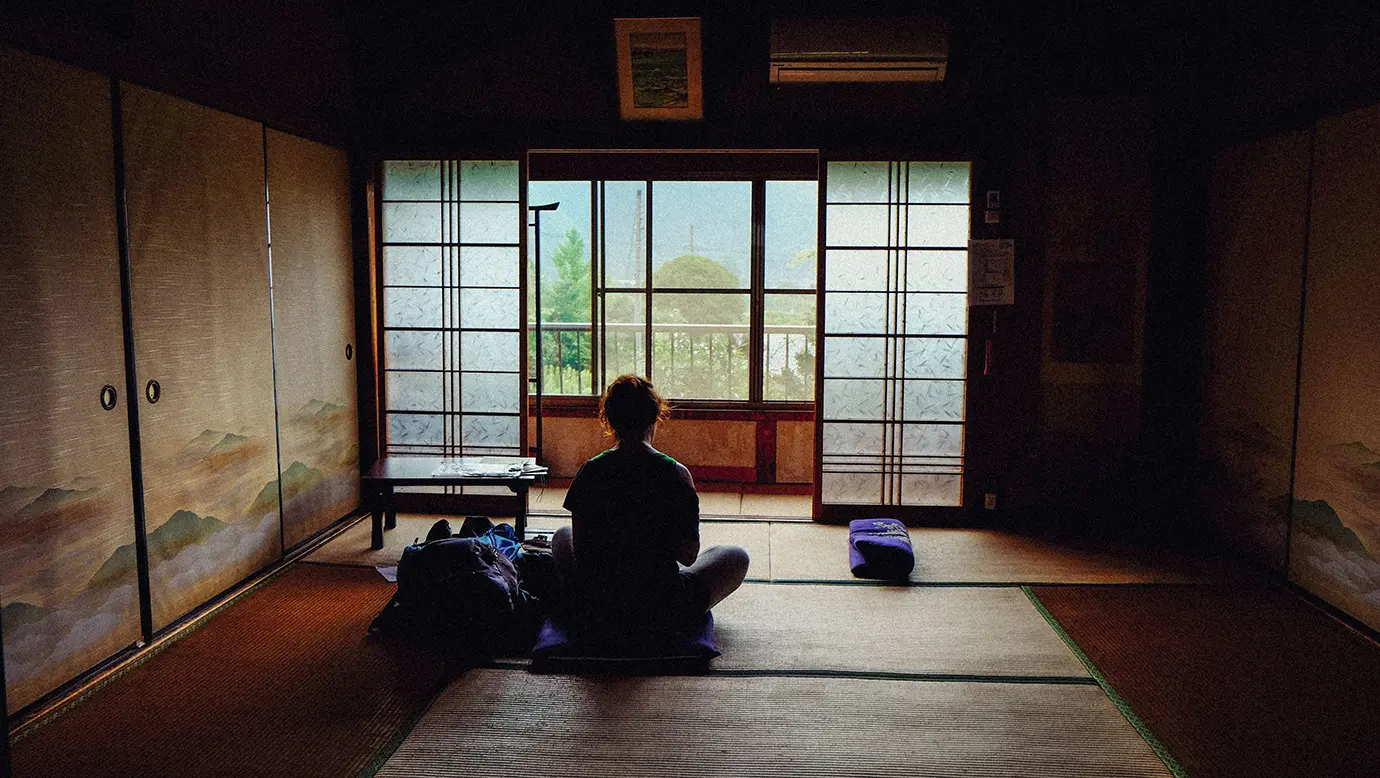
The signature move is one ryokan night in Hakone at ¥45,000- -5,000 ($300- -00) per person, with a kaiseki dinner and breakfast included. Add one memorable Kyoto kaiseki, and you have the cultural highlights without luxury pricing. Best for honeymooners, anniversary couples, and families of four.
Tier 3: Luxury / All-Managed Private Tours
The luxury tier runs about ¥90,000-180,000 ($600-1,200) per person per day. Hotels move up to the Ritz-Carlton, Park Hyatt, Peninsula, or Four Seasons class at ¥90,000-200,000 ($600-1,335) per night. High-end ryokan like Gora Kadan or a Hoshinoya property run ¥100,000-¥180,000 per person, including meals.
Kaiseki at Michelin-recognized houses runs ¥25,000-50,000 per person. Trains ride in the Green Car, private guide days cost ¥60,000-100,000, and cultural experiences come pre-booked. Best for honeymoons, milestone birthdays, and travelers who value time far above cost.
A Note on “All-Inclusive” in Japan
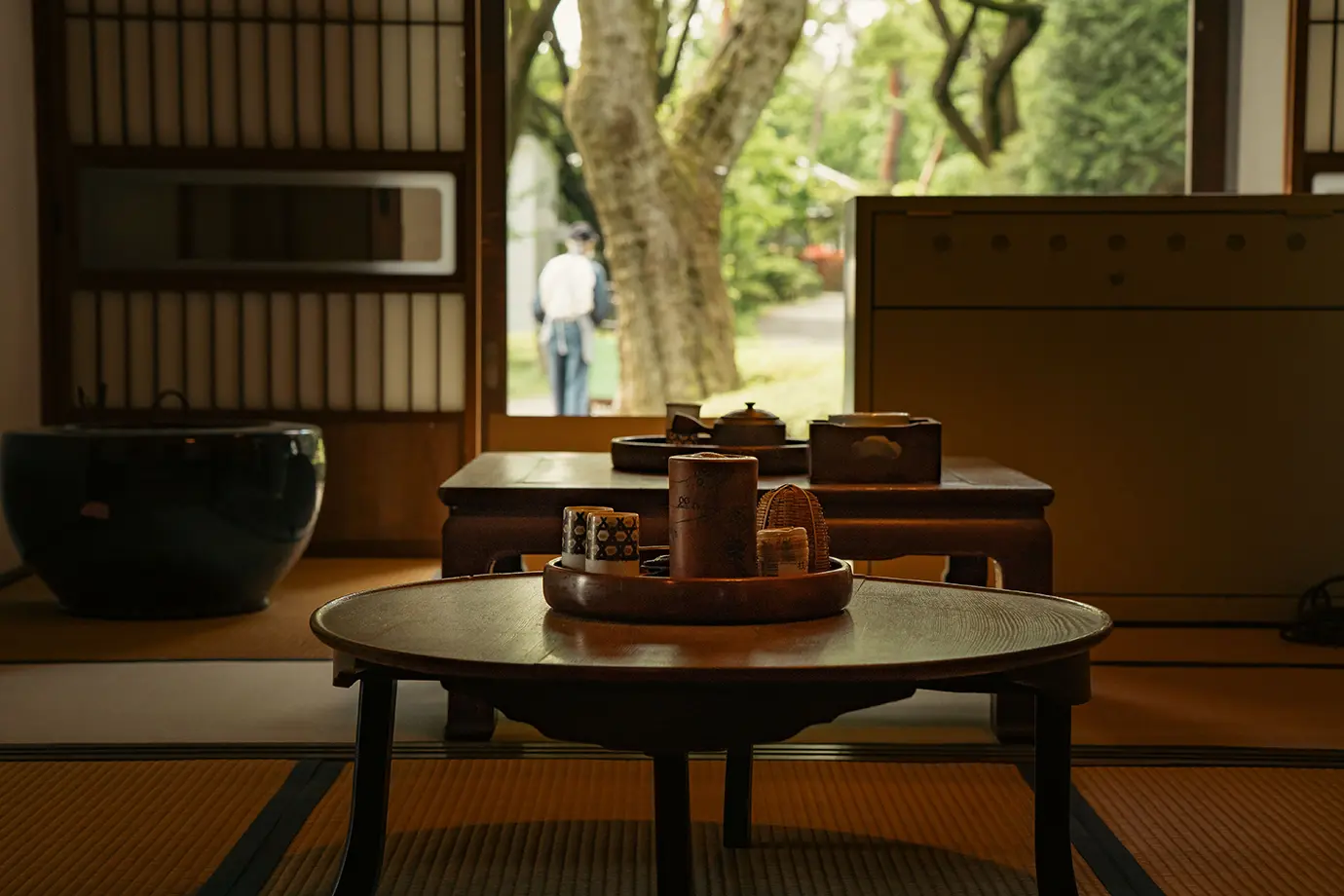
Japan is not the Maldives, so drop the resort meal-plan idea. Japanese hotels rarely run all-inclusive packages. In the Japanese context, “all-inclusive” means a fully prepaid, managed trip with hotels, meals, trains, and experiences booked in advance. The one real exception is the ryokan, whose rate folds in an elaborate dinner and breakfast.
Where the Tiers Overlap
Some costs remain the same regardless of your tier. International flights vary by origin, not style. Temple entries run ¥400-1,000 for everyone. The IC card deposit is a flat ¥500. Accommodation tax applies at every tier. The real gap shows up in hotels, dining, and Shinkansen class.
Accommodation: Your Biggest Line Item
Accommodation is the single biggest cost of any trip to Japan, and it varies the most. The jump from a business hotel to a four-star property to a five-star suite is the main reason two Japan trips can cost wildly different amounts. Set this line first, because it moves your total more than anything else.
Tokyo Accommodation Ranges
| Tier | Property type | Nightly rate (JPY) | USD (approx.) |
|---|---|---|---|
| Budget | Business hotel (Toyoko Inn, APA) | 9,000-14,000 | 60-95 |
| Budget-plus | 3-star (Sotetsu Fresa Inn, Mitsui Garden) | 15,000-22,000 | 100-150 |
| Comfort | 4-star (Hyatt Regency, Cerulean Tower) | 30,000-50,000 | 200-335 |
| Upper comfort | 4-star superior (Prince Park Tower) | 45,000-70,000 | 300-465 |
| Luxury | 5-star (Ritz-Carlton, Park Hyatt, Peninsula) | 90,000-200,000 | 600-1,335 |
Kyoto Accommodation Ranges
Kyoto runs 10 to 20 percent higher than Tokyo during cherry blossom and autumn foliage weeks, when rooms sell out months ahead. Off-peak, rates sit close to Tokyo. Book Kyoto first, since it is the tightest market of the three cities.
| Tier | Property type | Nightly rate (JPY) | USD (approx.) |
|---|---|---|---|
| Budget | Business or capsule hotel | 8,000-15,000 | 55-100 |
| Comfort | 4-star (Hotel Granvia, Cross Hotel) | 32,000-55,000 | 215-370 |
| Comfort ryokan | Mid-tier machiya or ryokan (per person) | 45,000-80,000 | 300-535 |
| Luxury | 5-star (Ritz-Carlton, Four Seasons) | 100,000-220,000 | 665-1,465 |
| Luxury ryokan | High-end ryokan (per person) | 120,000-250,000 | 800-1,665 |
Osaka Accommodation Ranges
Osaka runs 10 to 15 percent lower than Tokyo at the same tier, which makes it a smart base for a budget or comfort finish. Business hotels near Namba start around ¥8,000-13,000, four-star properties run ¥25,000-42,000, and five-star hotels like the Conrad or St. Regis reach ¥80,000-180,000.
What a Ryokan Rate Includes
A ryokan rate almost always includes a multi-course kaiseki dinner and breakfast. When you weigh it against a hotel, add ¥15,000-30,000 per person to the hotel rate to compare fairly. A ¥60,000-per-person ryokan night delivers similar total value to a ¥30,000-40,000 hotel room plus two good meals.
The Accommodation Tax Almost Nobody Budgets
Japan adds a per-night lodging tax on top of your room rate, and it never appears in the headline price. Each prefecture sets its own. Tokyo charges ¥¥0 per person per night. Osaka charges a low tax that rises modestly with the room rate.
Kyoto recently overhauled its lodging tax into steep new tiers that climb to as much as ¥10,000 per person per night on the priciest rooms, now the highest in the country. Any single night feels small. Across a 10-day couple trip at comfort tier, the tax adds roughly ¥8,000-14,000 ($55-95), so give it a line.
Where to Save on Accommodation
- Book 60 to 90 days out for cherry blossom and autumn foliage dates.
- In Kyoto, stay near Kyoto Station rather than central Higashiyama and save 15 to 25 percent.
- In Osaka, choose Umeda or Namba over ultra-central Shinsaibashi.
- Take one memorable ryokan night instead of two or three.
- Travel on shoulder dates like early December or mid-winter, when rates soften 25 to 35 percent.
Meals: Budget for It, Because Japan Earns It
Food is your second-biggest bucket, and in Japan that is a feature, not a warning. You can eat brilliantly at every price, from a convenience-store counter to a two-star kaiseki room.
Meal Costs by Tier
| Meal | Budget (JPY) | Comfort (JPY) | Luxury (JPY) |
|---|---|---|---|
| Breakfast | 400-800 (konbini) | 2,500-4,500 (hotel) | 5,000-8,000 |
| Casual lunch | 800-1,500 | 2,500-5,000 | 8,000-20,000 |
| Casual dinner | 1,500-3,000 | 5,000-10,000 | n/a |
| Special dinner | 3,000-5,000 | 10,000-20,000 | 25,000-60,000 |
Divide any yen figure by about 150 for the dollar equivalent.
The Signature Meals Worth a Splurge
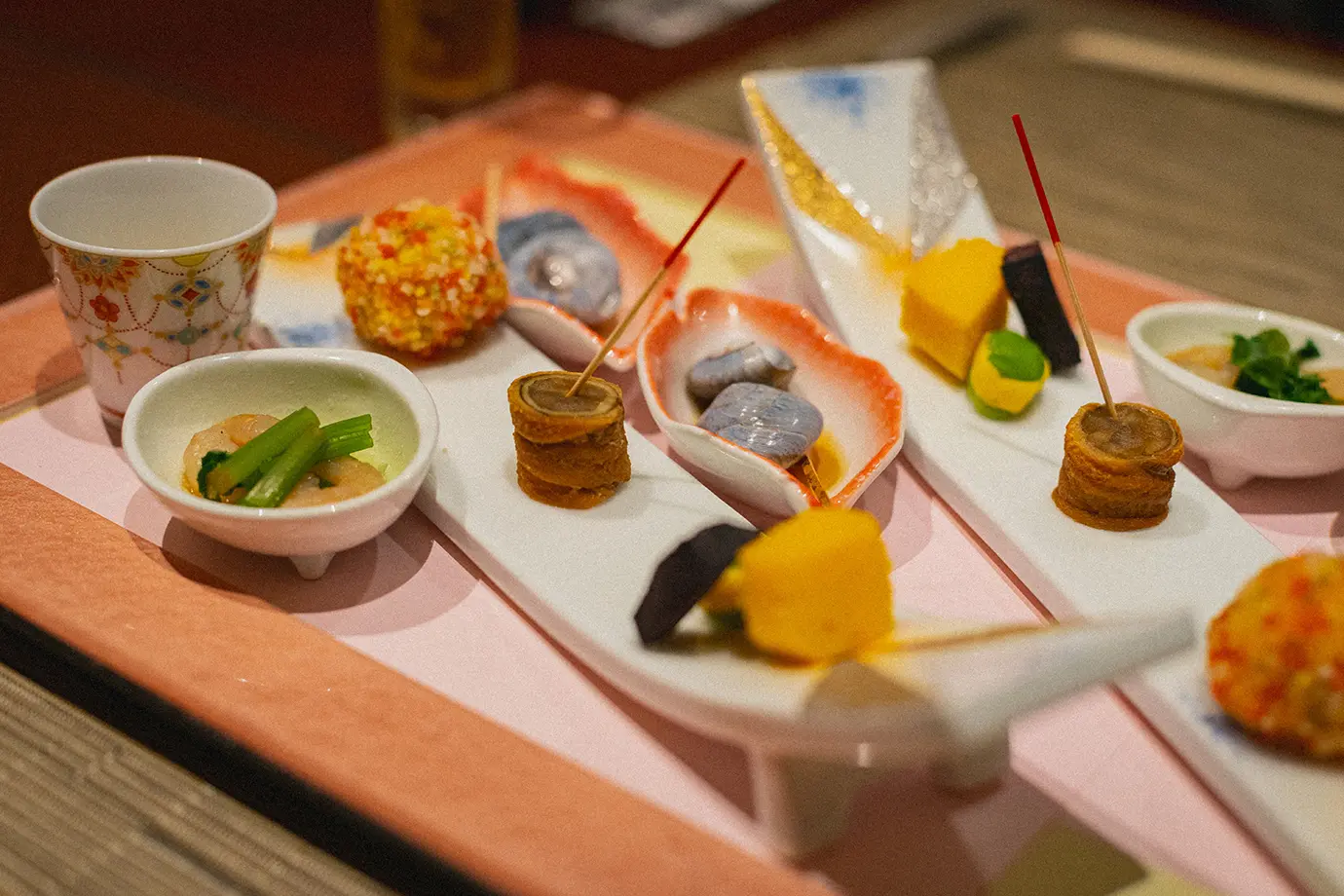
Some meals justify their price. A kaiseki dinner in Kyoto runs ¥15,000-40,000 at a ryokan restaurant, and ¥30,000-80,000 at famous houses like Kikunoi or Hyotei. A sushi omakase in Tokyo runs ¥20,000-50,000 at a neighborhood counter and far more at a top name. Wagyu teppanyaki runs ¥15,000-35,000 at a hotel. An Osaka street-food crawl through Dotonbori costs just ¥3,000- ¥ 6,-0for takoyaki, okonomiyaki, and kushikatsu.
The Convenience-Store Truth
Japan’s convenience stores sell genuinely good food. Rice balls, sandwiches, bento boxes, and hot dishes all run ¥400-800. Even comfort-tier travelers can take one or two convenience-store breakfasts across a trip and save ¥10,000-15,000 with almost no loss.
The 10-Day Meal Budget by Tier
For a couple over 10 days, meals run roughly ¥60,000-90,000 ($400-600) at the budget tier, ¥180,000-260,000 ($1,200-1,735) at the comfort tier, and ¥400,000-700,000 ($2,665-4,665) at the luxury tier, with Michelin meals in every city.
Special diets cost a little more and need planning. Fish-based dashi stock hides in many vegetable dishes, so strict vegetarians and vegans pay 10 to 20 percent more at dedicated spots. Halal options thin out fast outside the big cities. Book dietary-friendly restaurants ahead.
Transportation: The Post-Hike Reality
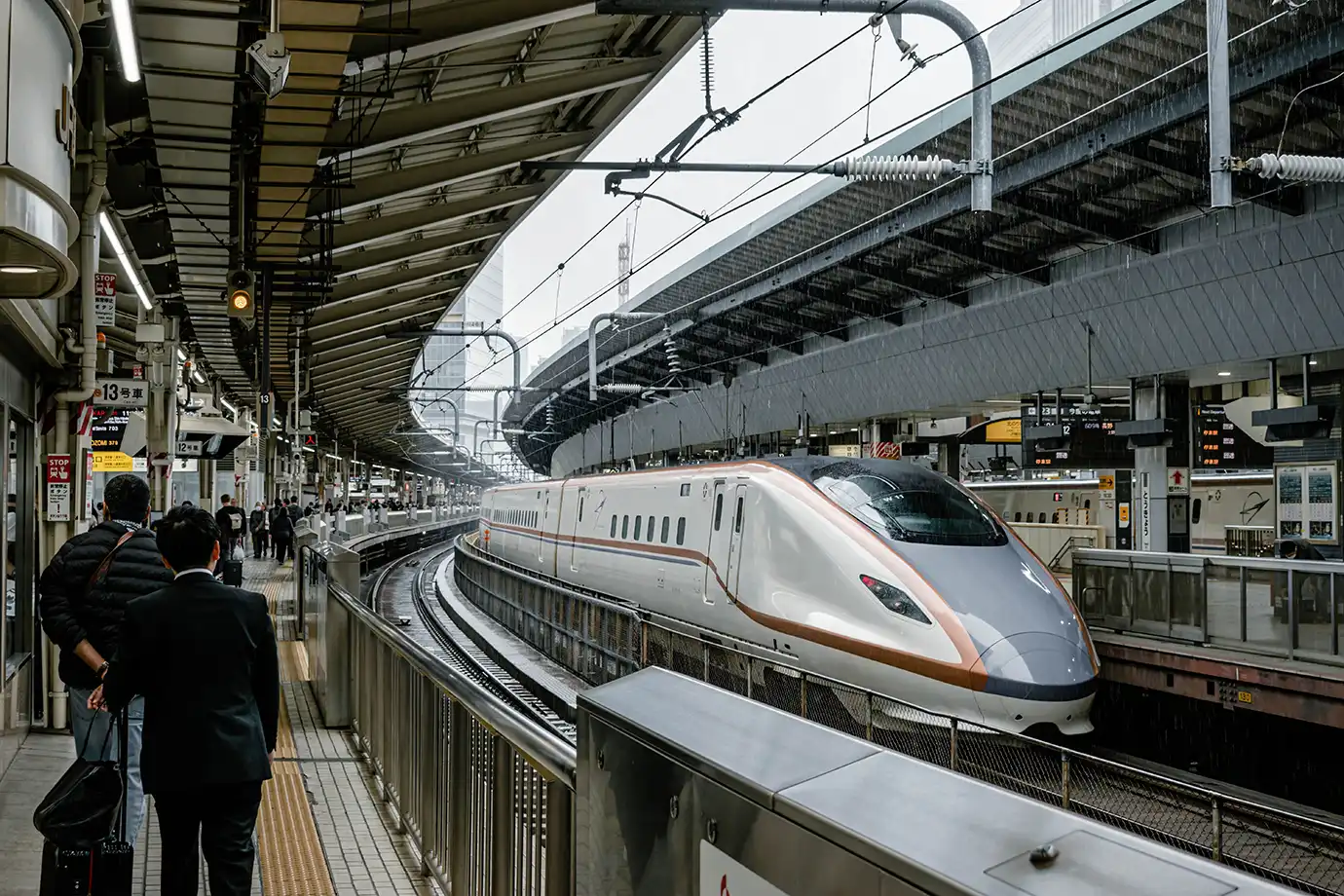
Intercity trains are a fixed, predictable cost, and the Japan Rail Pass is the decision that trips people up. Get this bucket right, and you save real money.
International Flights
Flights fall outside your daily budget and vary by departure point. Round-trip economy runs roughly $1,200-3,500 from North America, $1,000-3,000 from Europe, $800-2,500 from the Gulf, $700-1,800 from South Asia, and $500-1,400 from Southeast Asia. Business class runs three to five times higher. Price flights on their own before you model the in-country budget.
The JR Pass Reality Check
The Japan Rail Pass repriced sharply upward, and the seven-day ordinary pass now costs ¥50,000 ($335), with the Green Car version at ¥70,000 and the 14-day pass at ¥80,000. For the classic Tokyo-Hakone-Kyoto-Osaka route, single tickets beat the pass by a wide margin.
Here is the math for that route. Tokyo to Odawara runs about ¥3,500, Odawara to Kyoto about ¥12,000, Kyoto to Osaka about ¥570, and local JR use another ¥3,000-5,000. Single tickets total roughly ¥19,000-¥21,000, well under the ¥50,000 pass. Buy the pass only if you plan to take long-haul trips to Hiroshima, Nikko, or Kanazawa.
Individual Shinkansen Fares
| Route | Fare (JPY) | USD (approx.) | Time |
|---|---|---|---|
| Tokyo to Kyoto | 14,000-14,400 | 95 | 2h 15m |
| Tokyo to Osaka | 14,400-14,700 | 98 | 2h 30m |
| Tokyo to Hiroshima | 18,700-19,800 | 130 | 4h |
| Kyoto to Hiroshima | 10,700-11,400 | 75 | 1h 40m |
| Tokyo to Odawara (Hakone) | 3,500 | 23 | 35m |
One catch to know. The standard pass does not cover the fastest Nozomi trains, so pass holders ride the slightly slower Hikari or pay a supplement.
Local Transit and IC Cards
A prepaid IC card is all you need for local trips. Suica, Pasmo, and ICOCA all work nationwide on trains, buses, lockers, and shops. Rides run ¥150-380 each, and 10 days of local travel totals about ¥8,000-14,000 ($55-95) per person. The card takes a flat ¥500 deposit, refundable at any major station. After a supply shortage paused sales, regular cards are available again.
Luggage Forwarding (Takkyubin)
Japan’s overnight luggage service moves your suitcases hotel to hotel while you travel light. Yamato charges about ¥2,000-3,000 per bag per leg. For a couple with two suitcases on a Tokyo-Hakone-Kyoto-Osaka route, three forwarding legs run ¥12,000-15,000 ($80-100). Send the bags ahead over the Hakone night and ride the bullet trains with just a day pack.
Airport Transfers
The Narita Express costs about ¥3,270 to central Tokyo, the Haneda monorail about ¥500- -70, and the Haruka from Kansai about ¥2,900. A private car runs ¥22,000-40,000. For a couple, budget ¥8,000-16,000 total on public transit across arrival and departure, or ¥45,000-80,000 for private cars both ways.
Cultural Sites and Experiences
Most temples and shrines cost little or nothing, so this is your smallest fixed bucket until you add signature experiences. Many top sights are free, including Senso-ji, Meiji Jingu, Fushimi Inari, and the Arashiyama bamboo grove.
Temple and Site Entry Fees
| Site | City | Entry (JPY) |
|---|---|---|
| Senso-ji, Meiji Jingu, Fushimi Inari | Tokyo / Kyoto | Free |
| Kiyomizu-dera, Kinkaku-ji | Kyoto | 500 |
| Nijo Castle | Kyoto | 1,300 |
| Todai-ji (Great Buddha) | Nara | 800 |
| teamLab Planets | Tokyo | 3,800 |
| Shibuya Sky | Tokyo | 2,500 |
| Universal Studios Japan | Osaka | 8,600-10,900 |
Across a 10-day trip hitting the major sights, entry fees total about ¥6,000-10,000 ($40-65) per person. Small, but consistently underestimated.
Signature Cultural Experiences
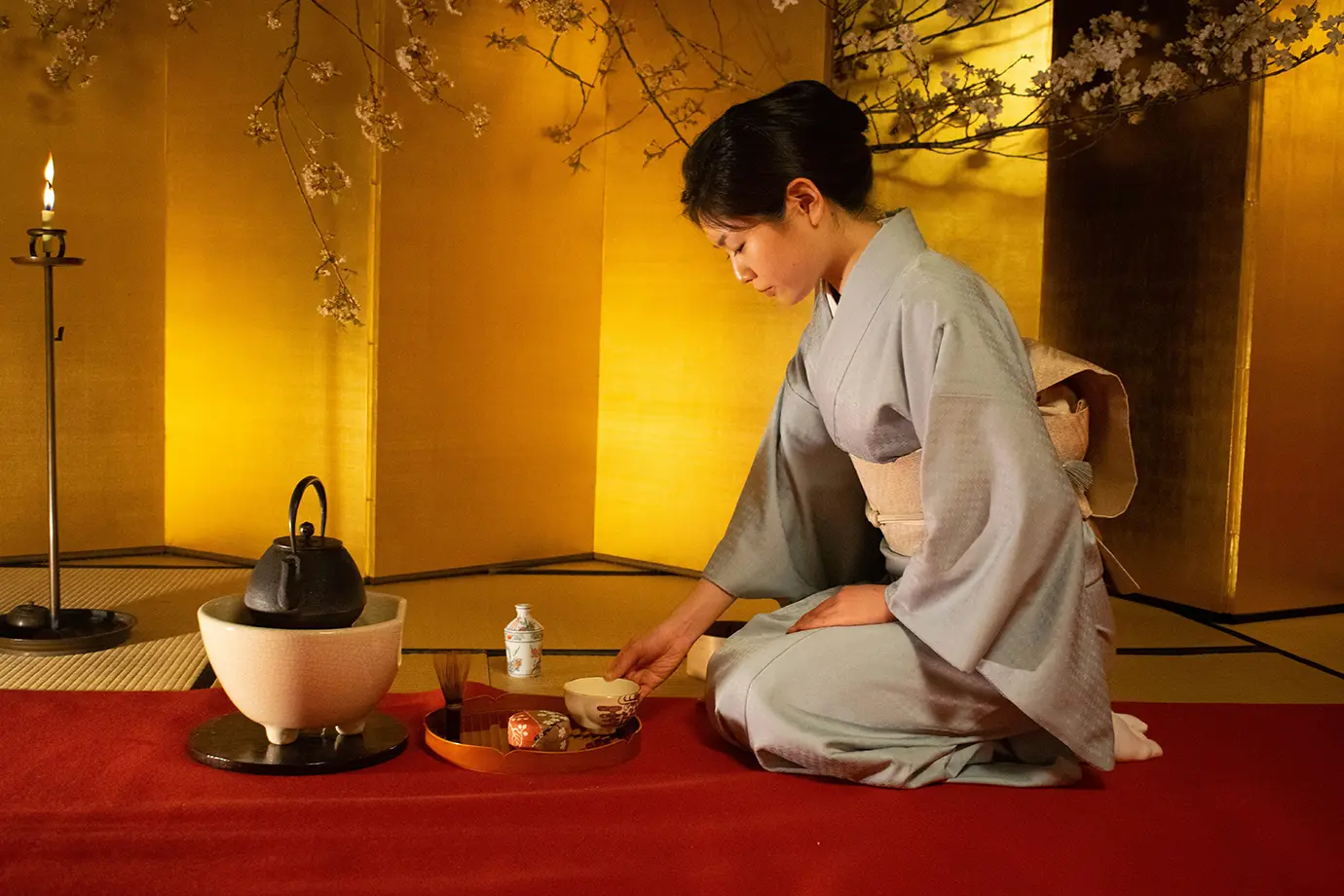
- Tea ceremony: ¥3,000-5,000 group, ¥8,000-15,000 private
- Kimono rental for a day: ¥4,000-10,000
- Zen meditation session: ¥1,000-3,000
- Sumo tournament ticket: ¥4,000-15,000
- Geisha entertainment, private dinner for a couple: ¥200,000-500,000
The Hakone Free Pass, at about ¥6,100, covers the entire mountain loop of trains, cable cars, ropeways, and boats. An Osaka day pass at about ¥2,800 bundles sights and subway. Skip a Tokyo pass, since the metro is efficient without one.
Hidden Costs Most Travelers Miss
A handful of small costs never show up on a hotel or train booking, and together they add up to a real margin. For a comfort-tier couple on a 10-day trip, they total ¥30,000-55,000 ($200-370).
- Lodging tax, added per night, is steepest in Kyoto.
- Luggage forwarding, ¥2,000-3,000 per bag per leg.
- Otoshi is a ¥300-800 seated-cover appetizer that many izakaya serve automatically and that you cannot decline.
- Service charge and consumption tax, both added on top of the menu price at high-end kaiseki and sushi, turning a ¥30,000 meal into ¥36,000-¥38,000.
- Coin lockers, ¥300-800 per use on day trips.
- Ryokan extras, from ¥800-2,500 for drinks to a ¥3,000-8,000 private-bath booking.
One cost you can cross off entirely is tipping. Japan has no tipping culture, and staff may hurry after you to return money you leave behind. Budget nothing for gratuities. The soft exception is a small parting gift for a private guide or driver, a kind gesture rather than a rule.
Carry some cash, but not a brick of it. Cashless payment now covers more than half of all transactions. Keep about ¥30,000-50,000 per person in cash-only pockets, and refill at ATMs inside any 7-Eleven, which reliably accepts foreign cards.
Worked Examples: Real Trip Budgets by Tier
Here is how the math pulls together across three tiers. These are illustrative planning breakdowns, not quotes, so hold the shape and adjust the hotel line to your target properties.
Example 1: Budget Solo Traveler, 10 Days
- Business hotel, 9 nights: ¥100,000 ($665)
- Meals, mostly konbini and ramen: ¥45,000 ($300)
- Shinkansen, single tickets: ¥20,000 ($135)
- Local transit and temple entries: ¥16,000 ($105)
- Tax and small hidden costs: ¥9,500 ($65)
- Trip subtotal: ¥190,500 ($1,270), plus flights of $ 800- 2,500
- Total: about $2,070-3,770
Example 2: Comfort Couple, 10 Days
- Hotels in Tokyo, Kyoto, and Osaka, 8 nights: ¥335,000 ($2,235)
- Mid-tier ryokan in Hakone, 1 night for two: ¥130,000 ($865)
- Meals for two, mixed casual and quality: ¥220,000 ($1,465)
- One signature Kyoto kaiseki for two: ¥60,000 ($400)
- Shinkansen, reserved, and local transit for two: ¥62,000 ($415)
- Temples, one tea ceremony, luggage forwarding, transfers: ¥55,000 ($365)
- Tax and hidden costs: ¥37,000 ($245)
- Trip subtotal: ¥899,000 ($5,990), plus flights of $2,000-6,000
- Total per couple: about $7,990-11,990
Example 3: Luxury Couple, All-Managed, 10 Days
- Five-star hotels in Tokyo, Kyoto, and Osaka, 8 nights: ¥1,080,000 ($7,200)
- Luxury ryokan in Hakone with private onsen, 1 night: ¥320,000 ($2,135)
- Meals with kaiseki and sushi omakase: ¥480,000 ($3,200)
- Green Car trains and private airport transfers: ¥155,000 ($1,035)
- Private guide days: ¥220,000 ($1,465)
- Cultural experiences, including one geisha dinner: ¥350,000 ($2,335)
- Tax, forwarding, and incidentals: ¥92,000 ($615)
- Trip subtotal: ¥2,697,000 ($17,985), plus business-class flights of $ 8,000- 16,000
- Total per couple: about $25,985-33,985
What the Examples Tell You
The luxury trip costs three to four times as much as the comfort tier. Ryokan choice, meal tier, and private guiding drive most of that gap. The comfort tier delivers 80 to 85 percent of the same experience at 30 to 40 percent of the cost. Pick the closest example, adjust the hotel line to your real target, and your estimate should land within 15 to 20 percent of a genuine quote.
DIY, Package, or Fully-Managed: Which Wins?
There are three ways to book a trip to Japan, and the right one depends on your time, your tier, and the level of access you need.
| Model | Effort | Access to hard bookings | Support | Relative cost |
|---|---|---|---|---|
| Do-it-yourself | High, weeks of research | Limited | None | Lowest |
| Mid-range package | Low | Some | Some | 5-15% above DIY |
| Fully-managed | Very low | Best | Around the clock | 15-25% above DIY |
Doing It Yourself
Booking everything yourself saves 5 to 15 percent if you catch good rates and have the time. The cost is 30 to 80 hours of research, the risk of missing peak-season ryokan and restaurant windows, and the lack of on-the-ground help. Best for repeat visitors and travelers who enjoy the planning.
A Mid-Range Package
A package costs about 5 to 15 percent more than a perfect DIY and recoups most of the cost of the work. Hotels, trains, and standard experiences arrive pre-arranged. Best for first-timers and comfort-tier couples who want the trip planned without the research load.
A Fully-Managed Private Tour
A fully managed tour runs 15 to 25 percent above DIY in the luxury tier, or roughly $3,000 to $ 6,000 more per couple. The premium buys access to inns and counters that need operator relationships, fluent private guides, round-the-clock support, and hands-off travel. Best for honeymoons, milestone trips, and time-over-cost travelers.
The Honest Break-Even
For comfort couples, DIY usually saves ¥40,000-80,000 ($265-535) compared to a package, and the package’s value is the time it takes to return. For luxury couples, the managed premium pays for access and calm that are hard to achieve on one’s own. Ask an operator for an itemized quote, and you can weigh the trade with real detail.
Where to Save Without Hurting the Trip
You can trim a Japan budget hard before the experience suffers. Cut in this order, and keep the few things that make the trip.
Cut in This Order
- Skip the JR Pass on the core route and save about ¥30,000 per person.
- Swap one or two hotel breakfasts for a convenience-store morning.
- Drop from Green Car to reserved ordinary seats and save ¥20,000-40,000 for a couple.
- Take one ryokan night instead of two and save ¥80,000-¥160,000 per couple.
- Base near Kyoto Station and save ¥30,000-50,000 during your stay in Kyoto.
Do Not Cut
- The one kaiseki dinner in Kyoto that anchors the whole trip.
- The Hakone ryokan and onsen night, the traditional heart of the trip.
- The trip length below is about eight nights, since cutting days ruins the pacing.
- Luggage forwarding at comfort or luxury tier, which easily earns its ¥15,000.
The Best Things Are Nearly Free
Half of Japan’s finest moments cost only the train fare. Meiji Jingu at a quiet hour, Fushimi Inari at dawn, the Arashiyama bamboo grove, a walk along Kyoto’s Kamo River, and Dotonbori lit up at night. Spend on the few signature experiences you truly want, and let the free ones carry the daily rhythm.
How Peregrine Prices a Japan Trip
Peregrine’s Japan desk quotes every trip with each line itemized, so the figure you see is the figure you pay. No headline rate that quietly grows at checkout, and taxes and service charges stated up front.
What the Desk Handles
The desk covers three things. First, hotel and ryokan bookings, including hard-to-secure high-demand inns during peak seasons. Second, Shinkansen and transit coordination, with reserved seats, luggage forwarding, and honest advice on whether a rail pass or single tickets fit your route. Third, cultural access, from tea ceremonies to kaiseki tables and geisha evenings. Travelers pairing Japan with Nepal, Bhutan, or Southeast Asia can combine them into a single trip through the Kathmandu and Muscat offices.
Ways to Shape It
The route flexes to your dates and tier, from a comfortable four-star build to a luxury five-star one, and from a short Tokyo-and-Kyoto week to a longer loop that adds Hiroshima or Kanazawa. Send your dates and your tier, and the first reply comes back itemized, so you see where every yen sits before you commit.
Frequently Asked Questions
Is Japan Expensive to Visit?
Japan sits in the mid-range among developed countries, and it often costs less than in Western Europe or the United States for food and trains. A weaker yen has made it better value for foreign visitors lately. A budget traveler manages on ¥15,000-22,000 a day, while a luxury couple can spend ten times that. Your total depends far more on your hotel tier and dining than on Japan’s cost of living.
Can I Do a 10-Day Japan Trip on a Tight Budget?
Yes. A solo budget traveler can cover a 10-day trip for roughly ¥190,000 ($1,270) before flights, using business hotels, convenience-store and ramen meals, single Shinkansen tickets, and public transit. A couple sharing a room costs around ¥300,000-350,000 before flights. The trip skips ryokan nights and kaiseki, but the temples, shrines, and street food that define Japan stay fully within reach.
Should I Buy the Japan Rail Pass?
Usually not for the classic Tokyo-Hakone-Kyoto-Osaka route. The seven-day pass now costs ¥50,000, and single tickets for that route total only about ¥19,000-21,000. The pass earns its keep when you add long-distance legs like Hiroshima or Kanazawa. Note also that the standard pass does not cover the fastest Nozomi trains so that you would ride the slightly slower Hikari.
Do I Need to Tip in Japan?
No. Japan has no tipping culture, and staff may chase you down to return money you leave behind. Restaurants, taxis, and hotels neither expect nor want tips, and excellent service is simply the standard. Budget nothing for gratuities. The one soft exception is a small parting gift or an envelope of ¥3,000-5,000 for a private guide or driver, which reads as a kind gesture rather than an obligation.
Can I Use Credit Cards Everywhere, or Do I Need Cash?
Cards are accepted at most hotels, chain restaurants, department stores, and city shops, and cashless payments now account for more than half of all transactions. Still carry ¥30,000-50,000 per person. Small family restaurants, older temples, and rural stalls remain cash-only. Pull yen from the ATMs inside any 7-Eleven, which reliably accept foreign cards, and keep an IC card topped up for small buys.
Is a Ryokan Night Worth the Cost?
Yes, at least once. A ryokan night at ¥45,000-80,000 per person includes a multi-course kaiseki dinner and breakfast, plus tatami rooms and hot-spring baths. The Hakone night is a highlight of most first trips, not a splurge to cut. Remember the rate covers two elaborate meals, so weigh it against a hotel plus dinner and breakfast, never against a room-only price.
Start With Your Tier, Then Your Dates
You now know the shape of a Japan budget. Accommodation leads, food follows close behind, trains stay predictable once you skip the pass, and a few quiet fees deserve a line of their own. A budget couple can travel for a few thousand dollars, a comfort couple lands near $ 8,000- 12,000, and a luxury couple runs well beyond that once flights are in.
Pick your tier by the handful of things you refuse to give up, set the hotel line first, and the rest falls into place. When you want real numbers for your dates, Peregrine’s Japan desk quotes every line itemized, with taxes and charges stated up front. Its Kathmandu and Muscat offices coordinate with the Japan desk and can fold Japan into a wider trip. Send your travel window and your tier, and you will get a clear, honest estimate to plan for Japan Tour Packages.