

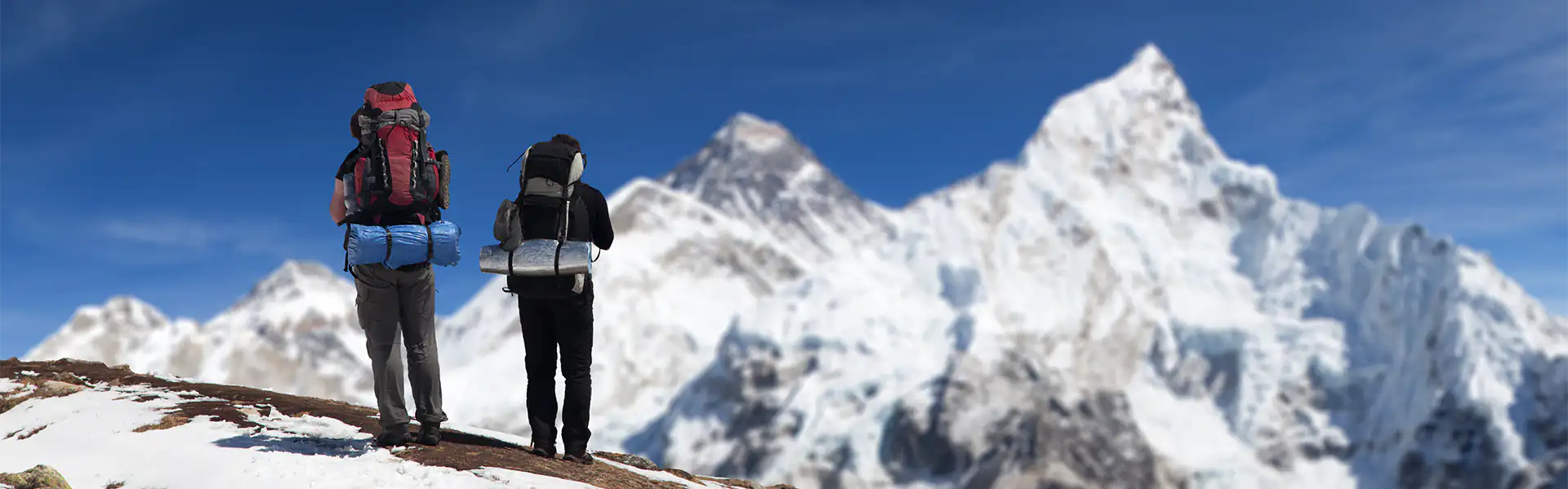


Peregrine Treks and Tours invites you to join the Everest Base Camp Trek- the unhurried type of mountain tourism. On your monumental expedition to the Everest Base Camp Trek, the dreamy backdrop of the Himalayan giants, dominated by the towering Everest, will always accompany you.
The Everest Base Camp Trek cost can range widely depending on your level of comfort, group size, and the season of travel. On average, trekkers spend anywhere from around USD 1,200 on a bare-bones trip to USD 7,500 or more on a luxury Everest experience. Understanding the breakdown of expenses helps you budget for this adventure without surprises. This guide provides a detailed look at the cost of trekking to Everest Base Camp in 2026–2027, covering everything from permits and flights to accommodations and gear, so you can plan according to your budget
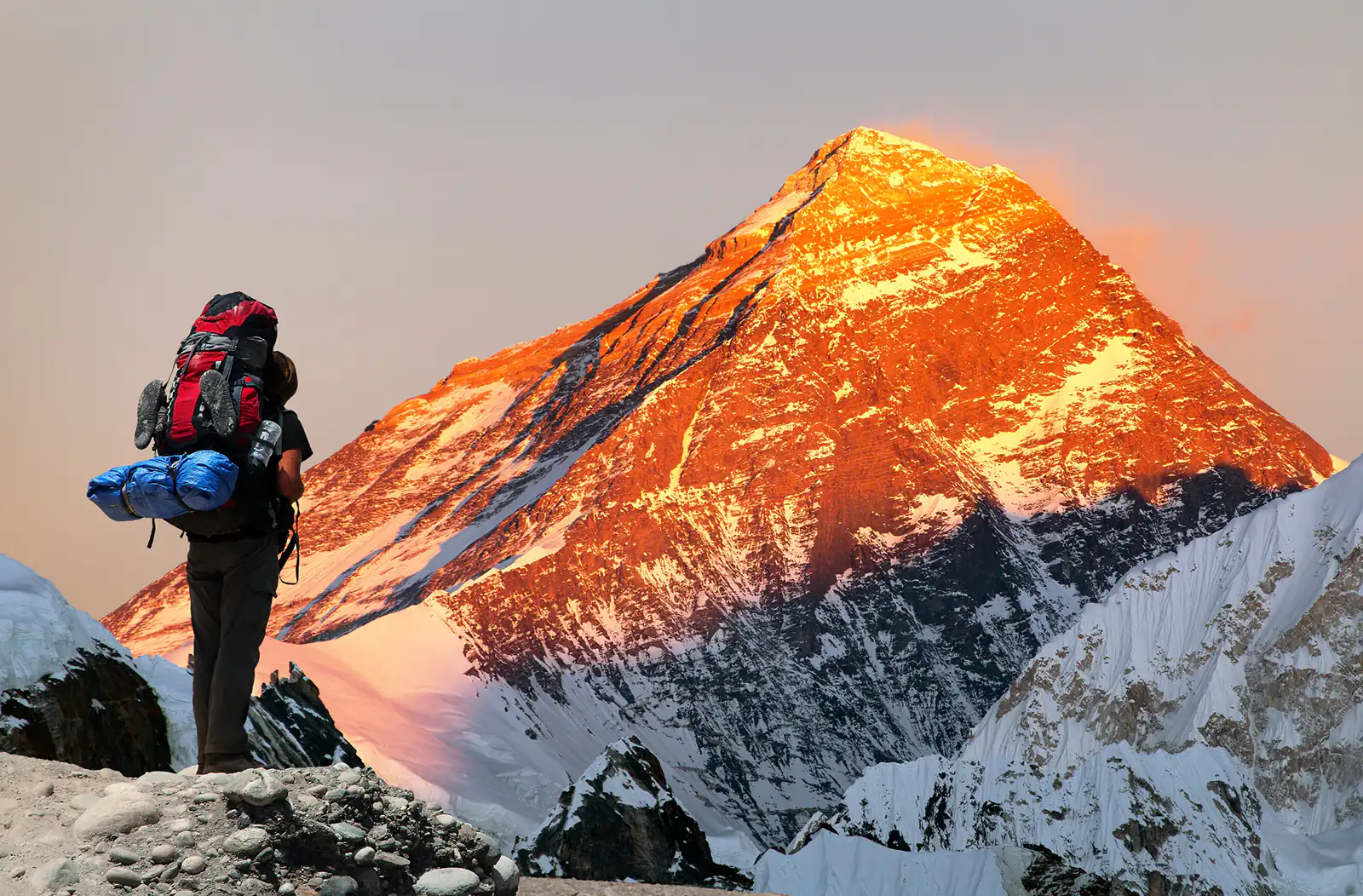
Overview of Everest Base Camp Trek Cost
There are roughly three trek tiers: budget, standard, and luxury. Each tier comes with a different price range and inclusions. Below is an approximate cost per person for a typical 12–14-day Everest Base Camp trek in each category:
- Budget trek: USD 1,200–1,600 per person for a 12–14 day itinerary.
- Standard trek: USD 1,700–3,000 per person for 12–14 days.
- Luxury trek: USD 3,800–7,500 per person for 12–14 days, often including extra services like helicopter transport or high-end lodges.
All treks follow the same trail to Base Camp; higher budgets mainly buy you more comfort and convenience (better lodging, transport, and services). The differences lie in the level of accommodation, mode of transportation, and services included. For example, a budget Everest trek will use simple tea houses and basic meals, while a luxury Everest Base Camp trek might involve upscale lodges and even a helicopter flight back to Kathmandu.
These cost ranges can also vary slightly by trekking company and season. Trekking during peak season (spring or autumn) often incurs slightly higher prices than off-season offers. Next, we’ll break down the specific components of the Everest Base Camp trek price so you can see where your money goes.
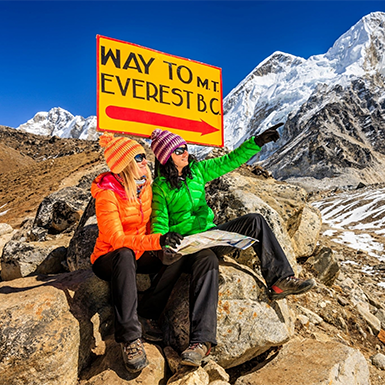
Permits and Entry Fees
Every trekker needs two permits for the Everest region:
- Sagarmatha National Park Entry Permit: Costs NPR 3,000 (approximately USD 25) per person. This permit is the fee to enter Sagarmatha National Park.
- Khumbu Pasang Lhamu Rural Municipality Permit: Costs NPR 3,000 (about USD 25) per person. This local permit (often called the “Khumbu permit”) is required for development in the Everest region.
You can acquire the permit in Lukla or Monjo if you start your trek in Jiri or Salleri. It is not possible to get permission in Kathmandu. This permit costs NPR 2000 per person (approximately $17, depending on the USD rate).
Together, the required permits total roughly USD 50 per person. Trekkers can obtain these permits in Kathmandu through a trekking agency or at permit checkpoints along the trail (e.g., at Monjo, just before entering the national park). If you’re trekking with a guide or tour operator, they usually handle the permits as part of your package. It’s important not to lose these permit cards during the trip, as officials may check them at various points.
Accommodation Costs
Accommodation on the Everest trek ranges from very basic, cheap lodges to pricey luxury hotels, much like the variety on the Everest Base Camp trek routes we discussed above. You will stay around 11 to 13 nights in mountain lodges (depending on your exact itinerary). Here’s how costs typically break down:
- Budget tea houses: \$5–\$10 per night per person. These are simple guesthouses with twin-share rooms and shared bathrooms. The cost is low because the expectation is that you will eat your meals at the same place (food is how tea houses make most of their money).
- Standard lodges: \$15–\$30 per night per person. In places like Namche Bazaar or Dingboche, you can get rooms with more amenities (for example, an attached bathroom at lower elevations or a slightly nicer room). The price increases with altitude if amenities are available.
- Luxury lodges: \$100–\$300 per night per person. Only available in a few villages (Lukla, Phakding, Namche, and Deboche), these high-end lodges offer hotel-quality comfort: heated rooms, private bathrooms with hot showers, Wi-Fi, and gourmet dining. You pay a premium for these comforts in such a remote area.
If you’re going with a tour package, they will often quote a lump sum that includes all accommodation. But it’s good to know the breakdown.
For a 12-night trek:
- A budget trekker might spend about \$100 total on accommodation (some nights as low as \$5, slightly more in Namche).
- A standard trekker might spend around \$200–\$300 total for lodging.
- A luxury trekker using the fancy lodges where available could spend \$1,000–\$2,000 just on accommodation for the trek.
Keep in mind, these costs are per person, assuming you are sharing a twin room. Solo trekkers might sometimes have to pay for both beds in a room if a single room isn’t available, or they might be paired with another solo trekker of the same gender in peak season. In Kathmandu (before and after the trek), your hotel is a separate cost which can range widely (budget hotels \$30/night, up to \$200/night for luxury). Many trek packages include at least a night or two in Kathmandu as well, so clarify that when budgeting.
Food and Drink Expenses
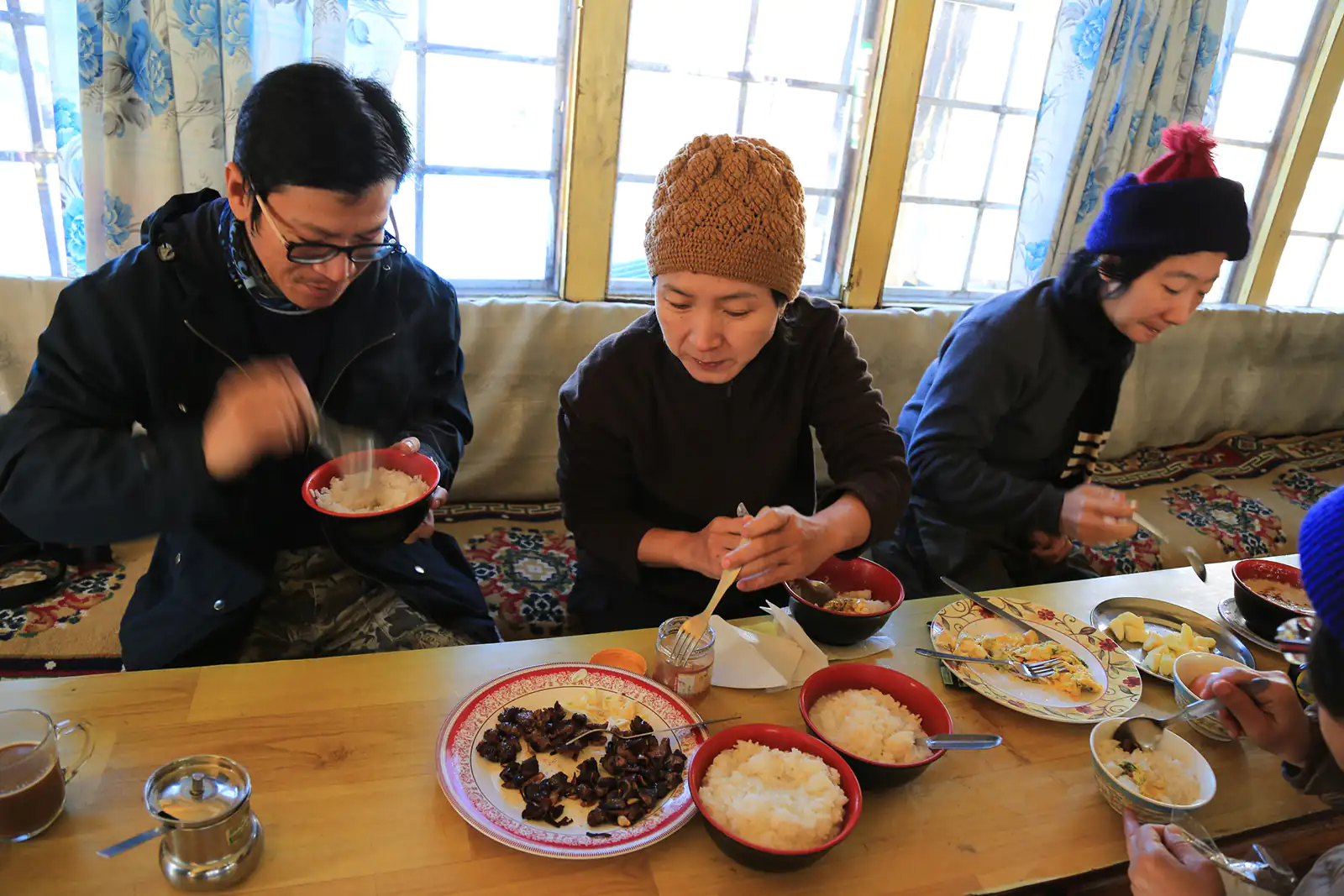
Food is the next major daily expense on the Everest Base Camp trek. The cost of meals goes up as you gain altitude because everything has to be carried in by people or yaks.
On average:
- Expect to pay about \$5–\$8 for a basic breakfast (porridge, toast, or pancakes with tea or coffee).
- Lunch and dinner entrees typically cost $6–$12 each, depending on the dish and location.
- In total, most trekkers spend $25–$40 per person per day on food and drinks during the trek.
Over a 12-day trek, that’s roughly \$300–\$480 per person for meals and drinks. This includes three meals a day plus plenty of hot tea, coffee, or boiled drinking water. If you enjoy snacks like chocolate bars, a slice of apple pie, or an occasional beer, those will add a few dollars each time (and prices increase with altitude). For example, a soda might cost \$2 in Lukla but around \$4 in Gorakshep.
Menus include dal bhat, noodles, soups, pasta, eggs, momos (dumplings), and even some Western treats like pancakes or fried potatoes. Higher altitudes mean limited ingredients and slightly higher prices. Many trekkers stick to vegetarian meals as a cost-saving and health measure, since meat gets more expensive (and less fresh) as you go up.
Also, budget for drinks:
- A cup of tea or coffee can be \$2–\$3 at lower elevations, rising to \$4–\$5 at higher lodges.
- Safe drinking water is crucial — a liter of boiled water can cost \$1–\$2 in lower villages and \$3–\$4 at high altitude.
Using water purification tablets or a SteriPEN with local tap or stream water can save money (and reduce plastic waste), but always ensure water is treated.
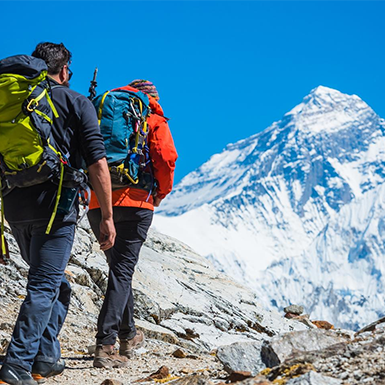
Luxury Accommodation Cost in the Everest Region
If you want a combo of adventure, thrill, and luxury simultaneously, then there are numerous options for your luxurious stay in the Everest region.
To name a few, we have listed the names of some luxurious accommodations in the Everest region:
Hotel Everest View
At an altitude of 3800 above Namche Bazaar, there is a luxurious hotel called Everest View, from the terrace of which Everest is visible in good weather. According to the Guinness Book, this is the world’s tallest hotel.
The only way to check into this lodging is by helicopter or on foot. Every guest staying at the Everest View Hotel in Nepal will have the chance to pull back the curtain and see the world’s tallest mountain through their window.
All 12 rooms have balconies with panoramic views of Mount Everest, Amadablam, Thamserku, and other massive Himalayan peaks. These rooms also have a room heater, electric blankets, a dressing area complemented with a thermos, and a small study. A dome and oxygen supply additionally facilitate the hotel. A one-day stay at this hotel can cost you around USD 300-400.
Yeti Mountain Home
Yeti Mountain Home is on Mount Everest and features traditional Khumbu-style wooden accommodations with Buddhist artworks. During your stay at this luxurious hotel, you will be within 5 minutes of the Tengboche monastery.
The hotel has 20 rooms equipped with a desk, a complimentary bottle of water, an attached bathroom, and free toiletries. This hotel also has a restaurant that serves lunch and dinner, as well as room service.
One night’s stay at Yeti Mountain home will cost you around $200 to $300, excluding meals.
Nirvana Home
Located 1 mile from Namche Bazaar, Nirvana Home is a delight for international and national guests. Every room opens to beautiful mountain views. The hotel is well-equipped with all the luxurious amenities, including free WIFI, laundry, housekeeping, and luggage storage.
The hotel also has on-site doctors available to its guests. The team of staff is friendly and is trained to follow health safety protocols. One night’s stay in this hotel can cost you around USD 11.
Flight Costs
International flight Cost
The international flight cost to Kathmandu varies depending on your country, month, day, and time of booking. Likewise, the airfare will be cheaper if you have a direct flight from your country to Nepal.
Neighboring nations China, India, Bangladesh, Japan, Turkey, Thailand, South Korea, Malaysia, and Saudi Arabia operate direct flights to Kathmandu.
However, guests arriving from Australia, France, Russia, or other European nations must change flights at least twice before reaching Kathmandu. Thus, the international fare from these nations can be relatively higher.
International airfare to Kathmandu also varies by month. January, February, and August are the cheapest months to visit Kathmandu during Nepal’s low tourist season. Traveling by air in September, October, and November can be expensive.
It would come as a surprise, but the airfare also varies depending on the day and time you choose to fly to Kathmandu. So, choose Thursday or Tuesday if you wish to fly at cheaper rates. Similarly, flights departing in the afternoon are the cheapest flights.
Also, remember to book your tickets at least 3 weeks before your visit so you can choose the flight conditions that best suit your wishes and financial capabilities.
The airlines you choose to fly with to Kathmandu also greatly influence your travel costs. Nepal Airlines, which operates flights from Qatar, Malaysia, Dubai, and India, offers air tickets at lower rates. You can also fly with FlyDubai, Qatar Airways, and Singapore Airlines, which operate direct flights to Kathmandu from various cities.
Domestic Flight Costs
The trek begins with a flight from Kathmandu to Lukla, the small mountain airstrip gateway to the Everest region. The cost of this flight is a significant part of the trek budget: –
Kathmandu–Lukla round-trip flight: Approximately USD 400–450 per person. This is for a small fixed-wing airplane that carries 15–18 passengers. The price typically includes 10–15 kg of luggage allowance. –
Helicopter option: If weather causes flight cancellations or if you prefer a more direct route, helicopters are available. A one-way helicopter ride between Kathmandu and Lukla costs around.
USD 500–700 per person (when sharing with a group). Some luxury trek packages include helicopter flights to ensure timely travel even if the weather is bad.
For most trekkers, the small plane ride to Lukla is the standard option. It’s about a 30-minute flight. Make sure to allow an extra day or two in your schedule in case the weather causes flight delays. Those opting for an upscale or luxury package sometimes choose to take a helicopter either to Lukla or on the return from Gorakshep (the end of the trek) back to Kathmandu. This approach can easily add several hundred dollars to your costs but saves time and offers a spectacular aerial view of the Himalayas.
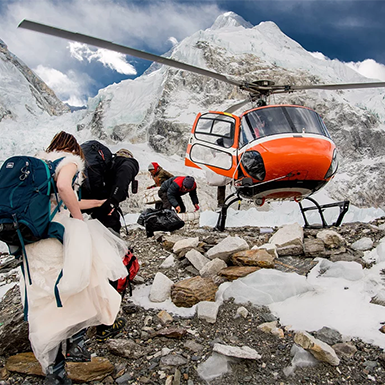

Everest Base Camp Trek with Helicopter Return
 11 Days
 Moderate to Challenging
Guide and Porter Hiring Costs
Hiring local staff not only provides you with support and cultural insight, but it also contributes to the local economy. Depending on your preference and budget, you might hire:
- Licensed trekking guide: Approximately \$30–\$40 per day. A guide will lead you along the trail, handle logistics, address any language barriers, and enhance your understanding of the region. For a 12-day trek, this comes to about \$360–\$480 in total wages. If you hire through an agency, the guide’s food, accommodation, and insurance are usually covered by the agency (in a package price).
- Porter: Around \$20–\$30 per day for one porter who can carry 20–25 kg of gear. Over 12 days, that’s about \$240–\$360. Usually, one porter is shared between two trekkers, carrying duffel bags, so that you only carry a daypack.
These rates can vary depending on the guide’s experience, the region, and whether you book in Kathmandu, through a tour company, or directly in Lukla. It’s customary to tip your guide and porter at the end of the trek (more on that in “Extra Expenses” below). If you’re in a group, the guide’s cost is shared among all members, which lowers the EBC trek’s cost per person. For example, a group of four might hire one guide (\$35/day) and two porters (\$25/day each). That’s \$85 per day for the team, divided by 4 people, which is about \$21 per person per day. Solo trekkers bear the full cost of the staff themselves, making the trip more expensive per person.
Insurance and Other Miscellaneous Costs
Travel insurance covering high-altitude trekking and emergency evacuation is highly recommended. A comprehensive policy that includes medical treatment and helicopter rescue up to 6,000 m can cost around \$100–\$200 for a 2–3 week trip, depending on your age and home country. This may seem like a high upfront cost, but it is minor compared to a \$5,000–\$10,000 helicopter evacuation fee if you need rescue from the mountains.
A few other expenses to keep in mind:
- Wi-Fi and charging: Many tea houses offer Wi-Fi internet access for a fee (e.g., \$5–\$10 for 24 hours via an Everest Link card). Charging your devices might cost \$2–\$5 per hour/device on solar power or a generator. Over the trek, you might spend \$20–\$50 on connectivity and charging.
- Hot showers: If not included in your lodge cost, hot showers cost about \$5–\$10 each at various points. Trekkers might take a few showers on the way up, then skip showers at the highest elevations.
- Tips for staff: It’s customary to tip your guide and porter at the end of the trek. Many trekkers budget around 10% of the total trek cost for tips. As a rough guideline, you might give your guide \$80–\$100 and a porter \$50–\$70 (to be shared if you had two porters) for a two-week trek. This reward is greatly appreciated as a supplement to their wages.
- Souvenirs and extras: In Namche Bazaar or Lukla, you might buy souvenirs like T-shirts, prayer flags, or snacks and drinks. It’s wise to have a small buffer (perhaps \$50) for miscellaneous personal expenses.
Always carry cash (in Nepali rupees) for these extras, as cards are not accepted in the mountains, and the only ATM in Namche is unreliable. Break your money into smaller denominations if possible; tea house owners often have difficulty making change for large bills.
Nepal Visa Fee
You will need a valid tourist Visa to enter Nepal, issued at all border crossings or upon arrival at the airport. Therefore, applying for it in advance is unnecessary, as is going to your country’s Nepalese embassies and consulates.
- A 15-day tourist visa will cost you 30 USD
- A thirty-day (1 month) tourist visa will cost you 50 USD
- A ninety-day (3 months) tourist visa will cost you 125 USD
A one-month Nepal tourist Visa is appropriate for the Everest Base Camp trek. There is also a 150-day tourist visa (5 months), but to get it, you must visit the immigration office in Kathmandu, where you can extend your regular tourist visa.
It would be best if you had two passport-size photos and a passport to obtain the Visa. If you have filled out an online Visa application form, it’s not needed. Remember, your credentials will remain on the system for 15 days.
Note that all visa payments are made exclusively in cash in US dollars, so to avoid unnecessary delay or misunderstanding, it is worth preparing the exact amount in advance.
Equipment and Gear Rental
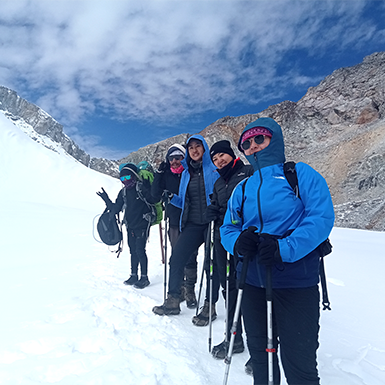
Trekking to Everest Base Camp requires some specialized clothing and gear, especially to stay warm at high altitudes. If you are an occasional trekker, it makes sense to rent or borrow gear rather than buy everything new. In Kathmandu, the Thamel area has many rental shops with typical prices:
- Down jacket: \$1–\$2 per day.
- Sleeping bag (good to -15°C): \$1–\$2 per day.
- Trekking poles: \$1 per day (or about \$2 for a pair).
- Crampons or microspikes: \$1 per day (sometimes useful in winter or early spring if trails are icy).
- Duffel bag: Often provided for free by trekking companies if you book a package. Otherwise, around \$10–\$15 to buy a simple one (many trekkers buy one as a souvenir).
For a two-week trek, renting a down jacket and sleeping bag might cost only \$20–\$40 total. Compare that to purchasing those items brand new, which could easily be \$200 each for good quality gear. Other items like gloves, hats, or thermal layers are cheap in Nepal (often available in local markets as knockoffs of big brands) if you need to buy. Gear rental saves you money, but make sure the equipment is clean and in good condition. Test the zippers and check the warmth rating of sleeping bags or jackets before renting.
Cost for Solo vs. Group Trekkers
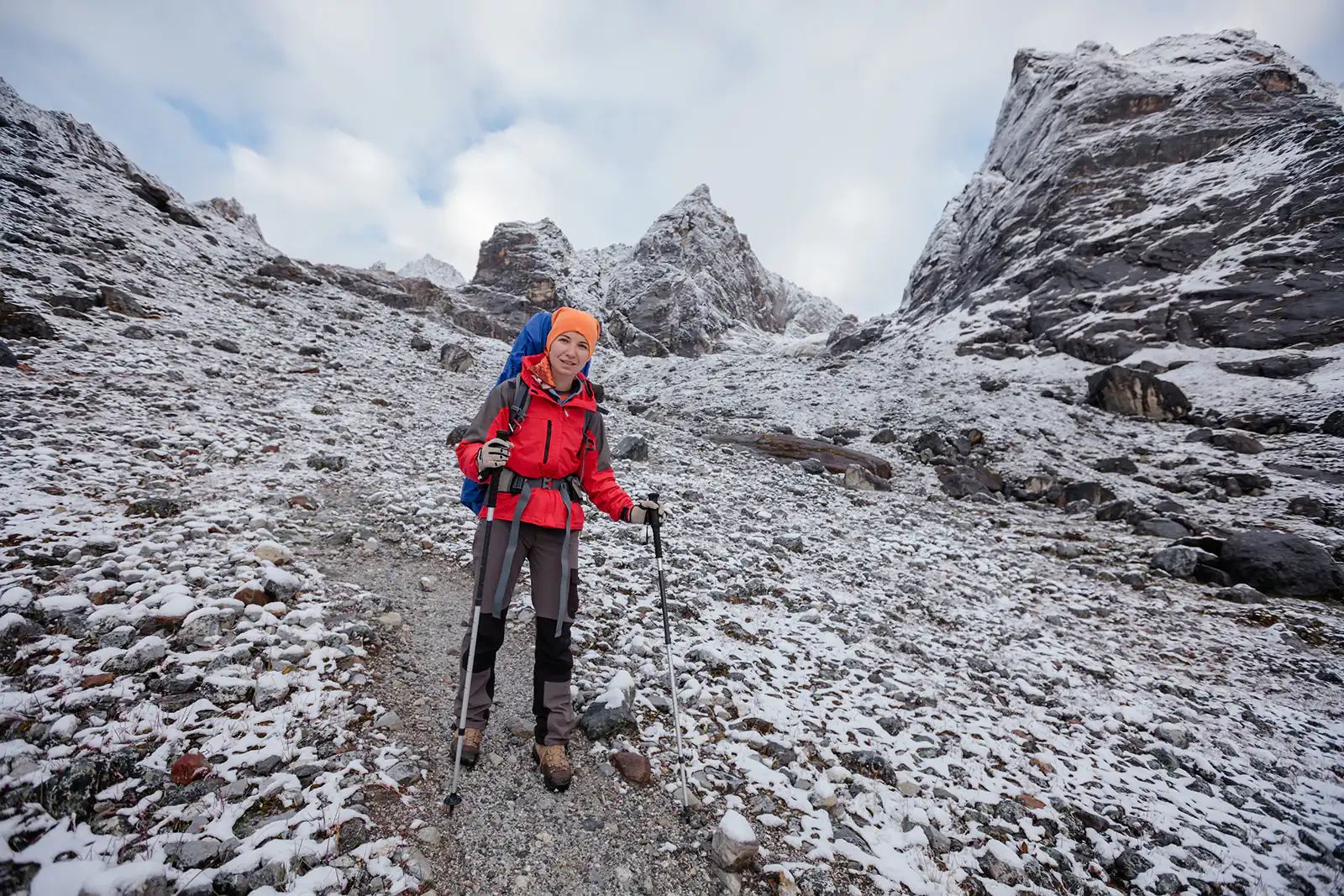
Traveling solo or in a private group gives you more flexibility, but it usually means a higher per-person cost than joining a group trek. The main reason is that certain expenses (like guide and porter fees or private transport) are not shared. For instance, if you hire a guide on your own for \$400, you bear that full cost, whereas in a group of four, that’s only \$100 per person.
For example, a solo trekker arranging everything independently can sometimes trek for around \$1,500 on a tight budget, whereas a guided standard package for one person might cost about \$2,200. In a group of four, each person might pay about \$1,900 on a standard trek, since the guide and porter costs are shared among the group.
Many trekking agencies offer lower rates per person for bigger groups. Joining a group trek (where the agency brings together solo travelers) is a popular way for solo travelers to keep costs in check and meet fellow hikers. On the other hand, going solo means you have full control over your itinerary and can sometimes negotiate prices directly with guides or accommodation providers. Just remember that the safety of having a guide and the convenience of a package can outweigh the savings of going completely solo, especially for first-time Everest trekkers.
Budget, Standard, and Luxury Trek Comparison
What do you get by paying more for an Everest Base Camp trek? Here’s a quick comparison of how a budget trek differs from a luxury trek in key aspects:
Accommodation: Budget trips use basic tea houses (very simple rooms, shared bathrooms). Standard trips use comfortable lodges or the best available tea houses, often with a few more amenities, such as attached bathrooms, up to a certain altitude. Luxury treks include the top-end lodges (with heat and en-suite facilities) wherever possible. –
Meals: On a budget trek, you’ll likely eat the set menu at tea houses (lots of dal bhat and simple meals). Standard treks offer a bit more menu variety and a mix of Nepali and Western dishes. Luxury treks might offer gourmet meals with greater variety and sometimes include welcome drinks or desserts.
Transportation: Budget travelers fly to Lukla on the regular flight and hike the same route back. Standard trekkers do the same. Luxury treks might replace or supplement the return trip with a helicopter flight to avoid long descents or weather delays.
Guide and porter support: Budget treks might have you sharing one guide among a larger group and perhaps limited porter support (or you carry your own backpack). Standard treks often have a dedicated guide for your group and sufficient porters to carry most of your gear. Luxury treks often come with the most experienced guides, a higher guide-to-client ratio, and more support staff. –
Extras and comfort: Paying more usually means that things like trekking permits, meals, and even down jackets or sleeping bags are included in the price. Luxury packages might include hotel stays in Kathmandu, a post-trek massage, or other perks. Budget packages cover the basics, and you pay for any extras out of pocket.
Every trekker walks the same trail to Base Camp, but these differences can make the experience more or less comfortable. If you are hardy and on a tight budget, the basic approach still gets you to Everest. If you prefer some comfort, the mid-range approach is a nice balance. And if you want the smoothest experience money can buy, the luxury trek tries to minimize the hardships of the trail.
Factors Affecting Everest Base Camp Trek Cost
Several factors cause the cost of an Everest Base Camp trek to fluctuate. Keep these in mind when budgeting or comparing trek quotes: –
Season: Peak seasons (March–May and September–November) have the best weather and thus the highest demand. Prices for flights, guides, and accommodation can be higher in these months. Off-season discounts may be available in summer (monsoon) or winter, but conditions are more challenging then. –
Trek Duration: The standard trek is about 12 days round-trip from Lukla to Base Camp and back. If you add extra acclimatization days, side trips (like a visit to Gokyo Lakes or Ama Dablam Base Camp), or need extra days due to weather, your costs for lodging, food, and guide/porter wages will increase accordingly. –
Luxury Upgrades: Any special add-ons will raise costs. Examples include taking a helicopter out of Gorakshep instead of trekking back, staying in luxury lodges every night, hiring a personal photographer, or ordering imported food and alcohol at the luxury lodges. Each upgrade, big or small, adds to the total. –
Group Size: As discussed, trekking in a group allows you to share costs. Private treks for one or two people will always be pricier per person than joining a larger group. Group discounts often kick in for groups above a certain size (usually 4 or more).
Personal Spending: Your own habits will affect the budget. If you buy a lot of snacks, beer at the lodges, or souvenirs, you’ll spend more than someone who sticks to basics. Similarly, someone renting every piece of gear will spend more than someone who already owns their jacket, sleeping bag, etc.
Money-Saving Tips for Trekkers
Trekking to Everest Base Camp doesn’t have to break the bank. Here are some tips to keep your costs down without compromising safety:
- Book your Lukla flights early: As soon as you know your trekking dates, book the flights. This prevents last-minute airfare spikes or having to charter a pricey helicopter if plane seats fill up.
- Join a group or find a trek partner: Sharing the cost of guides and porters and qualifying for group rates can save a lot. Many solo travelers connect with groups via trekking agencies to get a lower per-person price.
- Rent or reuse gear: Don’t buy expensive gear that you’ll use only once. Rent quality jackets and sleeping bags in Kathmandu. Also, reuse gear from previous trips where possible.
- Carry a water filter bottle: Instead of buying many plastic bottles, use a water purification system to treat local water. This can save money and reduce waste. Many tea houses will fill your bottle with boiled water for a small fee, which is cheaper (and greener) than purchasing bottled water every time.
- Choose dal bhat occasionally: Local meals like dal bhat are not only filling and nourishing but also offer free refills, giving you more calories for your money. It can be more economical than pricier imported foods on the menu.
- Travel in the shoulder seasons: If your schedule allows, consider late February or early December for your trek. You might get slightly lower prices on accommodations and flights, and the trails will be less crowded (just be prepared for colder weather).
Every little bit helps when you are on a budget. However, be cautious about cutting costs on critical things like insurance or a good guide — those are well worth the money for your safety and experience.
Conclusion
The Everest Base Camp Trek cost ultimately comes down to the kind of experience you want and your budgeting skills. A thrifty trekker can complete the journey with a budget of around \$1,300–\$1,600 by keeping things simple and traveling with a group. A mid-range trek with a few comforts might land around \$2,000–\$2,500 per person, providing a balance of cost and comfort. For those seeking the best of the best, a luxury trek with all the add-ons can range anywhere from \$4,000 up to \$7,500 or more.
Whatever your budget, proper planning ensures you get the most value out of every dollar. Do your research, compare packages, and ask what is included. Remember that a higher cost often means more convenience and comfort. Still, the same incredible views of Mount Everest and the sense of accomplishment await every trekker at Base Camp, no matter how much they spend. By understanding where the money goes and using a few smart strategies to save, you can tailor an Everest Base Camp trek that fits your budget and provides a memorable adventure.