


This Azerbaijan itinerary packs more variety into a week than most countries manage in two. A well-built 7-day Azerbaijan itinerary covers a UNESCO walled city, hillsides that burn without fuel, 40,000-year-old rock carvings, mountain forests, and an 18th-century Silk Road palace. Total driving comes to roughly 850 kilometers. None of it feels punishing. Below you will find the route day by day, with real distances, real drive times, and the operational details that decide whether a trip runs smoothly or badly.
Is This Azerbaijan Itinerary Enough to See the Country?
Seven days is the ideal length for this Azerbaijan itinerary — long enough to cover the essential circuit without rushing any single stop. You get two days in Baku, one day for the fire sites, one for Gobustan, one in the Gabala mountains, and two for Sheki. Nothing gets rushed. The only genuine constraint sits on your final day, which involves a long return drive.
Azerbaijan measures about 86,600 square kilometers. Roads are good, and the M4 highway west runs smoothly. Anything under five days forces you to skip either Sheki or Gabala. Both deserve the space.
Azerbaijan Itinerary at a Glance
| Day | Base | Focus | Driving |
|---|---|---|---|
| 1 | Baku | Old City, arrival | Airport transfer |
| 2 | Baku | Palaces, modern architecture | Walking, short hops |
| 3 | Baku | Absheron fire sites | ~60 km round trip |
| 4 | Baku | Gobustan, mud volcanoes | ~190 km round trip |
| 5 | Gabala | Mountains, a waterfall, a cable car | ~225 km |
| 6 | Sheki | Khan’s Palace, caravanserai | ~85 km |
| 7 | Baku | Kish Church, return drive | ~320 km |
Days 1 and 2: Baku, Where Medieval Meets Zaha Hadid
Baku holds the sharpest architectural contrast in the Caucasus. A 12th-century walled city sits 15 minutes from a Zaha Hadid building with no straight lines. Give the capital two full days before heading anywhere else. Baku also sits 28 meters below sea level, making it the lowest-lying capital city on earth.
Day 1: Icherisheher, the Walled Old City
Land at Heydar Aliyev International Airport. The drive into the center covers 32 kilometers and takes about 35 minutes. Start walking in the late afternoon. Stone holds the day’s heat here, and the lanes stay warm after sunset.
UNESCO inscribed Icherisheher in 2000. The walls enclose about 22 hectares of lanes, courtyards, and caravanserais.
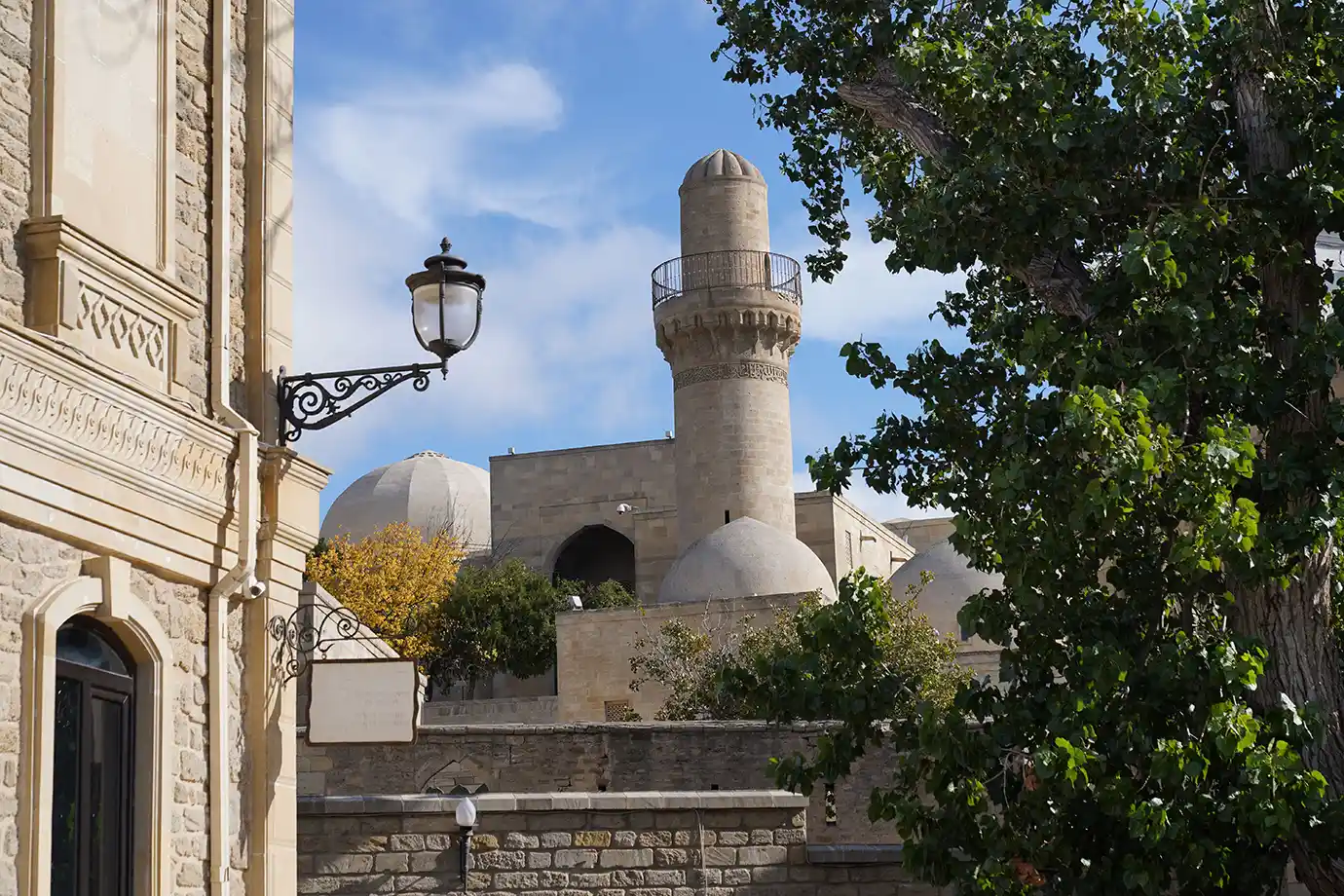
Maiden Tower anchors the southern wall. The stone cylinder rises to 28 meters and dates to the 12th century in its current form.
Nobody agrees on what it was built for. Fortress, observatory, and fire temple all have serious advocates.
Climb it early or late. Eight floors of steep, uneven stone stairs make midday heat unpleasant.
Practical note: the Old City is fully walkable, but the pavement is rounded cobbles. Flat shoes with grip matter more here than anywhere else in Azerbaijan.
Day 2: Shirvanshah’s Palace and the Heydar Aliyev Center
The Palace of the Shirvanshahs occupies the highest ground inside the walls. Construction ran through the 15th century under the Shirvanshah dynasty. Sixteen of the original 25 rooms survive. Peter I’s troops and, later, the Russian occupation destroyed the rest.
Walk the burial vault and the court mosque. The stone carving on the Divankhana pavilion is the finest in the complex. Allow 90 minutes. Summer queues run 30 minutes without pre-arranged entry.
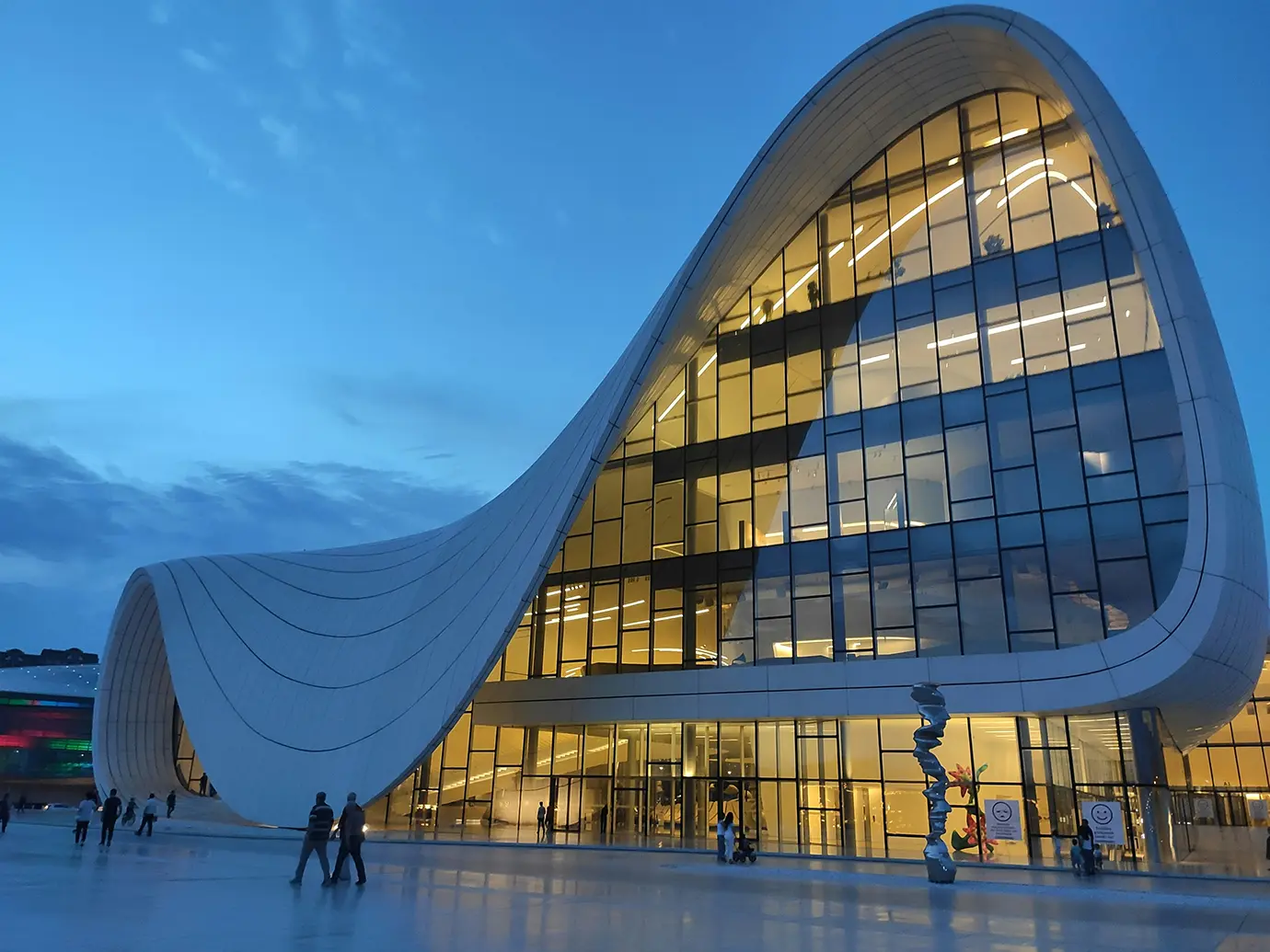
The Heydar Aliyev Center sits 4 kilometers northeast. Zaha Hadid designed it with no straight lines anywhere in the structure. The white shell rises out of the ground and folds back into it. Photograph it from the plaza before going inside. Allow two hours. The building itself deserves as much time as the exhibits.
Where to Eat in Baku
Order plov, the saffron rice dish served under a crisp bread crust called gazmag. Azerbaijan claims dozens of regional variations.
Dolma means stuffed grape leaves here, filled with lamb and herbs. Ask for the yogurt on the side.
Piti arrives as a sealed clay pot of lamb and chickpeas, slow-baked for hours. Eat the broth first with torn bread, then the meat.
Restaurants inside a restored caravanserai offer the setting and the Azerbaijani food in one place. Firuze and Sumakh both do this well.
Day 3: The Land of Fire on the Absheron Peninsula
Azerbaijan’s name links directly to fire. Natural gas seeps through the Absheron Peninsula, and some ignited seeps have burned for centuries. Two sites cover the story well: the Ateshgah Fire Temple in Surakhani and the burning hillside at Yanar Dag. Both sit within 30 kilometers of central Baku.
Ateshgah Fire Temple
Drive 30 kilometers east to Surakhani. The trip takes 40 minutes. Ateshgah follows a pentagonal plan built around a central four-arched altar. Flames once rose from a natural gas vent directly beneath it.
Zoroastrian, Hindu, and Sikh worshippers all used the site. Merchant-pilgrims from India carved inscriptions into the monastic cells. Look closely at the cell doorways. The scripts appear in Sanskrit and Punjabi, alongside one Persian inscription. The natural vent stopped flowing in the 1960s after heavy gas extraction nearby. The flame today runs on piped gas.
Yanar Dag
Continue 20 minutes north. A gas seam along the base of a low hillside burns continuously. The flames run about 10 meters wide and rise a meter or so. Wind changes the shape constantly.
Visit in morning shade or after dusk. Midday sun washes the flames out completely, and photographs come back looking like nothing. Bring a windbreaker. The site sits exposed, and Baku earns its nickname as the city of winds.
How Long Does the Absheron Day Take?
Both sites together fill a half day. Most travelers finish by 14:00. Use the free afternoon for the Baku Boulevard, a 6-kilometer seafront promenade. Or take the funicular up to Highland Park for the skyline view.
Day 4: Gobustan Petroglyphs and the Mud Volcanoes
Gobustan holds over 6,000 rock carvings, the oldest dating back roughly 40,000 years. UNESCO inscribed the site in 2007. The reserve sits about 64 kilometers southwest of Baku, roughly one hour by road. Nearby, hundreds of cold mud volcanoes bubble across a barren plateau, and Azerbaijan holds more of them than any other country.
The Rock Art Reserve
Start at the museum. The multimedia displays explain what you are about to walk through, and skipping them wastes the site.
Then take the outdoor trail across the Boyukdash plateau. Carvings cover boulders and rock faces along a marked circuit.
Look for the reed boats. Thor Heyerdahl studied them closely and argued they linked the Caucasus to Scandinavian seafaring.
Hunting scenes, dancing figures, cattle, and human handprints all appear. Some carvings sit at knee height, so look down as well as up.
Walking time runs about 90 minutes. The ground is uneven limestone, and shade is nonexistent.
Getting to the Mud Volcanoes
Here is the detail that catches most first-time visitors.
The mud volcano field at Dashgil sits about 18 kilometers beyond the rock art site. The access track is unpaved, rutted, and impassable in a normal car.
Local drivers run the last stretch in modified Soviet-era Ladas. Expect to arrange one at the museum or through your operator.
Standard rental cars and tour minibusses do not attempt it. Anyone who tells you otherwise has not driven the track.
What the Mud Volcanoes Are Actually Like
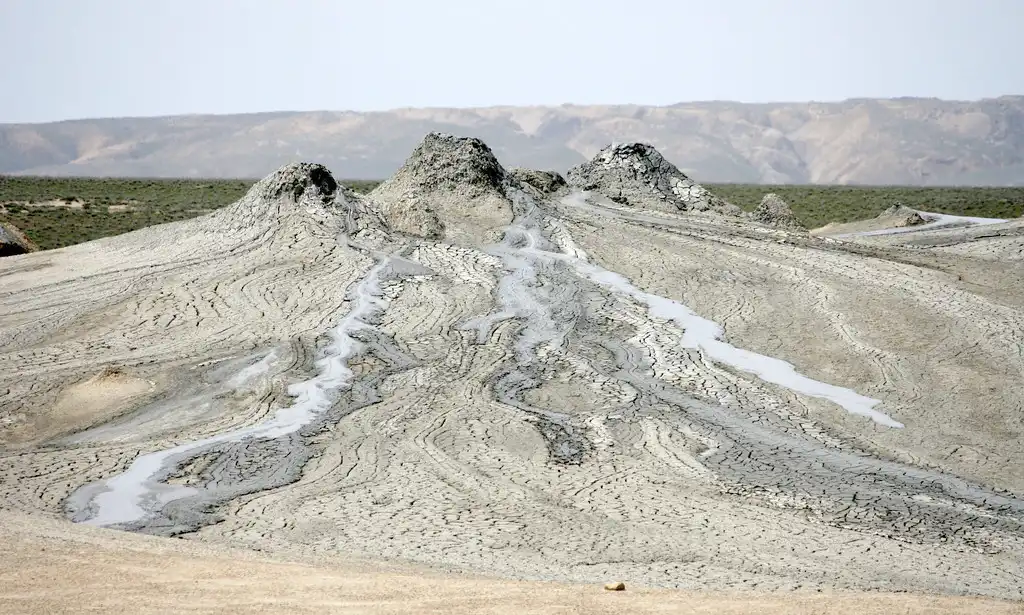
Cones stand knee-high to waist-high across a grey, cracked plain. Cold mud bubbles up through the craters and spills down the sides. Nothing grows here—no trees, no grass, no shade.
The mud is cold, not hot. Volcanic heat plays no role, and the process runs on subsurface gas pressure instead. Wear shoes you do not mind ruining. Grey clay gets everywhere and dries hard.
Timing note: Gobustan plus the mud volcanoes takes a full day from Baku, roughly seven to eight hours door to door.
Day 5: Gabala, a Mountain Escape for Families
Gabala sits at about 750 meters in the foothills of the Greater Caucasus, roughly 225 kilometers northwest of Baku. Driving time runs about 3.5 hours on the M4. Forest, waterfalls, a lake, and a cable car make it the most family-friendly stop on this route. Temperatures run 10 to 15°C below Baku through the summer.
Stops on the Drive West
Break the journey twice. Both stops sit directly on the route.
The Diri Baba Mausoleum near Maraza is one hour out of Baku. A 15th-century two-story tomb is built directly into a limestone cliff face.
Shamakhi Juma Mosque follows 30 minutes later. Founded in 743 AD and rebuilt many times, most recently in 2013.
Shamakhi served as the Shirvanshah’s capital for centuries. Earthquakes flattened the city repeatedly.
Cover shoulders and knees inside. Women should carry a scarf.
Tufandag Mountain Resort
The cable car station is 5 kilometers from the town of Gabala. Gondolas climb from roughly 900 meters to about 1,920 meters across two stages. Combined line length exceeds 12 kilometers, among the longest networks in the South Caucasus.
The ride takes about 25 minutes each way. Views open across the Greater Caucasus at the upper station. Carry a jacket even in August. Summit air runs sharply colder than the valley.
Winter turns Tufandag into a ski resort with runs for beginners and intermediates. Season runs roughly from December through March.
Yeddi Gozel Waterfall
Yeddi Gozel means Seven Beauties. The falls sit near Vandam village, about 3.5 kilometers off the main highway. A staircase, walkways, benches, and viewing platforms climb through a narrow forested gorge. The construction makes it manageable for children and older travelers.
The climb is still real. Allow 45 minutes up and down, and expect stairs the whole way. Small cafes line the path. Summer weekends bring heavy crowds, so go early.
Nohur Lake
Nohur Lake sits 8 kilometers from Gabala in a forest bowl. The water reads deep emerald against the tree line. Pedal boats and rowboats are rented by the hour. Morning light gives the cleanest reflections.
A shoreline path handles a 30-minute walk. Families with small children find it easy.
Days 6 and 7: Sheki and the Silk Road
Sheki is Azerbaijan’s finest Silk Road town, and UNESCO inscribed its historic center in 2019. The town sits at an elevation of 549 meters on the southern slopes of the Greater Caucasus, about 85 kilometers from Gabala. Driving time runs 1.5 hours. Two days will let you see the Palace properly and still visit the Kish Church.
Day 6: Sheki Khan’s Palace and the Caravanserai
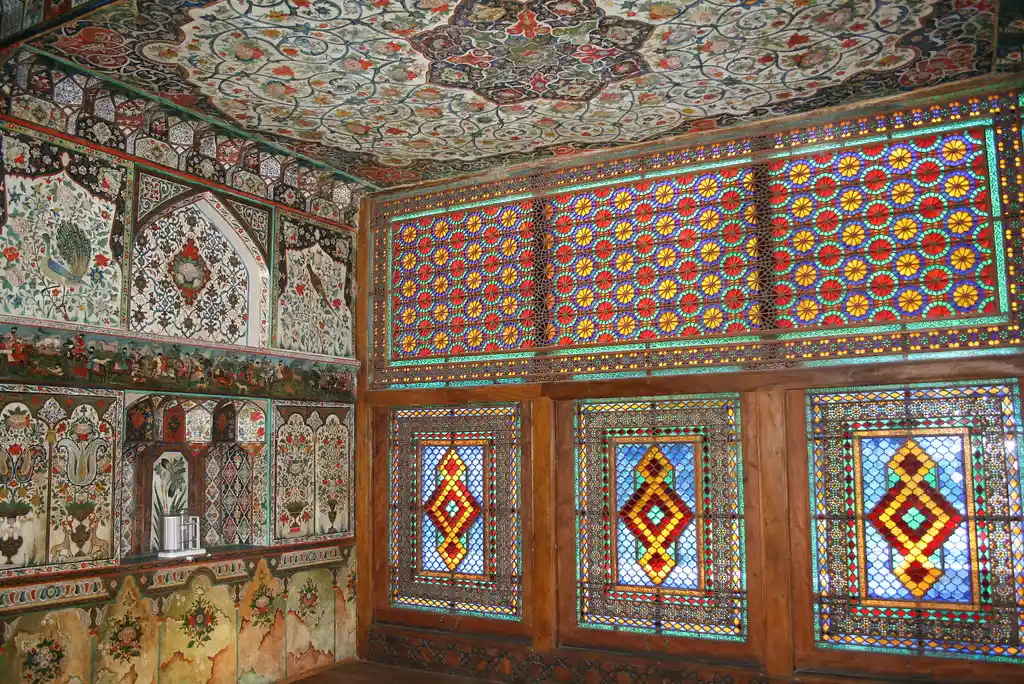
The Sheki Khan’s Palace dates to 1797 and served as the Khan’s summer residence. The building is small, two stories, and far more impressive inside than its footprint suggests.
Every window uses shebeke, a wooden lattice holding thousands of hand-cut colored glass pieces. No nails. No glue. The frame interlocks entirely through joinery. Artisans fit up to 5,000 pieces into a single square meter.
Sunlight through the shebeke throws colored patterns across the interior walls. Late morning gives the strongest effect. The Palace opens at 10:00. Photography is allowed without flash, and interior visits with a guide last 45 minutes to an hour.
Frescoes cover the upper rooms with hunting scenes, battles, and floral panels. Ask your guide to explain the ceiling in the Khan’s Reception room.
Where the craft survives: shebeke workshops still operate within walking distance of the Palace. A handful of masters make the lattices by hand. Stop in and watch.
The Caravanserai
Sheki’s Yukhari (Upper) Caravanserai dates to the 18th century and still operates partly as a hotel. Merchants stabled animals on the ground floor and slept above.
The courtyard runs cool even in August. Thick stone walls and a central well handle the temperature.
Order lunch here. The setting does most of the work.
What to Eat in Sheki
Sheki piti is the local signature. Lamb and chickpeas bake for hours in a sealed clay pot and are served in two stages.
Pour the broth over torn bread first. Then mash the meat and eat it separately.
Sheki halva looks nothing like the Middle Eastern version. Layered, honey-sweetened, and cut into small diamonds.
Buy some at the bazaar by weight. It travels well and lasts a week.
Day 7: Kish Church and the Long Drive Back
Here is the operational reality most itineraries hide. Sheki sits about 320 kilometers from Baku. The return drive takes roughly five hours without stops.
Your final day is a travel day. Plan around it rather than pretending otherwise.
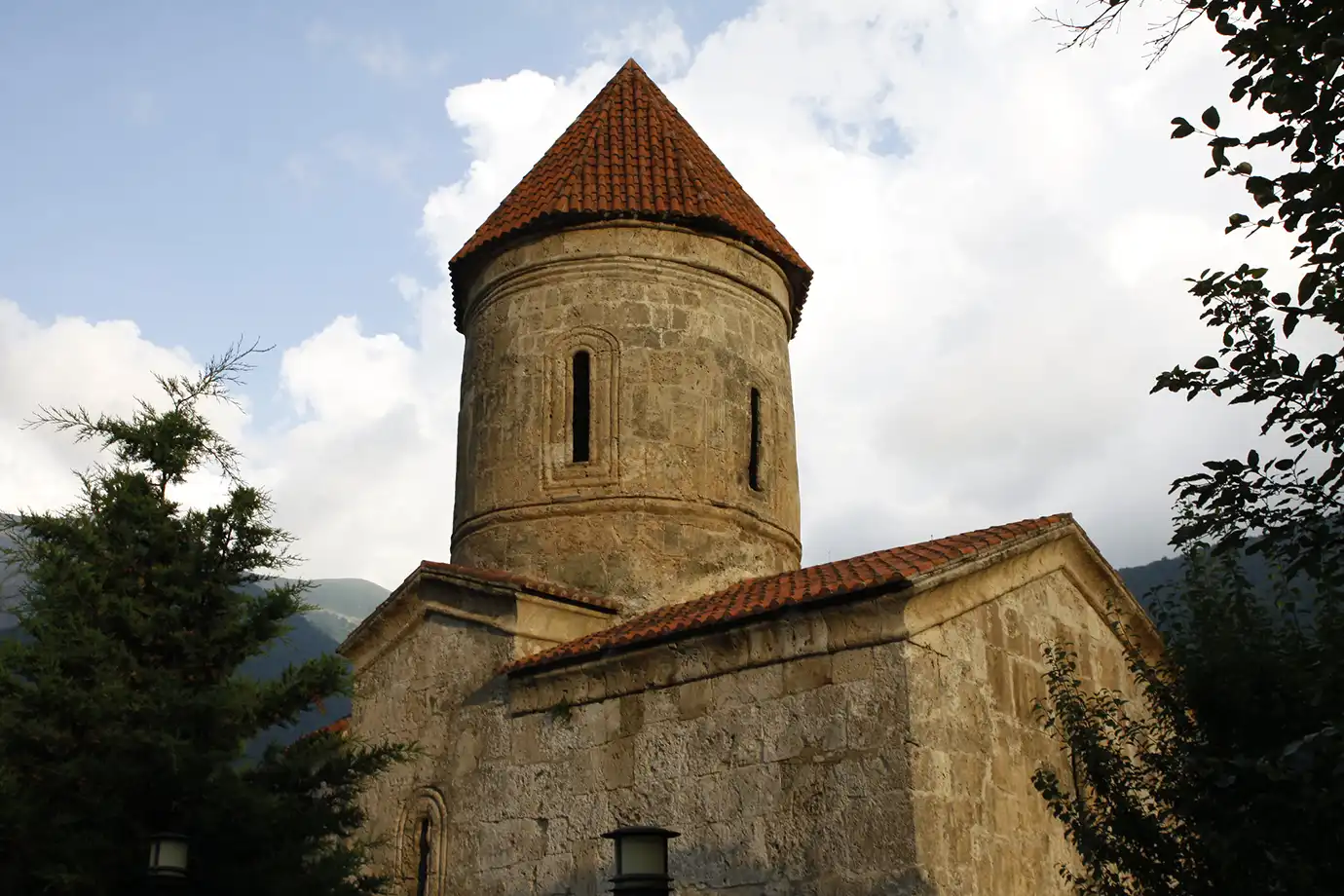
Morning: Kish Church. Drive 5 kilometers north of Sheki to the village of Kish. A small, round-domed Caucasian Albanian church stands here, roughly 12th-century in its current form. Worship on the site runs far older.
Thor Heyerdahl funded excavations here and returned repeatedly. He argued for links between the Caucasus and Scandinavia. Glass floor panels reveal burial pits beneath the nave. Allow 45 minutes.
Then drive. Depart Sheki by 11:00 to arrive at Baku airport around 16:30, with a comfortable buffer.
Critical booking note: Do not book a morning departure from Baku on Day 7. The drive makes it impossible. Afternoon and evening flights work. Anyone with a morning flight should add a final night in Baku, which would make the trip eight days.
Alternative: Ganja International Airport is about 170 kilometers from Sheki, a drive of roughly 2.5 hours. Check whether your route allows you to depart from Ganja instead.
When Is the Best Time to Follow This Itinerary?
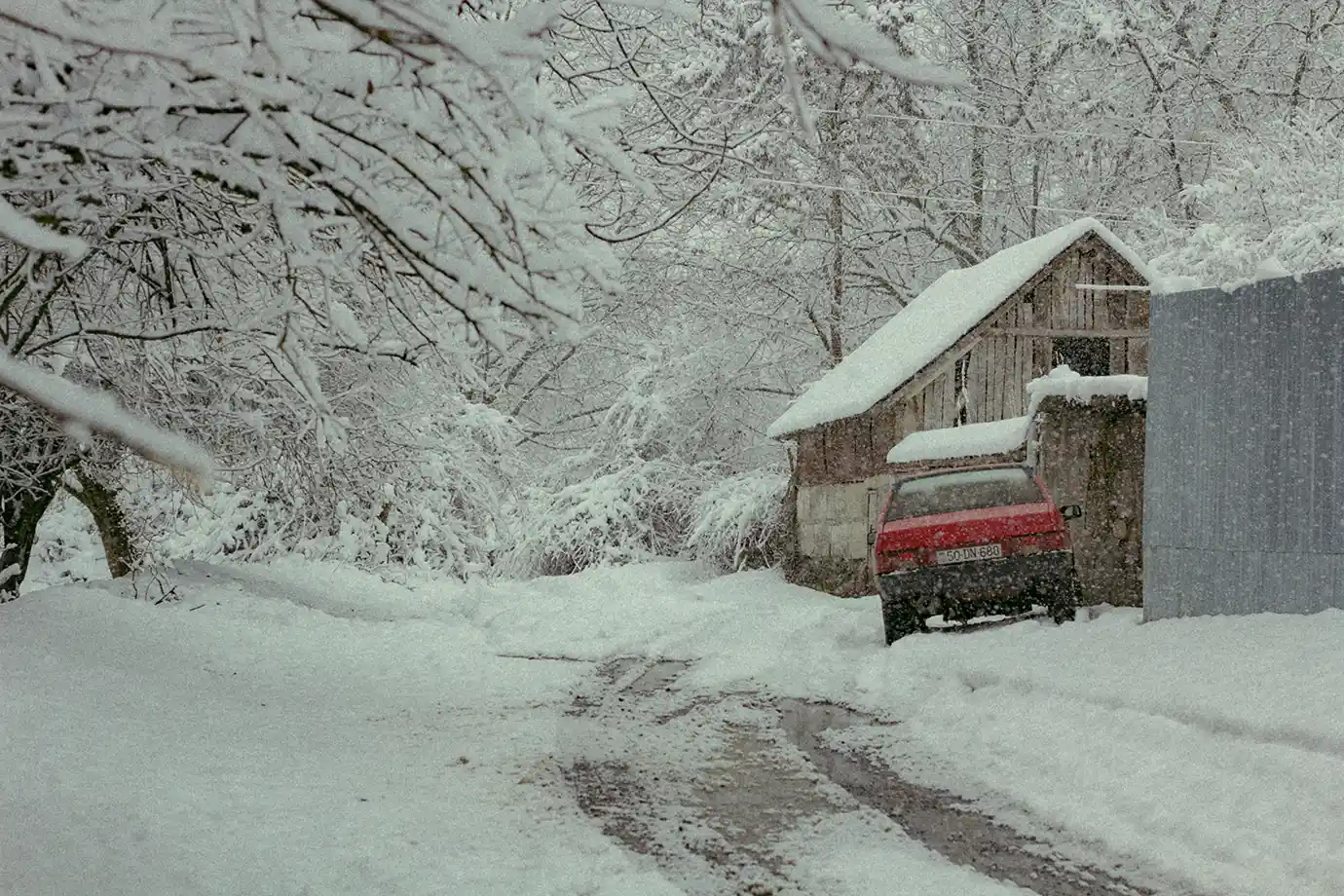
Late April to mid-June and September to mid-October offer the best conditions along the entire route. Baku stays warm without summer humidity. Gabala and Sheki run pleasantly cool. Every road stays open. July and August are warm in Baku, while Sheki gets snow from December through February.
| Month | Baku | Gabala (750 m) | Sheki (549 m) |
|---|---|---|---|
| Apr–May | 18–24°C | 12–20°C | 15–22°C |
| Jun–Aug | 28–35°C | 20–28°C | 24–30°C |
| Sep–Oct | 20–27°C | 15–22°C | 18–25°C |
Winter narrows the route rather than closing it. Mountain roads slow down, and Tufandag switches to ski operations.
Read More: Best Time to Visit Azerbaijan: Season-by-Season Guide
Practical Planning Notes
Visas
Most nationalities apply through the ASAN e-visa system at evisa.gov.az. Standard processing takes three working days.
Apply at least 5 working days in advance. Urgent processing is available but does not reliably clear on weekends and public holidays.
Print your approval. Border officers occasionally ask for a paper copy.
Money
The Azerbaijani manat is pegged to the US dollar at roughly 1.70. Rates barely move, which makes budgeting simple.
Cards work in hotels and most restaurants across Baku, Gabala, and Sheki. Carry cash for the Sheki bazaar, the mud volcano drivers, and roadside food stops.
Getting Around
Uber does not operate in Azerbaijan. Use Bolt or Yango in Baku. Outside Baku, arrange taxis through your hotel rather than hailing on the street. Sheki and Gabala both work this way.
A private driver makes the most sense for this route. Intercity marshrutka minibusses exist, but take hours and skip every roadside stop worth making.
What to Pack
- Flat shoes with grip for Old City cobbles and the Gobustan trail
- Shoes you can ruin for the mud volcanoes
- A windbreaker for Yanar Dag and the Absheron coast
- A warm layer for the Tufandag cable car, even in August
- A scarf for mosque interiors
- Sunscreen and a hat for Gobustan, where shade does not exist
Frequently Asked Questions
“How many days does this Azerbaijan itinerary cover?”
Seven days cover the essential circuit: two days in Baku, one for the Absheron fire sites, one for Gobustan, one in Gabala, and two in Sheki. Five days force you to drop either Sheki or Gabala. Ten days would let you add Lahij, Quba, or the Khinalig mountain village without rushing anything.
Is Azerbaijan safe for tourists?
Azerbaijan maintains a strong safety record for visitors. Violent crime against tourists is rare, and walking Baku’s Old City, Boulevard, and Fountains Square late in the evening is normal. Standard precautions apply to pickpocketing in crowded markets. The main practical risk on this route is road conditions, not crime.
Can you visit Gobustan and the mud volcanoes on the same day?
Yes, and most people do. Gobustan sits 64 kilometers from Baku, and the mud volcano field lies about 18 kilometers beyond the rock art reserve. Together, they fill seven to eight hours door-to-door. The mud volcano access track requires a local off-road vehicle, which you arrange at the museum or through your tour operator.
Do I need a 4×4 for this itinerary in Azerbaijan?
No, except for the mud volcano access track at Dashgil. Every other road on this route is paved and in good condition, including the M4 to Gabala and Sheki. Local drivers run the mud volcano stretch in modified Ladas for a set fee. Standard cars and minibusses cannot make that final section.
How far is Sheki from Baku?
Sheki is about 320 kilometers from Baku, roughly five hours by car via Shamakhi on the M4. Never attempt it as a day trip. Plan at least one overnight stay, and do not book a morning departure flight on the day you return. Ganja International Airport is a closer alternative, about 170 kilometers from Sheki.
What is shebeke, and why does it matter?
Shebeke is a Sheki craft in which colored glass and carved wood interlock to form window lattices without nails or glue. Artisans fit up to 5,000 hand-cut pieces into a single square meter. The Sheki Khan’s Palace holds the finest surviving examples. Only a handful of masters still practice the technique, and their workshops sit near the Palace.
This Azerbaijan tour package itinerary works as a private guided circuit or a self-drive route, depending on your comfort level.