


Azerbaijan Travel Cost sits among the lowest of any destination in the wider Caucasus and Middle East. A trip to Azerbaijan costs roughly 85 AZN per day for backpackers, 175 AZN per day for mid-range travelers, and 375 AZN or more per day for upscale travelers. The currency helps you plan. The Azerbaijani manat is pegged to the US dollar at roughly 1.70, so rates barely move month to month. Below you will find real costs by category, what drives up budgets, and where travelers waste money without realizing it.
What Is a Realistic Azerbaijan Travel Cost Per Day?
Plan on 85 AZN per day as a backpacker, 175 AZN as a mid-range traveler, and 375 AZN at the upscale end. Accommodation drives most of the difference. Food and public transport remain cheap across all tiers, which is why Azerbaijan feels generous even on a tight budget.
Baku costs noticeably more than the rest of the country. Prices drop once you head west toward Gabala, Sheki, or Quba. Understanding Azerbaijan travel costs by category — accommodation, food, and transport — is the fastest way to build a budget that holds.
| Travel Style | Daily Budget | Sleeping | Eating | Getting Around |
|---|---|---|---|---|
| Backpacker | ~85 AZN | Hostel dorm, guesthouse | Street food, cafes | Metro, marshrutka |
| Mid-Range | ~175 AZN | 3-star hotel, guesthouse | Local and mid-range | Bolt, group tours |
| Upscale | ~375 AZN+ | 4 and 5-star hotels | Good restaurants | Private driver, tours |
Solo travelers should budget toward the top of each band. Accommodation is the cost that is not split.
Accommodation Costs in Azerbaijan
Expect 8 to 20 AZN for a hostel dorm bed, 30 to 70 AZN for a decent budget or mid-range hotel room, and 150 AZN and up for luxury properties in Baku. Regional towns run 30 to 40 percent below Baku in terms of equivalent quality. Guesthouses in Sheki and Gabala often include breakfast in the rate.
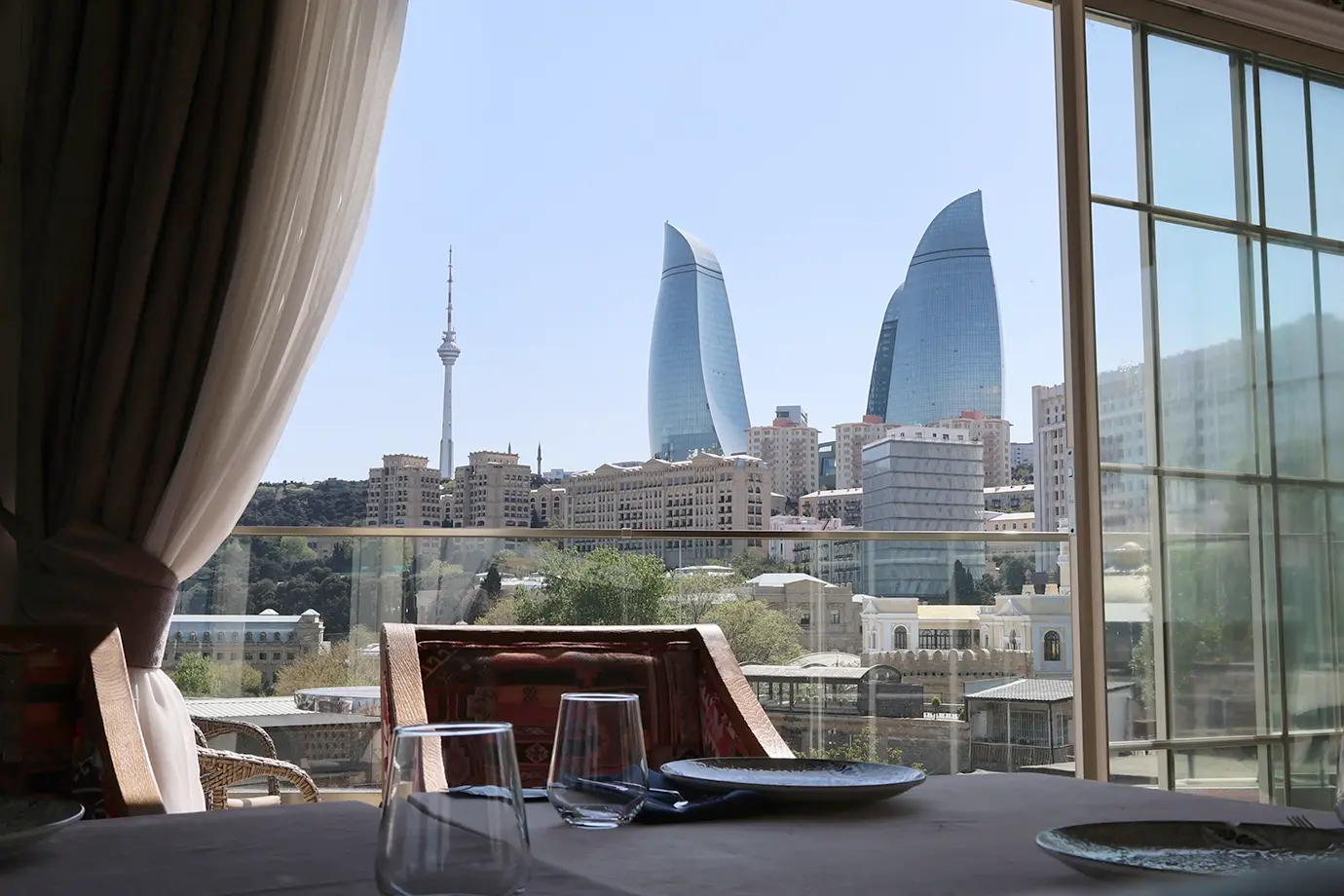
Budget: Hostels and Guesthouses
Dorm beds in Baku hostels run 8 to 20 AZN per night. Boutique hostels near the Old City sit at the upper end. Private rooms in hostels and guesthouses cost 25-60 AZN in Baku. In Sheki, Gabala, or Quba, similar rooms drop to 20-40 AZN.
Regional guesthouses frequently include breakfast and sometimes dinner. Ask before booking, since the meals can be worth more than any discount you were chasing.
Mid-Range: 3-Star Hotels
Baku 3-star rooms run 50 to 100 AZN per night. Outside the capital, expect 30 to 60 AZN for equivalent quality. Value peaks here. A clean, well-located Baku room with breakfast costs less than a budget chain hotel in most European capitals.
Upscale and Luxury
Baku’s premium properties start around 150 AZN and climb past 300 AZN in the best time to visit Azerbaijan. Fairmont at the Flame Towers, Four Seasons, and the Boulevard Autograph Collection all sit in that range. GaGabala’s sort properties are priced similarly. Sheki has no true luxury tier, and a good 4-star resort is the practical ceiling there.
Where a Package Fits
Curated packages occupy the middle ground between booking everything yourself and paying full luxury rates. Operators buy hotel nights at contracted rates and bundle private transport, guiding, and entrance fees. For travelers who want 4-star comfort and private vehicles without having to assemble every piece, the arithmetic usually favors the package.
The gap widens on multi-city routes. Baku, Gabala, and Sheki in one trip means three hotel bookings, two long transfers, and a guide in each town.
Food and Drink Costs
Street food runs 1 to 5 AZN, a local restaurant meal costs 10 to 17 AZN, and a mid-range restaurant meal with drinks runs 20 to 40 AZN per person. Azerbaijani food is the best value in the country. You can eat extremely well without spending much.
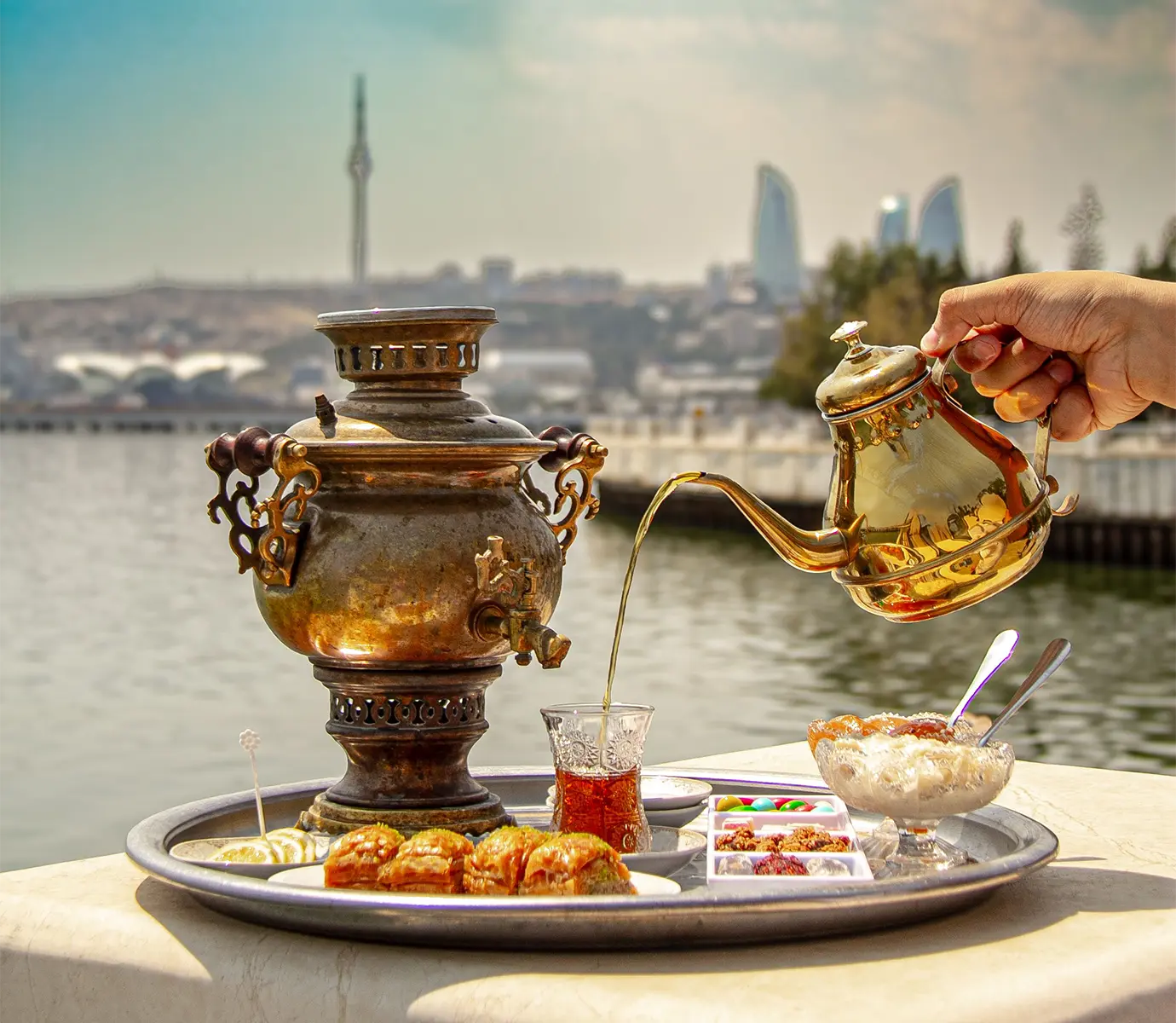
Here is what individual items actually cost.
- Kutab, doner, or shawarma from a street stall: 1–5 AZN
- Meal at a cheap local restaurant: 10–17 AZN
- Mid-range restaurant, meal with drinks: 20–40 AZN per person
- Dinner for two at a mid-range place: 45–80 AZN
- Fine dining in Baku: from 50 AZN per person
- Fast food combo meal: around 13 AZN
- Cappuccino: around 6 AZN
- Espresso: around 4 AZN
- Bottled water, 1.5 liters: 50–1.50 AZN
- Local beer at a bar: 4–7 AZN
The gap between a tourist restaurant and a neighborhood one is large. Places two streets off Nizami charge half of what the main pedestrian strip charges for the same plov. Ask your hotel to point you toward the nearest restaurant with no English menu. You will eat better and pay less.
The 10 Percent Service Charge
Many restaurants in Baku automatically add a 10 percent service charge to the bill. Check the printed total before adding anything extra. The charge is standard practice rather than a scam. But it does mean your 30 AZN meal arrives as 33 AZN.
Transport Costs in Azerbaijan
Baku metro and bus rides cost around 0.50 AZN, and Bolt taxi trips within the city run 3 to 7 AZN. Domestic transport is the cheapest line in any Azerbaijan budget. Renting a car or hiring a private driver is what moves the number.
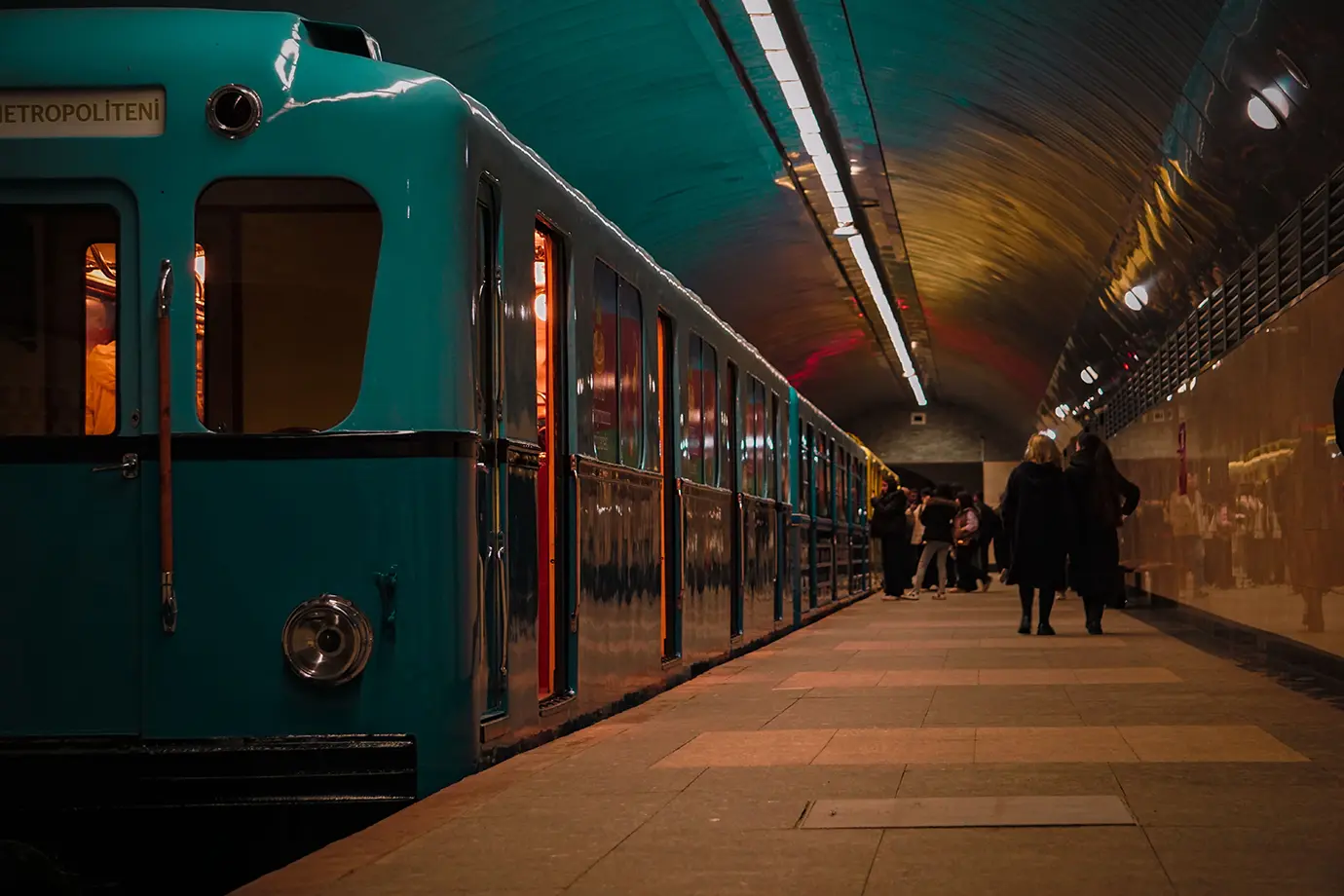
City Transport in Baku
You need a BakiKart to use any public transport. Buy one from a vending machine at the metro stations or the airport. Two warnings about the machines. They accept cash only, and they do not give change.
| Service | Cost |
|---|---|
| Metro or city bus, single ride | ~0.50 AZN |
| BakiKart card | Small one-time fee |
| Airport bus H1 to May 28 Square | 1.30 AZN |
| Bolt or Yango, typical city trip | 3–7 AZN |
| Taxi, per kilometer | ~1.00 AZN |
The airport bus H1 is the single biggest saving most travelers miss. The ride takes about 30 minutes and costs 1.30 AZN. A taxi along the same route costs 25-40 AZN. Buy your BakiKart at the airport machine before you exit. Uber does not operate in Azerbaijan. Use Bolt or Yango instead, and never take an unmetered taxi from the arrivals hall.
Intercity Transport
Marshrutkaminibuses and coaches connect almost everywhere cheaply.
- Baku to Sheki by bus or marshrutka: around 14 AZN, roughly 6 hours
- Baku to Sheki by shared taxi: around 20 AZN
- Baku to Sheki by private taxi: 100–120 AZN per vehicle
- Gabala to Baku by bus: around 12 AZN
- Car rental, economy: 70–90 AZN per day, fuel excluded
Trains run between Baku and several western cities. Ticket prices are close to bus fares, and the seats are more comfortable.
The Private Driver Math
A private driver costs 250 AZN per day, depending on the distance. The figure covers the vehicle, not each passenger. When split among four people, private transport often beats four individual tour tickets. It also buys you roadside stops that group buses skip entirely.
Tours, Entrance Fees, and Activities
Most Azerbaijani attractions charge modest entrance fees, and many of the best sites are free. Group day tours from Baku run 50 to 100 AZN per person. Private Azerbaijan Tour Packages cost more but scale well for groups.
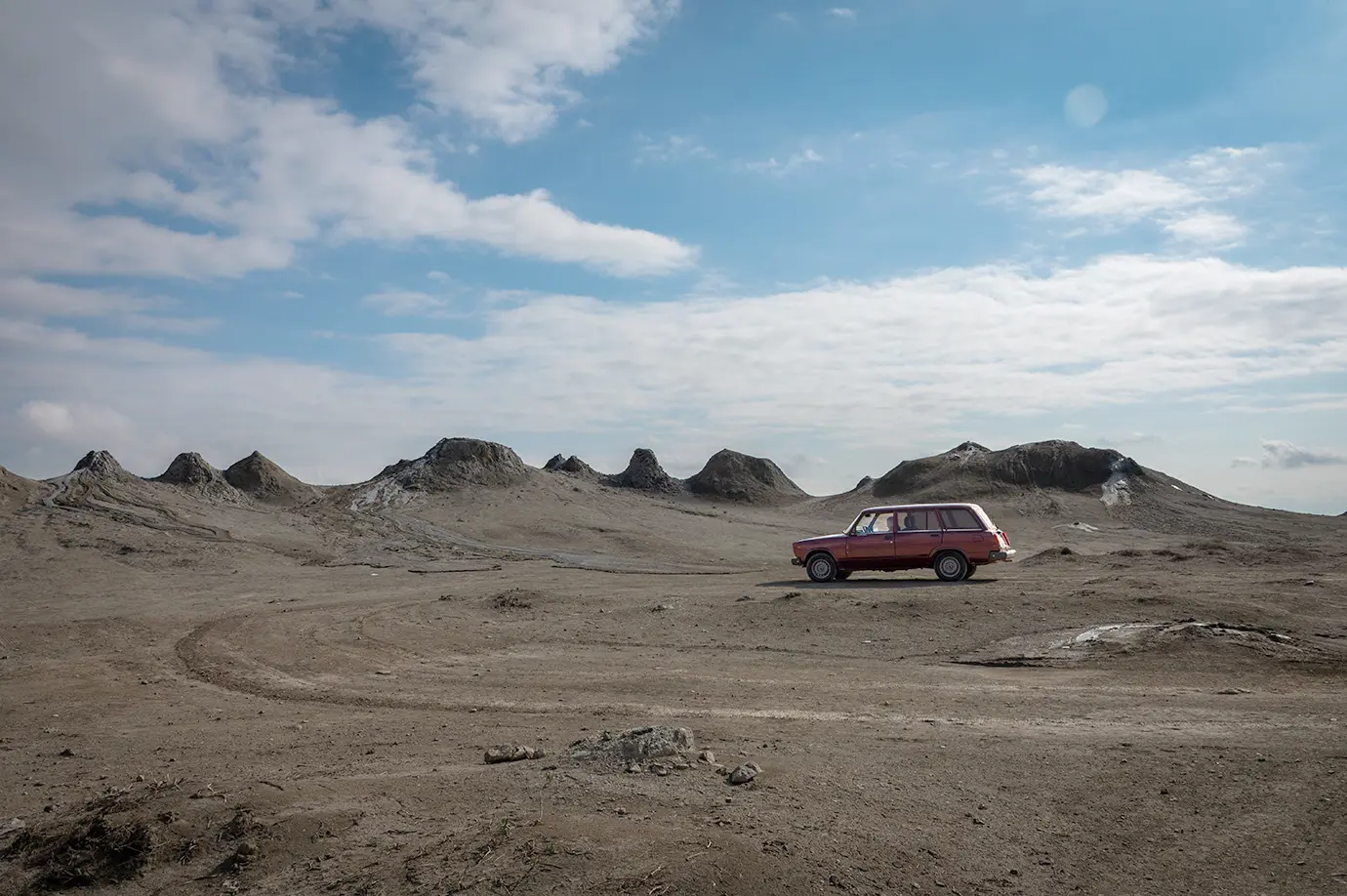
Entrance to mosques, the Baku Boulevard, Fountains Square, and the area around Yanar Dag costs little or nothing. The costs that add up are transport-linked rather than ticket-linked. The Gobustan mud volcanoes are the clearest example. The access track beyond the rock art reserve is unpaved and impassable in a normal car. Local drivers run the final stretch in modified Ladas for 25-50 AZN per vehicle.
Negotiate before you get in. Sharing with other visitors brings it down to around 10 AZN per person. Cultural events cost less than most travelers expect. Opera, ballet, and theater tickets in Baku run 10 to 50 AZN depending on seating.
How to Reduce Your Azerbaijan Travel Cost
The biggest savings come from the airport bus, neighborhood restaurants, and traveling outside Baku. None requires sacrifice. Together, they can cut a quarter off a typical trip.
Here is what actually works.
- Take the H1 airport bus—300 AZN, compared to 25 to 40 AZN for a taxi. Buy the BakiKart at the airport machine with cash.
- Carry a reusable bottle. Tap water is not recommended for drinking, so a filter bottle saves you from buying 1.50 AZN bottles several times a day.
- Join a free walking tour in Baku. Guides work on tips rather than a set fee. Budget 10-20 AZN per person, and you get a proper orientation plus local restaurant recommendations.
- Eat where the menu has no English: same food, roughly half the price.
- Leave Baku. Sheki, Gabala, Quba, and Lahij all cost 30 to 40 percent less for equivalent quality.
- Use Bolt for every taxi. Street taxis quote three to four times the app rate to foreigners.
- Travel in shoulder season. Late April to mid-June and September to mid-October give the best weather and lower room rates than midsummer.
- Split private drivers across a group. Four people in one vehicle beats four separate tour tickets almost every time.
- Check the bill for the 10 percent service charge before adding a tip on top of it.
Is the Tap Water Safe to Drink in Azerbaijan?
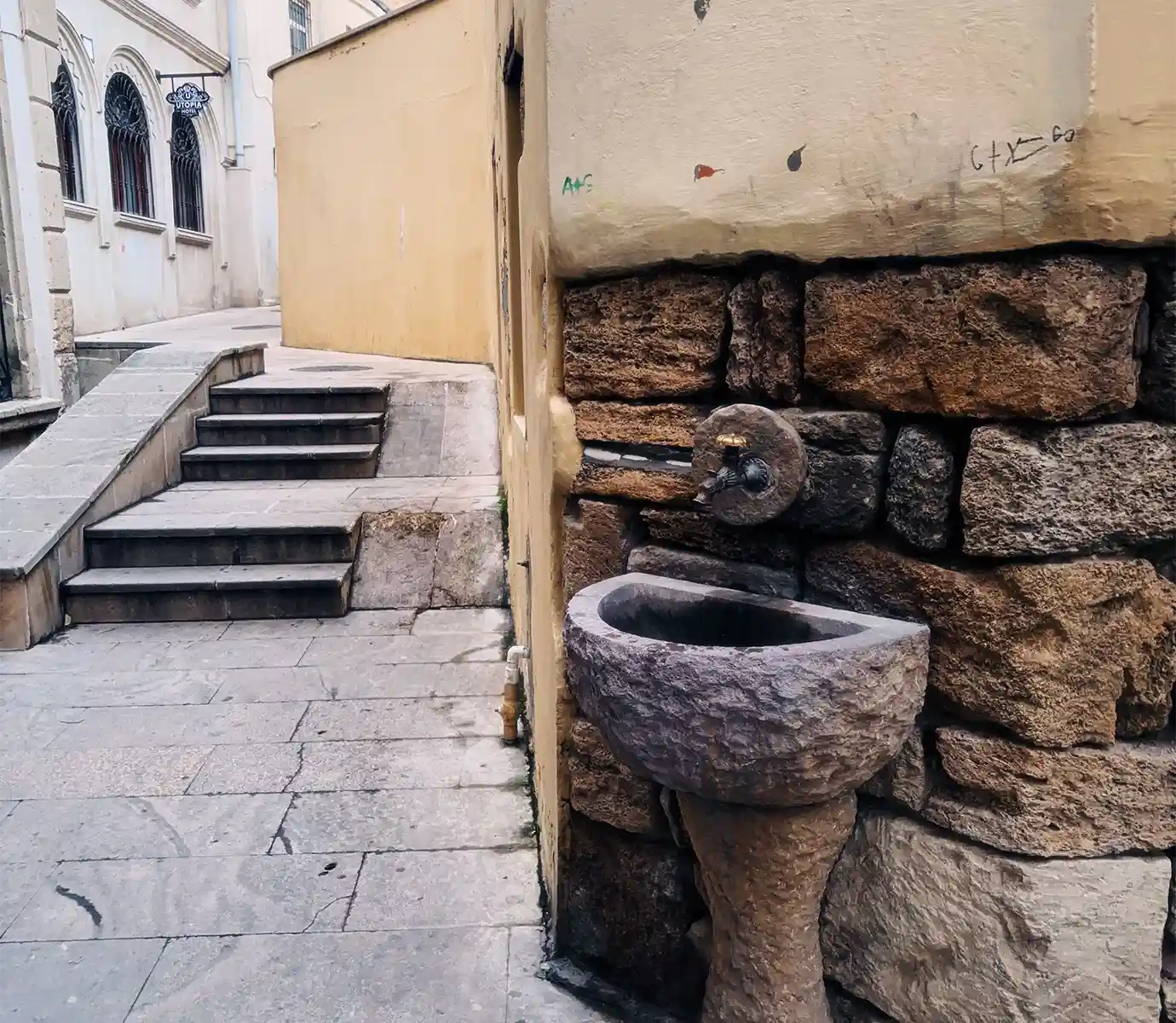
No. Do not drink the tap water anywhere in Azerbaijan, including Baku. The city treats its supply through a modern ultrafiltration plant, but aging distribution pipes reintroduce sediment and metals. Locals and visitors both drink bottled water. Brushing your teeth with tap water is fine in Baku, but less advisable in smaller towns.
Bottled water costs 0.50-1.50 AZN per 1.5 liters. Local brands like Badamli come from northern mountain springs and are of good quality. A filter bottle pays for itself in three days. LifeStraw, Grayl, and Sawyer models all handle Azerbaijani tap water.
Avoid ice at street stalls. Hotels and established restaurants use filtered or commercial ice, so the ice there is fine. Stock up before heading into the mountains. Bottled water gets scarce in the rural Gabala and Sheki districts.
Tipping in Azerbaijan: What Is Actually Expected?
Tipping is not culturally obligatory in Azerbaijan, and many restaurants already add a 10 percent service charge. Check the bill before adding more. Where no service charge appears, rounding up or leaving 5 to 10 percent is generous and appreciated.
Guides and drivers are the exception. Tour guides typically receive 20 to 40 AZN per person for a full day, and drivers slightly less. Hotel porters and housekeeping expect nothing. A few manat is welcome but never assumed. Taxi drivers do not expect tips. Bolt fares are fixed before you accept the ride.
Hidden Costs and Money Traps
Two things catch travelers out in Baku: the automatic service charge and inflated bar bills. Both are avoidable if you know they exist.
The Bar Bill Trap
Some Baku bars and clubs bring out snacks, fruit plates, or drinks that appear complimentary. They are not. The bill arrives with items you never ordered, sometimes totaling more than 100 AZN. Ask the price of anything placed on your table before touching it. Reputable restaurants and hotel bars do not operate this way.
Currency and Cards
Cards work widely in Baku, Gabala, and Sheki hotels and restaurants. Carry cash for market stalls, marshrutkas, and roadside food stops. Withdraw from bank ATMs in the city rather than exchanging at the airport. Airport counters carry the worst rates in the country. Because the manat is pegged to the dollar at roughly 1.70, rate shopping matters less here than in most destinations.
Is Azerbaijan Cheaper Than Its Neighbors?
Azerbaijan is close to Georgia and Armenia for food and transport, and slightly more expensive for accommodation in Baku. Compared to Turkey, prices are similar outside the capital. Compared with Western Europe, Azerbaijan costs roughly half or less in every category.
Baku’s premier tier prices are like those in a mid-tier European capital—everything else in the country is priced well below that level. Where Azerbaijan clearly wins: restaurant food, public transport, entrance fees, and guided tours. Where prices average: Baku hotels in peak season, car rental, and imported alcohol.
Frequently Asked Questions
What is the average travel cost in Azerbaijan per week?
A week costs roughly 600 AZN as a backpacker, 1,200 AZN mid-range, and 2,600 AZN or more at the upscale end. Figures cover accommodation, food, local transport, and activities, but exclude international flights and the e-visa fee. Solo travelers should add 25 to 35 percent, since accommodation is the cost that is not split between two people.
Is Azerbaijan expensive for tourists?
Azerbaijan is affordable by regional and European standards. Food, public transport, entrance fees, and guided tours all cost far less than Western European equivalents. Baku accommodation is the exception, with premium hotels’ prices close to those in mid-tier European capitals. Costs drop 30 to 40 percent once you leave the capital for Sheki, Gabala, Quba, or Lahij.
What currency does Azerbaijan use, and should I bring cash?
Azerbaijan uses the manat (AZN), pegged to the US dollar at roughly 1.70. The peg keeps rates stable, so budgeting is straightforward. Cards work in most Baku, Gabala, and Sheki hotels and restaurants. Carry cash for market stalls, marshrutkaminibussess, mud volcano drivers, and roadside food stops. Use city ATMs rather than airport exchange counters.
Can you drink tap water in Azerbaijan?
No. Tap water is not recommended for drinking anywhere in Azerbaijan, including Baku. The supply is treated, but aging pipes introduce sediment and metals. Bottled water costs 0.50 to 1.50 AZN for 1.5 liters, and a filter bottle pays for itself within days. Brushing teeth with tap water is fine in Bak,u but less advisable in smaller towns.
Do restaurants in Azerbaijan add a service charge?
Many restaurants in Baku automatically add 10 percent to the bill. Check the printed total before adding a tip on top, since paying twice is easy to do by accident. Where no service charge appears, rounding up or leaving 5 to 10 percent is generous. Tipping is not culturally obligatory in Azerbaijan the way it is in North America.
What is the cheapest way to get from Baku airport to the city?
The H1 airport bus runs to May 28 Square in about 30 minutes and costs 1.30 AZN. You need a BakiKart transport card, which is sold at vending machines at the airport exit. The machines take cash only and give no change, so bring small notes. A taxi along the same route costs 25-40 AZN.
Azerbaijan’s travel costs remain among the most competitive in the region — the challenge is not finding value but knowing where the traps are.