


The Cultural Triangle of Sri Lanka is where the island’s ancient kingdoms, Buddhist heritage, and royal engineering converge in a dense, rewarding region. In a few days, travelers can climb a fifth-century rock fortress, walk through painted cave temples, explore ruined capitals that once rivaled Rome, visit sacred stupas wrapped in white cloth, and add a wildlife safari near elephant country.
The region sits in the north-central dry zone, which means heat is a bigger factor than rain for most of the year. Sites are large and spread out, so pacing and timing matter more than speed. A rushed visit turns extraordinary ruins into a hot blur.
Use this guide to choose the right sites, plan the right number of days, pick a base town, and avoid the mistakes that cost first-time visitors energy and enjoyment.
Quick Answer: What Is the Cultural Triangle of Sri Lanka?
The Cultural Triangle of Sri Lanka is an ancient heritage region in the north-central dry zone that links the historic royal capitals of Anuradhapura, Polonnaruwa, and Kandy. Modern travel routes also include Sigiriya Rock Fortress and Dambulla Cave Temple as essential stops inside the triangle.
First-time visitors should spend at least two to three days in the region for Sigiriya, Dambulla, and either Polonnaruwa or Anuradhapura. A four- to five-day route adds deeper history, Mihintale, village experiences, and an elephant safari near Minneriya or Kaudulla.
The best base is usually Sigiriya, Habarana, or Dambulla, with Kandy used as a southern gateway. Start every major site early in the morning to beat the heat and the crowds. A private chauffeur-guide and a local cultural guide together make the biggest difference to the experience.
Cultural Triangle of Sri Lanka at a Glance
| Topic | Practical Answer |
|---|---|
| Main sites | Sigiriya, Dambulla, Anuradhapura, Polonnaruwa, Kandy |
| Best base | Sigiriya, Habarana, or Dambulla |
| Ideal duration | 3 to 4 days |
| Minimum time | 2 days |
| Best for | Culture, history, photography, families, first-time visitors |
| Best add-on | Minneriya or Kaudulla elephant safari |
| Best travel style | Private chauffeur-guide with a local cultural guide |
| Main challenge | Heat, walking distance, and large sites |
| Best time of day | Early morning and late afternoon |



What Is the Cultural Triangle of Sri Lanka?
Why the Name “Cultural Triangle”
The term comes from the geographic shape formed by three ancient royal capitals: Anuradhapura in the north, Polonnaruwa in the east, and Kandy in the south. Together they trace the rise and fall of Sri Lanka’s Sinhala kingdoms across two thousand years of history.
In modern travel planning, the Cultural Triangle encompasses a broader area. Sigiriya and Dambulla sit inside the triangle and are often the first stops visitors make. Most travelers use the term to describe the whole heritage loop through Anuradhapura, Polonnaruwa, Sigiriya, Dambulla, and Kandy.
Why the Region Matters
The Cultural Triangle holds the island’s deepest concentration of ancient heritage. Ancient royal capitals with white stupas as large as pyramids. Cave temples with floor-to-ceiling murals painted over centuries. A rock fortress that still astonishes engineers. Sacred trees grown from cuttings older than most European nations. Stone carvings that rank among the finest in South Asia.
Five of Sri Lanka’s eight UNESCO World Heritage Sites sit in or near the Cultural Triangle. The region also holds living religious traditions, active pilgrimage routes, and a daily rhythm of offerings and ceremonies that connect the present to the past.
For travelers who want to understand Sri Lanka beyond beaches and tea country, the Cultural Triangle is the place to start.
The region also holds practical advantages. The dry zone means rain is less of a problem than on the coast, the roads are generally flat, and the sites work year-round, with early-morning starts. A private chauffeur-guide covers three or four stops in a day without stress, and the distance between Sigiriya, Dambulla, Polonnaruwa, and the safari parks sits comfortably within a 90-minute drive radius.
Is Kandy Part of the Cultural Triangle?
Yes. Kandy is one of the three traditional points of the triangle and is home to the Temple of the Tooth, Sri Lanka’s most sacred Buddhist relic. In practice, many travelers use Kandy as a gateway between the Cultural Triangle and the hill country rather than as a base for the northern sites.
Best Places to Visit in the Cultural Triangle
1. Sigiriya Rock Fortress
Sigiriya is the headline attraction of the Cultural Triangle. A fifth-century rock fortress rises 200 meters above the jungle on a sheer column of stone, and the climb passes through water gardens, ancient frescoes, and the lion’s paws before opening onto a summit with views across the green plain.
Start before 7:30 a.m. The first hour after the gates open beats the heat and the tour-bus crowds. The climb takes about 90 minutes up and an hour down. Carry water, wear sturdy shoes, and be ready for steep metal staircases near the top.
A private guide turns the climb into a history lesson, explaining the palace layout, the mirror wall, and the engineering that brought water to the summit. The frescoes of the Sigiriya maidens, painted into a sheltered pocket of the rock face, are among the oldest surviving artworks in Sri Lanka. From the summit, the grid of the ancient pleasure gardens spreads below, with symmetrical pools and walkways still visible two thousand years after they were laid out. The water gardens at the base are an engineering feat in their own right, with fountains that still work when the rains fill the ancient channels.
Two to three hours on site. Combine with Dambulla the same day.
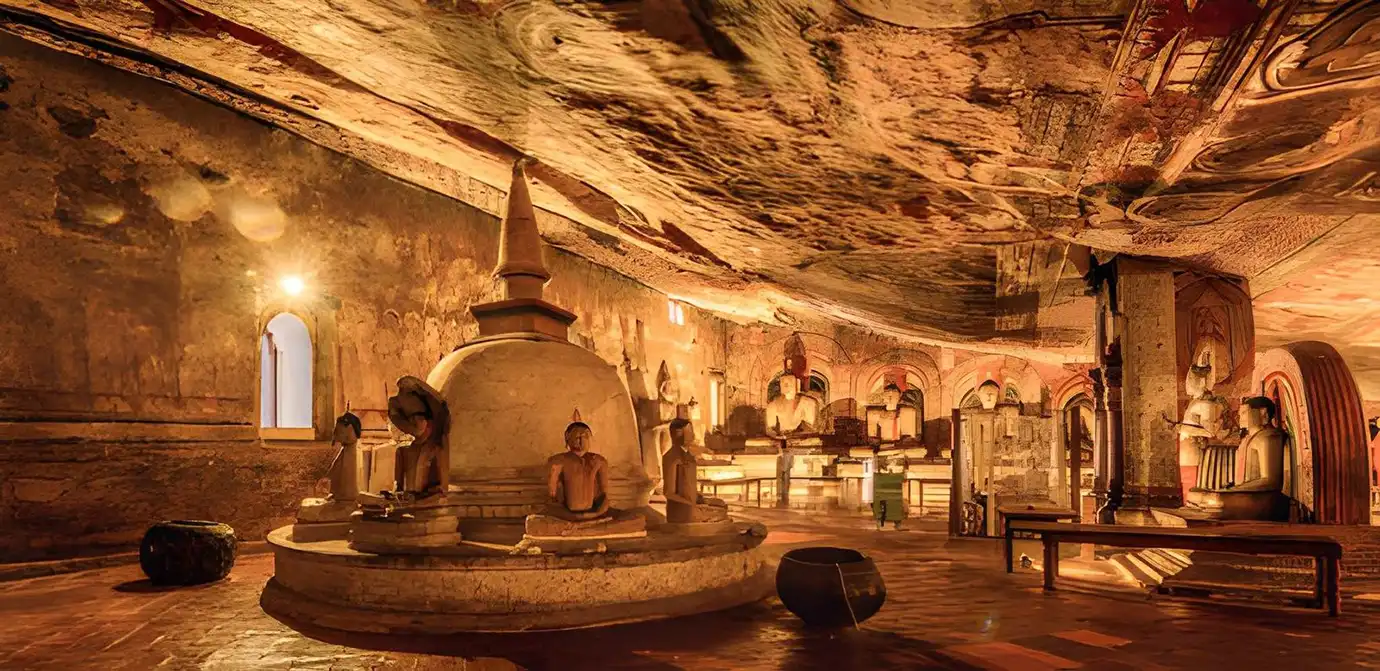
2. Dambulla Cave Temple
Dambulla is a sacred cave temple carved into a granite overhang, with five painted caves housing over 150 Buddha statues and murals covering every surface from floor to ceiling. The caves are cool and dark after the climb, and the art spans several centuries of Buddhist devotion.
Cover shoulders and knees, and remove shoes before entering. A short, steep climb reaches the cave entrance, and the view from the top takes in the surrounding countryside. The caves themselves feel like walking into a painted jewel box, with every inch of ceiling and wall covered in murals of the Buddha’s life, local kings, and celestial figures. The largest cave holds a 14-meter reclining Buddha carved from the rock.
About 1.5 to 2 hours on site. Dambulla is less than 30 minutes from Sigiriya and makes for a good afternoon visit after a morning rock climb.
3. Anuradhapura Ancient City
Anuradhapura is the oldest and largest of Sri Lanka’s ancient capitals, and it functions as much as a living pilgrimage city as a historical site. White-robed devotees circle the Ruwanwelisaya stupa, families make offerings beneath the Sri Maha Bodhi tree (grown from a cutting of the tree under which the Buddha attained enlightenment), and the hum of prayer carries across the ancient grounds.
The site is spread out over a wide area. A half day covers the main stupas, the Bodhi tree, and the monastic ruins. A full day includes the museum, the outer monasteries, and nearby Mihintale. Rent a bicycle or hire a private guide and vehicle to cover the distances in the heat.
Start early. Anuradhapura is hot by mid-morning, and the open plains around the stupas offer little shade.
The scale of the ancient city is hard to appreciate from a map. The Ruwanwelisaya stupa alone stands 55 meters high and 90 meters across, and it is just one of several massive structures spread across miles of parkland. The Jetavanaramaya, now partly restored, was once the third-tallest structure in the ancient world. A guide connects these monuments to the kings and monks who built them, and without that context, the sheer size can overwhelm rather than inform.
4. Polonnaruwa Ancient City
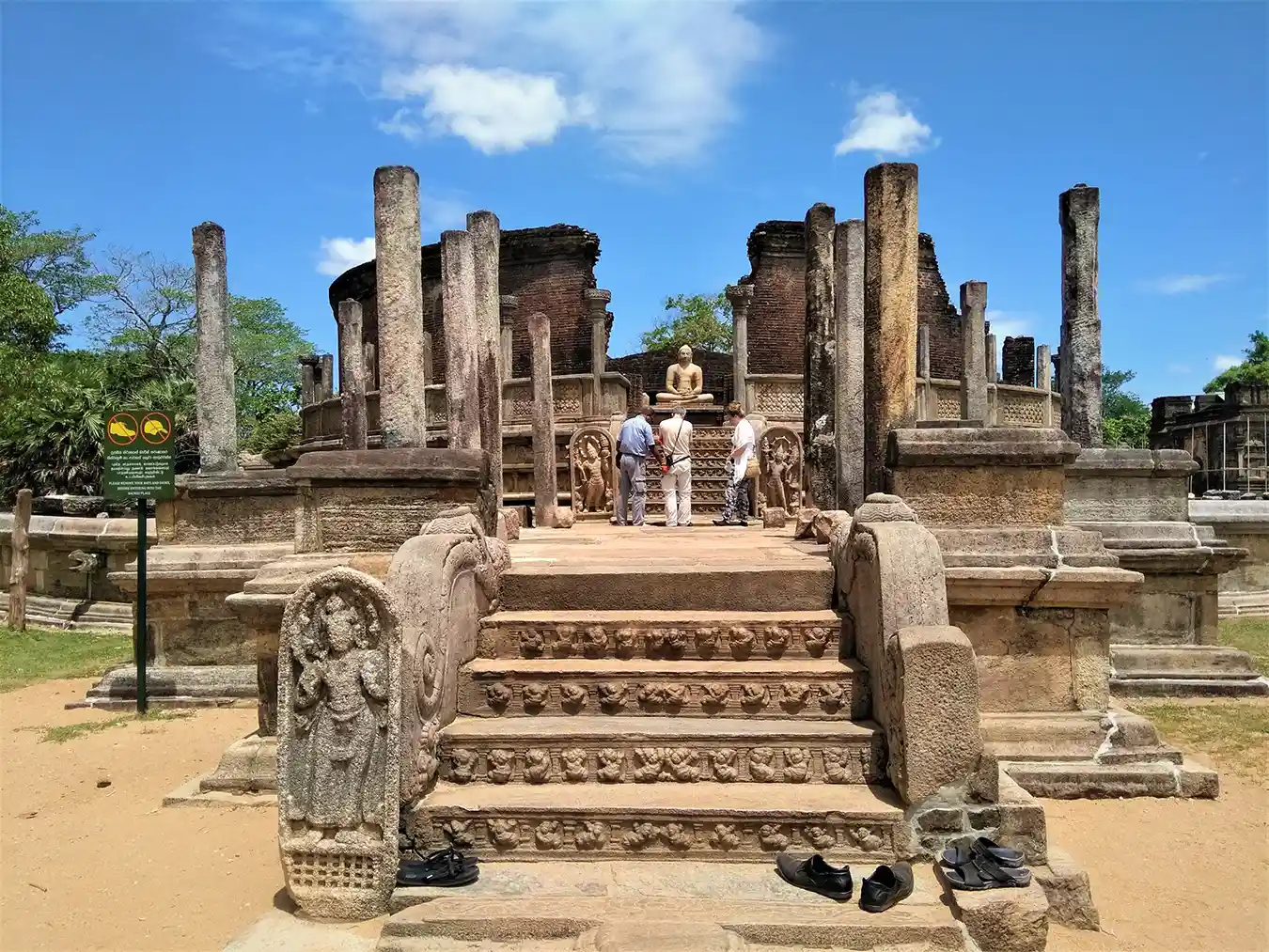
Polonnaruwa is more compact than Anuradhapura and easier to cover in a shorter visit. The ruins of the royal palace, the circular relic house, the carved council chambers, and the temples sit within a parklike stretch of forest.
The Gal Vihara, a set of four Buddha figures carved from a single granite slab, is one of the finest pieces of stone carving in South Asia. The reclining figure stretches 14 meters, and the standing figure beside it shows a rare expression of sorrow that most visitors find deeply moving. Standing in front of the reclining Buddha is a moment most visitors remember long after the trip.
Cycling the site is the most pleasant way to see it. Three to five hours covers the main ruins well. Carry water, sun protection, and a hat, because the paths between ruins run through open ground.
Combine Polonnaruwa with a late-afternoon elephant safari at Minneriya or Kaudulla from a Sigiriya or Habarana base.
The Quadrangle, a compact walled area near the center, holds the densest concentration of carved temples and sacred buildings. Spend extra time here. The Vatadage, a circular relic house with carved stone guardians and moonstone steps, is one of the finest individual structures in Sri Lanka.
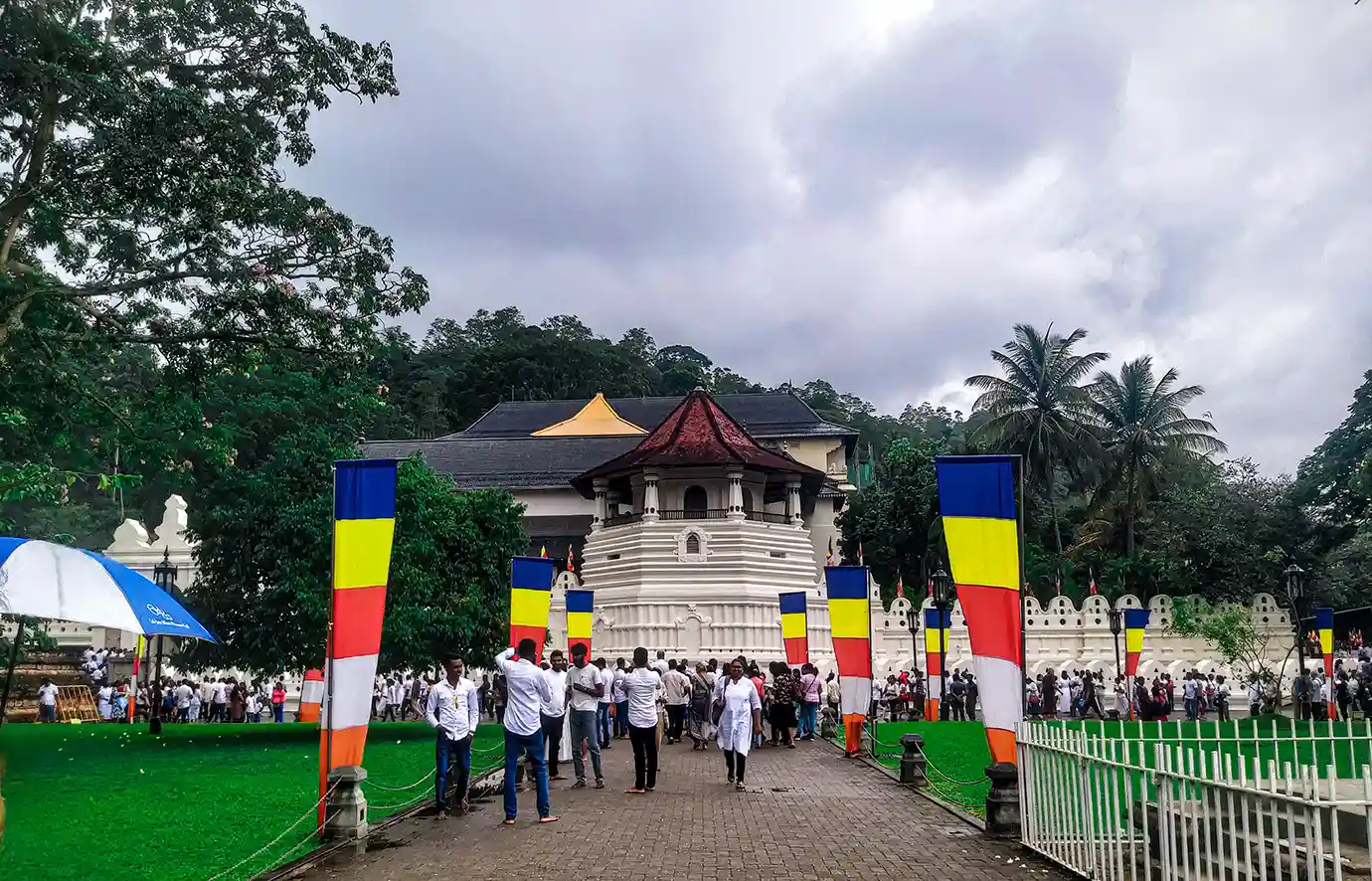
5. Kandy and the Temple of the Tooth
Kandy sits in the lower hill country and is home to the Temple of the Tooth, which houses a sacred relic of the Buddha. The evening puja ceremony draws crowds of pilgrims, and the atmosphere inside the temple is genuine and moving. Drums roll through the corridors, incense fills the air, and the golden casket holding the relic sits behind carved wooden screens.
Beyond the temple, the Royal Botanical Gardens at Peradeniya are worth spending two hours at, and a Kandyan dance performance offers a short, vivid introduction to Sri Lanka’s performing arts. Kandy also connects naturally to the scenic train route into the tea country and Ella.
One to two nights. Kandy works best as a cultural stop between the northern ruins and the hill country, rather than as a base for day trips to Sigiriya or Anuradhapura.
During the Esala Perahera festival in July or August, the city fills with drumming, dancers, and decorated elephants for ten nights. Hotels book out months in advance. Outside the festival, Kandy has a quieter rhythm built around the lake, the temple, and the surrounding hills.
6. Mihintale
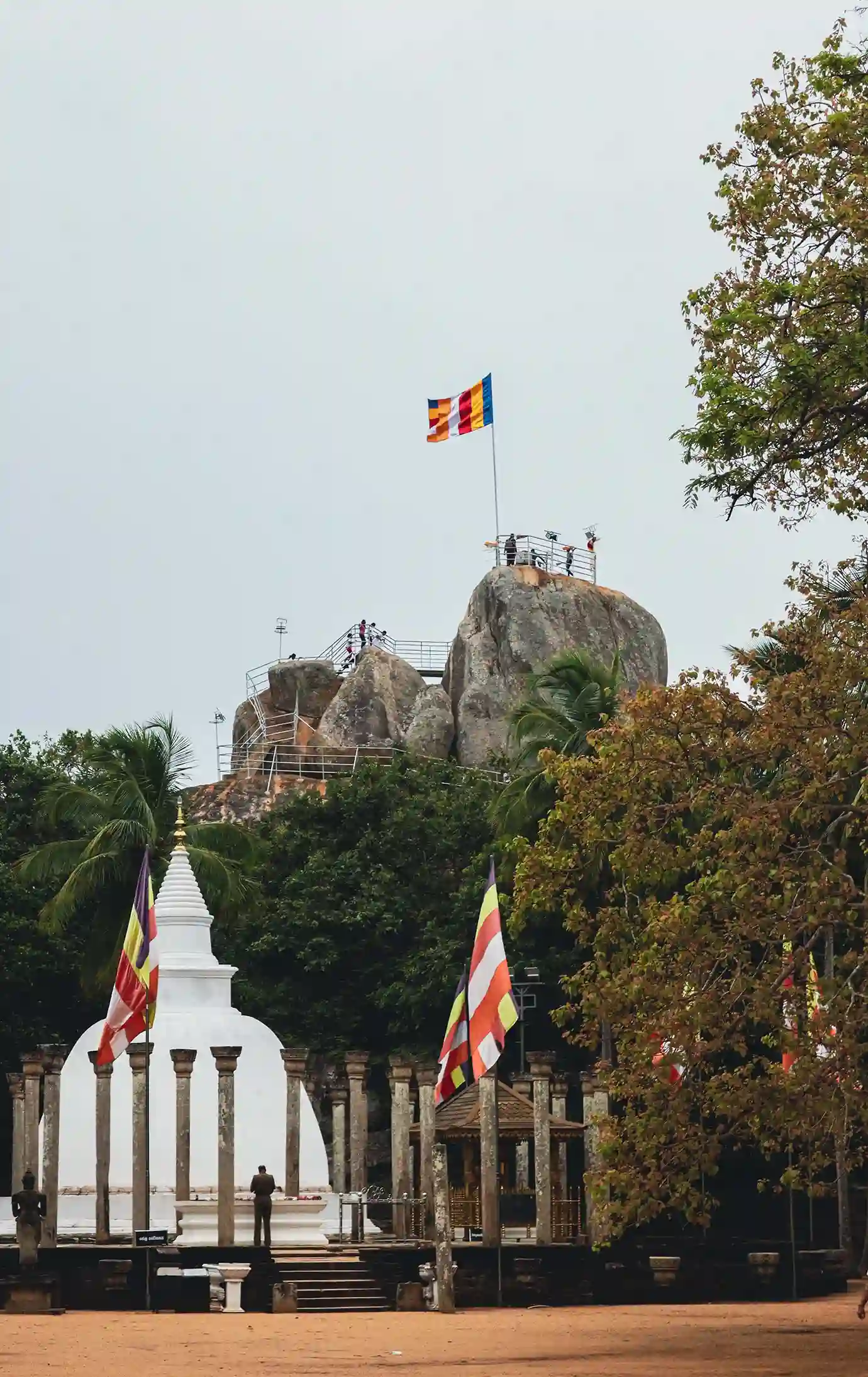
Mihintale is the place where Buddhism first arrived in Sri Lanka, according to tradition. A long staircase climbs through the forest to a hilltop with stupas, a meditation platform, and a wide view over the north-central plains.
The site is quieter and less crowded than Sigiriya or Dambulla, and the spiritual significance runs deep for Buddhist visitors. Late afternoon gives the best light and cooler temperatures.
About 1.5 to 2.5 hours. Combine with Anuradhapura on the same day. The climb is steady rather than steep, and the steps are wide and well-maintained. The view from the top takes in the flat north-central plains dotted with ancient tanks and green forest.
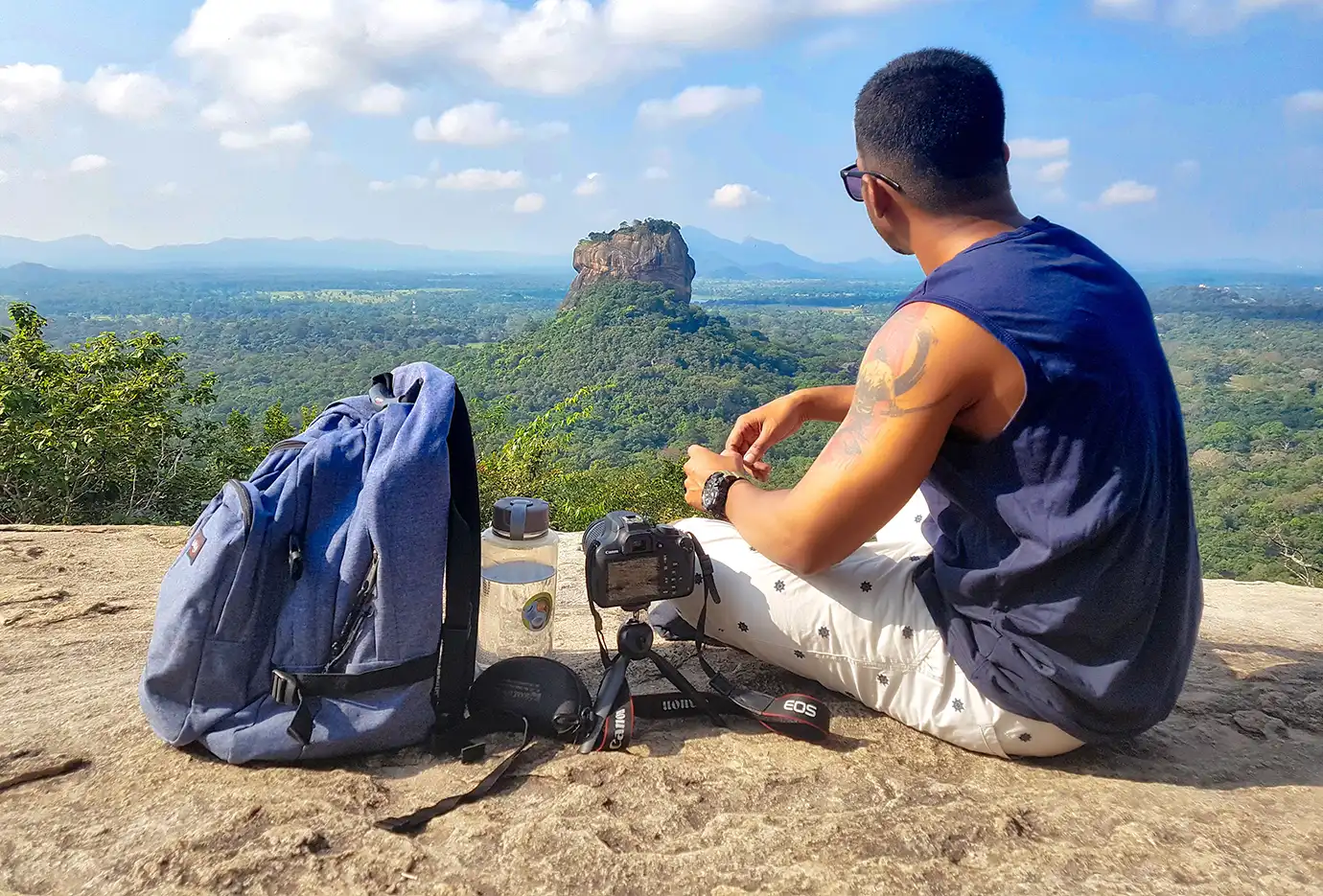
7. Pidurangala Rock
Pidurangala sits near Sigiriya and offers a sunrise or sunset viewpoint overlooking the rock fortress. The climb is shorter and steeper than Sigiriya itself, with a scramble over boulders near the top.
Good shoes, a headlamp for pre-dawn starts, and caution near the edges are essential. Pidurangala is not a replacement for Sigiriya’s history, but the view of the fortress from across the valley is one of the best photographs in Sri Lanka.
About 1.5 to 2 hours. Best for active travelers and photographers. A reclining Buddha figure carved into the base of the rock marks the start of the trail, and the final scramble over boulders rewards you with the classic Sigiriya-from-across-the-valley shot.
8. Ritigala Forest Monastery
Ritigala is a quieter stop for travelers with extra time. The forest monastery sits in thick woodland, with stone pathways, meditation platforms, and a sense of a place left to the trees. The ruins are atmospheric and uncrowded. Moss-covered stone pathways lead through dense canopy, and the only sounds are birdsong and the drip of forest moisture.
Two to three hours. Best for nature lovers, history buffs, and repeat visitors who want something off the main route. Wear walking shoes and carry water.
9. Aukana Buddha Statue
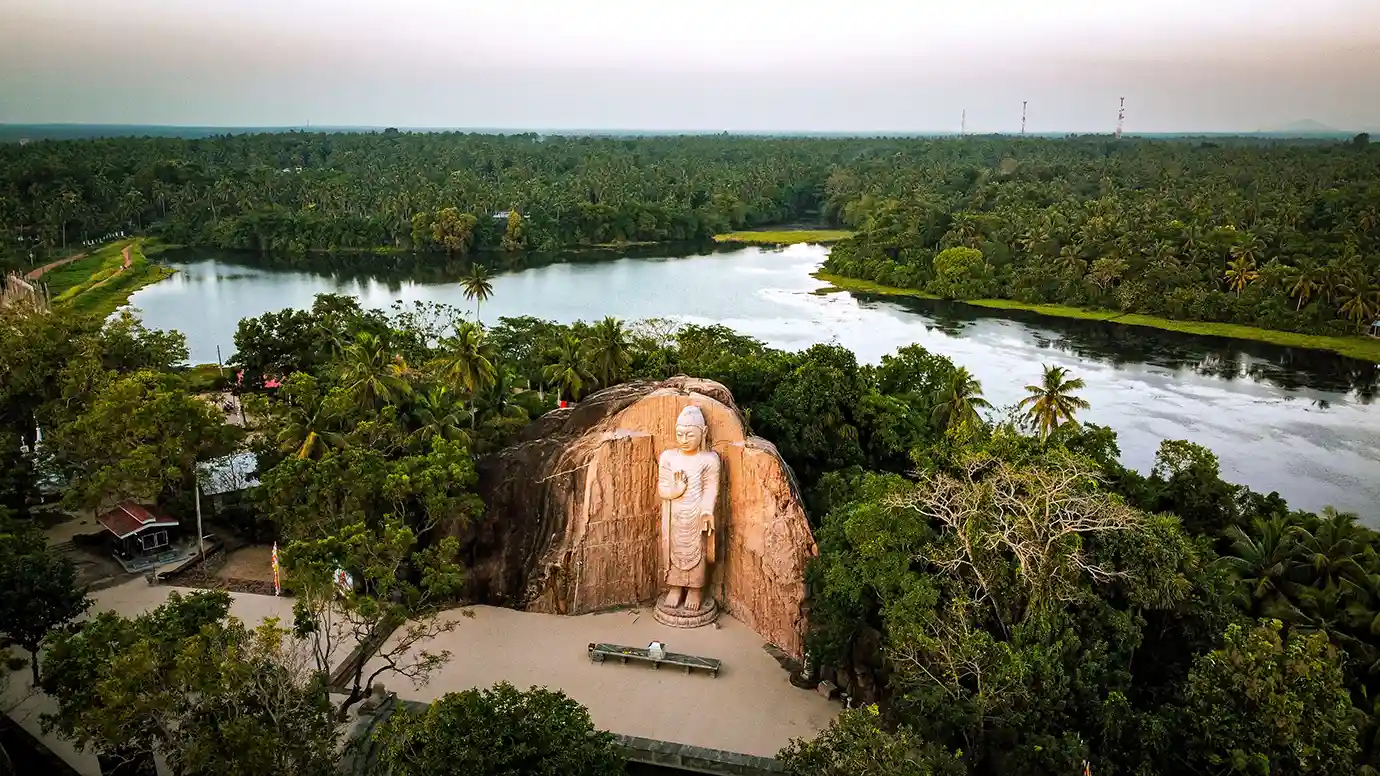
The Aukana Buddha is a 12-meter standing figure carved from a single rock face, one of the finest free-standing stone sculptures in Sri Lanka. The site is small and quiet, and the statue rewards a short stop between Anuradhapura and Sigiriya.
About 45 minutes to an hour. Dress modestly.
10. Minneriya, Kaudulla, or Hurulu Elephant Safari
The elephant gathering near Minneriya or Kaudulla is a nature add-on rather than a heritage site, but it pairs beautifully with the Cultural Triangle. From July to October, herds mass around the receding tanks in the dry zone, and a late-afternoon safari drive catches them at golden hour.
The best park changes with the water and the season. A good operator follows the elephants on the day rather than locking one park into the schedule.
Half a day. Best for families, wildlife lovers, and photographers based in Sigiriya or Habarana. Outside the July-to-October gathering season, smaller herds still graze along the tank edges, and the parks are home to sambar deer, peacocks, painted storks, and the occasional mugger crocodile.
Sigiriya, Dambulla, Anuradhapura, or Polonnaruwa: Which Should You Choose?
With only two days, Sigiriya and Dambulla are the clear priorities. Three days adds Polonnaruwa or Anuradhapura (Polonnaruwa is easier to cover in less time). Four days fit both ancient cities. Five days open the route to Mihintale, Ritigala, and a slower pace.
Luxury travelers should resist the urge to cover every site and instead choose fewer stops with longer stays. A two-night base near Sigiriya with a pool villa, a private guide for the morning, and a long afternoon rest delivers a far better experience than a four-site sprint through the heat.
How Many Days Do You Need in Sri Lanka’s Cultural Triangle?
| Duration | Best Route |
|---|---|
| 1 day | Sigiriya and Dambulla only (rushed) |
| 2 days | Sigiriya, Dambulla, and a safari or Pidurangala |
| 3 days | Sigiriya, Dambulla, and Polonnaruwa or Anuradhapura |
| 4 days | Sigiriya, Dambulla, Polonnaruwa, and Anuradhapura |
| 5 days | Full triangle with Mihintale, Ritigala, or safari depth |
Two days is the realistic minimum for a meaningful visit. Three to four days is the sweet spot for most first-time travelers. Five days suitculture lovers, luxury travelers, and photographers who want to go deeper without rushing.
Suggested Cultural Triangle Itineraries
2-Day Itinerary
Day 1: Arrive from Colombo or Negombo (about 3.5 hours). Visit Dambulla Cave Temple in the afternoon. Stay near Sigiriya or Habarana.
Day 2: Climb Sigiriya early morning. Afternoon elephant safari at Minneriya or Kaudulla (seasonal), or visit Pidurangala for sunset. Continue to Kandy or your next destination.
Fits a 7-day Sri Lanka highlights loop.
3-Day Itinerary
Day 1: Arrive at Sigiriya base. Visit Dambulla Cave Temple.
Day 2: Sigiriya Rock Fortress early morning. Village walk or Pidurangala afternoon.
Day 3: Polonnaruwa ancient city by bicycle or vehicle. Continue to Kandy.
Fits a 10-day first-time Sri Lanka route. From Kandy, continue south to Ella by scenic train, then to Yala and the south coast for a full 10-day loop.
4-Day Itinerary
Day 1: Arrive at Sigiriya base. Dambulla afternoon.
Day 2: Sigiriya early morning. Minneriya or Kaudulla elephant safari in the afternoon.
Day 3: Polonnaruwa ancient city.
Day 4: Anuradhapura and Mihintale. Continue south or return to Sigiriya.
Covers the full triangle with good pacing. An optional fifth day adds Ritigala, a village experience, or a second safari before continuing to Kandy.
5-Day Itinerary
Day 1: Arrive at Anuradhapura from Colombo (about 4 hours).
Day 2: Anuradhapura ancient city and Mihintale in the afternoon.
Day 3: Ritigala forest monastery. Transfer to Sigiriya or Habarana.
Day 4: Sigiriya early morning. Dambulla afternoon. Village experience.
Day 5: Polonnaruwa and elephant safari. Continue to Kandy or the coast.
Suits culture lovers, photographers, and slow-travel guests. The north-to-south flow also builds nicely into a Kandy and hill-country extension.
Read More: How Many Days Do You Need in Sri Lanka? 7, 10, and 14-Day Sri Lanka Itinerary
W.here to Stay in the Cultural Triangle
- Sigiriya: Best for luxury travelers and couples. Close, immediate access to the fortress and Dambulla caves, with premium boutique villa hotels among the strongest in the region.
- Habarana: Best for families and overall route balance. A central location with fast access to the elephant safari parks and a practical base for Polonnaruwa and Sigiriya.
- Dambulla: Best for budget to mid-range travelers—a practical, well-connected road hub with good access to every major site.
- Anuradhapura: Best for deep history lovers. Staying here grants early-morning access to the massive ancient ruins and sacred pilgrimage grounds before the heat builds.
- Polonnaruwa: Best for travelers with a compact focus on ruins. An overnight stay lets you explore the stone carvings by bicycle before the midday heat peaks.
- Kandy: Best as a southern gateway. The Temple of the Tooth and the hill-country connection make it a natural stop between the northern ruins and Ella.
Best Luxury Stays
Sigiriya and Habarana hold the strongest luxury options in the region. Water Garden Sigiriya spreads around lily ponds beneath the great rock, with open-air dining and pool villas facing the fortress. Uga Ulagalla occupies a former chieftain’s estate. Jetwing Vil Uyana sits on an artificial wetland. Heritance Kandalama near Dambulla hugs a cliff face with views over the reservoir. Kandy adds boutique hill hotels for the southern leg.
| Base | Luxury Hotel Style | Best For |
|---|---|---|
| Sigiriya | Villa resorts and nature lodges | Couples and luxury travelers |
| Habarana | Larger resort-style stays | Families and route balance |
| Anuradhapura | Heritage and private villas | Deep cultural routes |
| Kandy | Boutique hill hotels | Cultural and hill-country extension |
| Dambulla | Scenic cliff-edge resorts | Central access |
Best Time to Visit the Cultural Triangle
The Cultural Triangle sits in the dry zone, so rain is less of a problem than heat. The sites are open-air archaeological grounds, and the midday sun at Sigiriya, Polonnaruwa, and Anuradhapura can be punishing.
- December to March: Strong for classic Sri Lanka routes. Warm but manageable with early starts.
- April: Hot in the lowlands. Plan Sigiriya and Polonnaruwa before 9 a.m.
- May to September: Works well, especially combined with east coast extensions—slightly more humidity.
- October to November: More flexible planning is needed across the island, but the Cultural Triangle stays drier than the coasts.
Best Time of Day for Each Site
- Sigiriya: Before 7:30 a.m. The heat and crowds build fast after 9.
- Dambulla: Morning or late afternoon. The caves are cool, but the climb is hot.
- Polonnaruwa: Early morning. Cycling the ruins in midday heat is miserable.
- Anuradhapura: Early morning, or split into two sessions with a long midday break.
- Mihintale: Late afternoon for the best light and cooler stairs.
Read More: Best Time to Visit Sri Lanka: The Ultimate Monsoon and Weather Guide
How to Get Around the Cultural Triangle
A private chauffeur-guide is the best way to cover the region. The driver handles the heat, transfers, and timing between sites, while a separate local cultural guide brings the history to life at the major ruins. Without context, many sites feel like disconnected stones and temples. With a guide, they become stories of kings, monks, and engineers.
A cultural guide costs a fraction of what travelers spend on hotels, and the return in understanding is enormous. The best guides know the individual carvings, irrigation channels, and temple histories that no sign can explain. Book a guide for Sigiriya, Anuradhapura, and Polonnaruwa at a minimum.
Cycling works well at Polonnaruwa and parts of Anuradhapura, where the ruins sit in a flat, parklike area. Start early and carry water. Rental bicycles are available near both sites, and a cycling tour of Polonnaruwa takes three to four hours at a comfortable pace. The shade between ruins makes the ride pleasant in the first hours of the day, but the same route at noon becomes a furnace.
Tuk-tuks handle short local transfers around town. Agree on the price before you get in. Public buses run between towns but are not practical for travelers with limited time, multiple heritage sites, or large luggage. The heat and the transfers between scattered ruins make a private vehicle the clear winner in terms of comfort and efficiency. Budget travelers can use buses between Dambulla, Sigiriya, and Habarana, but should expect slower travel and less flexibility.
Drive times between the main bases:
- Sigiriya to Dambulla: About 30 minutes
- Sigiriya to Polonnaruwa: About 1 to 1.5 hours
- Sigiriya to Anuradhapura: About 2 to 2.5 hours
- Sigiriya to Kandy: About 2.5 to 3 hours
- Anuradhapura to Mihintale: About 30 minutes
Practical Tips for Visiting the Cultural Triangle
Temple Dress Code
Cover shoulders and knees at every temple and sacred site. Remove shoes and hats before entering. Carry socks for hot stone surfaces, because bare feet on midday stone can burn. Speak quietly, follow signs, and avoid posing disrespectfully near sacred statues. A lightweight sarong or scarf in your daypack works as a quick cover-up when you arrive at a temple from a casual morning.
Heat and Hydration
Start every site early in the morning. Carry at least one liter of water per person per site. Wear a hat and sunscreen. Rest during the midday heat rather than pushing through open-air ruins in the full sun. A good hotel with a pool or shaded garden turns the midday break into a pleasure rather than a waste. Many luxury and mid-range properties near Sigiriya and Habarana are designed around this rhythm, with morning excursions, long pool lunches, and afternoon activities.
Footwear
Wear comfortable walking shoes for the ruins and easy-to-remove footwear for the temples. You will take your shoes on and off many times during a visit to the Cultural Triangle.
Entrance Tickets
Foreign visitors pay higher entrance fees at most heritage sites. Fees can change, so check current rates before you travel. Sigiriya is the most expensive single-site ticket in the country, and a family of four can spend a meaningful sum on entrance fees alone across three or four days. Budget for these early, because the costs add up across a Cultural Triangle route.
Photography Etiquette
Ask before photographing people, especially at pilgrimage sites. Do not turn your back to a Buddha statue for a photo. Check drone rules before flying — many heritage sites restrict or ban drones.
Wildlife and Monkeys
Monkeys live around many sites, especially Sigiriya and Dambulla. Keep food secured and bags closed. Do not feed them.
Cultural Triangle With Safari, Hill Country, or Beach
The Cultural Triangle connects naturally to the rest of the Sri Lanka route. Each add-on below keeps one plan and one team from start to finish, and most fit within a 10- to 14-day Sri Lanka loop. A good specialist designs the route so the Cultural Triangle flows into the next region without doubling back.
- Cultural Triangle plus Minneriya safari: Add a half-day elephant safari from Sigiriya or Habarana—best from July to October.
- Cultural Triangle plus Kandy: Continue south to the Temple of the Tooth and the hill country. Fits every itinerary.
- Cultural Triangle plus Ella: Sigiriya to Kandy to Ella by road or scenic train. Culture meets tea country.
- Cultural Triangle plus Galle and the south coast: The classic 10-day loop runs from the Cultural Triangle through Kandy and Ella to Yala and Galle.
- Cultural Triangle plus Maldives: Do Sri Lanka’s culture first, then fly to a Maldives resort for beach rest. Strong for honeymooners and luxury couples.
| Add-On | Best For | Extra Time |
|---|---|---|
| Minneriya / Kaudulla safari | Elephants and families | Half day |
| Kandy | Living culture and temples | 1 to 2 nights |
| Ella | Hill country and scenic train | 2 nights |
| Galle | Heritage and coast | 1 to 2 nights |
| Ayurveda retreat | Wellness and slow travel | 3 to 7 nights |
| Maldives | Honeymoon and beach rest | 4 to 5 nights |
Common Mistakes to Avoid
- Trying to see every site in one day. The ruins are large, and the heat is real. Two or three sites a day is plenty.
- Climbing Sigiriya after 9 a.m. The midday sun and the crowds make the experience harder and less enjoyable. Go early.
- Skipping a guide at the ancient cities. Polonnaruwa and Anuradhapura are large, spread out, and poorly signed. A local cultural guide handles the navigation, buys the right tickets, and explains what each ruin meant to the kings and monks who built it.
- Forgetting temple clothing. Many sites are active places of worship. Cover shoulders and knees.
- Using Kandy as a base for northern day trips. Kandy is a strong cultural stop, but Sigiriya, Habarana, or Dambulla are better bases for Sigiriya, Polonnaruwa, and Anuradhapura.
- Ignoring the heat. Use early starts, long midday breaks, and plenty of water. Do not pack three open-air ruins into one afternoon. A two-site day with a long midday rest beats a three-site day that leaves you exhausted by sunset.
Related Article: Sri Lanka Travel Guide: ETA Visa, Costs, Transport, and Safety
Frequently Asked Questions About the Cultural Triangle of Sri Lanka
What is the Cultural Triangle of Sri Lanka?
The Cultural Triangle is the island’s main heritage region, covering Anuradhapura, Polonnaruwa, Kandy, Sigiriya, and Dambulla. It holds ancient capitals, rock fortresses, cave temples, and sacred Buddhist sites.
Which places are in the Cultural Triangle?
The main places are Sigiriya, Dambulla, Anuradhapura, Polonnaruwa, and Kandy. Many itineraries also include Mihintale, Pidurangala, Ritigala, and a Minneriya or Kaudulla elephant safari.
How many days do you need in the Cultural Triangle?
Two days cover Sigiriya and Dambulla. Three to four days adds Polonnaruwa and Anuradhapura. Five days allow for a deeper, slower route with Mihintale, Ritigala, or extra safari time.
Is the Cultural Triangle worth visiting?
Yes. The region is one of the best in Sri Lanka for history, temples, archaeology, photography, and cultural understanding. First-time visitors should include at least Sigiriya and Dambulla.
Where should I stay in the Cultural Triangle?
Sigiriya, Habarana, and Dambulla are the most practical bases. Anuradhapura works for deeper ancient city visits. Kandy works as a southern gateway to the hill country.
Which is better, Anuradhapura or Polonnaruwa?
Anuradhapura is larger, older, and more spiritual. Polonnaruwa is more compact and easier to cover in a shorter visit. Both are worth seeing, but Polonnaruwa fits tighter schedules.
Can I visit Sigiriya and Dambulla in one day?
Yes. Climb Sigiriya early in the morning and visit Dambulla in the afternoon. The two sit about 30 minutes apart and make one of the best short combinations in the Cultural Triangle.
Do I need a guide?
A guide is strongly recommended for Sigiriya, Anuradhapura, and Polonnaruwa. The sites become far more meaningful when the history, art, and engineering are explained clearly.
What should I wear when visiting temples?
Cover shoulders and knees. Remove shoes and hats where required. Carry socks for hot stone surfaces.
What is the best time to visit the Cultural Triangle?
The region operates year-round, but early-morning starts are essential because the sites are open and hot. December to March is strong for classic Sri Lanka routes.
Can I combine the Cultural Triangle with a safari?
Yes. Minneriya, Kaudulla, and Hurulu are popular elephant safari options near Sigiriya and Habarana. The best park depends on the season and current elephant movement.
Can the Cultural Triangle fit into a 7-day Sri Lanka trip?
Yes. A 7-day route can include Sigiriya, Dambulla, Kandy, Ella, and Galle. Keep the Cultural Triangle section short and focused on two days.
Is the Cultural Triangle suitable for families?
Yes, with pacing adjustments. Families should use early starts, private transfers, shorter site visits, and hotels with pools or open space. An elephant safari keeps younger travelers engaged.
Plan Your Cultural Triangle Tour With Local Experts
Sri Lanka’s Cultural Triangle is best experienced with careful pacing, expert guiding, and the right hotels. Please tell us your travel dates, interests, hotel style, and budget, and how many days you want to spend in the Cultural Triangle. A Sri Lanka specialist will design a private cultural route through Sigiriya, Dambulla, Anuradhapura, Polonnaruwa, Kandy, and the best seasonal add-ons.
Email: sales@peregrinetreks.com
WhatsApp: +977 985 105 2413
About the Author
Written by the Peregrine Treks and Tours travel team, with direct experience planning and running private Cultural Triangle, hill country, safari, and coast routes for international travelers. Route notes, drive times, and site guidance reflect years of on-the-ground planning across the region.