In Thimphu, several festivals and cultural events integrate the inhabitants. The ancient city, which is rich in culture, prioritizes cultural festivals. Thimphu Durbchen is one of the city’s most significant festivals. It will be a privilege to experience this multicultural environment while touring Thimphu, which Tashico Dzong holds. When Kuenga Gyeltshen was meditating, he encountered glimpses of the Buddhist goddess Palden Lhamo enacting extraordinary performances beneath his sight in 1710. It is when he first revealed it.
The natives also perform spectacular rituals during this event while wearing traditional garb that represents luck, fortune, and divine graces. More than this, exquisite festivals like Gangtey Tshechu, Gasa Tshechu, Gomphu Kora Tshechu, Haa Summer Festival, Jakar Tshechu, Jambay Lhakhang Drup, Kurjey Tshechu, Wangdue Phodrang Tshechu, Lhuentse Tshechu, and Matsutake Mushroom Festival are some of the key festivals that hold the beautiful cultural history of Thimphu.
During the Tshechu festival, Bhutan
Strolling around Thimphu
Wandering through the streets of Thimphu is the most enjoyable way to experience the fantastic neighborhood. Individuals offer various goods for sale, including fruit and veggies, stunning handicrafts, traditional Bhutanese costumes, attire, ornaments, and more. Ceremonial garb and delicious food await visitors on the streets of Thimphu.
The prevalent languages of Thimphu are Dzongkha and Sharchop, and you may hear people speaking them whenever you go past the businesses and local restaurants. Every edifice still exhibits aspects of the native Dzong architectural style, and Buddhism permeates almost all aspects of ordinary routine. Similarly, seeing the monks meditating around the monasteries and the quiet atmosphere enhances the attraction.
View of Thimphu, the Capital of Bhutan, Supreme Court, and surrounding
Thimphu’s Impeccable Nightlife
The capital of Bhutan offers incredible nightlife and a tranquil environment in the evening, much like other major cities. After exploring and strolling the entire day, one may take in the excellent nightlife in the valley by visiting pubs, bars, and restaurants. Live music, karaoke, dancing, and other activities will be obtainable. In the serene atmosphere of Thimphu, one may consume food and beverages deliciously and interact with the inhabitants.
Similarly, the illumination of the entire building creates an excellent perspective to enjoy from a bit above the city. Furthermore, experiencing a musical event and relaxing in Thimphu’s capital city will be the finest sensation ever.
[contact-form-7 id=”bec8616″ title=”Inquiry From – Blog”]
In the Paro region, you may engage in several popular outdoor activities. The best way to experience the local food is to explore Paro and stop by its excellent stores and restaurants. Beyond this, one can meditate around monasteries and dzongs by getting along with the local Monks. Most of the time at the Paro, there will be rites and activities of a cultural nature, and everyone is welcome to participate. Similarly, touring local communities can lead you to exquisite handmade goods, old houses, and monuments.
Nevertheless, one may enjoy a hot stone bath at one of the old cottages. It’s said to be a treatment for injuries involving the neurons, the joints, and many other conditions. The fire and stone beneath the wooden tub assist in raising the temperature over the boiling point of the water. In Paro, taking a hot stone bath is a well-known activity. Archery is another activity that you may practice in an open field. In Bhutan, archery is wildly popular, and virtually everyone participates. In addition to this, you may cycle through the valleys and discover the terrain. Fishing, horse riding, rock climbing, off-roading, outdoor camping, and motorbike adventures are different things you can undertake in Paro.
Trekking Activities
Many trekking destinations are accessible from Paro. Try out roughly ten different trekking expeditions from here. The Jomolhari Trek and the Druk Path Trek are the most famous.
Jomolhari Trek
The hike will be adventurous, deepening the highlands above Paro. After traversing through excellent sites like Jangothang, Sodu, and Barshong, the trek will end at the Dolamkencho or Dodena. The starting point will be the lovely hamlet of Gunitsawa, Paro. The walk will last around ten days, and the scenery will likely be charming along the way. The moderate to easy difficulty level of this trek will allow you to appreciate the magnificent creatures and landscape, as well as the culture and traditions of the inhabitants. With this trekking adventure, you’ll witness an exhilarating panorama of Jomolhari Mountain at 7,300 meters.
Jomolhari Trek
Druk Path Trek
This incredible journey of discovery will commence at the National Museum of Paro. The astonishing vista awaits trekkers after the trail propagates through the fantastic natural meadow of blossoms and temperate forests. Druk Path Trek is also easy to moderately strenuous, making it accessible to anyone. Furthermore, this contemplative trek will reach a maximum altitude of about 4300 meters. Along the route that links Thimphu and Paro, you will pass by innumerable lakes, monasteries, secret enclaves, mind-blowing valleys, and Bhutan’s highest peak, Gangkar Puensum (7,570m). The trial concludes in Thimphu after passing through the fascinating hamlets of Jele Dzong, Labana, Simkota, and Phajoding.
Druk Path Trek
Stunning accommodation and meals
The accommodations in and around Paro are excellent. Everything from mid-range to three-star hotels is available here, with exceptional services. Finding a hotel in Paro will be easy if your budget is reasonable. Furthermore, there are inexpensive lodging options where guests can use regional amenities. The bell sounds from the monasteries create a tranquil atmosphere around the accommodations, and the hotel views are stunning. The maximum possible enjoyment of intercontinental dishes, Tibetan snacks, and regional specialties is also possible. Traditional foods like rice, noodles, boiled eggs, fried corn, and extraordinary beverages contribute to local cuisine.
The most spectacular things to do in Bhutan are the great outdoor activities. There are certain outdoor activities that individuals have done while visiting Bhutan. The incredible adventure in the foothills and Himalayas will be epic. In addition, hiking and trekking will be the leading outdoor activity due to the abundance of highlands, scenery, and potential for alpine adventures. Trekking activities with a distinctive flair include the Druk Trek Path, Dochu La Pass, Jomalhari Mountain Trek, and Snowman Trek. The phenomenal trekking destinations are accessible from the Paro city center. Other activities include white water rafting, crossing a suspension bridge, kayaking, rock climbing, meditation, archery, mountain biking, paragliding, and fishing.
Cultural Activity and Historical Relevance
The Buddhist culture has swept the whole country, bringing the vast majority of people together via harmonious relationships and diverse cultural customs. It is often common to see colorful flags lining the hills’ monasteries. The popular Dzong is a blend of fortification and arts and crafts. One of Bhutan’s most significant historical influences is the Dzongs. At six, Buddhist monks enroll in monasteries and begin engaging in countless rites and remarkable meditation practices. The cultural events and festivals are yet another noteworthy sight to see. It is common to see people wearing red masks and orange dresses and dancing throughout towns, executing extraordinary rites and festivities.
A Prayer Wheel in the middle of Paru – a small Bhutanese town. Devotees walk by and spin it to earn merit.
More than that, the tsechu is Bhutan’s primary celebration. The Dzong fills up with visitors from around the nation during this celebration. Typically, they congregate and dance while wearing the traditional garments “Gho” and “Kira.” The myriad festivals and rituals were also held at Tassicho Dzong. They carry out specific acts during the rituals and also create vibrant artwork.
Similarly, at the end of the rite, the monks offer everyone delicious sweet rice combined with dry almonds. They also grasp the potato in their palm, which resembles a fortune. More than this, a multitude of rites clearly illustrate the exceptional contribution of Guru Rinpoche to Buddhism. Overall, this incredible culture and customs serve as an intriguing attraction.
The Highly Durable Tourism Policies
Bhutan had its first tourists in 1975. Since then, tourism has had a considerable positive impact on the nation. The Bhutanese nation began to receive visitors from all across the world. Bhutan’s standards for tourism vary, and the guidelines are periodically updated. According to the new regulations, tourists must pay the government $200 as a Sustainable Development Fee. It finally came to light due to the shutdown failure and the changes made to the regulations, which allow visitors to select from a variety of excellent, high-quality services.
Furthermore, this approach will assist those involved in local tourism. Tourism is Bhutan’s second economic source. Thus, the new accreditation of Bhutan as the world’s second most significant destination in 2023 is encouraging for Bhutanese and visitors from across the world.
With a 3-hour hike from Phakding, you can reach the small village of Monjo. The downhill track transitions to an uphill section, so carrying heavy backpacks is wise. A leisurely walk while glimpsing the lives of the people at the foot of the Himalayas makes your hard labor worthwhile.
The uphill ascent onward offers the pure white appearance of the Himalayan folds, which is beautiful against the clear blue sky. After a while, there is a waterfall, and if you climb the slope opposite it, you will arrive in a village called Benkar.
If you go further, a long suspension bridge will appear, and Khumbila peak, the sacred mountain of the Sherpas, will come into view. After climbing a steep hill and turning a corner, you will reach Monjo Village, a world of different times out of an old tale.
Monjo to Namche Bazaar
A five-hour walk from Monjo will take you to the capital of the Sherpas, Namche Bazaar. But before, you will be in front of the entrance of Sagarmatha National Park. The park is located at the highest altitude in the world, in the Khumbu mountain range, home to the world’s famous high peaks. From here onwards, the area is registered as a UNESCO World Natural Heritage Site, and an entry permit is required.
Trail to Namche
Then, a 10-minute descent, crossing a suspension bridge, brings you to the village of Jorsale at an altitude of 2,800 m. On a busy path, pass through several small villages and a pine forest.
The first breathtaking view for you will be the western ridge of Kusum Kanguru. Further, your route passes along the Dudh Koshi River, crosses a suspension bridge, and then stubbornly conquers another steep climb to the town of Namche Bazaar.
Accommodation in Monjo Village
You can get many lodges in Monjo, like Namaste Lodge and Restaurant, Mount View Lodge, Mount Kailash Lodge, etc. Similarly, Yeti Mountain Home and Everest Summit Lodge are the luxury accommodations in this place. The price of accommodation starts from US$10 to US$250. You can choose anyone to stay there. Usually, you do not need to book hotels or lodges in the low season, and we highly recommend booking the luxury lodge before your trip. You will get a discount if you book these lodges through Peregrine Treks and Tours.
From Lukla, you will begin your real adventure from Lukla to Everest Base Camp. Today’s destination is the small village of Phakding, which lies 7.5 km from Lukla. Approximately 4 hours of the hike will take you to this village, where you will stay for a night at Buddha Lodge, one of the best lodges in Phakding.
The road will pass through the villages and farms of the local Sherpa people. On a suspension bridge, you will cross the Thadokhola River, from which you will observe a magnificent view of Kusum Kangura (6367 m). If lucky, you can see musk deer running along the steep rocks.
Day 2: Phakding to Namche
After the first night in the mountains, prepare to begin your ascent. Today, prepare to see the ancient yet modern Namche Bazaar, the trade center of Sherpas. Today, you will cover a distance of 10 km within 6 to 7 hours of hiking.
The trail to Namche Bazaar goes along a beautiful canyon, which you will now and then cross over numerous suspension bridges. Having passed half the path planned for today, you will see Thamserku’s first snowy peak.
You will cross another suspension bridge, and the path will go up sharply. And now you can see the Namche Bazaar ahead – the only city on the track, while the remaining villages usually show only a few lodges. There is a post office, a market, a hospital, and even an Irish pub.
There are multiple lodges available for you to choose from regarding your accommodation. Panorama Lodge, Nirvana Home, and Himalayan Lodge, to name a few.
After staying in a hotel, you can walk around the city with time and energy.
Day 3: Namche Acclimatization
The city itself lies at the height of 3440 m above sea level and around ice peaks. It is a semicircle; from anywhere in the city, you can see another part of it. There are also many good cafes in Namche Bazaar, so don’t just sit and drink but walk around the neighborhood to get the best acclimatization.
By climbing to a height of 4000 meters, you will reach a memorial dedicated to the family of Edmund Hillary, offering stunning views of the surrounding peaks, including Everest and Ama Dablam.
Namche Bazaar – Way from Lukla to Everest Base Camp
Day 4: Namche to Tengboche
Another morning in Namche Bazaar, you will leave this wonderful place today. You will go out onto the path that stretches along a half-kilometer cliff and see the handsome Ama-Dablam ahead in half an hour.
After 4 4-hour hike, you will reach Tengboche (3930 m) and stay at Hotel Himalayan. Since you have plenty of time, you can visit the famous Tengboche monastery. You can learn the unique history of this place, visit the service, and those who wish can get an audience with the Lama. In this temple, the blessing ceremony occurs for climbers who go to the top of the world.
Day 5: Tengboche to Dingboche
Your goal today will be to reach Dingboche, which is located at 4410 m, right at the foot of the majestic Ama Dablam. Today, you will cover a distance of 10.5 km with approximately 6 hours of walking.
If you feel dizziness, nausea, fatigue, drowsiness, or a mild headache, don’t get alarmed; all these are entirely normal. As you continue your journey, you will learn to listen to your body and cope with the miner as efficiently as possible.
Along the way, you will admire the six-thousand-meter Thamserku and Ama Dablam, which has already changed its shape and turned into a giant pyramid.
Overnight stay at Moonlight Lodge in Dingboche.
Day 6: Dingboche Rest
You will spend the entire day today resting and preparing your body to ascent and exceed the mark of 5000 m the following days.
Dingboche is the optimal resting spot for this purpose. Locals have built fences of stones to protect their farms from wild animals.
Here begins the valley of the alpine tundra, with no trees.
Dingboche – Way from Lukla to Everest Base Camp
Day 7: Dingboche to Lobuche
After much-needed rest, you will embark on your journey to Lobuche, 9 km from Dingboche. Within 5 hours of waking, you will reach the Lobuche village, where you can admire the colossal scale of the glacier and stay overnight at Himalayan Eco Resort.
The route runs through the Phalung Karpo valley at an altitude of 4340 meters. Several seasonal huts are among the harsh and majestic rocks and breathtaking panoramas of the Ama Dablam Mountains.
Day 8: Lobuche to EBC to Gorakshep
This day is marked as the day you reach your destination, Everest Base Camp. The early morning trek from Lobuche will take you to Gorakshep within 1 to 2 hours, the distance being merely 4.5 km.
The views around change and the sharp peak of Nuptse (7861 m) opens up to your eyes. The trail here is no longer as well-trodden as in previous days, and you must carefully look under your feet.
After lunch, you will go to Everest’s base camp. This is the holy of holies of mountaineering.
The distance from Gorakshep to Everest Base camp is 3.5 km, which you can cross within 2 hours of hiking. From Everest Base Camp, you can also admire the scale of the Khumbu Icefall and absorb its unique aura and energy. Enjoy the grandeur of Everest that will remain with you as long as you live.
You will return to Gorakshep, have dinner, and rest at Buddha Lodge.
Day 9: Hike to Kala Patthar and back to Pheriche
This day is marked by the climbing of the summit of the Kala Patthar (black stone of Nepal) that smiles at the height of 5644 m. Contrary to your expectations, this day will be easy, as climbing Kala Patthar is not so difficult.
Covering a distance of 1.3 km within 2 hours, you will reach the top of Kala Patthar, where you can have a stunning view of the entire Himalayan range. Here is the highest point of the route.
Everest appears before you from the top of Kala Patthar in all its grandeur. And now the setting sun gradually repaints the highest mountain in the world in a blood-red color.
It would help if you hurried down before it gets too dark, as you have to return to Pheriche. You have to hike 10 km for 5 to 6 hours to reach Pheriche, where you will stay overnight at Everest Inn.
Day 10: Pheriche to Namche
After long days of ascent, it is time to return to the valley of civilization, Namche Bazaar. Today, you have to cover a distance of 18 km, so get ready to walk for 6 to 7 hours. However, you do not have to rush; enjoy your walk slowly.
The landscape will change slowly to lavish greenery; perhaps, on the way, you will meet groups that have yet to conquer Everest Base Camp.
Day 11: Namche to Lukla
Today, you need to reach Lukla, crossing a distance of 18 km. The crossing takes 6-8 hours, but with stops, it can take the whole day. You will take a leisurely trek to Lukla, where you can view the lush green scenery surrounding the Sherpa villages.
Unlike other villages approaching Everest Base Camp, Phakding is characterized by a warm and temperate climate. The temperature fluctuates between 0°C and 20°C. The best seasons to visit Phakding are spring and autumn, with the average daytime temperature between 10°C and 15°C.
From Lukla to Phakding
It takes approximately four hours to walk from Lukla to Phakding, passing through Chaplung and Ghat. The path from Lukla to Phakding will run through pine, cedar forests, and Sherpa villages along the banks of the picturesque river Dudh Koshi.
During these few hours of hiking, the constant sound of Dudh Koshi river water flow will accompany you along with the fluttering chime of small and large prayer flags in the wind. You will be hailed with the majestic views of the Kongde Peak and Lukla landscape.
Being the first route towards Everest Base Camp, trekkers have about a dozen inns to choose from, all with a restaurant. The menus are simple: potatoes, rice or noodles, vegetables, and an optional egg. Nepal’s national dish is at the top of the menu for the hungry: Dal Bhat – rice, lentils, vegetable curry, and some pickled vegetables, including a second helping.
Hanging bridge near Lukla
From Phakding to Namche Bazaar
It takes about 6 hours to walk from Phakding to Namche Bazaar (about 3440m above sea level). On the first day of actual walking, the crossing of many suspension bridges will punctuate. You will follow the Dudh Koshi for quite a while, crossing it regularly.
You will pass through the Rimijung village with its 350-year-old Pema Choling Monastery. The site claims the protection of fauna (snow leopard, pheasant, musk deer) and flora (rhododendrons).
You will get the first sight of the majestic summit of Thamserku, 6618 m high. On the way, you will go through the entry procedures at the National Park Office and enter the Sagarmatha National Park area.
The climb will continue, so take your time and take it slow while paying attention to your physical strength and altitude acclimatization. When you come to Namche Bazaar, there are many small souvenir shops and stylish coffee shops.
If the weather permits, you can relish a spectacular view of Mount Everest. As a place of trade from Tibet, the bazaar is lined with rare souvenirs such as power stones.
The city has several dozen hotels and guest houses, modest, tidy, and entirely on budget. Many of them are located in the center, next to Durbar Square. It is worth staying here at least for the night – to watch the great awakening of the city in the morning. Here are some of the best accommodation offers near Bhaktapur Durbar Square:
Shiva Guest House
This hotel is within proximity of Bhaktapur Durbar Square and Pottery Square. The guest house has 18 rooms with a cozy bed, balcony, and windows for the perfect city view. They offer free wireless internet service throughout the hotel property. The tour and ticket assistance will assist you in booking your trip.
The hotel also provides kindergarten and spa services for fun and relaxation. The hotel also takes care of its guests by relieving them of all the hustle and bustle of luggage storage and check-out and offers transport to the airport at an additional cost.
Pagoda Guest House and Restaurant
Located in the center of Bhaktapur, the medieval city of Nepal, this guest house is in a small square close to the city’s main monument, Taumadhi Square. Pagoda Guest House has 19 spacious, comfortable rooms with multi-channel TV, 24-hour hot and cold water, and air conditioning.
It has free 24-hour room service, free Wi-Fi throughout the hotel, and a small restaurant where breakfasts and main Nepali, Newari, Continental, Chinese, and Indian meals are served. From the restaurant terrace, you can see the Nyatapola temple and the busy life in the square, and it is less than a minute’s walk from Bhaktapur Durbar Square.
If, when making the reservation, you ask to be picked up at the airport, they do so by charging a small amount.
Sunny Guest House
Sunny Guest House is in the fascinating city of Bhaktapur in front of Nyatpole Temple. Its rooms, all different, spacious, and with great beds, are decorated with great charm. Some have incredible views of Taumadhi Square, which should be considered when making your reservation.
The Sunny guest house has a restaurant with typical delicious dishes and a terrace with truly priceless views. The team staff is always ready to smooth over any problem. Concierge, tour desk, airport transfer, safe deposit, currency exchange, laundry, and ATM are some services they provide.
Kumari Guest House
Small hostel located just a few meters from Durbar Square, the heart of Bhaktapur. The room is spacious and clean, with comfortable beds and a small and standard bathroom. A great, hospitable team of staff manages the hotel. They serve all kinds of breakfast from Nepali, Newari to French.
This hotel’s terrace offers Bhaktapur’s overall view with magnificent views of the mountains of the Himalayas. It is undoubtedly recommended since its location is perfect, it is staff friendly, the room is good, and the price is affordable.
Hotel Bhaktapur Inn
Hotel Bhaktapur Inn is located within walking distance of Bhaktapur Durbar Square. The hotel offers a restaurant, Bar/Lounge, Room Service, complimentary toiletries, meeting facilities, and Laundry/dry cleaning services.
You can connect with your loved ones via free Wi-Fi throughout the hotel [property. An additional fee will provide you with an airport shuttle service.
The exquisite Gangtey Monastery welcomes you as you embark from the jaw-dropping landscapes of the Bhutanese highlands and descend through the clouds after completing the Gangtey Natural Trial. Once you get to the monastery, submerge yourself fully in its peace and rhythms. Trekking through the Phobjika Valley and its small rivers will be breathtaking.
Moreover, observe the monks and other Buddhists at this monastery as they practice meditation, ceremonial practices, and devotion. For the Bhutanese, Gangtey Monastery is the leading site of divinity, and it also draws a considerable number of visitors. More than that, this great monastery embodies Guru Rinpoche‘s heritage as well as the legacy of other gods.
Composition and Sequence of Gangtey Monastery
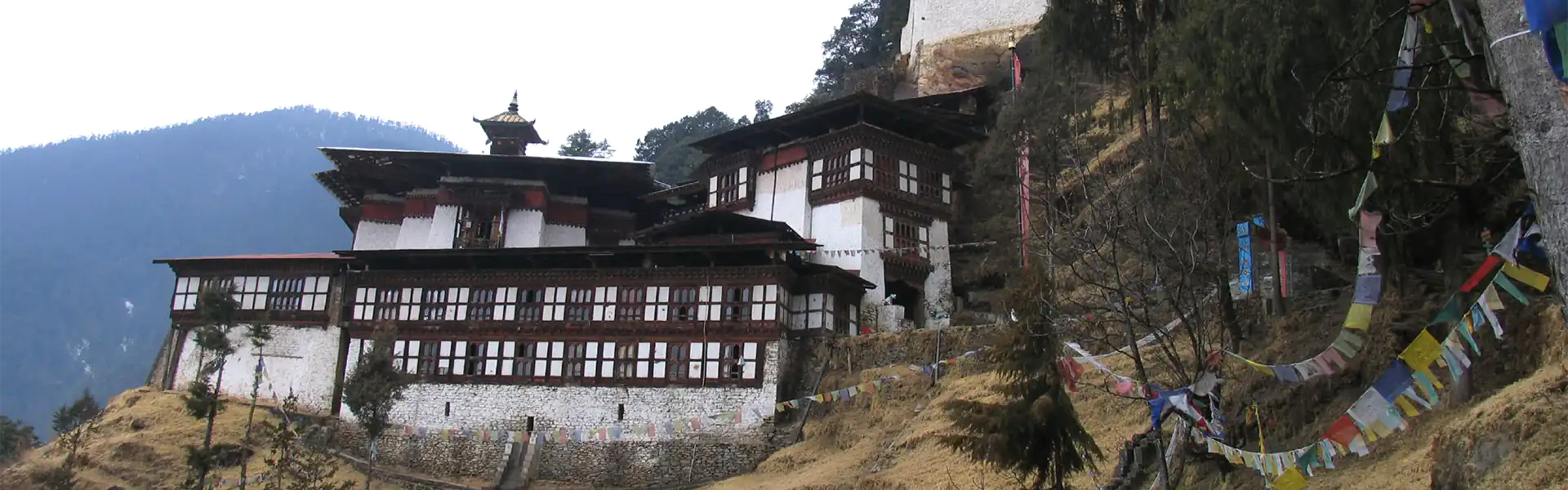
Gangtey Monastery has three different structures with five sanctuaries. All five sanctuaries encircle this monastery’s impressive Central Dome. After passing through the doorway, the temple complex of the monastery, known as the Tashokan, emerges. Tshokhang’s architects are reminiscent of the outstanding Tibetan-style woodwork and structures. The upper half of the monastery is made of lumber planks and colored with naturally occurring materials.
Gangtey Monastery
The hall is noted for having immense wooden pillars in Bhutan. After completely renovating it, the groups of monks and tribal elders gave this monastery a fresh identity. More than this, as you ascend to the second floor, you will see the stunning carvings and decorations accompanying the splendid hardwood windows. There will also be lovely sculptures of Guru Rinpoche and other idols. Gangtey Monastery also shelters the school and is crucial in offering a school system for the monks. The monastery is set in a convenient place in the Phobjika region.
Moreover, it is currently a large structure comprising the integral monastery, monks’ dwelling accommodations, contemplation spaces, and ritual performing halls. There are also exquisite mystical emblems and canvases at Gangtey Monastery’s shrines. Similarly, before approaching this majestic monastery, you must trek through an enchanting snow-covered hamlet.
History of Gangtey Monastery
In 1619, Pema Lingpa’s grandson “Rigdinz Pema Tinley” gave the Gangtey Monastery an idyllic life. Pema’s grandson started this to teach children and young people about spirituality, harmony, peace, and legion. The windows and doors were designed with the incredible craftsmanship of native woods to commemorate the illustrious history of the Buddhist religion.
It was initially erected as a Lhakhang, a small rural monastery, but was later upgraded by Rigdinz’s son Tenzing Legpaye Dhoendup, resembling a fortress. Likewise, The initial portrayal pertinent to this monastery represents Guru Rinpoche, who had a significant role in formulating the “Vajrayana” form of Buddhism and transforming Bhutan into Buddhism. Each winter, it is believed that Black-Neck Cranes, on their migratory route, follow a circular pattern in the monastery before making their way to the ravine.
Inside Gangtey Monastery
Moreover, before they take a summertime journey back to Tibet, each year on November 11th, Gangtey Monastery hosts the Black Neck Cranes Festival each year. In the same way, the 2008 earthquake significantly impacted a large chunk of this monastery, which was eventually renovated and rebuilt. Even today, the stunning monastery’s original details are still in place.
The official start for the route to Mount Everest Base Camp is in Lukla. The first option is to take a bus to Jiri from Kathmandu—the bus ticket costs from NPR 1800 to NPR 2000. The ten-hour bus ride is exhausting and, at the same time, a unique experience that belongs to a trekking adventure in Nepal.
Then, a six to seven-day hike to Lukla awaits you. You can get used to hiking and acclimatize a little during this time. You can start a shorter hike to Lukla from Salleri, which only takes three days. Or you can rent a jeep from Kathmandu to Salleri from NPR 23000.
If you have less time, the most convenient, fastest option is a flight to Lukla at $190 per person.
Annapurna Base Camp
Getting to the Annapurna Base Camp from Kathmandu is pretty straightforward: if you are short of time, you can travel in a chartered helicopter from Kathmandu at $3500 or Pokhara at $1800.
If you have enough time, you can hike from Pokhara, which will take 5-7 days. The three options available are the routes from Ghorepani Poon Hill, Ghandruk, or Dhampus.
5 – Following the Legendary Footsteps at:
Everest Base Camp
Trek to Everest Base Camp is filled with the spirit of mountaineering everywhere. Almost every lodge has portraits of the discoverers; quite often, there are monuments to the fallen climbers. Tenzing Norgay, Hillary, George Mallory, Reinhold Messner etc. Everything here is saturated with names that have entered the history of mountaineering.
The trail to Everest Base Camp is abundant with commercial and sports expedition tents. Everest Base Camp is an opportunity to touch on the history and legends of mountaineering.
Annapurna Base Camp
Hiking at Annapurna Base Camp is filled with the fun of exploration. The path filled with the diversification of landscapes among the fragrant nature is more thrilling than any trekking trail in Nepal.
You can also combine your tracks with other routes if you wish. From Chomrong, the track will be uniform, which you can cross by following your thoughts and imagination.
Annapurna Base Camp – Annapurna vs. Everest Base Camp Trek
6 – Difficulty
Everest Base Camp
The first difficulty with the EBC trek is the altitude. This trek (if you will reach Kala Patthar) climbs above all others. The trek requires at least two stages of acclimatization.
The last stage (from 5000 to 5644 m altitude) requires spending the night in the previous refuge at 5000 m.
The second difficulty is the cold. It is much colder than in the rest of the treks in Nepal. You must be well-prepared and wear appropriate mountain clothing. The shelters usually have extra blankets; you can ask for a double blanket.
In terms of length, you can do the regular Everest Base Camp Trek in 11 days, reaching the camp on day 8.
Annapurna Base Camp
The path can be tiring if you are not physically fit, as it has endless steps up one way and the same number of steps back down.
The climate of Annapurna Base Camp is more humid, so almost every day, it dawns clear.
Unlike the Everest Base Camp trek, this does not require acclimatization stages.
Walking to Annapurna Base Camp, you reach your destination on day 5 or 6; the total duration is about eight days.
7 – Permits
Everest Base Camp
The Everest Base Camp trek requires two permits:
Khumbu Rural Municipality Permit: You can obtain this permit from Monjo or Lukla, for which the fee is NPR 2000 per person for the first four weeks of the visit. After a time limit of four weeks, the cost exceeds NPR 2500 per person.
The second permit is the Sagarmatha National Park Entry Permit: You can acquire the license from the Nepal Tourism Board in Kathmandu or at the Sagarmatha National Park entrance gate.
If you are a resident of the SAARC nations, you have to pay NPR 1500 per person. In the case of foreign nationals, you pay NPR 3000 per person.
Annapurna Base Camp
Since the Annapurna region lies within the Annapurna Conservation Area, for this trek, you need two permits:
ACAP (Annapurna Conservation Area Permit), for which you must pay NPR 3000 per person if you are a foreign citizen. If you are from the SAARC nations, the fee is NPR 1000.
The second permit is TIMS (Tourism Information Management System), for which the fare is NPR 2000 per person without a guide and NPR 1000 per person with a guide.
Both permits are available from the Nepal Tourism Board office in Kathmandu or the ACAP office located in Pokhara.
8 – Budget
Everest Base Camp
Trek to Everest Base Camp is costly, especially if you fly from Kathmandu to Lukla. You can also walk to Lukla from Jiri (reachable by bus from Kathmandu), which takes about six days. The complete tour may cost between $2100 and $4500, excluding personal expenses, food, and beverages. The cost of these items may get expensive as you move up.
You can expect to spend around 30-40% more on Everest for food, shower, and electricity. However, they remain affordable, and you can easily fit them into a budget of 30 dollars daily.
Annapurna Base Camp
In comparison, the Annapurna Base Camp trek is much cheaper. The total package for the trek ranges between $600 to $900, again excluding personal expenses. Usually, $25 per day would suffice for your expenses during the Annapurna Base Camp trek.
Some common Factors between Annapurna Base Camp and Everest Base Camp
Annapurna vs. Everest Base Camp Trek Accommodation
All trekkers live in lodges on Everest Base Camp and Annapurna Base Camp tracks. These are relatively modest hotels: double rooms with two beds and sometimes a table. The shower and toilet are usually in the corridor but sometimes in the room (at low altitudes).
The shower exists and is available to those who wish every day. On Annapurna, lodge owners heat water in cisterns by the sun or gas, for which they may charge $1-$2.
The situation is tricky at Everest Base Camp; hot showers are only possible if the water is heated with a gas bottle. This service is available in every lodge and costs $4-5. At high altitudes, the showers are cold and sometimes windy.
At the beginning of the trek to Everest Base Camp (Phakding, Monjo, Namche Bazaar), hotels have in-room showers and 24-hour hot water. They are expensive, ranging from $10-$20. Also, on Everest, some villages at the beginning of the track have hotels at a symbolic price of $100-200 per night.
Local Culture in Everest and Annapurna
On both tracks, all the villages on the main trail are a collection of hotels, restaurants, and shops. Everything in them is geared towards tourists; almost all residents are involved in the tourism business. But it is worth stepping aside even a little; you can see a different picture.
Many immigrants from Tibet the mountains brought their colorful culture. Both tracks have authentic Buddhist monasteries – this is a must-see.
Wi-Fi Access in Annapurna and Everest
You may wonder if there is Wi-Fi on both of these treks. The excellent news is Wi-Fi is almost everywhere on both treks. The signal strength may vary, so streaming Netflix or other things that need high speed is impossible, but WhatsApp chats and uploading photos are possible. You may have to pay $1 to $4 for the service.
Besides, NCELL 3G and NTC services are available even in the remotest villages of Nepal. If you buy a SIM card for these services, you can have access to the internet, plus you can also make calls.
Summary of Annapurna vs. Everest Base Camp Trek
Choosing between Everest Base Camp and Annapurna Base Camp is difficult. Each of the two treks is worth the energy it costs. Annapurna is a better choice for first-time hikers as it is easier, less intense, and less time spent at high altitudes. Everest, however, remains a symbol of magnitude and legend. Both treks require good health, a strong mind, and a positive attitude toward trekking – if you have all that, plunge into the journey of both treks for an invaluable experience.