


Based on 746 reviews

Luxury Gokyo Ri Trek
Exclusive Comfort to Gokyo Lakes & Summit Views

Duration
13 Days

Meals
- 12 Breakfast
- 9 Lunch
- 9 Dinner

Accommodation
- Kathmandu Guest House
- Yeti Mountain Home
- Best available lodges

Activities
- Trekking
- Scenic Flight
- Sightseeing
SAVE
US$ 710Price Starts From
US$ 3550
Overview of Luxury Gokyo Ri Trek
Set out on a 13-day private luxury trek to the hidden gem of the Everest region, Gokyo Valley, offering breathtaking scenery of Everest Base Camp without the crowds. This exclusive Luxury Gokyo Ri Trek itinerary is designed with the traveler’s safety and comfort, along with the thrill of adventure, in mind.
Take off from Kathmandu, Nepal’s capital, for Lukla, the gateway to the Himalayas, and explore the timeless Sherpa villages, turquoise glacial lakes, and expansive Himalayan panoramas.
After each day’s journey, unwind in carefully selected accommodations that range from stylish hotels in Kathmandu to well-appointed teahouses with private bathrooms at lower altitudes, and warm, character-filled lodges tucked away in the higher mountain regions.
Over the course of thirteen days, the journey leads deep into Sagarmatha National Park, a UNESCO World Heritage landscape, rising gradually from forested valleys of pine and juniper to the high alpine beauty of Gokyo.
A highlight of the Luxury Gokyo Valley Trek is the early-morning ascent of Gokyo Ri at 5,357 meters, where a sweeping sunrise reveals four of the world’s six highest mountains, Everest, Lhotse, Makalu, and Cho Oyu, laid out in a full panoramic view above a chain of brilliant lakes.
The route follows the Ngozumpa Glacier and six turquoise sacred lakes, combining Sherpa hospitality with expert leadership, reliable logistics, and comfortable lodges for a refined trekking experience.
Key Highlights of Luxury Gokyo Ri Trek
- Scenic Mountain Flights: Fly from Kathmandu to Lukla with panoramic Himalayan views.
- Namche Bazaar: Stay for 2 nights in the Sherpa capital at 3,440 m to acclimatize and explore markets, cafes, and local culture.
- Comfortable Lodging: Enjoy the best available lodges, from luxury mountain hotels with heated beds to warm village teahouses.
- Gokyo Lakes & Glacier: Walk past turquoise glacial lakes and alongside the massive Ngozumpa Glacier.
- Gokyo Ri Summit (5,357 m): Reach a high viewpoint with sunrise views of Everest, Lhotse, Makalu, and Cho Oyu.
- Quieter Trails: Trek beyond the main Everest crowds through peaceful villages and yak pastures.
- Sherpa Culture: Visit monasteries, mani walls, and Sherpa villages while learning local traditions and Buddhist culture.
- Expert Crew: Guides manage safety and pace, while porters carry heavy luggage to ensure a comfortable trek.
- Private & Flexible: Adjust the itinerary, add rest days or viewpoints, and personalize the trek to your interests.
Quick Fact about Luxury Gokyo Ri Trek
Trek Region: Solukhumbu (Everest Region), Sagarmatha National Park.
Duration: 13 days in total (Kathmandu arrival to departure), with 10 days trekking on the trail, plus 2 days for flights, 1 day of leisure in Kathmandu.
Max Altitude: 5,357m (17,575 ft) at Gokyo Ri summit.
Trek Style: Fully private, high-end guided experience, with premium lodge stays in Lukla, Phakding, and Namche, such as Yeti Mountain Home or comparable properties, offering en-suite rooms and hot showers.
In Dole, Machhermo, and Gokyo, we will offer the finest teahouses available, with private rooms and shared amenities. The program includes all meals, served from clean, carefully prepared à la carte menus featuring both Nepali specialties and familiar Western dishes.
Difficulty: This trek falls into the moderate to moderately challenging category (Grade 3), with an average daily hike of 5 to 7 hours. You do not need technical climbing skills, but elevations above 5,000 meters and several steep sections, including the climb to Gokyo Ri, make the route more demanding. Both beginner and experienced trekkers can enjoy this trek with proper preparation and pacing.
Trek Staff: Certified, English-speaking guide with strong high-altitude and first-aid experience, with a personal porter shared between two guests carrying up to 20 kg, supported by a dedicated team that handles all logistics throughout the journey.
Permits: Sagarmatha National Park entry permit and Khumbu Rural Municipality Permit, arranged for you.
Safety: Thoroughly scheduled acclimatization days with two built-in rest days, oximeter and first aid kit prepared first-hand by guides, backup oxygen cylinder and medical kit for the group, round-the-clock support, and helicopter rescue on call with insurance for any emergencies.
Flexibility: Modifiable itinerary, with extra days for acclimatization or helicopter return if needed.
Detail Itinerary of Luxury Gokyo Ri Trek
Day 1: Arrival in Kathmandu
Your Luxury Gokyo Ri Trek begins at Tribhuvan International Airport, where Peregrine staff greet you and provide a private transfer to your hotel. Once you settle into your room at a property like Kathmandu Guest House, you have the morning to rest from your flight.
In the afternoon, you meet your trek leader for a full briefing over drinks to review your gear and confirm you have all the essentials for the trail. Depending on your energy levels, you can walk through the nearby streets of Thamel or choose to relax at the hotel spa.
Altitude: 1,400m (Drink plenty of water and rest to start your body’s adjustment to the elevation).
Day 2: Kathmandu to Lukla
Altitude: Kathmandu (1,400m) to Lukla (2,840m) to Phakding (2,610m)
Distance: ~8 km | Walking: 3–4 hours (easy)
Flight: 30 minutes
You head to the airport before dawn for the flight to Lukla. This short trip on a small plane takes you over rolling green hills before the high Himalayan peaks appear. You land at Tenzing-Hillary Airport, or simply Lukla Airport, in about thirty minutes. Once on the ground, you meet the porter team and eat a solid breakfast at a local lodge while the crew prepares the gear.

The Luxury Gokyo Ri Trek begins in the late morning with a relaxed descent through pine and rhododendron forests. You follow the Dudh Koshi River and cross your first suspension bridge, where colorful prayer flags catch the wind. The trail passes through several farming hamlets, including Cheplung and Thado Koshigaon. Along the way, you can see the snowy peak of Kusum Kanguru, which provides a small taste of the much larger mountains ahead.
After roughly three hours of walking, you reach the riverside village of Phakding. You check into the Yeti Mountain Home, a comfortable retreat at 2,610 meters. This lodge provides private rooms with attached bathrooms, hot showers, and electric blankets. During the late afternoon, you can lounge on the terrace or walk up to a nearby monastery. The lower elevation here helps your body begin the adjustment process gradually.
Highlights: Mountain flight, river crossings, and authentic Sherpa villages.
Difficulty: Easy (The route actually descends about 230 m today).
Accommodation: Yeti Mountain Home (Luxury lodge)
Meal: Breakfast, Lunch, and Dinner
Day 3: Trek from Phakding to Namche Bazaar
Altitude: Phakding (2,610m) to Namche Bazaar (3,440m)
Distance: ~10–11 km | Walking: 6–7 hours (moderate to challenging)
You begin the day with a solid breakfast before heading north into the Dudh Koshi Valley. The trail winds through thick pine forests and crosses several sturdy suspension bridges as the river curves below. You pass through small farming settlements like Toktok and Benkar, where yak caravans often share the trail. After about three hours, you arrive at the entrance of Sagarmatha National Park in Monjo. While our guides manage the permit paperwork at the park gates, you can rest and look at the intricate mani stones nearby.
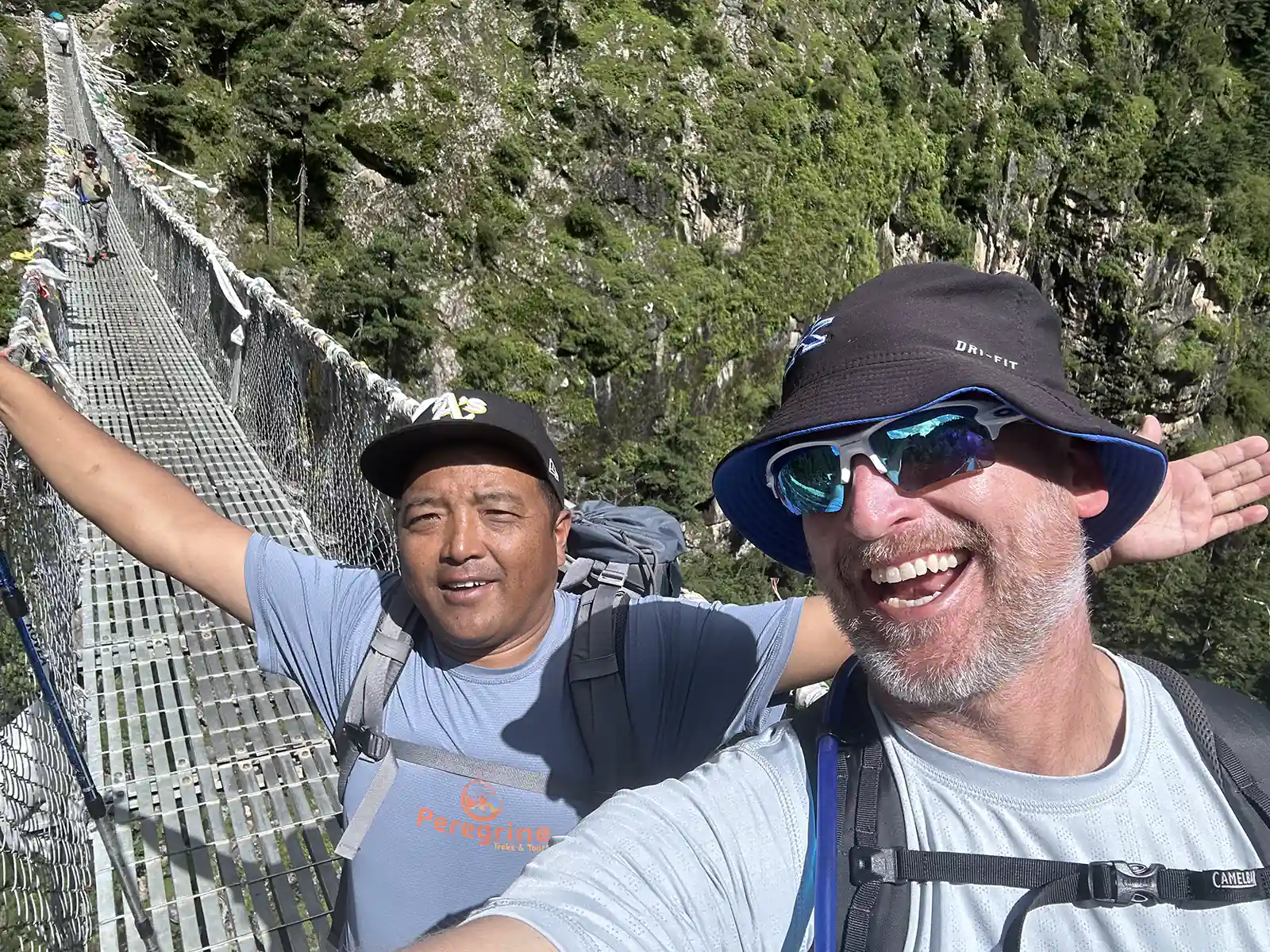
Once inside the national park, the trail leads toward the high Hillary Bridge. This suspension bridge hangs far above the river confluence and marks the start of the final climb. From here, you begin the long ascent up Namche Hill, gaining roughly 600 meters of elevation through the forest. Your guide maintains a deliberate, steady pace to help you manage the incline and stay hydrated. At a viewpoint halfway up the hill, you may get a first look at Mount Everest standing behind the Lhotse ridge if the sky is clear.

By mid-afternoon, you reach the edge of Namche Bazaar. This town sits in a natural mountain bowl and serves as the primary hub for the entire Khumbu region. You check into your room at Yeti Mountain Home, which provides high-end comfort at an elevation of 3,440 meters. After a hot shower, you can explore the local markets or visit a bakery for a coffee and a slice of apple pie.
Highlights: Entering the National Park, crossing the high Hillary Bridge, and the first sighting of Everest.
Difficulty: Moderate to Challenging (The day involves a significant climb of 830 meters).
Accommodation: Yeti Mountain Home (Luxury lodge)
Meal: Breakfast, Lunch, and Dinner
Day 4: Acclimatization Day in Namche: Hike to Everest View Hotel and Khumjung
Altitude: Namche Bazaar (3,440m); hike up to ~3,880m and return Walking: 3–4 hours (easy to moderate)
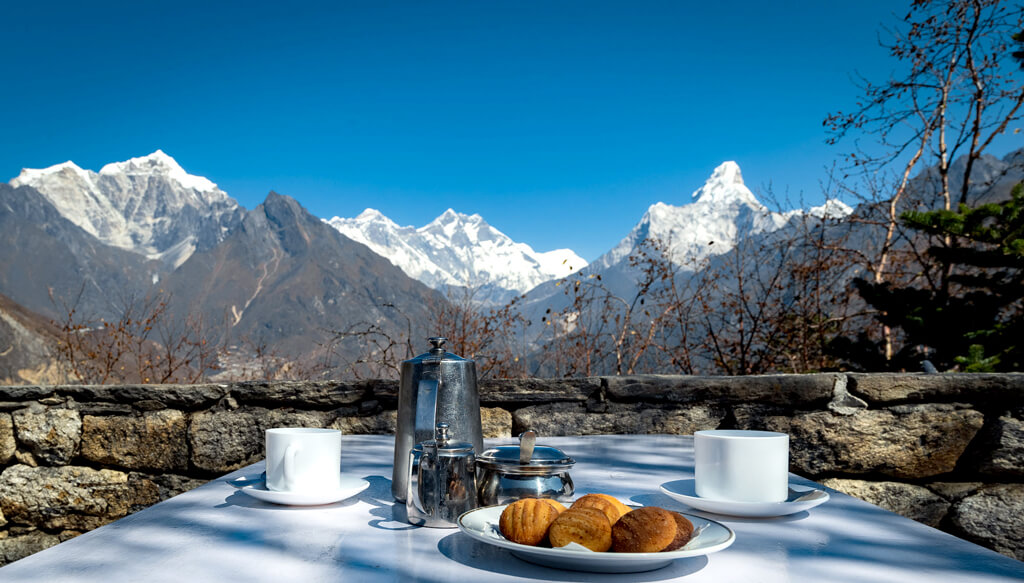
You stay an extra night in Namche to follow the “climb high, sleep low” rule, which helps your body adjust to the thin air. After breakfast, you follow a winding trail through juniper and rhododendron forests up to Hotel Everest View at 3,880 meters. From the terrace of this high-altitude hotel, you can see expansive views of Everest and Ama Dablam while you have a cup of tea or hot chocolate.
The trek takes you through Khumjung village, a traditional settlement at 3,780 meters. You can walk through the Hillary School or visit the local monastery to see a display that locals claim is a Yeti scalp. The loop back to Namche passes by the Syangboche airstrip or the neighboring village of Khunde, covering about three hours on foot.
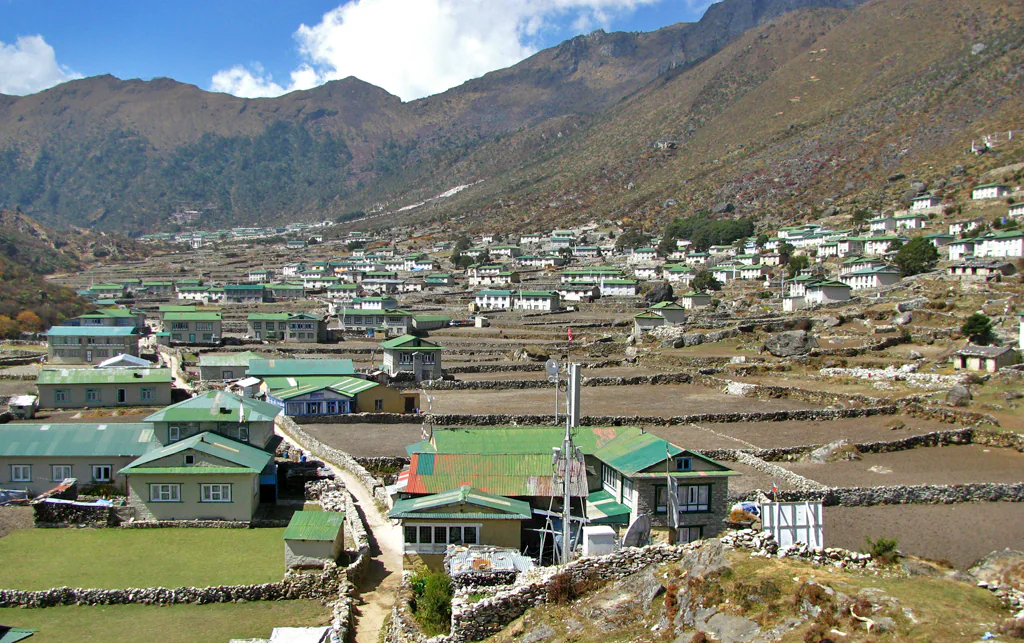
You return to Namche in time for lunch and have a free afternoon. You can browse the local shops, visit the Sherpa Culture Museum, or look through the Everest Photo Gallery to learn about early expeditions. If you still have energy in the evening, you can walk up a nearby hill for the sunset or relax at a local bakery.
Highlights: Views from Hotel Everest View, cultural visits in Khumjung, and a relaxed pace to support altitude acclimatization.
Difficulty: Easy (This day focuses on active rest with a 440m gain and a return to the lodge).
Accommodation: Yeti Mountain Home, Namche (second night)
Meal: Breakfast, Lunch, and Dinner
Day 5: Trek from Namche Bazaar to Dole
Altitude: Namche (3,440m) to Dole (4,038m)
Distance: ~11 km | Walking: 6–7 hours (moderate)
You leave the activity of Namche behind and climb to the top of the town to reach a trail that sits above the traditional route to Everest Base Camp. The path follows the curve of the hillside, offering views back toward Ama Dablam, Everest, and Thamserku. You might spot Himalayan monal pheasants in the bushes or wild goats on the rocky slopes as you walk. After two hours, you reach a junction at Kyangjuma where you leave the main crowds and head toward the Gokyo Valley.
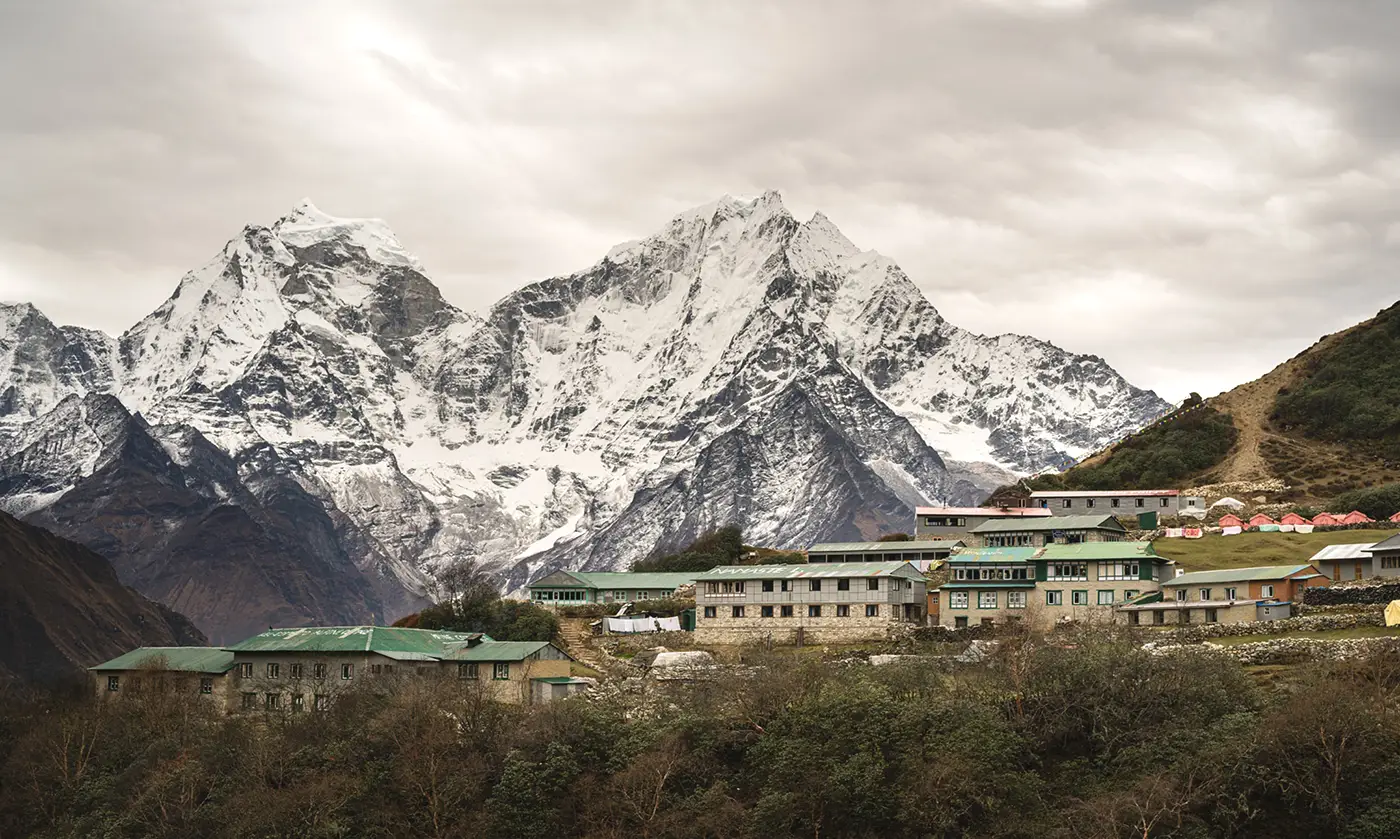
The route descends through rhododendron forests to the river at Phortse Tenga before starting a steady climb through pine and birch woods. As you move above 3,800 meters, the trees thin out and give way to scrub juniper and mountain tundra. You pass seasonal yak grazing pastures and stop for lunch at a viewpoint village like Tongba. On the horizon, the massive peak of Cho Oyu begins to appear. You reach the hillside settlement of Dole by late afternoon, where the atmosphere is much calmer than in Namche.
You check into the best available lodge in Dole, offering a simple, traditional mountain experience. The rooms are clean with twin beds, and the dining hall features a stove fueled by yak dung to keep the space warm in the evening. This is your first night sleeping above 4,000 meters, so your guide will closely monitor your health to ensure you adjust well to the thinner air.
Highlights: Leaving the main tourist trail, first views of Cho Oyu, and spotting mountain wildlife in the meadows.
Difficulty: Moderate (The day involves a net elevation gain of about 600 meters).
Accommodation: Best available lodge in Dole (Traditional teahouse).Best available lodge in Dole (Traditional teahouse).
Meal: Breakfast, Lunch, and Dinner.
Day 6: Trek from Dole to Machhermo
Altitude: Dole (4,038m) to Machhermo (4,470m)
Distance: ~6 km | Walking: 3–4 hours (moderate)
This shorter trekking day allows your body to adjust to the increasing elevation. You leave Dole after breakfast and climb a ridge above the village where the trail leaves the last of the trees behind. As you enter the alpine tundra, you pass through small summer settlements like Lhabarma and Luza, which local herders use for their yaks. The views of the valley open up completely from here, and the massive peak of Cho Oyu appears much larger on the horizon.
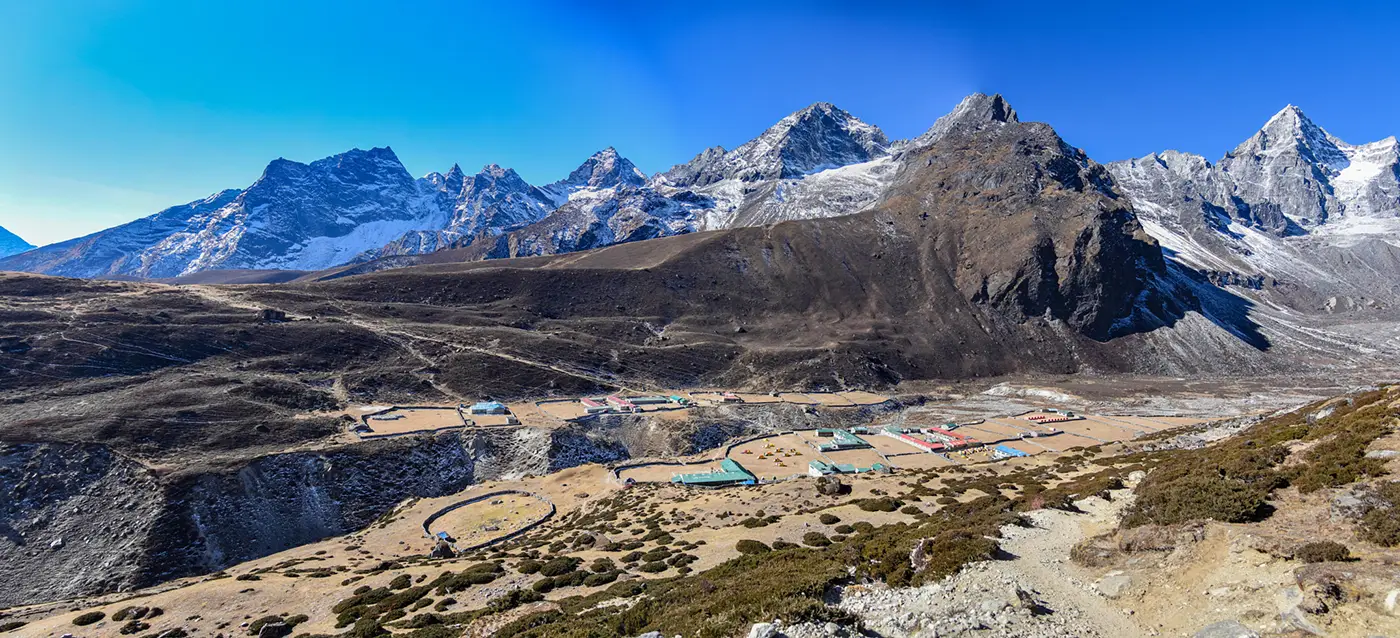
Prayer flags mark the hilltop rest stops where you might catch a glimpse of Himalayan tahr on the slopes. After about four hours of steady walking, you reach Machhermo in time for lunch. This small settlement is situated in a broad valley, offering clear views of the surrounding peaks. You can visit the local rescue post in the afternoon to listen to a talk on altitude safety and mountain health.
You check into the best available lodge, which often features a small bakery. You can spend the afternoon resting and hydrating, or take a short walk up a nearby ridge to see the end of the Ngozumpa Glacier. The lodge provides a warm dining hall for the evening as temperatures begin to drop at this height.
Highlights: Close views of Cho Oyu, a more manageable hiking schedule for acclimatization, and a visit to the high-altitude rescue post.
Difficulty: Moderate (A shorter distance with a gain of about 430 meters to help your body prepare for higher altitudes).
Accommodation: Best available lodge in Machhermo (Traditional teahouse)
Meal: Breakfast, Lunch, and Dinner
Day 7: Trek from Machhermo to Gokyo
Altitude: Machhermo (4,470m) to Gokyo Village (4,790m)
Distance: ~7 km | Walking: 5–6 hours (moderate)
You start the morning with a steady climb to the ridge above Machhermo. From this vantage point, the pyramid of Cho Oyu stands directly ahead while the massive Ngozumpa Glacier winds through the valley floor below you. The trail eventually levels out and follows the valley across scrubland and glacial moraines. As you reach the top of a small ridge after about two hours, the first of the Gokyo Lakes comes into view.
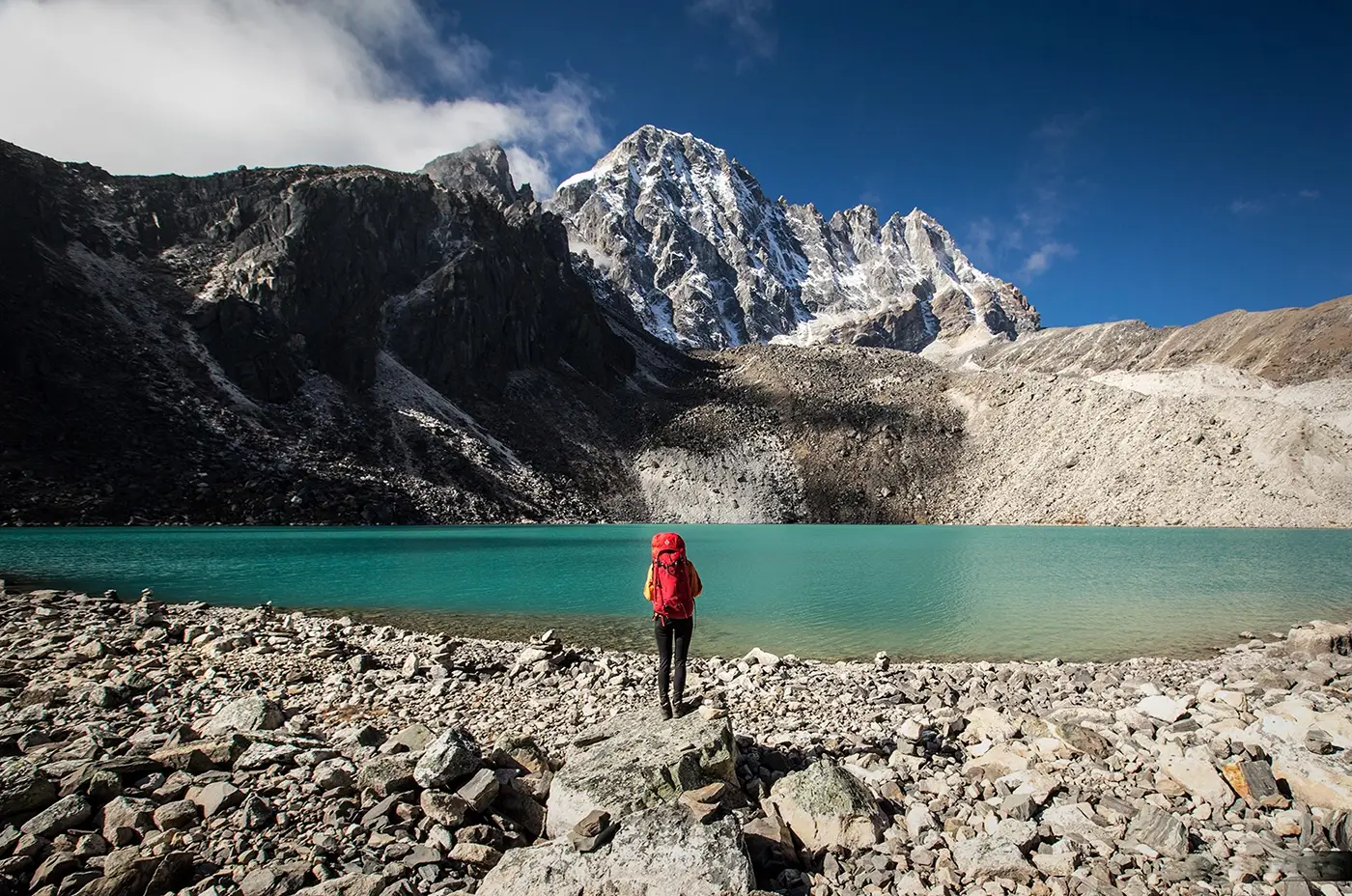
The trail leads you past the smaller First Lake, known as Longpongo, and continues toward the deep blue waters of the Second Lake, Taboche Tsho. The terrain remains flat primarily as you walk toward the heart of the valley. Finally, you cross a slight rise to find Dudh Pokhari, the Third Lake. The village of Gokyo sits right on the edge of these turquoise waters with the peaks of Cholatse and the glacier providing a dramatic background.
By mid-afternoon, you settle into one of the best available lodges in the village, such as Gokyo Resort or Paradise Lodge. After lunch, you can spend your time resting by the water or taking a short walk around the lake edge. If you feel energetic, you can hike toward the Fourth Lake or walk up to the ridge for a closer look at the glacier. You stay here for two nights to enjoy the remote atmosphere and prepare for the climb tomorrow.
Highlights: Reaching the chain of glacial lakes and settling into the high-altitude village of Gokyo.
Difficulty: Moderate (The distance is short, but the elevation reaches nearly 4,800 meters. Your guide will monitor your oxygen levels this evening as a standard safety check).
Accommodation: Best available lodge in Gokyo (Traditional teahouse)
Meal: Breakfast, Lunch, and Dinner
Day 8: The Summit of Gokyo Ri
Altitude: Gokyo Village (4,790m) to Gokyo Ri (5,357m)
Distance: ~3 km total (plus optional 3–4 km to further lakes) | Walking: 3–4 hours for the climb; 2–3 hours optional side hike (strenuous)
You begin your ascent before dawn, using headlamps and warm layers to navigate the trail behind the lodges. The path follows a steady zigzag up a gravel-and-boulder slope, gaining about 567 meters in elevation. At this height, you move at a slow and deliberate pace while pausing frequently to breathe the thin mountain air. As the first light appears, the turquoise lakes and the village of Gokyo look small in the valley below, while the massive face of Cho Oyu begins to glow across the way. After two to three hours of climbing, you reach the summit of Gokyo Ri marked by a heap of colorful prayer flags.
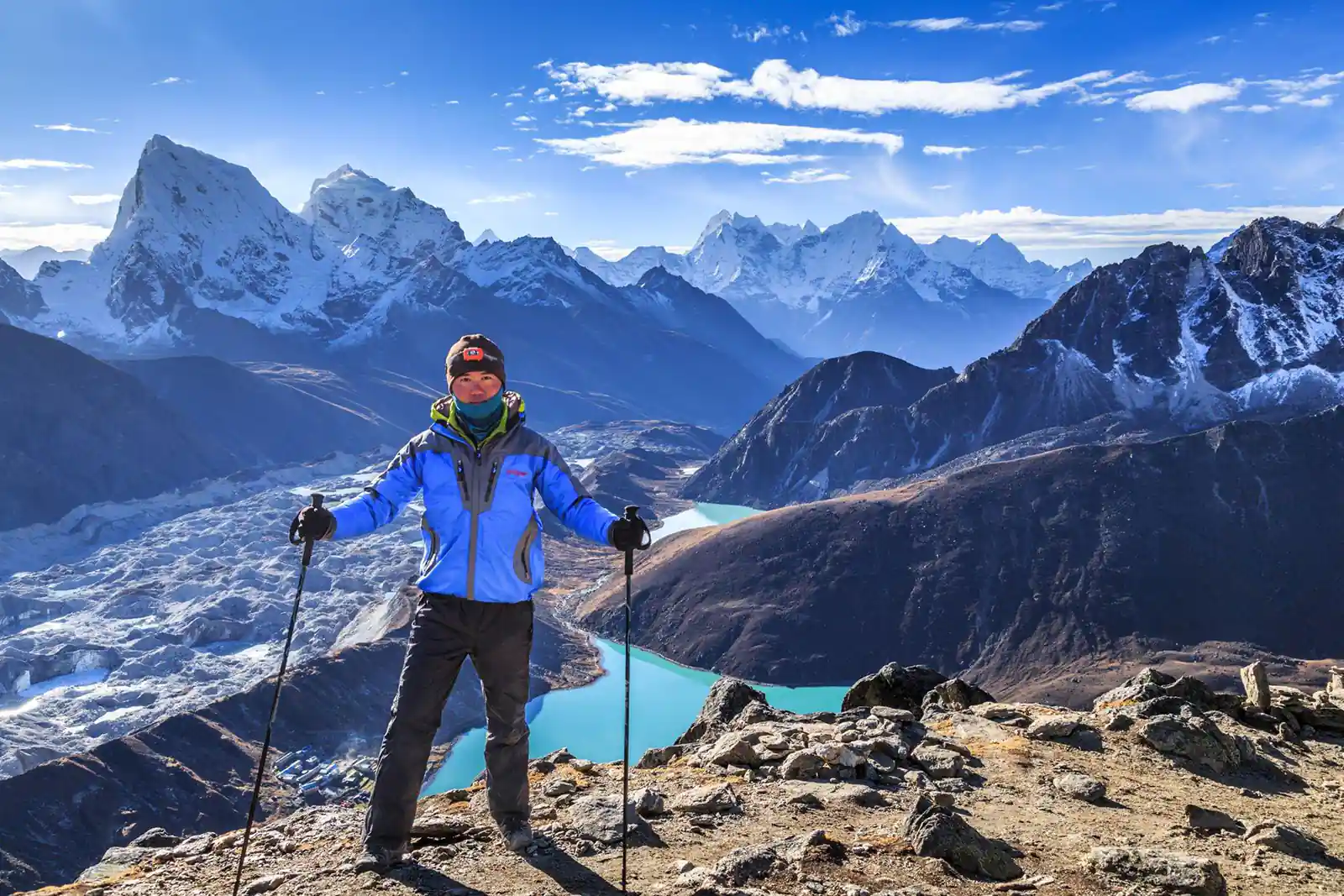
From this high vantage point, you can see four of the world’s tallest peaks, including Everest, Lhotse, Makalu, and Cho Oyu. The 360-degree view also covers a skyline of peaks like Nuptse and Pumori, with the Ngozumpa Glacier stretching out like a frozen river far beneath you. You watch as the sun rises, turning the mountain range from deep blue to gold. Many travelers find this viewpoint superior to others in the Khumbu for its view of the entire Everest range.

After spending time at the top to capture photos and take in the scenery, you descend carefully back to the village for breakfast. You can spend the rest of the day resting at the lodge or choose to explore further up the valley. A popular optional hike leads north alongside the glacier to the Fifth Lake, known as Ngozumba Tsho. This relatively flat walk leads to Scoundrel’s Viewpoint, which offers an even closer view of Everest’s face. You spend a second night in Gokyo to ensure your body recovers well from the high-altitude effort.
Highlights: Sunrise from the summit of Gokyo Ri, views of four 8,000-meter peaks, and a visit to the remote upper lakes.
Difficulty: Strenuous (The morning climb is steep and demanding due to the altitude, though it requires no technical climbing skills. Your guide will lead at a slow pace to help you manage the effort).
Accommodation: Best available lodge in Gokyo (Traditional teahouse)
Meal: Breakfast, Lunch, and Dinner
Day 9: Hike from Gokyo to Dole
Altitude: Gokyo (4,790 m) to Dole (4,038 m)
Distance: ~13 km | Walking: 5-6 hours (moderate, mostly downhill walk)
You wake to the quiet of the high mountains for your final morning in Gokyo. After breakfast, you begin the return journey by retracing your path south through the valley. You will find that breathing becomes noticeably easier as you lose elevation and move into thicker air. The trail leads you past the lakes once more and drops alongside the glacial moraine, offering a final look at the summit of Gokyo Ri where you stood just a day before.
The team moves at a relaxed pace to enjoy the scenery from a new perspective. After passing the second lake, the path descends more steeply over rocky sections and loose gravel. You reach Machhermo in about two hours, where you can stop for a quick rest or a cup of tea. As you continue the descent toward Dole, the landscape shifts from the stark alpine zone back to green slopes. You pass through the small hamlets of Luza and Lhabarma, where grazing yaks often share the trail.
You arrive back in Dole by mid-afternoon. At 4,038 meters, the air feels much richer in oxygen than at the lakes, which often provides a natural boost to your energy levels. After checking into the lodge, you have the afternoon to relax and stretch your legs. Many trekkers spend the evening by the stove in the dining hall, talking with the guides or resting before the final days of the trek.
Highlights: Different perspectives of the Khumbu peaks during the descent and the return of greenery as you move into lower elevations.
Difficulty: Moderate (While the distance is longer than previous days, the elevation loss of 750 meters makes the trek easier on your heart and lungs. Trekking poles help manage the downhill sections and protect your knees.)
Accommodation: Best available lodge in Dole (Traditional teahouse)
Meal: Breakfast, Lunch, and Dinner
Day 10: Trek from Dole to Namche Bazaar
Altitude: Dole (4,0388 m) to Namche (3,440 m).
Distance: ~12 km | Walking: 5–6 hours (moderate).
After breakfast in Dole, you move back through the juniper scrub and into the thicker pine forests. The path leads down to Phortse Tenga, where the sound of the Dudh Koshi River grows louder. After crossing the river, you face a short climb to reach Mong La at 3,975 meters. This ridge offers a final wide-angle view of Ama Dablam and Thamserku. You can pause here for tea and look back at the valley you traversed earlier in the week.
The trail then descends through the woods to rejoin the main Everest Base Camp route at Sanasa. You will likely notice a significant increase in the number of trekkers here compared to the quiet trails of the Gokyo Valley. The final stretch into Namche winds along the mountainside where you share the path with yak caravans and local porters. By midday, you round a bend and see the terraces of Namche Bazaar once again.
You return to the comfort of Yeti Mountain Home, where you can enjoy a hot shower and a comfortable bed. The afternoon is yours to spend as you like. You might browse the local shops for souvenirs, visit a bakery for an espresso, or head to the local pub for a drink with your crew. Since this is your last night at high altitude, the evening meal serves as a celebration of the miles you have covered.
Highlights: Rejoining the main trail and returning to the amenities of Namche for a final evening in the Sherpa capital.
Difficulty: Moderate (The day is mostly downhill with a total loss of about 600 meters. The increased oxygen levels make the walk feel much easier than the ascent, though trekking poles remain helpful for the descent into town.
Accommodation: Yeti Mountain Home (Luxury lodge)
Meal: Breakfast, Lunch, and Dinner
Day 11: Trek from Namche Bazaar to Lukla
Altitude: Namche Bazaar (3,440 m) to Lukla (2,860 m)
Distance: ~16 km | Walking: 7–8 hours (long moderate trek).
You begin the morning with the descent down Namche Hill back toward the Dudh Koshi River. This 600-meter drop requires careful footing, so you use your trekking poles for stability on the steeper sections. You cross the high suspension bridges one last time and check out at the ranger post in Jorsalle to officially exit Sagarmatha National Park.
The path leads you back through familiar villages, such as Monjo and Phakding. With the major climbs finished, you can spend this time talking with your guide about the trip or taking final photos of the valley. You pass by the river-powered prayer wheels and stone mani walls that you have learned to navigate clockwise over the last two weeks. After a midday meal at a riverside lodge in Phakding, you start the final gradual climb back toward Lukla.
You reach Lukla by late afternoon and head directly to Yeti Mountain Home for your final night in the mountains. This lodge offers a comfortable space to relax, complete with hot showers and private bathrooms. In the evening, you join your trekking team for a farewell dinner. This is the traditional time to express gratitude to your porters and guides for their support throughout the journey. The night often concludes with local music and a celebration of the miles you have covered together.
Highlights: Completing the full trekking circuit and sharing a final celebratory dinner with your Sherpa team.
Difficulty: Moderate but long (The day involves about seven to eight hours of walking. While the route is mostly downhill or flat, the total distance makes it a full day of effort).
Accommodation: Yeti Mountain Home, Lukla (Luxury lodge)
Meal: Breakfast, Lunch, and Dinner
Day 12: Return to Kathmandu
The Flight: 30 minutes
Start your morning in Lukla. If the skies are clear, catch one last Himalayan sunrise and watch the planes navigate the famous mountain runway. We booked your flight for the early morning to beat the afternoon winds. After a quick walk to the terminal and a final goodbye to the local crew, you’ll board the aircraft.
Keep your camera ready during the 30-minute flight. The snow-capped peaks look incredible from above as you head back toward the city.
Once you touch down at the Kathmandu domestic airport, our team will meet you for the transfer to your hotel. We keep the rest of the day open. This schedule acts as a smart buffer in case of mountain weather delays, while also giving you much-needed time to recover.
Relax and Recover
Back at the hotel, trade your trekking boots for a hot shower or a lounge by the pool. Kathmandu’s food scene is yours to explore for lunch—whether you want a wood-fired pizza, a fresh burger, or sushi. If your muscles are sore, the hotel spa is the perfect place for a massage.
In the evening, we gather for a celebration dinner at a local restaurant. This is the time to look back on the best moments of the Luxury Gokyo Ri Trek. You’ll also receive your official certificate of achievement before heading back to the hotel for a comfortable night’s sleep.

Highlights: The adrenaline hits as you experience the thrilling takeoff from Lukla’s short runway, offering one last sweeping look at the Himalayas from above. Returning to the city brings a welcome shift to total comfort. You can finally trade your trekking boots for a hot shower and enjoy the variety of international food found throughout Kathmandu.
Note: If you want to visit UNESCO World Heritage Sites in Kathmandu today, just let us know. We can easily add a guided afternoon tour to your schedule.
Accommodation: 5★ Hotel in Kathmandu.
Meal: Breakfast (Lukla) and Farewell Dinner.
Day 13: Departure from Kathmandu
After breakfast, you have the final morning in Nepal to spend as you wish. If your flight leaves later in the day, use this time for any last-minute shopping or a quick stroll through the city. We provide a private transfer to the Kathmandu Airport in time for your departure. Our team sees you off with a traditional Khada scarf and warm wishes for your flight home. You leave with incredible memories and the achievement of reaching the Luxury Gokyo Ri Trek.
Note: We recommend arriving at the airport three hours before your scheduled departure. Namaste and safe travels. We look forward to welcoming you back for another exciting adventure.
Meal: Breakfast included.
Customize this trip with help from our local travel specialist that matches your interests.
Includes & Excludes
What is included?
- Airport Transfers: We provide a private car for your arrival pick-up and departure drop-off. A representative will meet you at the airport with a warm welcome.
- Hotel in Kathmandu: You get two nights in a 4-star hotel like Kathmandu Guest House or a similar luxury property. Breakfast is included.
- Farewell Dinner: We host a farewell dinner on Day 12 at the top traditional restaurants to introduce you to authentic Nepali cuisine.
- Domestic Flights: The package includes round-trip tickets for Kathmandu to Lukla and back, including all airport taxes. We book early flights to avoid bad weather. Helicopter upgrades are available for an extra cost.
- Accommodation on Trek: You stay in the best available lodges. This includes luxury Yeti Mountain Home lodges in Lukla, Phakding, and Namche with attached bathrooms and hot showers. In Dole, Machhermo, and Gokyo, we provide private rooms with shared facilities. All rooms are twin-share, although single supplements are available.
- Meals on Trek: We provide three fresh meals a day. You order directly from the lodge’s menus.
- Guides and Porters: You will have a licensed, English-speaking guide trained in wilderness first aid. We provide one porter for every two trekkers, who can carry up to 15 kg per person.
- Staff Insurance and Wages: We fully insure all guides, porters, and drivers in accordance with the law and pay them fair wages.
- Permits and Fees: We secure all necessary permits, including the Sagarmatha National Park entry and the Khumbu Rural Municipality fee.
- Equipment: We provide a duffel bag, a trekking map, and trekking poles on request. We also offer sleeping bags and down jackets for rental if needed.
- Medical Kit: Your guide carries a first aid kit tailored for high altitudes and an oximeter to monitor your health.
- Communication: Your guide uses a mobile phone for logistics. In remote areas, they have access to satellite phones or local radios. We stay in touch with our Kathmandu office throughout the trip.
- Taxes and Fees: All government taxes and service charges are included. There are no hidden fees.
- Guided City Tour: Upon request, we can include a half-day tour of Kathmandu’s UNESCO World Heritage Sites with a private vehicle and guide.
- Flexibility and Support: Because this is a private trek, we can customize the itinerary. If you want to add a day or a different pass, our team will facilitate the change.
What is excluded?
- International Flights: You must book your own airfare to and from Nepal.
- Nepal Visa Fee: You can get your visa at the airport. You will need to pay the fee in USD cash (currently $30 for 15 days or $50 for 30 days).
- Travel Insurance: Comprehensive insurance is mandatory. It must cover trekking up to 5,500 m and helicopter evacuation. You must provide these details before we depart.
- Meals in Kathmandu: You pay for your own lunches and dinners in the city, aside from the two included group dinners.
- Drinks and Snacks: Extra beverages, such as soda, juice, or alcohol, and snacks, such as chocolate, are not included. You can buy these along the trail.
- Personal Trekking Gear: You are responsible for your own clothing and boots. Any gear you choose to buy or rent in Kathmandu will incur an additional cost.
- Tips for Staff: Tipping is not compulsory but is expected in Nepali culture for good service. We suggest a total of $ 150 per trekker, divided among the crew.
- Extra Nights and Services: If you arrive early or stay late, you must cover those hotel costs. Additional activities, such as paragliding, spa treatments, or helicopter lifts to skip trail sections, also incur extra costs.
- Emergency Evacuation Costs: You must bear the cost of any helicopter rescue or early departure. Usually, your insurance will reimburse these costs.
- Miscellaneous Personal Expenses: This includes fees for charging batteries, hot showers at higher teahouses, Wi-Fi cards, laundry, and souvenirs.
We also operate Private Trips.
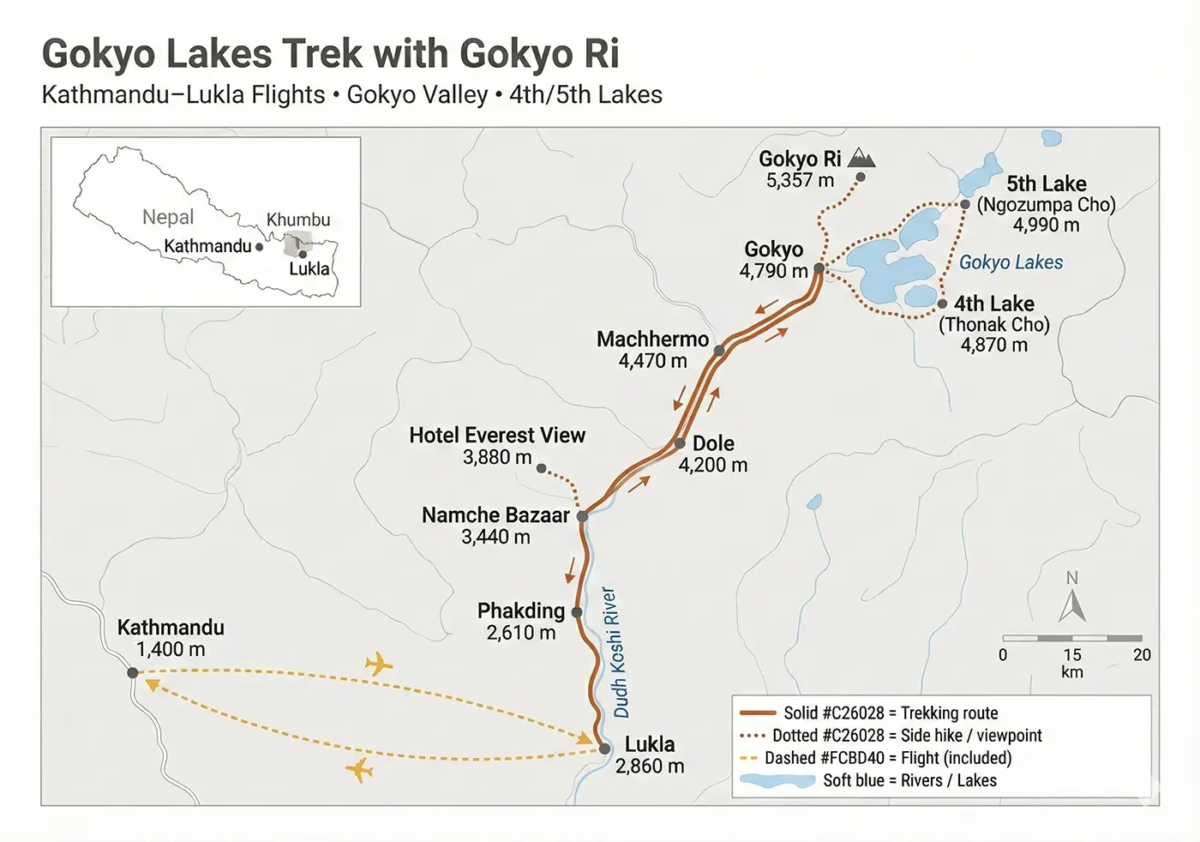
Route Map
Good To Know
Clothing: Pack 2 moisture-wicking thermal base layers, 3–4 quick-dry trekking shirts, 2 pairs of hiking pants, and 1 warm fleece or down jacket. Add a waterproof, windproof shell, rain pants, quick-dry underwear, and a thermal sleep set.
Footwear: Bring sturdy, broken-in waterproof trekking boots, comfortable camp shoes, and 4–5 pairs of wool or synthetic trekking socks.
Head & Hand Gear: Carry a sun hat, a warm beanie, a neck gaiter, layered gloves, UV-protected sunglasses, and a headlamp with spare batteries.
Trekking Gear: Use adjustable trekking poles, a 25–35L daypack with rain cover, water bottles or a hydration bladder, and purification tablets.
Personal & Health Items: Pack personal medications, blister care, sunscreen (SPF 50+), lip balm, toiletries, wet wipes, and hand sanitizer.
Electronics & Documents: Bring a camera, a power bank, a local SIM or Wi-Fi card, a passport, insurance copies, and enough Nepali cash.
Logistics & Tips: Extra luggage can be stored in Kathmandu; Lukla flights allow a maximum of 15 kg. Layer clothing, avoid cotton, waterproof your gear, and carry a small repair kit for emergencies.
Trek Duration: The trip lasts 13 days from your arrival to your departure in Kathmandu. You spend 10 days on the trail and 3 days for travel and logistics.
Max Elevation: You reach a peak altitude of 5,357 m (17,575 ft) at the Gokyo Ri summit. Your highest sleeping point is at the Gokyo lodge at 4,790 m.
Trek Grade: We categorize this as a Moderate-Adventure (Grade 3 of 5). While the altitude is high, we maintain a steady, well-paced schedule with 4 to 7 hours of walking daily.
Route: You fly from Kathmandu to Lukla, then trek through Phakding, Namche, Dole, and Machhermo to reach the Gokyo Lakes and Gokyo Ri. You return along the same path through Dole, Namche, and Lukla before flying back to the city.
Trek Region: This journey takes place in the Everest (Khumbu) Region within Sagarmatha National Park in northeastern Nepal.
Accommodation: You stay in a 5-star hotel in Kathmandu. On the trail, we offer luxury lodges, such as Yeti Mountain Home in Lukla, Phakding, and Namche, which feature en-suite bathrooms. In Dole, Machhermo, and Gokyo, you stay in cozy teahouses with heated dining halls and shared facilities.
Transportation: We use 35-minute flights for the Kathmandu-Lukla leg. In the city, we provide private cars or vans for all transfers. You can also request helicopter upgrades.
Group Size: This is a private trek where you choose your companions. We host groups of 1 to 15 people. Solo travelers are welcome, and we never place you with strangers unless you specifically request it.
Guide-to-Client Ratio: We provide one lead guide for every 4 hikers. For groups of five or more, we add an assistant guide. One porter is assigned to every two trekkers.
Entry Permits: Your package includes the Sagarmatha National Park permit and the Pasang Lhamu Rural Municipality fee.
Highlights: You will experience the Everest vista from Gokyo Ri, visit six turquoise lakes, explore Sherpa culture in Namche and Khumjung, and see the Ngozumpa Glacier. This route offers luxury in remote settings with fewer crowds.
Best Season: Spring (March to May) and Autumn (September to November) offer the best conditions. Winter treks are possible with adjustments, but we do not recommend the monsoon months.
Temperature Range: On the trail, daytime temperatures range from 0°C to 15°C. In October and November, nights at Gokyo can drop to between -10°C and 0°C. Lower areas, such as Lukla and Namche, are generally 10°C warmer.
Fitness and Experience: You do not need technical climbing experience. Good cardio fitness and previous hiking experience are helpful. This trek is suitable for both first-time and experienced hikers.
Amenities: Cell coverage is available in Lukla and Namche, but becomes patchy further up. Most lodges offer Wi-Fi for a fee, and you can charge electronics for a small fee. Hot showers are free at our luxury lodges and available for a fee at higher stops.
Safety: Our schedule includes built-in acclimatization. Your guide carries first aid supplies and an oximeter to monitor your health. We book morning flights to Lukla for safety, and our high success rate reflects our focus on your well-being.
Trip Information
Difficulty and Who this Trek is for
Trek Difficulty: We classify this Luxury Gokyo Ri Trek as moderate to challenging. It works well for fit beginners with an adventurous spirit or experienced hikers looking for a quieter route than the standard Everest Base Camp trail. You don’t need technical climbing skills to finish this route. If you can walk for five to seven hours a day and handle uphill climbs at high altitudes, you can complete this trek with the proper preparation.
Trail Conditions:
Well-trodden paths make navigation straightforward, transitioning from stone-paved village walkways to dirt trails in the open hills. You will face steep climbs, particularly on the Namche hill and the ascent of Gokyo Ri, along with rocky steps and loose gravel near the Gokyo moraine. The route includes several high suspension bridges. While these bridges, like the Hillary Bridge, are secure and sturdy, you can take them at your own pace if heights make you uneasy.
Since the trek is non-technical, you won’t need ropes or rock-climbing skills. You carry a daypack for your essentials while porters move the rest of your gear between stops.
Daily Walking Hours:
Plan for 5-6 hours of walking on a typical day. Some days are shorter, lasting about 3 to 4 hours during acclimatization, while the return from Namche to Lukla can take 7 to 8 hours.
We usually hit the trail around 8:00 am after breakfast and stop for a one-hour lunch break around midday. We aim to reach each stop by 3:00 pm, giving you the entire afternoon to rest or explore the village. The pace remains relaxed with frequent stops for water and photos. Moving slower is actually the best approach at high altitudes. You will often hear the local phrase “bistari, bistari,” which means slowly, slowly.
Our schedule prioritizes your safety by including two specific acclimatization breaks. We maintain modest daily elevation gains and adhere to strict altitude safety protocols to help your body acclimate. This careful planning makes the high-altitude sections much easier to manage.
Who This Trek Is For:
This Luxury Gokyo Ri Trek is suitable for anyone who can walk 8 to 10 km a day with a small pack and has a spirit of adventure. First-time hikers often reach the top of Gokyo Ri after a few months of training, as the route is moderate by Himalayan standards. While Gokyo sits at a higher elevation than the standard Everest Base Camp early on, the overall physical effort remains similar. It attracts photographers and nature lovers who prefer quieter trails and enough time to enjoy the scenery. This route serves as the perfect alternative for those who want to see Everest without the heavy crowds.
Fitness plays a key role in your comfort on the trail. We suggest starting a cardio routine, such as hiking, jogging, or cycling, several months before you arrive. Building leg strength is also vital; try incorporating uphill walks, stair climbing, squats, and lunges into your workouts. If you have any past knee injuries, bring trekking poles and a brace to help with the long downhill sections.
Altitude Factor:
The main challenge comes from the elevation rather than the terrain. We climb above 5,300 m at Gokyo Ri, so you will likely experience shortness of breath or fatigue. This is a common occurrence during high-altitude hiking. Our schedule includes specific rest days to help your body adjust and lower the risk of altitude sickness. Still, you should arrive mentally prepared for a slower pace and some physical exertion.
This Luxury Gokyo Ri Trek route is not suitable for individuals with serious heart or lung conditions; please consult your doctor before booking. Additionally, if you struggle with vertigo or a severe fear of heights, the suspension bridges might feel challenging. These crossings are brief, and our guides are always available to help you across or during your crossing to avoid crowds.
In conclusion, individuals aged 12 to 70 who are physically fit can complete the Luxury Gokyo Ri Trek. Success requires preparing for several days of consistent hiking and the physical effects of high altitude. Beginners succeed here by following a solid training plan and keeping a positive mindset. Seasoned hikers will find the pace manageable and the scenery rewarding. Our team supports your safety through a gradual ascent schedule and constant health monitoring.
While the lack of technical climbing makes this route more accessible than other Himalayan trails, the term “easy” is relative in this environment. We rank this as a moderate-plus trek due to its elevation and total duration. If you are in good health and ready for the thin air, our support system makes this goal entirely reachable.
Who should consider a Different Trek:
If you have fewer than 10 days available, you might prefer a shorter trek or a helicopter tour. Those who wish to avoid steep climbing may find the Everest Panorama Trek more suitable, as it stays at lower elevations. If your main goal is specifically to reach Everest Base Camp and you don’t mind the crowds, that route offers a different atmosphere. However, most people who want a unique experience in the Everest region choose Gokyo. Travelers often find it more beautiful and peaceful than the standard base camp route.
This trek is suitable for anyone seeking a balance of adventure and comfort. You spend your days challenging yourself among the highest peaks on earth and your evenings relaxing in high-quality lodges. It works perfectly for couples, families with active teenagers, or small groups of friends. Our team adjusts the daily rhythm to match your speed, so both slower and faster hikers feel comfortable. With a positive mindset and basic fitness, you can enjoy everything the Gokyo Lakes have to offer.
Best Time to Trek
Selecting the right season is crucial for capturing clear mountain views and experiencing stable weather. The ideal times for the Luxury Gokyo Ri Trek are spring (March to May) and autumn (September to November).
During these months, you can expect the most consistent conditions, comfortable temperatures, and impressive scenery. Here is a breakdown of what each season offers:
Spring (March to May):
Many consider spring the best time to visit Gokyo. As the winter chill fades, temperatures become mild and the days grow longer. You can expect daytime highs around 10°C in Namche and up to 20°C in the lower regions. At Gokyo, which sits at 4,790 m, temperatures stay much cooler and often hover just above freezing. Mornings usually remain clear, offering crisp views of Everest and the surrounding peaks. While clouds may form in the afternoon, the weather generally stays stable.
The rhododendrons bloom throughout April and May, covering the hillsides around Dole and Namche in shades of red, pink, and white. These early morning hours offer crystal-clear skies, perfect for photography. Since this coincides with the Everest climbing season, you will likely see the buzz of major expeditions passing through Lukla and Namche.
Crowd levels stay moderate during this time. You will find fewer trekkers than in the autumn peak, though the trails remain active from late March through April. This season suits nature lovers and those who prefer slightly warmer nights at high altitudes. While late May can bring some pre-monsoon humidity, the heavy rains typically wait until June.
Autumn (September to November):
Autumn serves as the peak trekking season in Nepal. Following the summer monsoon, the air becomes incredibly clear and dust-free, which almost guarantees daily blue skies. While September starts with the monsoon gradually retreating, conditions improve significantly by the middle of the month. October provides the most consistent weather of the year, with daytime temperatures around 15°C in Namche and cooler temperatures at higher altitudes. Visibility remains excellent, making the mountains appear sharp and close.
This period also coincides with major Nepali festivals, such as Dashain and Tihar, adding a rich cultural layer to your visit. November remains wonderful and stays very clear, though temperatures drop toward the end of the month. You might see a dusting of snow on the high peaks, which adds to the scenery. Because October is the busiest month, you will share the trail with more trekkers. We handle all lodge and flight reservations in advance to ensure your comfort, though popular spots like Gokyo Ri will have a friendly crowd at sunrise. This season is ideal for photographers and anyone wanting the most reliable weather.
Luxury Gokyo Ri Trek
Luxury Gokyo Ri Trek is possible, though it is the coldest off-season. The primary benefits include nearly empty trails and crystal-clear skies that often persist throughout the day. The landscape transforms into a winter wonderland with snow-covered paths and frozen lakes. If conditions permit, you might even walk on portions of the frozen Gokyo lakes.
However, the temperatures are harsh. You should expect nights at -15°C or lower in Gokyo, while daytime highs at 5,000 m range from -5°C to +5°C. Below Namche, the cold feels more manageable. Occasional heavy snow can close trails or make the ascent to Gokyo Ri risky. We recommend winter treks only for experienced hikers who handle extreme cold well and maintain a flexible schedule. While some high-altitude teahouses might partially close, we coordinate in advance to ensure all services remain available.
Monsoon (June to August):
We generally do not recommend the monsoon season for a Luxury Gokyo Ri Trek. Heavy rains frequently hit the lower elevations, and clouds often obscure views of the mountains. Trails become wet and muddy, and flights to Lukla usually face delays due to low visibility. If you must travel during this time, early June offers the best chance before the heavy rains arrive in mid-June. July and August are the wettest months, featuring daily afternoon downpours.
On the positive side, the valley becomes lush and green, and waterfalls flow at full capacity. You will find true solitude with almost no other trekkers on the path. The humid air brings vibrant wildflowers to the alpine meadows, marking the start of the local mushroom season. Views of Everest are hit-or-miss, usually appearing only when clouds part briefly. We can arrange helicopter transfers to provide more travel leeway during this time. If you choose this season, plan early-morning hikes to beat the afternoon clouds and bring high-quality rain gear.
Shoulder Months:
Late February and early March mark the beginning of spring. While the air remains cold and snow may linger on the passes, the weather steadily improves. Similarly, late November and early December offer a late-autumn experience with clear skies and fewer crowds. These “edge” times provide an outstanding balance for those who want to avoid the peak-season rush and don’t mind a bit more chill in the air.
Our Recommendation:
We suggest mid-October to mid-November for the most stable conditions and clearest views. Alternatively, April offers a perfect mix of clear mornings and blooming rhododendrons. If you want to avoid crowds while still enjoying good weather, early December or early March are excellent choices. Each season has its own charm, but spring and autumn remain favorites for a reason.
Regardless of your travel dates, our team ensures flexible planning. Our guides monitor weather forecasts constantly and will adjust the itinerary to keep you safe. With the right gear and mindset, Gokyo is a year-round marvel; however, selecting the optimal window will maximize those famous Himalayan views.
Season Summary:
- Spring (Mar–May): Mild weather, blooming flowers, and great views.
- Autumn (Sep–Nov): Clear skies and stable weather, but high foot traffic.
- Winter (Dec–Feb): Sharp views and quiet trails, but extreme cold.
- Monsoon (Jun–Aug): Lush and green, but rainy with obscured views.
Altitude & Safety
Luxury Gokyo Ri Trek involves high altitudes, with our itinerary reaching over 5,300 m. Proper safety protocols are vital, so we have built them directly into the trip design. Here is how we manage altitude and safety on this luxury trek.
Gradual Ascent and Acclimatization:
We follow the principle of climbing high and sleeping low to help your body adjust naturally. The route includes two scheduled acclimatization days: one at Namche Bazaar (3,440 m) and another in Gokyo (4,790 m). We keep daily elevation gains within safe limits. For instance, the move from Namche to Dole increases your sleeping altitude by only 600 m, which aligns with recommended safety ranges. On rest days, we encourage short hikes to higher elevations, such as the Everest View Hotel, before returning to a lower elevation to sleep. This strategy triggers acclimatization, significantly reducing the risk of altitude sickness.
Monitoring Your Health:
Altitude sickness can affect anyone regardless of fitness level. Our guides are trained to spot early symptoms such as headaches, loss of appetite, or shortness of breath. We monitor your health daily using an oximeter to check your blood oxygen levels and pulse each evening.
Communication is key, so please tell your guide about even minor symptoms. Our team carries a comprehensive first aid kit, including altitude medications, and a portable oxygen cylinder for emergencies. In Machhermo, we also visit a seasonal medical post where you can get expert advice and attend a talk on altitude safety.
Emergency Protocols:
In the rare event of severe altitude sickness, the only cure is immediate descent. Since this is a private trek, we can change the plan on short notice for your safety. Our team can guide you to a lower altitude while others continue, or we can arrange a helicopter evacuation for urgent cases. We require all clients to have travel insurance that covers high altitude helicopter rescue to ensure swift action. Our Kathmandu office remains on standby to coordinate these efforts if needed.
Hydration and Pace:
We recommend drinking at least 3 to 4 liters of fluid daily. We provide boiled or filtered water at every lodge to keep you hydrated, which is one of the best ways to reduce altitude risks. Your guide will set a slow and steady pace. This is not a race, and going too fast often leads to illness. The itinerary allows plenty of time, so you never feel rushed. Moving slowly is the best way to maintain good health.
Weather and Trail Safety:
Himalayan weather can change quickly. If a storm makes a path like Gokyo Ri unsafe, we adapt by using our buffer days or skipping that specific section for your safety. Our guides check forecasts via phone and internet, with satellite backup from our home office.
On the trail, we ensure safe bridge crossings and make sure you never walk alone on tricky sections. When passing yaks or mules, always stand on the uphill side of the trail to stay clear of the edge.
Sanitation and Hygiene:
We vet all luxury lodges to ensure they meet high hygiene standards. We choose locations with clean kitchens that use purified water for cooking. To stay healthy, stick to the treated water we provide and avoid uncooked foods, such as salads, at high elevations. While we offer luxury lodges with en-suite bathrooms in places like Namche and Lukla, higher areas like Gokyo may have shared facilities due to their remote location. We suggest bringing personal wet wipes and hand sanitizer for added convenience.
Expert Guides and Team:
Our lead guides have over a decade of experience and hold government licenses and wilderness first aid certifications. They have handled everything from adverse weather conditions to medical emergencies. Trust their advice, especially regarding the “no alcohol” rule at high altitudes, as alcohol increases dehydration and sickness risks.
Flight and Travel Contingencies:
The weather often delays flights in and out of Lukla. We built a buffer day into the end of your trip in Kathmandu to account for this. If a flight is canceled, we attempt to fly the next day or can arrange a helicopter transfer. Your safety is the priority, and flights only operate when the Civil Aviation authorities deem it safe.
In summary, our safety strategy is proactive and layered. By using a cautious ascent profile, constant monitoring, and robust backup plans, we ensure you can focus on the views with peace of mind. We also choose to avoid the Cho La Pass, which can be icy and dangerous, to maintain a focus on a safe and enjoyable experience at the Gokyo Lakes.
Related Articles
Frequently Asked Questions
Our itinerary ensures safe acclimatization through a gradual ascent and two rest days in Namche and Gokyo. We use the “climb high, sleep low” method, and our guides monitor your health daily with oximeters. By staying hydrated and moving slowly, you minimize the risk of altitude sickness. If symptoms persist, we can easily adjust the plan or assist with a descent to keep you safe.
You’ll stay in top accommodations, including 4/5-star city hotels and luxury lodges with en-suite bathrooms and electric blankets in lower regions. In remote areas like Gokyo, we select the cleanest and warmest teahouses available.
All meals are included, with a mix of Western dishes and local food like dal bhat. Vegetarian and vegan diets are easily accommodated, and boiled drinking water is provided daily for safety and hydration.
Mountain weather can occasionally delay flights to Lukla. To improve your chances, we always book the earliest slots. If a cancellation occurs, we use the built-in buffer day to protect your international travel plans. For longer delays, we can arrange a helicopter transfer quickly. Our team manages all logistics and ensures you remain comfortable in luxury lodges while you wait.
Beginners can successfully complete the Luxury Gokyo Ri Trek with proper preparation. While the trails are non-technical, we recommend building baseline fitness through local hikes or stair climbing before you arrive. Our guides specialize in coaching newcomers, ensuring a comfortable pace with zero pressure to rush. Since this is a private journey, we customize every step to your needs, helping you reach your goals safely and confidently.
As of 2023, the Nepal government requires all foreign trekkers to hire a licensed guide. This rule improves safety and supports the local economy. Our Luxury Gokyo Ri Trek package meets this requirement by providing an experienced guide and porter. Your guide manages navigation, safety, and lodge arrangements, while your porter carries heavy loads. This setup gives you the freedom of a private trek with reliable support at high altitude.
You must carry travel insurance that covers high-altitude trekking up to 5,500 m, including emergency helicopter evacuation. This coverage protects you from rescue costs that can reach USD 10,000, as well as medical treatment and trip cancellation. Please share your insurance details before the trek and keep a digital or printed copy with you. We recommend choosing a policy that specifically covers the Everest region for complete protection.
Our Luxury Gokyo Ri Trek gives you full flexibility to shape the journey. You can add Renjo La Pass, extend the trek to Everest Base Camp, fly back to Lukla by helicopter, or include extra acclimatization and cultural days. We handle special requests and make small route adjustments to match your goals and fitness level.
Reviews on Luxury Gokyo Ri Trek
5.0
Related Packages
Destination
NepalDifficulty
ModerateEverest Base Camp Trek for Beginners
 16 Days
US$ 2450
Destination
NepalDifficulty
ModerateLuxury Everest Base Camp Trek with Helicopter Return
13 Days
US$ 4900

Destination
EverestDifficulty
EasyLuxury Sherpa Village Hike with Everest Helicopter Tour
6 Hours
US$ 6500